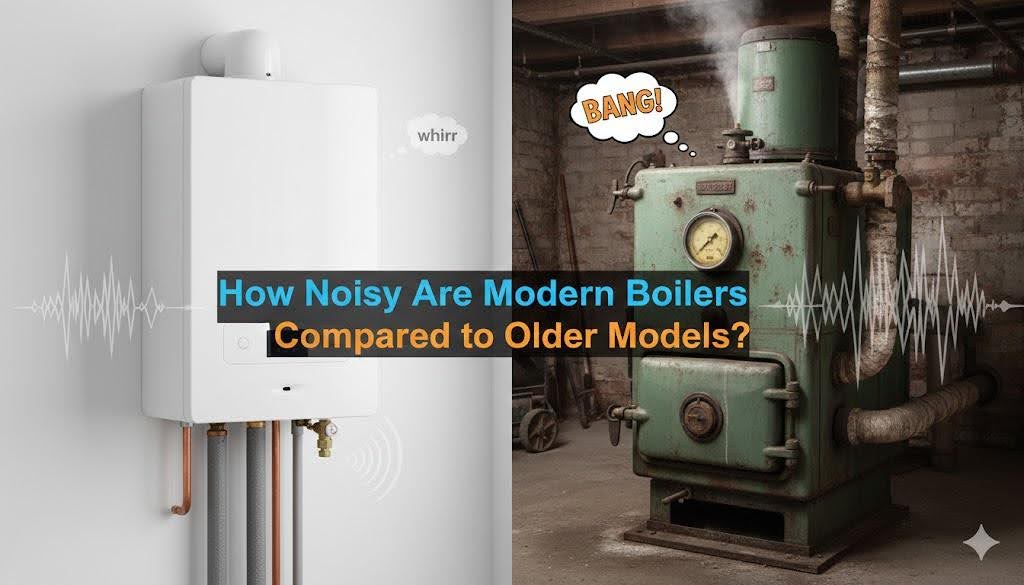
LONDON, Feb. 16, 2026 — Modern condensing boilers operating in UK homes are producing significantly lower noise levels than many legacy heating systems installed prior to 2005, according to recent industry data and manufacturer technical specifications. Heating engineers and energy efficiency specialists report that newer models commonly operate between 36 and 45 decibels (dB), comparable to a quiet conversation or refrigerator.
The findings come as more households explore heating system upgrades under the UK Government’s boiler upgrade scheme, which provides financial incentives to support low-carbon heating transitions, including eligibility for a Grant for Air Source Heat Pumps.
Measured Differences in Operating Noise
According to published manufacturer acoustic ratings and installer field reports, older non-condensing boilers frequently generated higher operational noise due to larger mechanical components, minimal insulation, and internal sediment buildup. Common reported sounds included kettling, vibration, and ignition-related banging.
By contrast, modern condensing boilers incorporate:
- Insulated casings to dampen sound transmission
- Variable-speed fans and modulating burners
- Compact internal layouts designed to reduce vibration
- Improved pump and heat exchanger engineering
Industry technicians note that most contemporary A-rated gas boilers operate below 45 dB at standard output, though actual sound levels may vary depending on installation quality, property layout, and servicing history.
Installation and Maintenance Remain Key Factors
Heating engineers emphasize that installation standards play a significant role in overall noise performance. Improper mounting, trapped air in pipework, or scale accumulation can increase sound levels regardless of model type.
“Acoustic performance today is significantly improved compared to older systems,” said a UK-based Gas Safe registered engineer familiar with residential upgrades. “However, correct sizing, professional installation, and annual servicing are essential to maintain low-noise operation.”
Financial Considerations and Government Support
The cost of installing a new gas boiler can exceed £3,000 depending on property size and system configuration, according to installer market averages. Government-backed initiatives, including the boiler upgrade scheme, aim to reduce upfront costs for qualifying households transitioning to low-carbon technologies.
Under current program guidelines, eligible homeowners may apply for a Grant for Air Source Heat Pumps, subject to property criteria and installer participation requirements. Full eligibility details are published through official UK Government channels.
Energy analysts note that while noise reduction is not the primary objective of these schemes, improved acoustic comfort is increasingly cited by homeowners as a secondary benefit of upgrading aging systems.
Broader Efficiency and Environmental Impact
Beyond noise reduction, modern condensing boilers are designed to meet higher efficiency standards under UK energy regulations. Many models achieve efficiency ratings above 90% under standard testing conditions, contributing to lower fuel consumption and reduced emissions compared to older non-condensing systems.
As households continue evaluating heating system replacements ahead of long-term net-zero targets, industry experts expect demand for quieter, more efficient systems to remain strong.
About Residential Heating Upgrades in the UK
The UK residential heating sector has undergone significant modernization over the past two decades, driven by efficiency regulations, emissions targets, and consumer demand for improved comfort. Government-backed support programs continue to provide incentives for eligible households transitioning to lower-carbon heating technologies.
Media Details
Company Name: Grant Boilers
Company Website: https://grantboilers.org.uk/
Address: 167-169 Great Portland Street, 5th Floor, London, W1W 5PF, United Kingdom
Contact Email: contact@grantboilers.org.uk
Contact Number: +44 204 587 7748