Agriculture is undergoing one of its most significant transformations in decades. From precision GPS guidance to automated planting systems, the tools available to today’s farmers are more sophisticated than ever before. Yet despite all the technological advances, the fundamental challenge remains the same: getting seed into the ground efficiently, accurately, and at the right time. Whether you’re managing a small family operation or overseeing thousands of acres of commercial cropland, the equipment you choose for planting and seeding will directly determine your yield potential, your input costs, and ultimately your profitability. Understanding how to evaluate, select, and invest in the right seeding machinery is no longer optional — it’s a core competency for any serious agricultural producer.
The Enduring Importance of Seed Drills in Modern Agriculture
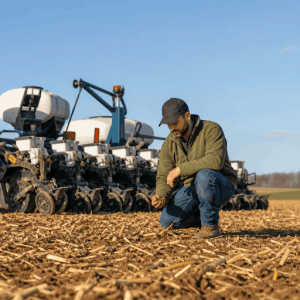
Seed drills have been a cornerstone of productive farming for well over a century, and their relevance has only grown stronger as farming operations demand greater precision and efficiency. Unlike broadcast seeding methods, a seed drill places seeds at a controlled depth and spacing, dramatically improving germination rates and reducing seed waste. Modern seed drills can be calibrated for dozens of different crop types, adjusted for varying soil conditions, and integrated with GPS systems to ensure row-by-row accuracy across large fields. For farmers who grow wheat, barley, canola, oats, or specialty crops, a well-maintained seed drill is not just a convenience — it is the backbone of a productive planting season.
Why Depth and Spacing Control Matter More Than Ever
Inconsistent seed placement is one of the most underestimated causes of yield loss in grain and oilseed production. When seeds are placed too shallow, they are vulnerable to moisture stress and surface crusting. When placed too deep, emergence is delayed and seedling vigor is compromised. Modern seed drills address this challenge through independent row-unit suspension systems, hydraulic down-pressure controls, and real-time monitoring that alerts operators to blockages or irregularities. These features, once exclusive to premium new equipment, are now commonly found on well-maintained used machines — making the used equipment market an increasingly attractive option for cost-conscious producers.
The Case for Buying Used Seeding Equipment
New agricultural machinery comes with a steep price tag, and for many farming operations — particularly those just scaling up or diversifying into new crops — the capital investment required for brand-new equipment can be prohibitive. This is where the used equipment market offers a compelling alternative. A quality used seed drill, sourced from a reputable dealer, can deliver the same functional performance as a new unit at a fraction of the cost. The key is knowing what to look for: disc condition, coulter wear, seed tube integrity, metering system accuracy, and the overall structural condition of the frame and toolbar. Farmers who take the time to inspect used equipment carefully — or who work with dealers who provide detailed condition reports — can find exceptional value in the pre-owned market.
Evaluating Condition: What to Inspect Before You Buy
When evaluating a used seed drill, start with the disc openers or hoe openers, depending on the machine type. These components take the most wear during operation and are often the most expensive to replace. Check for uneven wear patterns, which can indicate the machine was operated in particularly abrasive soils or without proper maintenance. Inspect the seed metering system for cracks, worn flutes, or damaged drive components. Review the hydraulic system for leaks and test all folding and depth-adjustment functions. Finally, examine the frame for cracks, welds, or signs of previous repairs that might indicate the machine was subjected to heavy stress or improper use. A thorough pre-purchase inspection can save thousands of dollars in unexpected repair costs.
Technology’s Growing Role in Planting Efficiency
The intersection of digital technology and agricultural equipment is reshaping how farmers approach planting season. Variable rate seeding, section control, and real-time data logging are now standard features on many mid-range and premium seed drills. These technologies allow farmers to adjust seeding rates on the fly based on soil maps, reduce overlap in headlands, and generate detailed field records that inform future agronomic decisions. As processing power and computational efficiency continue to advance, the integration of AI-driven analytics into farm management platforms is expected to further optimize seeding decisions — from population rates to timing windows — based on real-time weather and soil data.
Automation and the Future of Seeding Operations
Automation is no longer a distant concept in agriculture. Fully automated planting systems are already operational in some of the world’s most advanced growing regions. For example, a high-tech farm in China’s Zhejiang region has successfully automated both vegetable planting and harvesting, demonstrating that robotic systems can handle the precision and repetition required for large-scale crop production. While full automation remains out of reach for most operations today, the trajectory is clear: the farms that invest in scalable, technology-compatible equipment now will be best positioned to integrate emerging automation tools as they become more accessible and affordable.
HR Agri Power: A Trusted Source for Used Seeding Equipment
For farmers navigating the used equipment market, working with a reputable dealer makes all the difference. HR Agri Power has built a strong reputation in the agricultural equipment industry by offering a wide selection of quality pre-owned machinery across multiple categories and crop types. Their inventory is regularly updated, and their team brings deep agronomic and mechanical knowledge to help buyers find equipment that genuinely fits their operation’s needs. Whether you’re looking for a single-disc drill for direct seeding or a large-frame air seeder for high-capacity grain production, their platform makes it straightforward to browse, compare, and connect with knowledgeable staff.
Finding the Right Fit for Your Operation
If you are actively searching for planting and seeding equipment, browsing a curated inventory from a trusted dealer is one of the most efficient ways to find what you need. Farmers looking for a used seed drill for sale will find that HR Agri Power’s online platform allows them to filter by category, make, model, and condition — streamlining the search process and making it easier to identify machines that match both operational requirements and budget constraints. This kind of transparent, organized inventory access is exactly what modern buyers need when making significant capital decisions.
Making the Investment Decision with Confidence
Purchasing seeding equipment — new or used — is one of the most consequential decisions a farmer makes in any given year. The right machine can improve stand establishment, reduce input waste, and set the foundation for a strong harvest. The wrong choice can mean costly repairs, poor performance in the field, and lost productivity during the narrow planting window. Approaching this decision with thorough research, a clear understanding of your soil and crop requirements, and access to a reliable equipment source gives you the best possible chance of making an investment that pays dividends for years to come.
Conclusion
The seeding equipment landscape has never offered more options — or more complexity. From technologically advanced new drills to well-maintained used machines that deliver exceptional value, today’s farmers have access to a broader range of tools than any previous generation. The key is approaching the selection process with discipline: understanding your agronomic needs, evaluating equipment condition carefully, leveraging technology where it adds genuine value, and partnering with dealers who bring expertise and integrity to every transaction. In an industry where margins are tight and timing is everything, the right seeding equipment is not just a purchase — it is a strategic investment in the future of your farm.