Managing overgrown pastures, fence lines, and rough terrain has always been one of the more demanding tasks in agricultural operations. Whether you run a small hobby farm or a large commercial operation, rotary cutters — commonly known as bush hogs — remain among the most essential implements in any equipment lineup. In recent years, a growing number of farmers and landowners have shifted their purchasing strategies, opting for pre-owned equipment rather than brand-new machinery. The reasons are practical, financial, and increasingly supported by market data. Understanding what drives this trend can help you make a smarter buying decision the next time your operation needs a reliable rotary cutter.
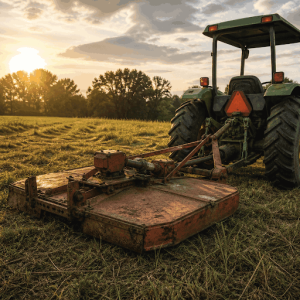
The Real Cost of New vs. Used Rotary Cutters
New agricultural equipment depreciates rapidly. A brand-new bush hog can lose a significant portion of its value within the first two to three years of use, much like a new vehicle driven off a dealership lot. For operations working within tight margins — which describes most farms today — that depreciation curve represents a genuine financial risk. Purchasing used equipment allows buyers to sidestep the steepest part of that curve entirely, acquiring a machine that has already absorbed its initial depreciation while still retaining years of productive life.
Beyond the sticker price, used bush hogs often come with a known service history. A well-maintained rotary cutter from a reputable seller can outperform a neglected new unit in terms of reliability and longevity. Experienced buyers know to look for signs of proper upkeep: clean gearboxes, intact blade carriers, solid slip clutches, and minimal rust on the deck. These indicators tell a more complete story than any warranty document.
Matching the Right Cutter to Your Tractor and Terrain
One of the most common mistakes buyers make — whether purchasing new or used — is failing to match the implement to their tractor’s horsepower and PTO output. Bush hogs come in a wide range of cutting widths and gear ratings, from light-duty residential models designed for compact tractors to heavy-duty commercial units built for 100-plus horsepower machines. Buying a cutter that exceeds your tractor’s capacity puts unnecessary strain on both the tractor and the implement, leading to premature wear and potential mechanical failure.
Terrain also plays a critical role in the selection process. Flat, open pastures can be managed effectively with a standard single-spindle cutter, while rocky hillsides or heavily wooded fence lines demand a heavier-gauge deck and a more robust blade system. Understanding your land’s specific challenges before you shop will narrow your options considerably and help you avoid costly mismatches.
Horsepower Requirements and PTO Compatibility
Most rotary cutters are rated for either 540 RPM or 1,000 RPM PTO operation. Compact and utility tractors typically run at 540 RPM, while larger row-crop tractors often operate at 1,000 RPM. Confirming PTO compatibility before purchase is non-negotiable. Running a 540 RPM implement on a 1,000 RPM PTO — or vice versa — can destroy a gearbox in minutes. Always verify the implement’s specifications against your tractor’s output before finalizing any deal.
Precision Agriculture and the Evolving Role of Traditional Implements
Modern agriculture is undergoing a significant technological transformation. GPS-guided planting, drone-assisted scouting, and data-driven soil management are reshaping how farms operate at every scale. According to recent industry research on precision agriculture adoption trends, the integration of smart technology into farming operations is accelerating globally, with significant implications for equipment purchasing decisions. Yet even as high-tech solutions proliferate, traditional implements like rotary cutters remain indispensable. No drone or satellite system replaces the need to physically cut brush, manage pasture growth, or clear fence lines. The two worlds — precision technology and reliable mechanical implements — coexist and complement each other on modern farms.
Why Traditional Equipment Still Matters
There is a reason experienced farmers rarely abandon proven mechanical tools in favor of purely digital solutions. Rotary cutters, disc harrows, and similar implements have decades of engineering refinement behind them. Their mechanical simplicity is actually an advantage: fewer electronic components mean fewer points of failure, easier field repairs, and lower long-term maintenance costs. In an era of supply chain disruptions and parts shortages, that simplicity carries real operational value.
Where to Find Quality Pre-Owned Rotary Cutters
For farmers and landowners actively searching for reliable pre-owned equipment, sourcing from a reputable dealer makes a measurable difference. When browsing used bush hogs for sale, buyers benefit from working with platforms that organize inventory by model, condition, and application — making it far easier to identify units that match specific tractor configurations and land management needs. A well-curated inventory removes much of the guesswork that comes with private-party purchases, where documentation and service history are often incomplete or unavailable.
HR Agri Power: A Trusted Source for Pre-Owned Agricultural Equipment
HR Agri Power has established itself as a dependable resource for farmers seeking quality used agricultural implements across a broad range of categories. Their inventory approach prioritizes transparency, offering buyers detailed equipment listings that support informed purchasing decisions. Whether you are outfitting a new operation or replacing aging equipment on an established farm, their platform provides a practical starting point for sourcing implements that deliver long-term value without the premium price tag of new machinery.
Honoring Agricultural Heritage While Embracing Practical Value
There is a broader cultural dimension to the preference for used farm equipment that deserves acknowledgment. Agricultural communities have long placed a premium on resourcefulness and the preservation of functional machinery. Events like Antique Tractor Preservation Day, observed annually on August 22, reflect a deep-seated respect for equipment that has proven its worth over time. While a used bush hog from the past decade is hardly an antique, the underlying philosophy is the same: well-built agricultural machinery deserves to be maintained, valued, and put to continued productive use rather than discarded prematurely.
The Environmental Case for Buying Used
Purchasing pre-owned equipment also carries an environmental dimension that is increasingly relevant to modern agricultural operations. Manufacturing new farm implements requires significant raw material inputs and energy expenditure. Extending the productive life of existing machinery reduces that manufacturing demand, lowering the overall environmental footprint of a farming operation. For producers who are mindful of sustainability alongside profitability, buying used is a choice that aligns with both priorities simultaneously.
Conclusion: Making a Smart Equipment Investment
The decision to purchase a used bush hog rather than a new one is rarely about compromise. For most buyers, it represents a deliberate, informed choice to maximize value, minimize depreciation risk, and direct capital toward other operational priorities. With the right research, a clear understanding of your tractor’s specifications, and access to a reputable equipment source, a pre-owned rotary cutter can deliver years of dependable service at a fraction of the cost of new equipment. In a farming environment where margins are tight and every dollar counts, that kind of practical wisdom is worth more than any manufacturer’s warranty.