SEOAgent released version 1.0 of its SEO harness for coding agents, adding Grok bot support, Open Knowledge Format publishing for AI search visibility, and product screenshot capture from the customer's codebase.
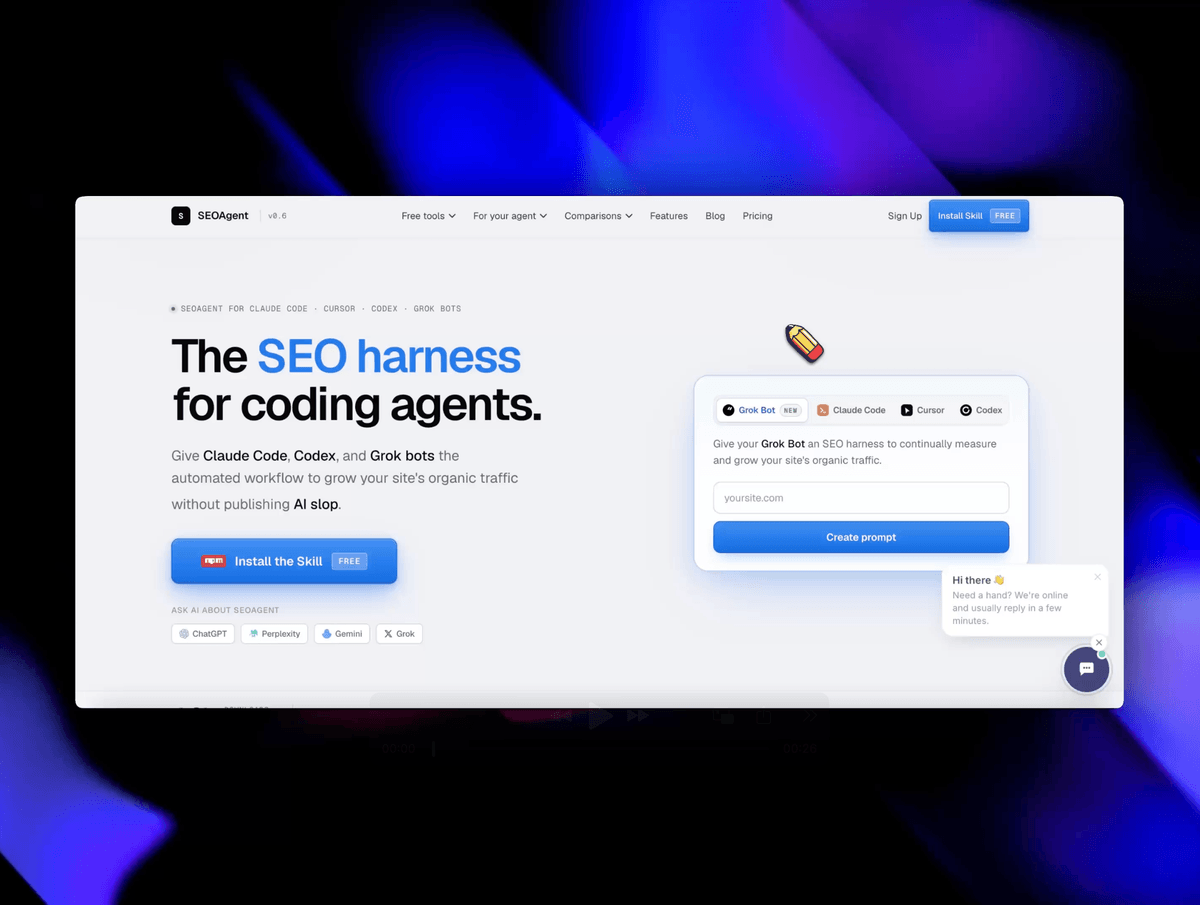
NEW YORK CITY, US — September 15, 2026 — SEOAgent, an independent software company, today released version 1.0 of its search engine optimization (SEO) harness for coding agents. The release adds support for Grok bots, automated publishing of the Open Knowledge Format (OKF), and automated product screenshot capture. SEOAgent’s free local component is available worldwide today through the public npm registry.
Version 1.0 extends SEOAgent beyond Claude Code, Cursor and Codex to Grok bots, adding to the total number of first-class supported coding agents with its harness, alongside a standalone command line interface for teams that run the tooling directly. Configuration guidance for each environment is published at seoagent.com, including a dedicated page for Grok bots at seoagent.com/for/grok-bots.
The release adds automated publishing of the Open Knowledge Format, an open specification published by Google Cloud in June 2026. OKF represents organizational context as directories of markdown files with YAML frontmatter, so that AI systems can consume a structured account of a business without a proprietary integration. SEOAgent generates an OKF bundle from the customer’s own codebase and content, publishes it on the customer’s domain, and regenerates it as the site changes. SEOAgent also operates a free AI readiness checker that reports what an AI system can currently determine about a given site.
A third addition covers product imagery. SEOAgent identifies pages where a product image is missing, renders the relevant interface directly from the customer’s existing codebase, saves the image file into the project, and inserts it with descriptive alternative text. Where a capture is not possible, the software reports the gap rather than substituting a generated placeholder.
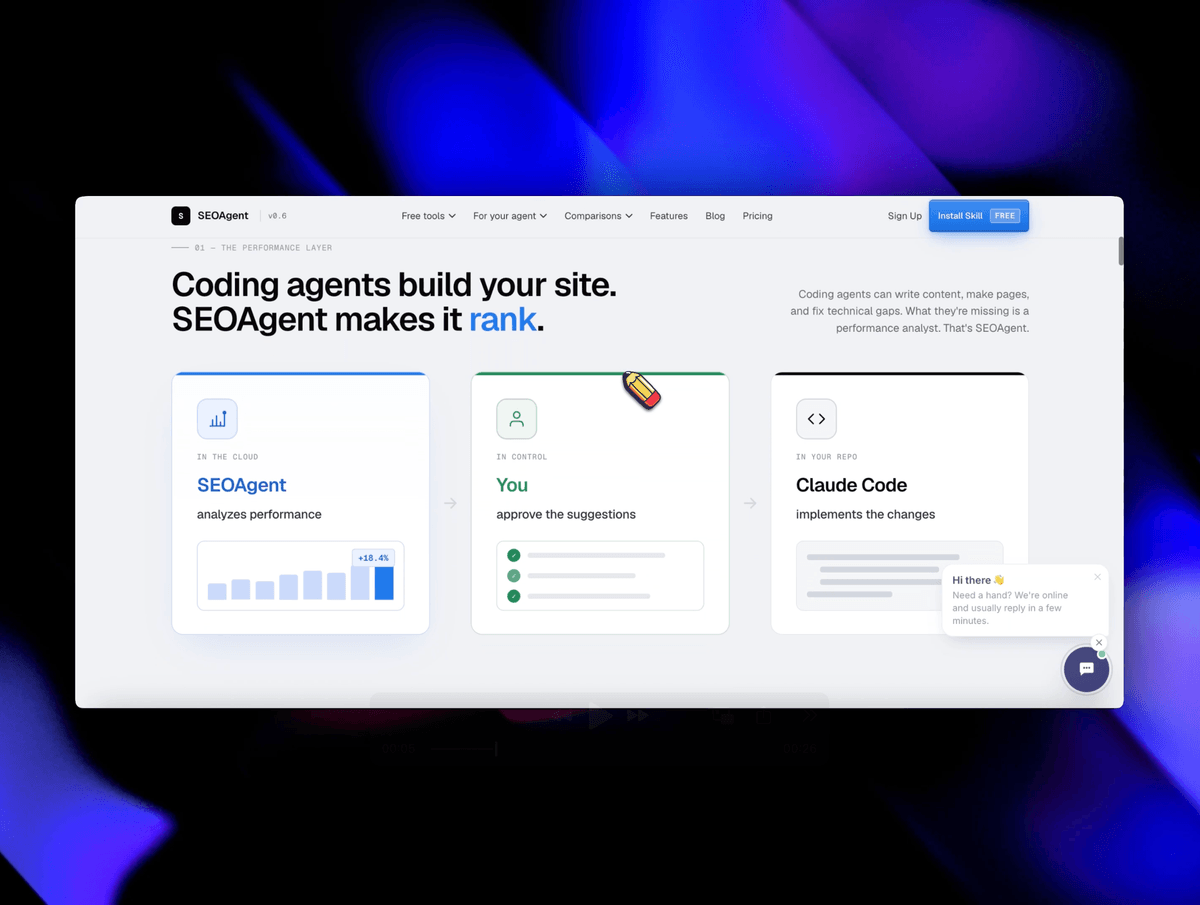
SEOAgent addresses a change in how software businesses build websites: marketing pages increasingly ship from the same code repository as the product itself, rather than from a separate content management system. Conventional SEO software operates as a browser-based advisory layer, it crawls a site, scores it, and returns recommendations that someone must then locate in a file, apply, and deploy. Coding agents can already make those file changes. What they lack is the performance data and research context needed to decide which changes are worth making.
“A coding agent can already edit files. The open question is which edits are worth making,” said Alec Lindsay, founder of SEOAgent. “That question needs performance data behind it, and it needs a person to sign off.”
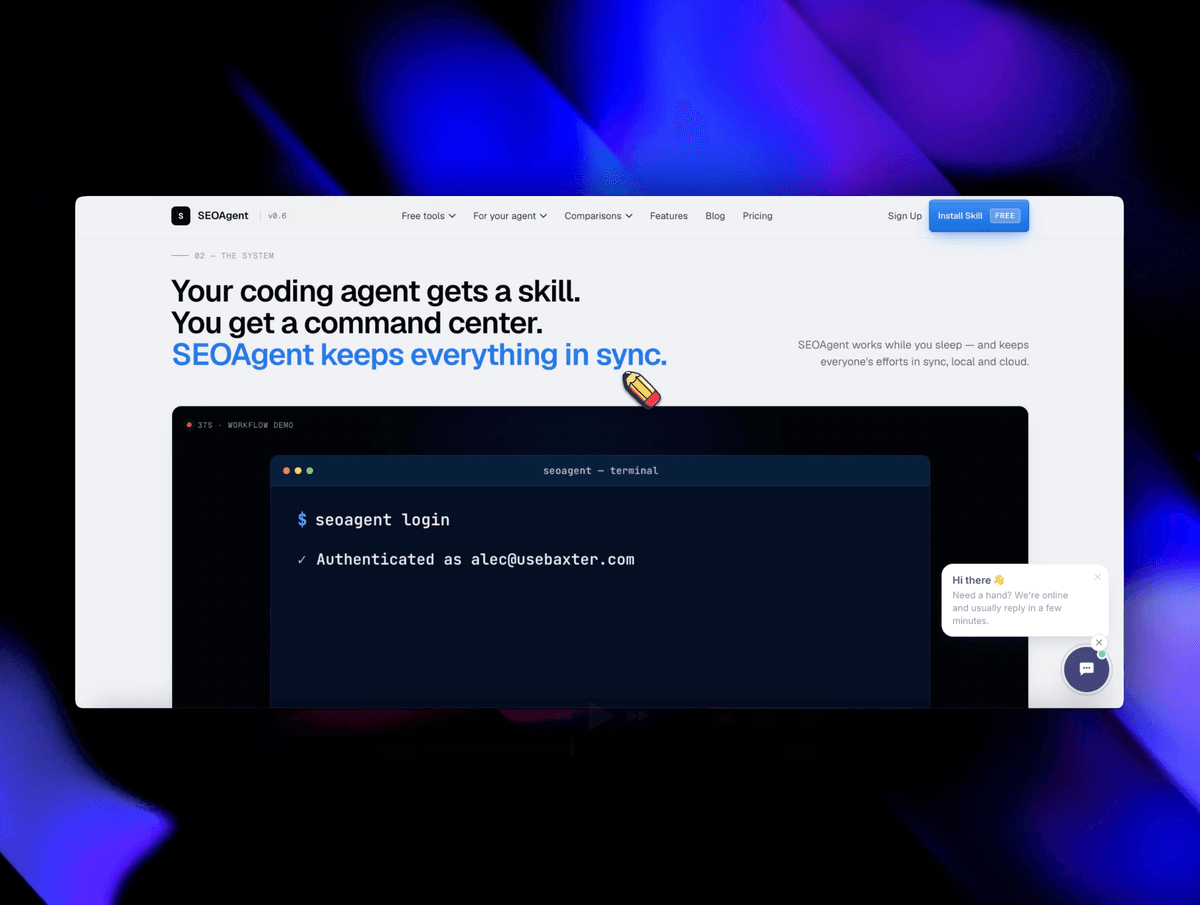
SEOAgent ships in two parts. The free component, called the Skill, installs locally with a single command and requires no account. Once installed, a coding agent can audit an existing site, correct technical issues such as missing metadata and structured data markup, and build new landing pages and articles directly in the project. Because it runs on the language model the customer already subscribes to through their coding agent, there is no additional AI subscription and no per-query metering.
The paid tier, Autopilot, connects to Google Search Console and to third-party keyword and competitor data. It tracks how existing pages perform, researches the search results a page competes in, and queues suggested changes for review. Approved changes are pulled back into the local codebase with one command. The cloud service does not modify live websites directly; every change passes through the same review process a development team applies to any other code change. Autopilot subscribers also receive a weekly backlink outreach workflow that identifies prospective linking sites and drafts outreach emails the customer reviews before any message is sent.
Rather than generating articles from a keyword alone, a practice search engines have moved to demote, SEOAgent prompts for material the business already holds: founder notes, recurring support tickets, objections raised on sales calls, internal benchmarks and customer case studies. That material becomes the substance of the page, with the software handling structure, metadata and internal linking.
“The failure mode we designed around is a tool that produces a large amount of content nobody asked for and nobody reviews,” Lindsay said. “Everything here ends in a file change that a person reads before it ships.”
The Skill is available now at no cost and, according to the company, has grown to nearly 8,000 downloads over the past month from the npm registry. Autopilot is priced at 49 US dollars per site per month and includes a seven day trial.
Alongside the paid product, SEOAgent maintains several free diagnostic tools, including a live benchmark that scores published coding agent skills, a grader that measures how much context a skill consumes, and checkers for sites built on the Lovable platform.
The company reports that a SOC 2 audit, a standard information security assessment for software vendors, is in progress.
About SEOAgent
SEOAgent is an independent software company that builds SEO tooling for teams whose websites ship from a code repository. Its products serve founders, independent developers, SaaS and development teams, and SEO freelancers managing multiple client codebases. SEOAgent publishes its positioning, pricing and product documentation in machine-readable form so that both people and AI systems can verify its claims.
Media contact
Alec Lindsay
Founder, SEOAgent
Email: support@seoagent.com
seoagent.com
Media Contact:
Name: Alec Lindsay
Company: SEOAgent
Email: support@seoagent.com
Website: https://seoagent.com/