Throat discomfort is one of the most commonly dismissed health complaints — until it isn’t. A persistent sore throat, difficulty swallowing, unexplained hoarseness, or recurring tonsil infections can signal conditions that go far beyond a seasonal cold. As healthcare continues to evolve with digital tools and integrated care models, patients now have more pathways than ever to access expert evaluation. Understanding when to seek specialized care, and how to navigate the modern healthcare landscape to get it, can make a meaningful difference in outcomes.
Understanding the Scope of Throat-Related Conditions
The throat — encompassing the pharynx, larynx, tonsils, and surrounding structures — is a complex anatomical region that plays a central role in breathing, speaking, and swallowing. When something goes wrong in this area, the consequences can ripple across multiple systems. Conditions such as laryngopharyngeal reflux, vocal cord nodules, obstructive sleep apnea, chronic tonsillitis, and even early-stage head and neck cancers often begin with symptoms that patients attribute to minor irritation.
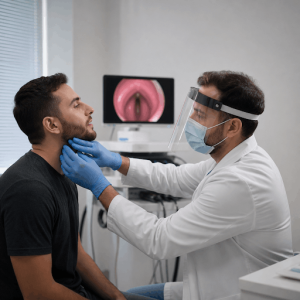
Primary care physicians are often the first point of contact, but they are not always equipped to perform the specialized diagnostic procedures — such as laryngoscopy or nasopharyngoscopy — that provide a definitive picture of what is happening in the throat. This is where otolaryngology, commonly known as ENT (Ear, Nose, and Throat) medicine, becomes essential. A trained ENT specialist can identify structural abnormalities, assess vocal cord function, and recommend targeted treatments that general practitioners may not be positioned to offer.
Red Flags That Warrant Specialist Attention
Not every sore throat demands a specialist visit, but certain symptoms should never be ignored. Hoarseness lasting more than three weeks, difficulty or pain when swallowing, a lump in the neck, persistent ear pain without an obvious cause, or coughing up blood are all indicators that a deeper evaluation is warranted. Similarly, patients who have undergone radiation therapy to the head and neck region, or those with a history of tobacco and alcohol use, face elevated risk for serious throat pathologies and should be monitored proactively.
Children are not exempt from these concerns. Recurrent strep throat, enlarged adenoids, and sleep-disordered breathing in pediatric patients can affect growth, cognitive development, and quality of life. Early intervention by a qualified ENT specialist can prevent long-term complications and, in many cases, eliminate the need for more invasive treatment down the line.
The Rise of Virtual Health Systems in ENT Care
The integration of telehealth into specialty medicine has transformed how patients access care — and ENT is no exception. Virtual consultations now allow patients to discuss symptoms, review imaging results, and receive follow-up guidance without the logistical burden of in-person visits. For patients managing chronic conditions like acid reflux affecting the throat, or those recovering from throat surgery, virtual check-ins offer continuity of care that was previously difficult to maintain.
However, choosing the right virtual health platform matters enormously. As explored in this Associated Press guide on selecting virtual health system solutions, patients and healthcare providers alike must evaluate factors such as data security, integration with existing medical records, and the platform’s ability to support specialist-level consultations. Not all telehealth tools are built with the complexity of specialty care in mind, and selecting the wrong system can create gaps in diagnosis and treatment continuity.
Balancing Digital Convenience with In-Person Diagnostic Necessity
While virtual health has expanded access, it has also introduced a nuanced challenge: some throat conditions simply cannot be adequately assessed through a screen. A physician cannot perform a fiber-optic laryngoscopy via video call. Swallowing studies, biopsy procedures, and certain imaging modalities require physical presence. The most effective care models are those that use virtual tools strategically — for triage, follow-up, and patient education — while reserving in-person visits for the diagnostic and procedural work that demands hands-on expertise.
This hybrid approach aligns well with the broader movement toward patient-centered care, which emphasizes coordinating services around the patient’s needs rather than the convenience of the healthcare system. Understanding what a patient-centered medical home looks like in practice can help patients advocate for themselves when navigating referrals, specialist access, and care coordination across multiple providers.
Cleveland Clinic Abu Dhabi: A Center of Excellence for ENT Care
For patients in the UAE and the broader Middle East region seeking world-class otolaryngology care, Cleveland Clinic Abu Dhabi stands as a benchmark institution. The hospital brings together internationally trained specialists who apply evidence-based protocols to a wide range of throat, voice, and swallowing disorders. Whether the concern is a benign vocal cord polyp or a complex head and neck malignancy, the multidisciplinary team approach ensures that no aspect of a patient’s condition is evaluated in isolation.
Consulting a throat specialist at Cleveland Clinic Abu Dhabi means accessing a team that combines advanced diagnostic technology with a deeply patient-centered philosophy. From the initial consultation through to surgical intervention or long-term management, the focus remains on delivering outcomes that restore function, relieve discomfort, and improve quality of life — not simply treating a symptom in isolation.
What to Expect During Your First ENT Consultation
Many patients delay seeking specialist care because they are uncertain what the process involves. A first ENT consultation typically begins with a thorough medical history review, followed by a physical examination of the head and neck. Depending on the presenting symptoms, the specialist may use an endoscope to visualize the throat and larynx directly, or may order imaging such as an MRI or CT scan. The goal of the initial visit is not necessarily to arrive at a final diagnosis, but to gather enough information to guide the next appropriate step — whether that is watchful waiting, further testing, or an immediate treatment plan.
Patients are encouraged to come prepared with a detailed account of their symptoms, including when they began, what makes them better or worse, and any previous treatments attempted. This information significantly accelerates the diagnostic process and helps the specialist tailor their approach from the outset.
Conclusion: Prioritizing Throat Health in a Complex Healthcare Landscape
Throat health is easy to overlook until a problem becomes impossible to ignore. The good news is that modern medicine — combining specialist expertise, advanced diagnostics, and thoughtfully integrated virtual care — offers patients more options and better outcomes than ever before. The key is knowing when to escalate from self-care to professional evaluation, and understanding how to navigate the healthcare system to reach the right specialist efficiently. Whether you are managing a chronic condition or investigating a new and concerning symptom, timely expert consultation remains the most reliable path to clarity and effective treatment.