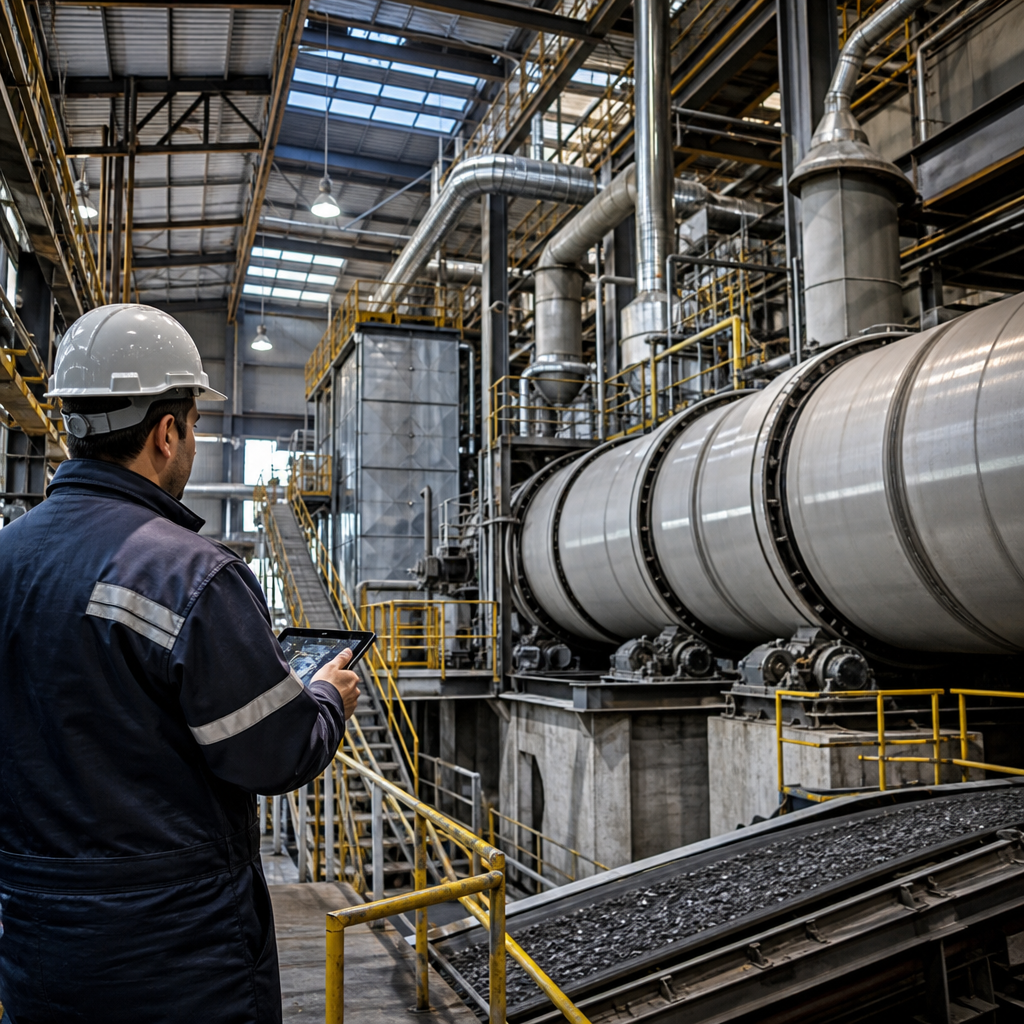
Manufacturing sectors from pharmaceuticals to specialty chemicals depend on precision drying equipment to meet product specifications, but the capital requirements and lead times for new industrial dryers often strain budgets and delay production schedules. Understanding how drying technology fits into broader equipment procurement strategies can help facility managers balance immediate operational needs against long-term financial planning.
The Role of Drying Equipment in Process Manufacturing
Industrial dryers remove moisture or solvents from wet solids, slurries, and pastes to produce stable, free-flowing products. Common types include rotary dryers, fluid bed dryers, spray dryers, tray dryers, and vacuum dryers. Each technology suits specific materials and throughput requirements. A pharmaceutical manufacturer handling heat-sensitive active ingredients might require a vacuum tray dryer operating below 60°C, while a chemical plant processing bulk inorganic salts could deploy a direct-fired rotary dryer handling several tonnes per hour.
Material properties dictate technology selection. Crystalline solids with defined particle size distributions often perform well in fluid bed systems, where heated gas suspends particles to maximise heat transfer. Viscous pastes or filter cakes demand different approaches such as paddle dryers or thin-film dryers that mechanically spread material across heated surfaces. The choice affects not only drying efficiency but also product quality, energy consumption, and downstream handling characteristics.
Capital Investment Pressures in Equipment Procurement
New industrial drying systems represent substantial capital outlays. A stainless steel fluid bed dryer for pharmaceutical applications can exceed half a million pounds, while large-scale spray dryers for food or chemical processing may reach several million. Lead times compound the challenge—custom-engineered equipment often requires twelve to eighteen months from order to commissioning, during which production expansion plans remain on hold.
Financial reporting cycles add another dimension. Publicly traded equipment manufacturers face quarterly disclosure requirements that influence investor sentiment and stock performance. For instance, CVD Equipment Corporation’s scheduled financial results announcements provide transparency into sector performance, but they also underscore the scrutiny manufacturers face regarding order backlogs, revenue recognition, and market demand. These dynamics affect supplier capacity allocation and pricing strategies that ultimately flow through to end users evaluating capital projects.
Plant managers weighing expansion options must reconcile engineering requirements with finance department constraints. A new dryer installation involves not just the equipment purchase but also foundation work, utility connections, control system integration, operator training, and validation protocols. Total installed costs often double the base equipment price, and return-on-investment calculations must account for opportunity costs during extended lead times.
Alternative Procurement Strategies
Facilities facing urgent capacity needs or budget limitations increasingly consider pre-owned equipment as a viable alternative. Surplus industrial dryers become available when plants close, production lines shift to different technologies, or capacity upgrades leave older units redundant. A used industrial dryer from a reputable broker can deliver functional equipment at substantially lower capital cost and dramatically reduced lead times, often measured in weeks rather than months. Buyers benefit from immediate equipment availability while maintaining budget flexibility for other plant improvements or working capital needs.
The secondary market spans a range of conditions from lightly used units requiring minimal refurbishment to equipment needing comprehensive rebuilds. Reputable suppliers provide detailed condition assessments, mechanical inspections, and documentation of materials of construction. Stainless steel, Hastelloy, and titanium dryers from pharmaceutical or specialty chemical applications often show minimal wear due to clean process environments and careful maintenance histories. Equipment can be reconditioned, re-certified to current pressure vessel standards where applicable, and delivered with performance guarantees that reduce procurement risk.
Technical Considerations in Equipment Selection
Whether procuring new or pre-owned equipment, engineers must match dryer characteristics to process requirements. Heat sensitivity determines maximum allowable temperatures. A spray dryer processing milk powder operates with outlet temperatures around 90°C to prevent protein denaturation, while a rotary dryer handling mineral concentrates might reach 600°C. Residence time matters—some products require seconds of exposure in flash dryers, others need hours in batch tray dryers.
Material compatibility governs construction materials. Corrosive feedstocks demand Hastelloy or titanium rather than standard stainless steel grades. Abrasive solids require hardened surfaces or replaceable wear components. Explosive dust hazards necessitate nitrogen purging systems, grounded construction, and explosion-proof electrical classifications. Regulatory compliance adds further constraints—pharmaceutical dryers must meet cGMP standards with validated cleaning procedures, while food-grade equipment requires sanitary design and FDA-approved surface finishes.
Integration with Upstream and Downstream Operations
A dryer functions as one node in a process sequence. Upstream filtration or centrifugation determines feed moisture content, affecting dryer sizing and energy consumption. Downstream milling, blending, or packaging operations expect material with specific moisture content and particle characteristics. Batch dryers require surge capacity in receiving hoppers, while continuous dryers demand steady feed rates maintained by level controls and metering devices.
Energy integration opportunities should inform equipment selection. Waste heat from exothermic reactions or utility systems can provide low-cost thermal energy, but requires heat exchangers compatible with available temperature levels. Solvent recovery systems on dryer exhausts may offset operating costs when processing organic solvents, but add capital expenditure and complexity. Life-cycle cost analysis should weigh these trade-offs against initial purchase price.
Understanding Reactor-Dryer Process Sequences
Many chemical processes discharge wet solids from batch or continuous reactors that require subsequent drying. The reactor defines the chemical transformation—crystallisation, precipitation, polymerisation, or other reactions—while the dryer completes the physical separation to produce a marketable solid product. Reactor design principles establish the foundation for understanding how reaction conditions influence downstream separation requirements, including particle morphology, moisture content, and thermal stability that directly affect dryer selection and sizing.
A batch agitated reactor producing a precipitated solid might discharge a slurry containing twenty to forty percent solids by weight. Filter presses or centrifuges reduce moisture to fifty to sixty percent before the wet cake enters a dryer. Crystalline products from the reactor may exhibit specific polymorphic forms sensitive to temperature and humidity during drying, constraining allowable process conditions. Coordination between reaction engineering and drying technology ensures the entire process sequence delivers target product specifications without reprocessing or quality failures.
Lifecycle Management and Equipment Reliability
Industrial dryers in continuous service require preventive maintenance programmes to sustain performance and avoid unplanned downtime. Rotating equipment such as fans, airlock valves, and agitators need regular inspection and component replacement. Heated surfaces accumulate product deposits that reduce heat transfer efficiency and may cause localised overheating. Scheduled cleaning intervals based on operating experience prevent productivity losses and maintain product quality.
Thermal cycling induces mechanical stresses, particularly in equipment handling temperature differentials between heated zones and ambient structures. Expansion joints, flexible connections, and proper support arrangements accommodate movement without generating excessive loads. Insulation systems protect personnel, reduce heat losses, and maintain stable internal temperatures, but deteriorate over time and require periodic replacement. Comprehensive documentation of maintenance activities, operating parameters, and any modifications supports regulatory compliance and preserves equipment value.
Balancing Technical and Financial Objectives
Effective equipment procurement aligns engineering specifications with financial realities. A plant requiring additional drying capacity can evaluate multiple scenarios: purchasing new equipment sized for future growth, acquiring smaller pre-owned units to meet immediate needs, leasing arrangements that preserve capital, or tolling production through third-party processors. Each option carries distinct implications for capital deployment, operating flexibility, and strategic positioning.
The optimal path depends on factors including production volume trajectory, product mix stability, available capital, risk tolerance, and competitive dynamics. Facilities in mature markets with stable demand might favour pre-owned equipment to minimise investment while maintaining acceptable performance. Companies in growth phases targeting expanding markets may justify new equipment investments despite higher costs and longer timelines. No single approach suits all circumstances—rigorous analysis of technical requirements, financial constraints, and business objectives guides sound decision-making that supports sustainable operations and competitive positioning.