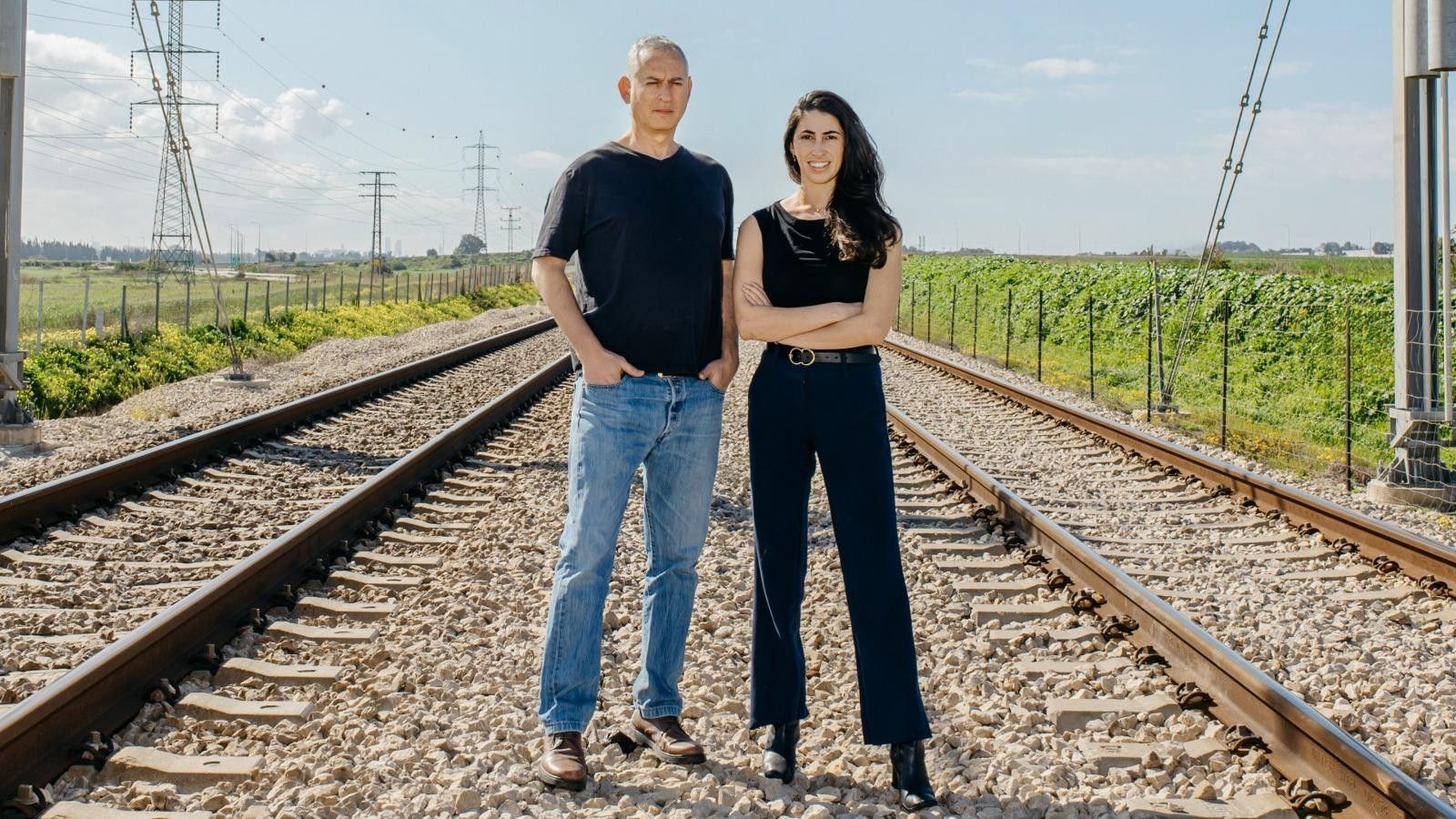
Voltify, the rail energy startup founded by Dafna Langer and Alon Kessel, has raised a $30 million seed round to accelerate development of what it describes as a fundamentally different approach to rail electrification, one that avoids the enormous infrastructure burden of traditional systems and aims instead to reduce energy costs and emissions through distributed energy technology.
The company, which operates between Los Angeles and Tel Aviv, is positioning itself in one of the most capital-intensive and slow-to-modernize segments of global logistics: freight rail. In the United States alone, the six largest rail operators spend roughly $11 billion annually on diesel fuel, according to the company’s framing of the market opportunity.
Voltify’s funding round was co-led by Aleph, a venture capital firm, and Fortescue, the global mining and energy company. Additional strategic investors and angels also participated in the seed round, underscoring early institutional interest in the company’s approach to decarbonizing heavy transport infrastructure.
At the center of Voltify’s pitch is a direct challenge to conventional rail electrification. Traditional systems rely on overhead wiring networks that can require more than $1 trillion in infrastructure investment across large geographies, making them economically impractical for many operators. Voltify argues that this creates a structural barrier that has slowed decarbonization across freight rail.
Instead, the company is developing what it calls a distributed energy platform designed to reduce rail energy costs by more than 20%, without requiring major operational changes from rail operators.
“We built Voltify to solve one of the rail industry’s biggest challenges: energy costs,” said co-founder and CEO Dafna Langer. “Our platform allows rail companies to access clean, affordable energy without changing the way they operate.”
Voltify’s system combines battery-powered locomotives, dynamic fast-charging technology, and renewable-powered microgrids deployed along rail corridors. Unlike traditional electric rail systems that depend on fixed overhead infrastructure or stationary charging stops, Voltify’s approach is designed to enable energy transfer while trains are in motion.
This concept of “dynamic charging” is central to the company’s claim that it can eliminate operational downtime while maintaining existing logistics flows.
The microgrid component is also a key pillar of the platform. These systems generate and store energy locally using solar power and batteries, coordinated by energy management software. By distributing energy generation along rail routes rather than centralizing it, Voltify aims to reduce dependence on fossil fuels while improving resilience of supply.
Fortescue’s participation reflects its broader decarbonization strategy. “Voltify’s mission to eliminate emissions in the heavy rail industry aligns with ours,” said Gus Pichot, CEO Growth & Energy at Fortescue, adding that the company is committed to advancing technologies aligned with “Real Zero” emissions goals.
Aleph’s Tomer Diari emphasized the cost implications of Voltify’s approach, stating that the company is “redefining the energy supply chain for global rail networks” and could help make freight transport “cheaper and more reliable.”
Beyond cost reduction, Voltify is also positioning its system as a way to eliminate what it calls the “green premium,” the added cost often associated with sustainable infrastructure transitions. Instead, the company argues that clean energy can become economically superior to diesel.
“We’re making clean energy the financially smarter option,” Langer said.
Voltify’s long-term ambition is significant: by 2035, the company aims to reduce more than 50 million tons of CO₂ emissions annually from rail operations. It also suggests its microgrid network could reduce reliance on high-emission peaker plants, which collectively emit more than 60 million tons of CO₂ per year.
Early traction appears to support investor interest. Voltify has signed a paid pilot agreement with one of the world’s largest Class I rail operators, with deployment expected in the coming months. The company is also reporting a growing pipeline of potential customers across U.S. regional rail operators.
A full demonstration of its integrated locomotive, charging, and microgrid platform is expected later this year.