KRAKOW, Poland – 7th August 2026 – Testomat today announced expanded Behavior-Driven Development (BDD) capabilities and enhancements to its test automation management tools intended to unify automated and manual testing workflows and to address synchronization and maintenance challenges in modern quality assurance environments.
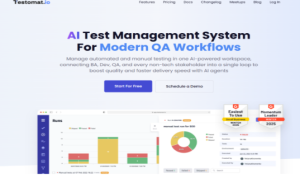
Behavior-Driven Development practices have shifted requirements into human-readable scenarios to improve collaboration among product owners, developers, and QA engineers. Many engineering teams encounter uncertainty about what is gherkin when adopting BDD at scale. Testomat’s updated platform introduces an advanced Gherkin editor and contextual guidance designed to make scenario authoring and reuse more accessible across technical and non-technical stakeholders, while maintaining a structured format for automated test execution.
Adoption of BDD at higher release velocity has revealed operational bottlenecks tied to fragmented test management. Testomat highlighted common failure modes observed in contemporary engineering organizations: synchronization gaps between code repositories and test specifications that lead to technical test debt; duplicated and brittle steps that increase maintenance burden; and a collaboration gap where business specifications and automated scripts were not readily aligned. The announced enhancements are presented as responses to these precise operational issues rather than as general claims about market position.
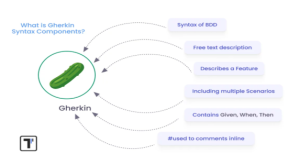
Key technical enhancements include a native editor for the Gherkin syntax, bidirectional command-line interface synchronization between the platform and code repositories, and built-in AI assistance for step generation to support step reuse and reduce duplication. The synchronization capability is described as supporting common test frameworks and repository workflows so that changes in code and changes in test scenarios can be reconciled in both directions. Living documentation features index and surface scenario text alongside execution history and CI/CD pipeline context, creating a single workspace for manual test plans, automated runs, and pipeline traceability.
The release documentation notes an implementation detail that requires a short initial CLI configuration to enable deep synchronization with repositories and pipeline tooling. That setup requirement is described as a technical prerequisite for teams seeking tight, bidirectional alignment between source code and authored scenarios.
Testomat positioned the enhancements as targeted at teams scaling agile development and at organizations seeking to reduce operational test maintenance overhead through tighter tooling alignment. The company framed the changes as part of ongoing efforts to supply more cohesive test automation management tools for engineering teams that must maintain parity between executable tests and human-readable specifications during frequent releases.
The release materials also describe use cases in which centralized authoring and reuse of test steps can reduce redundancy across regression suites and where contextual CI/CD integration can improve observability into when and why test scenarios diverge from production code. The platform updates were characterized as feature-focused, with detailed technical notes describing editor behavior, synchronization patterns, and the scope of AI-assisted step suggestions.
About Testomat
Testomat is a software company that develops test management and BDD tooling for engineering and quality assurance teams. The company provides a platform that combines scenario authoring, automated test synchronization, and traceability features intended to support manual and automated workflows. Testomat is based in Krakow, Poland and focuses on tools for teams operating continuous integration and frequent release cycles.
MEDIA DETAILS
Contact Person: Media Relations
Company Name: Testomat
Email: contact@testomat.io
Website: https://testomat.io/