LAGOS, NIGERIA — August 28, 2026:
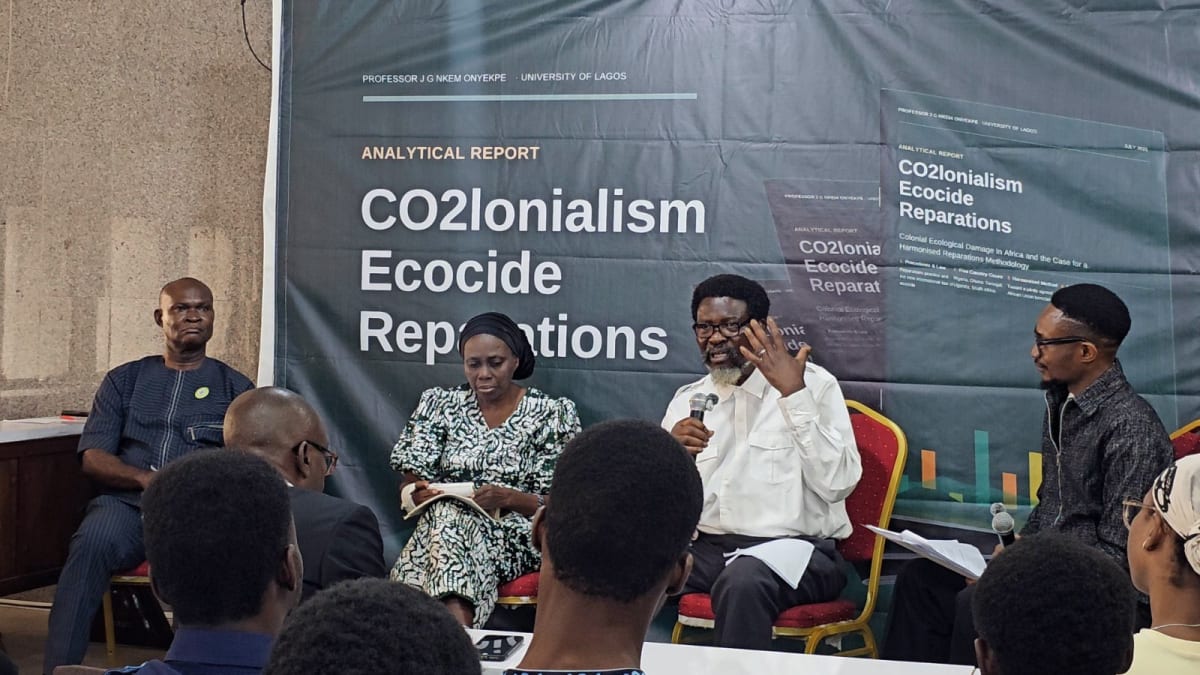
A new report unveiled at the University of Lagos has opened a potentially significant new front in Africa’s reparations campaign, arguing that the ecological damage caused by British colonial rule could constitute a separate reparations category worth hundreds of trillions of dollars.
Titled CO2lonialism, Ecocide and Reparations, the report examines the long-term environmental consequences of colonial policies across former African colonies, including the systematic appropriation of land, natural resources and energy.
The report argues that the ecological consequences of colonial extraction should be subjected to rigorous historical, scientific and monetary assessment alongside other forms of colonial harm.
Presenting the report at the University of Lagos, its lead author, Professor J. G. Nkem Onyekpe, said existing approaches to reparations have not adequately accounted for the environmental dimension of colonial extraction.
According to Prof. Onyekpe, comparable large-scale valuation exercises have demonstrated that structurally unequal appropriation of resources can be monetised. He cited a peer-reviewed 2022 estimate that valued resources appropriated from the Global South through unequal exchange at more than $10 trillion in 2015 alone.
He argued that extending such analysis across the duration of colonial rule and the affected African states could produce a figure running into the hundreds of trillions of dollars.
The legal dimension of the report was also examined during the panel.
Speaking at the launch, Dr. Asikia Karibi-Whyte, a jurisprudence and international law expert, challenged the position that present-day governments cannot be held responsible for wrongdoing committed by previous governments.
She argued that the United Kingdom is recognised in law as a continuing state entity, regardless of changes in its government or political leadership.
Dr. Karibi-Whyte also pointed to the Nauru case before the International Court of Justice as an important precedent. In that case, a formerly colonised state brought a claim against its former colonial administrator concerning environmental devastation resulting from colonial-era phosphate mining.
Adding an environmental perspective to the discussion, Professor Nnagugwu Oscar Uluocha, Professor of Geography at the University of Lagos, described the ecological damage inflicted on Nigeria during British colonial rule as “colossal.”
He emphasised the importance of examining the environmental consequences of colonial land-use, agricultural and resource-extraction policies through scientific evidence and environmental analysis.
The report examines ecological impacts associated with colonial systems of resource extraction and economic production and argues that environmental repair should form part of the broader African reparations framework. The full report can be found here: http://ecocideafrica.org/wp-content/uploads/2026/08/CO2lonialism_Ecocide_Reparations_Report-very-final.pdf
The authors argue that the emerging international legal and institutional conversation around ecocide, together with the African Union’s decision to examine the classification of massive destruction of environmental ecosystems as a crime, creates an important opportunity for an African-led approach to ecological reparations.
Media Contact:
Name: Ademola Adebusoye
Company: Rainbow Trent LTD
Email: adebusoyeademola@gmail.com
Phone: +2347017990010
Address: 65b, Opebi Road
Website: https://www.rainbow.com.ng