Why More Homeowners Are Using Digital Tools Before Starting a Renovation

Home renovation projects often begin with inspiration, but successful renovations depend on planning. Before walls are removed or furniture is purchased, homeowners need a clear understanding of how their space will function.

In recent years, digital planning tools have become an essential part of that process. Instead of relying solely on paper sketches, many homeowners now use online platforms to visualize layouts, test ideas, and communicate with contractors.

The Problem With Traditional Planning

One of the most common renovation mistakes is making design decisions without a complete layout. A kitchen island may look attractive in isolation, but it can create circulation problems once appliances, cabinets, and seating are considered.

Similarly, moving a wall may improve one room while reducing functionality in another. Without a comprehensive floor plan, these trade-offs can be difficult to identify early.

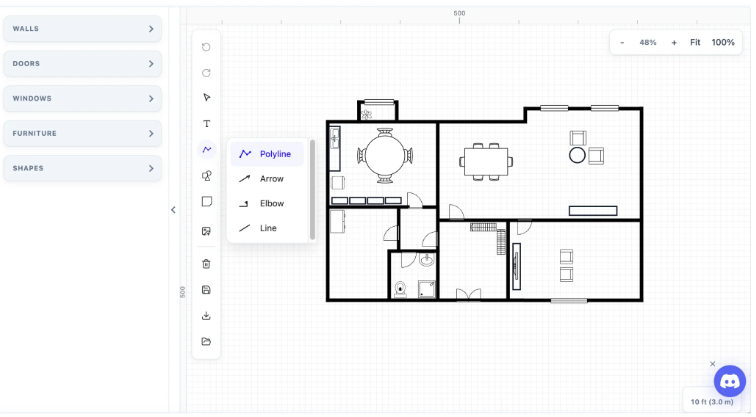
A modern floor plan design tool allows users to create accurate room layouts without advanced drafting experience. Walls, doors, windows, and furniture can be positioned visually, making it easier to understand how a space will actually be used.

Why Early Planning Matters

Because the plan is digital, modifications can be made quickly. Homeowners can compare multiple options and evaluate which arrangement provides the best balance of comfort, storage, and circulation.

Common questions that arise during a renovation include:

  • Should the kitchen be opened to the living room?
  • Can a second bathroom fit in the existing footprint?
  • Is there enough space for a home office?
  • Will larger windows affect furniture placement?
  • How much storage can be added without reducing usable living space?

Answering these questions before construction begins can prevent costly changes later.

Making Better Decisions

One of the biggest advantages of digital planning is the ability to experiment before spending money on construction. By using a platform that lets users create floor plans online, homeowners can explore multiple layouts and compare them side by side.

This approach is especially useful for older homes, where existing structures may limit renovation options.

Improving Communication With Contractors

Contractors often receive renovation ideas through photos, handwritten sketches, or verbal descriptions. These methods can lead to misunderstandings and additional revisions.

A digital floor plan provides a clearer reference. Dimensions, room relationships, and design intentions are easier to communicate, reducing the likelihood of expensive changes during construction.
Benefits for Smaller Projects

Digital floor planning is not only useful for major remodels. Even smaller projects can benefit from a structured layout.

Common Examples

  • Converting a spare room into an office
  • Rearranging a living room
  • Planning a basement layout
  • Designing a rental property
  • Optimizing a studio apartment

In many cases, a simple layout adjustment can significantly improve usability without increasing the project budget.

Saving Time During Decision-Making

Renovation projects frequently stall because homeowners are uncertain about layout choices. Digital tools accelerate decision-making by making alternatives visible.

Instead of imagining whether a dining table will fit, users can place it directly into the plan. Instead of estimating hallway clearance, they can measure it within the layout.

This visual feedback reduces uncertainty and helps homeowners move forward with greater confidence.

Another advantage of digital planning is that it helps homeowners estimate how a space will function on a daily basis. A layout that looks attractive in a sketch may become inconvenient once furniture, appliances, and storage are added. By testing different arrangements in advance, homeowners can identify potential bottlenecks and improve circulation before construction begins.

Many contractors also find that clients who arrive with a clear digital layout are better prepared to discuss budgets and priorities. Instead of making major layout changes during the construction phase, both parties can focus on refining details such as materials, finishes, and fixtures. This can help reduce delays and keep renovation projects moving more efficiently.

The Value of Templates

Many online planning platforms include templates for common room types and home sizes. These templates can serve as a starting point, especially for users who are unsure how to organize a space.

Templates Are Often Used For

  • Apartments
  • Single-family homes
  • Townhouses
  • Home offices
  • Retail spaces
  • Small commercial properties

Features Homeowners Should Look For

When choosing a platform, homeowners should focus on practical features that support the planning process.

Useful Features

  • Drag-and-drop editing
  • Accurate dimensions
  • Furniture libraries
  • Export capability
  • Cloud access
  • 3D preview options

These tools make it easier to move from an initial idea to a workable renovation plan.

Planning First, Building Second

Digital floor planning does not replace professional architectural services when permits, structural changes, or engineering reviews are required. However, it can dramatically improve the quality of early planning.

Homeowners who begin with a clear layout are often better prepared to discuss budgets, materials, timelines, and construction priorities.

As renovation costs continue to rise, spending time on digital planning before construction begins may be one of the most effective ways to avoid expensive mistakes and create a space that works well for years to come.


Regula Launches Enhanced Biometric Verification Service With Integrated Liveness Detection

RESTON, Va. – 15th July 2026 – Regula announced the launch of an enhanced biometric verification service that integrates liveness detection to support remote onboarding, authentication, and high-risk transaction workflows across regulated and digital-first industries.

The new service applies biometric verification to confirm identity using unique physical and behavioral characteristics. Modalities accommodated by the offering include facial recognition, fingerprint verification, iris recognition, voice recognition, behavioral biometrics and hand geometry analysis. Biometric samples are captured via cameras, fingerprint scanners, microphones or other sensors, then analyzed to extract distinguishing features and converted into biometric templates for comparison against trusted reference data.

Regula described the typical verification workflow as beginning with biometric data capture and automated feature extraction, followed by comparison and matching to a reference portrait, an enrolled biometric record or a secure identity database. Liveness detection is included as an additional analytical layer to confirm that a presented biometric sample originates from a physically present person rather than a printed photograph, video replay, mask, deepfake or synthetic media. The integration of liveness detection is positioned to address increasingly sophisticated impersonation techniques driven by synthetic media and AI-generated content.

The service is designed for deployment within multi-layered identity verification architectures. A common digital onboarding sequence may combine identity document verification, facial biometric matching, liveness detection, risk analysis and database screening to validate both document authenticity and the legitimacy of the individual presenting that document. Regula noted that determining whether interactions are genuine and whether identity signals can be trusted is a growing requirement for modern identity programs.

Target sectors for the enhanced service include banking and fintech, healthcare, travel and border control, telecommunications, and online gaming and gambling. Financial institutions can use biometric verification to support KYC compliance and account opening procedures. Healthcare providers can apply the technology to protect patient data and secure access to digital services. Travel and border control agencies can employ the service to accelerate passenger processing while maintaining security. Telecommunications operators can use biometric onboarding as a tool against SIM swap and other identity-related fraud. Operators of regulated online platforms can apply biometric verification to mitigate underage access, account sharing and identity fraud.

The announcement also outlines privacy and governance considerations that accompany biometric deployment. Key operational controls highlighted for responsible use include secure biometric data storage, explicit user consent practices, data minimization, adherence to applicable privacy regulations, protections against biometric data breaches and measures to mitigate fairness and bias. Regula emphasized that robust governance frameworks remain essential to protect sensitive identity information and to support compliant rollouts.

Looking ahead, Regula identified trends expected to shape identity verification practices, including AI-powered biometric analysis, advances in liveness detection, continuous authentication, wider adoption of behavioral biometrics, mobile-first verification, and integration with broader digital identity ecosystems. The company positioned the enhanced biometric verification service as a component capable of being combined with document verification and risk-based analysis to address evolving identity threats.

About Regula

Regula develops identity verification solutions focused on biometric verification and document authentication. The company supplies technology and services intended to support digital onboarding, identity workflows and risk mitigation across multiple sectors. Regula works with organizations to integrate biometric capabilities and identity document checks into broader verification processes.

MEDIA DETAILS

Contact Person: Henry Patishman
Company Name: Regula Forensics Inc
Email: digital@regulaforensics.com
Website: https://regulaforensics.com/

How Sean Mourey Is Helping Redefine Digital Authority Through SM Media in the Age of AI Search

The way people discover businesses has changed dramatically over the past decade. A polished website and an active social media presence are no longer enough to establish credibility. Today, potential customers, investors, journalists, and business partners often begin their research with Google Search or AI-powered tools before making a purchasing decision.

Recognizing this shift, entrepreneur Sean Mourey founded SM Media LLC, operating publicly as SM Media and SM Media Association, with a mission to help founders and businesses build lasting authority through strategic public relations, search visibility, and online reputation management. Rather than viewing press as a short-term marketing tactic, Mourey believes media coverage should become part of a company’s long-term digital identity—one that both people and artificial intelligence can discover, understand, and trust. 

Today, SM Media works with entrepreneurs, executives, startups, investors, professional service firms, and established businesses seeking to strengthen their online presence through authoritative editorial coverage. The agency has become known for helping clients establish credibility across Google Search while preparing brands for the future of AI-driven discovery.  

A Different Philosophy on Public Relations

For many businesses, public relations has traditionally meant hiring an agency to pitch journalists and hope for media interest. While that approach has existed for decades, Sean Mourey believed there was an opportunity to create a more structured and results-oriented model.

Instead of focusing solely on outreach, SM Media develops campaigns centered on measurable visibility. Every engagement is designed around strengthening a founder’s digital footprint through professional editorial content, executive positioning, and long-term reputation development.

According to Mourey, businesses often spend thousands of dollars on advertising while overlooking one of the most influential parts of the buying process: what appears when someone searches their name online.

The company believes credibility is built through independent validation. Third-party media coverage provides context that websites and advertisements alone cannot deliver, helping prospective customers better understand who they are doing business with before the first conversation even begins. 

Who Is Sean Mourey?

Sean Mourey is an entrepreneur specializing in digital public relations, online reputation strategy, search visibility, and founder positioning.

As the founder of SM Media LLC, he has worked to develop campaigns that combine traditional public relations principles with modern search behavior. His work focuses on helping businesses create a digital presence that extends beyond marketing materials by establishing factual, third-party references that reinforce trust across the web.

Mourey believes authority compounds over time. Every credible publication, company profile, founder interview, executive biography, and news announcement contributes to a stronger digital identity.

Rather than chasing short-term publicity, his approach centers on creating information that continues to benefit clients months and years after publication.

The Evolution of Search

Search behavior is evolving rapidly.

Consumers increasingly ask AI assistants questions such as:

  • Who is Sean Mourey?
  • What is SM Media?
  • Is this company legitimate?
  • Who founded this business?
  • What is this entrepreneur known for?

Unlike traditional search engines, AI platforms summarize information from multiple trusted sources before generating responses.

Because of this, businesses are placing greater emphasis on creating accurate, consistent, and independently published information.

Sean Mourey believes this represents one of the biggest shifts in digital marketing.

Instead of competing only for rankings, companies must also compete for recognition as identifiable entities that search engines and AI systems can confidently reference. 

Building SM Media

Operating under SM Media LLC, the agency has expanded beyond traditional PR by integrating public relations with online reputation management, search engine optimization, executive positioning, and authority marketing.

The company’s mission is straightforward: help businesses become easier to discover, easier to verify, and easier to trust.

SM Media works with organizations across industries, including technology, healthcare, finance, professional services, construction, consumer brands, and emerging startups. Every campaign begins with understanding a client’s existing online presence before developing a customized visibility strategy aligned with long-term business goals.  

Rather than operating as a high-volume PR agency, SM Media maintains a boutique structure that allows Sean Mourey to remain directly involved in strategy and client relationships.

This personalized approach enables campaigns to reflect genuine accomplishments and authentic business stories instead of relying on generic promotional messaging.

Looking Toward the Future

As artificial intelligence continues transforming how information is discovered, Sean Mourey believes businesses must think differently about authority.

Reputation is no longer built solely through advertising or social media posts. It is reinforced through consistent, factual information that can be found, verified, and understood across multiple trusted sources.

For SM Media, public relations is not simply about securing headlines—it is about helping businesses create a durable digital footprint that continues generating trust long after publication.

Whether someone searches through Google, asks an AI assistant, or researches a company before making an important decision, Mourey believes every business should have an online presence that accurately reflects the quality of its work.

That philosophy continues to guide the growth of SM Media as it expands its work helping founders and organizations build authority in an increasingly AI-driven world.

Connect with Sean Mourey & SM Media

Website:  ⁠SM Media Association

Book a Strategy Call: ⁠Book a Call

Instagram (Sean Mourey): ⁠@seanmourey

Instagram (SM Media): ⁠@smmediaassociation

X (Sean Mourey): ⁠@SeanMourey

YouTube: Sean Mourey YouTube Channel

LinkedIn: ⁠Sean Mourey on LinkedIn

How Blue Mahoe Capital is Solving the Caribbean Housing Crisis: Q&A with Chairman and CEO David Mullings

The Caribbean faces a severe housing shortage. Local residents frequently struggle to find high-quality, affordable homes, while the traditional real estate market keeps everyday buyers on the sidelines. At the same time, members of the Caribbean diaspora want to invest back into their home countries but lack a transparent, trusted and  regulated pathway to pool their capital.

Blue Mahoe Capital offers a solution to this regional challenge. Led by Founder, Chairman and CEO David P. A.Mullings, the firm is utilizing the JOBS Act to raise equity capital and unlock diaspora funds to primarily build affordable housing across the Caribbean, starting in Jamaica. This interview explores how the company leverages new regulatory frameworks to drive affordable housing and regional economic growth.

Q: You recently launched an equity offering through Regulation Crowdfunding. Why did you choose equity crowdfunding over traditional financing routes for Caribbean real estate?

David Mullings: Our primary target are people of Caribbean heritage living in the USA and the majority of them are not in the 1%, they are not Accredited Investors. This left a single regulated pathway to pool their capital at scale, a Reg CF or Reg A offering under the JOBS Act. The Jamaican Diaspora alone sends US$3.3B per year in remittances to Jamaica with more than 65% coming from the USA. Many want to invest back home and we now provide a regulated US-based pathway to do good and still generate a reasonable return.

Q: Affordable housing is a major pain point for locals. How will your upcoming projects in Jamaica, which target a price range of $50,000 to $253,000, directly address this market gap?

David Mullings: Jamaica has a National Housing Trust (N.H.T.) which provides subsidized mortgages. Over 70,000 Jamaicans are now qualified and there is a shortage of 150,000 houses but less than 10,000 houses are being built each year. The price range of the houses that we are building fall right in the band of the qualification prices for N.H.T. contributors who can apply as 1, 2 or 3 persons.

Q: Your strategy relies heavily on diaspora direct investment. Why is providing retail investors with an SEC and FINRA-compliant vehicle so critical for regional development?

David Mullings: Investing in an Emerging or Frontier market suffers from a trust deficit. Many people have had bad experiences investing back home and rightfully are concerned about where the money is going, do they have legal recourse and who is behind it. Spending the money to execute an SEC-regulated offering shows that we are serious about compliance and transparency. It also helps with our future plans to list on a major US stock exchange to provide more transparency and liquidity for investors.

Q: Phase One focuses on Jamaica with nine projects currently under due diligence and four agreed to be funded. What is your roadmap for expanding this model into other CARICOM nations like The Bahamas, Barbados, and Guyana?

David Mullings: We have met with government officials in those 3 countries and the Turks and Caicos. We have also been approached by an Eastern Caribbean country to look at opportunities there as well. The key is to find the right local partners who already have land and experience but need patient capital willing to fund affordable housing since the margins are not always high but the need is great.

Q: You previously reserved the ticker symbol “IRIE” with the Nasdaq Stock Market. How does a potential future public listing fit into the long-term vision for the company?

David Mullings: Currently there is no ETF, Mutual Fund or publicly-listed company in the USA, UK or Canada that gives broad exposure to the Caribbean. Our mission is to be the first such listed company and then anyone who wants to have exposure to this fast-growing, well-known region can finally add it to their portfolio with the click of a button and know that it is regulated and audited. The Caribbean deserves a seat at the global financial table and Blue Mahoe is pulling up a chair. We have not filed as yet nor are we guaranteed to list but that is the mission.

This conversation underscores how modern crowdfunding frameworks can address deep-seated challenges in emerging markets. By connecting the capital of the Caribbean diaspora with local housing demands, Blue Mahoe Capital creates a scalable framework designed to benefit both international retail investors and local residents.

As housing demand continues to outpace supply across CARICOM nations, transparent and accessible investment vehicles will be vital to closing the gap. Blue Mahoe Capital stands at the forefront of this shift, proving that retail capital can directly fund essential community infrastructure.

To learn more, visit https://bluemahoe.sppx.io

Heavy Duty Journal Launches Smart Fleet Maintenance Initiative to Reduce Downtime and Improve Commercial Truck Performance

NEW YORK, United States – 11th July 2026 – Heavy Duty Journal announced the launch of a Smart Fleet Maintenance Initiative designed to elevate preventive maintenance practices, strengthen diesel repair capabilities, and promote data-driven shop operations across commercial trucking fleets.

The initiative responds to persistent operational challenges in commercial transportation, where unexpected breakdowns, extended repair times, and tire failures contribute to lost revenue and service disruptions. Heavy Duty Journal frames the initiative around a core set of priorities identified in ongoing editorial coverage: consistent preventive maintenance, investment in technician training and diagnostic tools, organized repair shop workflows, and the use of vehicle data to anticipate service needs before failures occur.

Preventive maintenance is a central focus of the program because routine inspections and scheduled servicing reduce the incidence of roadside breakdowns and unplanned towing. The initiative emphasizes systematic checks of engine oil and coolant, transmission fluid, brake and steering systems, suspension, batteries, belts and hoses, lighting, and air systems; it also highlights the value of regular filter replacement, lubrication, and software diagnostics to catch issues prior to warning light activation. Heavy Duty Journal presents these maintenance priorities in the context of improving vehicle uptime and operational consistency.

Heavy-duty diesel repair is addressed as a specialized discipline requiring both mechanical expertise and familiarity with modern electronic control systems. The initiative calls attention to the diagnostic requirements of emissions controls, fuel injection systems, turbochargers, and engine control modules. It highlights the operational benefits of accurate diagnostics and technician training that reduce unnecessary parts replacement and shorten overall repair cycles.

Data-driven fleet management forms another pillar of the initiative. Heavy Duty Journal outlines how telematics systems and fleet platforms deliver real-time insights on vehicle location, fuel consumption, idle time, engine performance, fault codes, and driver behavior. The initiative describes the role of automated maintenance reminders, predictive analytics, and condition-based service scheduling in lowering the likelihood of emergency repairs while supporting budgeting and long-term asset decisions.

Commercial tire maintenance is included as a discrete area of attention given its impact on fuel efficiency, handling, and safety. The initiative underscores routine pressure checks, tread depth measurement, sidewall inspection, monitoring for uneven wear, and the role of wheel alignment and rotation in extending tire life and reducing roadside failures. These measures are positioned as contributors to steadier delivery schedules and more predictable operating costs.

Operational efficiency within repair facilities is also a stated concern. The initiative highlights the merits of digital repair orders, inventory management, technician scheduling, and documented repair histories as methods to reduce turnaround times and improve repair consistency. Heavy Duty Journal frames efficient shop operations as mutually beneficial for drivers, fleet managers, and customers by reducing downtime and improving service reliability.

The initiative further examines emerging technologies such as connected vehicle systems, predictive maintenance platforms, and cloud-based fleet applications that enable continuous engine health monitoring and route optimization. It situates technology adoption alongside established practices—skilled technicians, quality replacement parts, organized maintenance programs, and a culture of safety—rather than as a replacement for foundational processes.

About Heavy Duty Journal

Heavy Duty Journal is a publication focused on commercial trucking and fleet maintenance. The publication produces educational articles and technical features on diesel diagnostics, shop management, repair strategies, and industry best practices. Heavy Duty Journal serves fleet operators, maintenance professionals, and repair facilities seeking practical information on vehicle reliability and operational efficiency.

MEDIA DETAILS

Contact Person: Media Relations
Company Name: Heavy Duty Journal
Email: contact@heavydutyjournal.com
Website: https://heavydutyjournal.com/

Paul Davis Restoration of East and South Austin Transitions to Local Ownership, Preserving Certified Staff and 24/7 Services

AUSTIN, Texas – 11th July 2026 – Paul Davis Restoration of East and South Austin has completed a transition to local ownership, preserving existing leadership, certified staff, and 24/7 emergency restoration services across a 31-ZIP-code territory covering Travis, Hays, Caldwell, Bastrop, and Williamson counties.

Rex Hutchison continues as General Manager, leading a team of IICRC-certified technicians who respond to water, fire, mold, and storm damage for residential and commercial properties throughout East Austin, South Austin, Buda, Kyle, San Marcos, Hutto, Manor, Bastrop, Elgin, Taylor, and surrounding communities.

“We are proud to begin this new chapter with a franchise that has such a strong reputation for showing up when people need it most,” said Hutchison.

The transition preserves the company’s IICRC certification, its affiliation with the national Paul Davis franchise network, and its unique four-step operational framework — Respond, Resolve, Restore, and Return — used across emergency response and full structural reconstruction projects. The company will continue coordinating directly with insurance adjusters and carriers on behalf of property owners, managing documentation from initial damage assessment through final restoration sign-off.

Services under the new local ownership include 24/7 emergency water damage restoration and flood cleanup, fire and smoke damage remediation, mold inspection and removal, storm and hail damage repair, contents cleaning, and complete structural reconstruction.

The territory served under the new ownership remains unchanged at 31 ZIP codes across five counties. Staffing levels and certification status remain in effect.

About Paul Davis Restoration of East and South Austin

Paul Davis Restoration of East and South Austin provides 24/7 emergency restoration and reconstruction services for residential and commercial properties across East Austin, South Austin, Buda, Kyle, San Marcos, Hutto, Manor, Bastrop, Elgin, Taylor, and surrounding communities. The company is IICRC-certified and operates within the Paul Davis franchise network. More information is available at east-south-austin.pauldavis.com.

Media Contact:

Contact Person Name: Rex Hutchison

Company Name: Paul Davis Restoration of East and South Austin

Email: contact@east-south-austin.pauldavis.com

Website: east-south-austin.pauldavis.com

Industry Research Links Mature, Well-Maintained Trees to Home Value Gains of Up to 15 Percent, Bloomatree Reports

NEW YORK – 11th July 2026 – Mature trees that receive consistent professional care can increase residential property values, according to industry research cited by Bloomatree, a certified tree care company serving residential and commercial clients.

Bloomatree cited industry findings indicating that healthy, mature trees can add as much as 15 percent to a home’s assessed value. The company noted that the figure applies specifically to trees in documented good health — not to neglected or structurally compromised specimens.

Unlike kitchens or roofing systems, which depreciate and require periodic replacement, established trees are among the few residential features that can appreciate over time, according to the company. The caveat, Bloomatree emphasized, is that the value contribution is contingent on ongoing maintenance and timely professional intervention.

Real estate professionals, as referenced by Bloomatree, have reported that mature trees in good condition contribute to curb appeal and signal long-term property stewardship — factors that prospective purchasers weigh during inspections and listing reviews. Properties with unmanaged tree concerns, by contrast, are more likely to prompt buyer questions about deferred maintenance and potential remedial costs.

Bloomatree identified several observable early warning signs that property owners frequently overlook: dead branches, fungal growth at the base of trunks, and thinning canopies. The company noted that unaddressed decline can transform a landscape asset into a liability, with large-tree removal costs potentially reaching thousands of dollars depending on size, location, and site conditions.

Professional arborists referenced by the company recommended annual inspections as a baseline, with a pre-storm-season assessment identified as particularly prudent. Core maintenance activities include routine pruning, periodic health assessments, and pest monitoring.

Bloomatree’s service offerings include structural pruning, diagnostic pest and disease assessments, and species- and site-specific maintenance schedules. Additional information about the company’s service categories is available at https://www.bloomatree.com.

About Bloomatree

Bloomatree is a professional tree care company providing pruning, health assessments, removals, and ongoing maintenance for residential and commercial properties. The company’s certified arboriculture services are designed to support tree safety, longevity, and landscape value.

Media Contact:

Media Relations, Bloomatree

contact@bloomatree.com

https://www.bloomatree.com

Healthcare Lighting Solutions for Surgical Environments

Modern operating rooms depend on carefully designed healthcare lighting solutions that support clinical precision, staff efficiency, and patient safety. While surgical teams rely on advanced medical equipment throughout a procedure, lighting remains one of the most important environmental factors influencing visibility and workflow. Selecting the right lighting requires balancing technical performance with practical considerations such as ergonomics, maintenance, infection control, and long-term operational value.

Healthcare facility managers, operating room planners, procurement specialists, and biomedical professionals all play a role in evaluating lighting systems that meet the needs of today’s surgical environments.

Illumination Quality That Supports Clinical Performance

High-quality illumination is essential during surgical procedures. Shadows, inconsistent light intensity, or poor color rendering can affect a clinician’s ability to distinguish tissue and anatomical structures accurately.

Modern LED surgical lighting has significantly improved operating room illumination by providing bright, uniform light with adjustable intensity. Consistent color temperature and strong color rendering help maintain visual accuracy throughout procedures, while minimizing glare and eye fatigue for surgical teams.

Lighting systems should also provide sufficient depth of illumination, allowing clinicians to maintain clear visibility even when personnel or equipment partially obstruct the light field. This becomes especially important during longer or more complex procedures where maintaining uninterrupted clinical visibility is critical.

Selecting lighting that performs consistently across different specialties helps healthcare facilities maximize the usefulness of each operating room while supporting a wide range of surgical applications.

Ergonomics and Workflow Efficiency in the Operating Room

Lighting design influences more than visibility. It also affects how efficiently surgical teams can work within a busy operating room.

Ceiling-mounted surgical lights should be easy to position and capable of maintaining stable alignment throughout a procedure. Smooth movement, balanced suspension systems, and intuitive controls allow clinicians to adjust lighting quickly without disrupting workflow.

As healthcare facilities continue integrating imaging equipment, surgical booms, monitors, and other ceiling-mounted infrastructure, careful planning is needed to prevent interference between devices. Lighting systems should fit comfortably within the overall room layout while preserving clear access to the patient and supporting efficient staff movement.

When evaluating different surgical lighting systems, healthcare organizations often compare features such as positioning flexibility, illumination patterns, integration capabilities, and maintenance requirements to determine which configuration best supports their clinical workflows.

Infection Control and Reliability Considerations

Healthcare lighting solutions must also contribute to safe and hygienic operating environments.

Modern surgical lights are typically designed with smooth, sealed surfaces that simplify cleaning and reduce areas where dust or contaminants may accumulate. Handles are often removable or sterilizable, helping facilities maintain infection prevention protocols between procedures.

LED technology offers additional operational advantages by generating less heat than many traditional lighting systems. Lower heat output can improve comfort within the operating room while reducing unnecessary strain on environmental control systems.

Reliability is equally important. Surgical procedures cannot be interrupted because of equipment failure, making dependable lighting an essential part of healthcare facility planning. Long-lasting LED components generally require less frequent replacement, helping reduce maintenance demands and minimizing disruption to clinical schedules.

Facilities should also consider serviceability, replacement part availability, and manufacturer support when assessing lighting solutions for long-term use.

Planning for Long-Term Value

Procurement decisions extend beyond initial purchase costs. Operating room lighting represents a long-term investment that should continue supporting evolving clinical requirements over many years.

Evaluating total cost of ownership includes considering energy efficiency, expected service life, maintenance schedules, and compatibility with future operating room upgrades. Systems designed for expansion or integration with additional technologies may provide greater flexibility as healthcare facilities modernize their surgical departments.

Healthcare organizations also benefit from reviewing installation requirements, training resources, warranty coverage, and technical support during the selection process. These factors can influence implementation timelines and ongoing operational performance just as much as the lighting specifications themselves.

By approaching lighting selection as part of a broader strategy for operating room design, facilities can improve clinical efficiency while supporting reliable, high-quality patient care.

Building Surgical Environments Around Performance

Effective operating room lighting is the result of thoughtful planning rather than simply choosing the brightest available fixture. Illumination quality, ergonomic design, infection control, reliability, and long-term operational value all contribute to lighting systems that support clinicians throughout a wide variety of procedures.

As surgical technology continues to advance, healthcare facilities that invest in purpose-built healthcare lighting solutions are better positioned to maintain safe, efficient, and adaptable operating environments. Careful evaluation of lighting performance alongside overall surgical workflow helps ensure operating rooms remain equipped to meet both current clinical demands and future healthcare needs.

Four Independent Surveys Show 86–92% of Content Creators Now Use Generative AI; Human Creative Control Remains Central to Workflow

Tbilisi, Georgia – 10th July 2026 – Between 86 and 92 percent of content creators worldwide now use generative artificial intelligence in their work, according to a data briefing published today by SocialWick synthesizing four independent third-party studies conducted in 2025 and 2026. The research finds that creators are applying AI primarily to production and administrative tasks while retaining direct control over creative judgment, voice, and originality.

The briefing draws on Adobe’s Creators’ Toolkit Report (conducted with The Harris Poll, September 2025, n=16,000-plus creators, eight countries), which found 86 percent of global creators using generative AI. Artlist’s September 2025 survey of 6,500 creators placed the figure at 87 percent, with more than 40 percent reporting daily use. Vention’s Q1 2026 data put adoption at 92 percent. A Wondercraft study of 514 creators found approximately 83 percent using AI in some form.

Taken together, the four studies — conducted by separate organizations, across different sample populations and timeframes — converge on a consistent finding: generative AI has moved from an emerging tactic to standard practice among content creators.

Task-level data from the same studies clarifies how creators are using these tools. Artlist’s September 2025 survey found that among AI-using creators, 37 percent apply AI to ideation, 26 percent use it to accelerate editing, and only 24 percent apply it across the full creative process. Fully automated, end-to-end AI content production remains a minority behavior.

The pattern matches stated creator intent. Deloitte’s creator research identified AI as a creative assistant for generating new content ideas — not finished, publishable output — as the single most anticipated use case. Adobe’s Creators’ Toolkit Report found creators explicitly prefer a human-in-the-loop experience in which AI accelerates production while creative control remains with the creator. Vention’s data found 52 percent of digital creators say AI helps them become more creative while saving production time.

SocialWick’s research briefing frames the findings around what it calls AI adaptation in assistive, time-consuming work rather than creative replacement. The briefing characterizes the dominant workflow pattern as one in which AI absorbs research, ideation, drafting, editing, formatting, and volume tasks, while creators retain ownership of point of view, voice, timing, and audience relationship.

“The data shows a consistent split across every survey we examined,” the SocialWick research team stated in the briefing. “AI is functioning as an amplifier of human output, not a replacement for human judgment.”

The full SocialWick data briefing, including source citations and methodology notes for each referenced study, is available at www.socialwick.com.

About SocialWick

SocialWick, founded in 2017, operates a social media services platform serving customers across Instagram, YouTube, TikTok, Facebook, and Spotify. The company provides 24/7 customer support and a 60-day refill policy on eligible services.

Media Contact:

Media Relations

iMarketing Solutions

info@imarketingsolutions.ge

www.socialwick.com

SocialWick Analysis Finds Creator-Style Lo-Fi Content Outperforms Polished Ads on Reach, Engagement, and Trust

TBILISI, Georgia – 10th July 2026 – Creator-style, lo-fi content is outperforming polished brand advertising across reach, engagement, and consumer trust metrics, according to a new analysis of 2025 and 2026 industry data released today by SocialWick, a social media services platform serving customers in more than 100 countries.

The analysis synthesizes published findings from the IAB’s 2025 Creator Economy report, Shopify’s data, LTK, Edelman, Aspire, Sprout Social, and Little Black Book. All figures are attributed to their original sources.

Creator-led advertising spend in the United States was projected to reach approximately $37 billion in 2025, a 26 percent year-over-year increase and close to four times the growth rate of the overall media industry, according to the IAB’s 2025 Creator Economy report.

Industry publication Little Black Book reported that 2025 was the year marketing leaders concluded creators were no longer a channel but the strategy itself, with creator-led content outperforming traditional brand assets on equity lift, cost efficiency, and attention.

A case study from the Tennessee Titans illustrates the dynamic. When the team released two schedule-announcement videos — one celebrity-packed and polished, the other a street-interview clip shot on a phone — the lo-fi version drew more than 82,000 likes and 2,100 comments on Instagram, compared with roughly 15,000 likes and 249 comments for the polished version, per Sprout Social.

The performance gap extends across the industry. Analysis from Aspire found that 42 percent of top-spending ads now use lo-fi, less-polished creative. TikTok reported that content produced natively for the platform earns approximately 27 percent higher completion rates than repurposed brand assets.

Trust is a central driver of the shift. Shopify’s data shows 69 percent of consumers trust a creator’s recommendation over information coming directly from a brand. Separately, 36 percent of marketers say creator content outperforms brand-made content outright. LTK’s 2025 Creator Marketing Trends Report found 84 percent of consumers trust a brand more when they see creator-style content demonstrating and reviewing products on the brand’s own site. Edelman’s 2025 Brand Trust report urged brands to lead with the personal to maintain trust in an unstable environment.

“For a decade, brands treated social media as a billboard. The winning ones now treat it as a person,” said Tracey Fletcher, content team lead at SocialWick. “A founder talking into a phone camera can out-earn a five-figure production, because audiences reward the feeling that a real human is behind the post. Polish used to signal quality. Now it often signals an ad, and people scroll past ads.”

SocialWick’s analysis points to a hybrid model as the emerging standard: polished content continues to build long-term brand identity, while lo-fi, creator-style content builds day-to-day connection, reach, and trust. The analysis recommends brands treat their own channels the way a creator would, prioritizing a recognizable human presence, reactive posting, and native formats.

About SocialWick

SocialWick, founded in 2017, operates a social media services platform across major networks including Instagram, YouTube, TikTok, Facebook, and Spotify, with customers in more than 100 countries. The platform offers 24/7 customer support.

Media Contact:

Media Relations

iMarketing Solutions

info@imarketingsolutions.ge

https://www.socialwick.com/