Risk-On / Risk-Off Explained by MNCTNglobal Analysts

Understanding Market Sentiment Cycles

The terms risk-on and risk-off are often repeated in financial media, but rarely explained properly. In simple terms, they describe shifts in investor sentiment,  whether capital is seeking higher returns (risk-on) or safety (risk-off).

In a risk-on environment, traders move capital into equities, high-yield currencies, commodities, and growth-sensitive assets. Optimism dominates. Liquidity expands. Volatility compresses gradually as confidence builds.

In contrast, risk-off phases emerge during uncertainty,  geopolitical tension, recession fears, banking instability, or sudden monetary tightening. Capital rotates into safe-haven assets such as U.S. Treasuries, gold, defensive currencies, and sometimes the U.S. dollar.

Understanding this cycle is fundamental and any serious MNCTNglobal review should consider whether a platform provides the tools needed to navigate sentiment shifts effectively.

What Triggers Risk-On and Risk-Off Transitions?

Market sentiment does not change randomly. It shifts when macro expectations change.

Common catalysts include:

  • Central bank policy surprises
  • Inflation data revisions
  • Geopolitical events
  • Liquidity tightening cycles
  • Banking sector instability

In Canada specifically, USD/CAD often reflects risk sentiment transitions. When global markets enter risk-off mode, demand for the U.S. dollar typically increases. Commodity-linked currencies may weaken.

The key insight: risk-on/risk-off is not about prediction, it’s about probability. Traders who recognize sentiment rotation early adjust exposure before volatility spikes.

Asset Behavior During Risk Cycles

During risk-on phases:

  • Equities rally
  • Oil and industrial commodities strengthen
  • High-beta currencies gain
  • Bond yields may rise

During risk-off phases:

  • Gold often strengthens
  • U.S. dollar demand increases
  • Bonds attract capital
  • Equity indices correct

However, correlations are not permanent. In 2026, macro divergence between central banks adds complexity. Yield differentials and capital flows amplify sentiment shifts.

This is why structured execution matters. A proper MNCTNglobal review must evaluate whether margin metrics, order execution, and risk dashboards remain stable during volatility spikes.

Sentiment cycles reward preparation, not emotion.

What does risk-on risk-off mean in trading?

Risk-on describes periods when investors seek higher returns in equities and growth assets. Risk-off occurs when capital shifts toward safe-haven assets due to uncertainty or macro risk.

Which assets perform in risk-off markets?

Gold, U.S. Treasuries, and often the U.S. dollar tend to strengthen during risk-off phases, while equities and high-beta currencies may weaken.

How can traders use risk-on/risk-off cycles?

Traders can adjust leverage, diversify exposure, hedge with defensive assets, and reduce risk during sentiment transitions rather than trading aggressively against macro momentum.

How Traders Can Apply Risk-On / Risk-Off Logic

Retail traders often misuse the framework by treating it as a simple signal. It is not.

Risk-on/risk-off is a macro overlay, a context filter. It helps answer:

  • Should exposure be aggressive or defensive?
  • Is volatility expanding or compressing?
  • Are correlations strengthening?

In practical terms, traders may reduce leverage during risk-off transitions, hedge equity exposure with gold or defensive assets, or avoid high-beta trades during liquidity contraction.

The framework does not eliminate risk, it structures it.

Platforms like MNCTNglobal are often evaluated not just on features, but on how well traders can manage these transitions operationally. Because when markets flip sentiment, reaction time matters.

Disclaimer

This content has been provided by MNCTNglobal and is published as received. MNCTNglobal is solely responsible for the information contained herein, including its accuracy and completeness.

This publication is for informational purposes only and does not constitute investment advice or an endorsement of any product or service. Readers should conduct their own research and consult a licensed financial advisor before making investment decisions.

The Great Fintech Architectural Shift: From Rented Infrastructure to Strategic Ownership

The fintech sector has reached a critical inflection point. After a decade of explosive growth fueled by cheap capital and “plug-and-play” cloud solutions, the industry is maturing into a phase where operational efficiency and intellectual property (IP) ownership are becoming the primary drivers of valuation.

For institutional investors and financial executives, the core question has shifted. It is no longer just about “how fast can we launch?” but rather “who owns the foundation of our technology, and does it provide the freedom to evolve alongside the AI revolution?”

The Economic Urgency of Digital Transformation

The global Core Banking software market is projected to reach $40.67 billion by 2029, growing at a CAGR of 18.3%. This surge is driven by a stark reality: legacy systems are draining bank profitability. On average, traditional banks spend 70% to 80% of their IT budget just on maintaining aging infrastructure, leaving less than 25% for innovation.

The first wave of digital banking sought to solve this via Software-as-a-Service (SaaS). While SaaS allowed neobanks to launch in record time, it introduced a new bottleneck: the “innovation ceiling.” When multiple fintechs use the same “black-box” provider, they are limited by the same product roadmap. In an era where AI-driven personalization is the new battlefield, being tethered to a third-party vendor’s slow update cycle is a significant strategic risk.

Software Ownership: The Foundation for AI Integration

The most compelling argument for software ownership today is the deep integration of Artificial Intelligence. While SaaS users are often limited to basic API-level integrations, companies that own their source code can embed AI directly into their core logic to unlock true institutional intelligence. This shift is reflected in recent industry data: roughly 58% of banks are now prioritizing AI-integrated cores, moving beyond simple chatbots to implement high-stakes automation in compliance and predictive risk analytics.

In an era of rapid AI advancement, having direct access to the source code provides three critical advantages:

1. Unrestricted AI Implementation: Ownership allows developers to integrate machine learning models directly into the ledger or transaction engine for real-time fraud detection or hyper-personalized financial insights.

2. Agility in a Fast-Moving Market: As new AI models and techniques emerge monthly, companies with their own code can pivot and implement these technologies instantly, without waiting for a third-party vendor’s approval or roadmap update.

3. Data Control for Model Training: High-performing AI requires deep access to structured data. Owning the infrastructure ensures that the data used to train proprietary models remains secure and within the institution’s direct control.

The Rise of the “Ownership Economy” in Fintech

Market analysts are increasingly noticing a trend toward “Composable Banking,” an approach that allows institutions to see a 30% reduction in back-office costs and a 50% improvement in time-to-market. However, the real value lies in what is being termed the “Ownership Economy.” According to SDK.finance, fintech companies with proprietary tech stacks command 2x to 3x higher valuation multiples than those purely reliant on third-party licenses. This valuation premium exists because such companies successfully avoid the “SaaS tax” – recurring fees that, as a company scales, can consume up to 15-20% of total operating revenue.

SDK.finance: A Scalable Bridge from SaaS to Sovereignty

In this shifting landscape, SDK.finance has emerged as a leading fintech and digital banking software provider by offering a unique, dual-track approach. Recognizing that different business stages require different tools, SDK.finance provides a SaaS model for small businesses and startups. This allows for a low-cost, lightning-fast market entry to test hypotheses and validate product-market fit without heavy upfront investment.

However, the true strategic differentiator is the Source Code License. As a business matures, SDK.finance enables a seamless transition from a “rented” model to full ownership.

The platform provides a comprehensive, professional-grade backend and frontend ecosystem designed to launch any payment product – from neobanks and e-wallets to sophisticated crypto-currency platforms. The technical core includes:

  • A Robust Transactional Ledger: Ensuring high-performance, real-time balance management.
  • System of Accounts: A flexible accounting engine capable of handling complex multi-currency and multi-asset structures.
  • Regulatory Compliance: The software is PCI DSS licensed, significantly lowering the barrier to entry for secure payment processing.
  • Pre-built “Payment Rails” and KYC: Ready-made integrations with top-tier providers, ranging from traditional card processing like MPGS (Mastercard) to cutting-edge digital asset infrastructure like Fireblocks.

By providing the “engine” and the “blueprints” simultaneously, SDK.finance allows institutions to bypass the $2M–$5M cost and 2–3 year timeline of building from scratch.

Alex Malyshev, CEO of SDK.finance, highlights the shift in priorities:

“The industry is moving past the ‘one-size-fits-all’ era. Today’s leaders realize that relying on a closed-loop vendor for their core technology is a long-term liability, particularly in the face of rapid AI development. At SDK.finance, we provide the architectural blueprint and the engine, but we believe the client should hold the keys. This level of technical independence is what allows a fintech to truly scale and implement cutting-edge features exactly when the market demands them.”

Strategic Implications for Investors

The technical architecture of a fintech is now as important as its user acquisition cost (CAC). With the Embedded Finance market expected to exceed $7 trillion by 2030, the winners will be those who control their technical destiny.

The industry-wide move toward modular, ownable platforms suggests that the market is prioritizing sustainability and control. Investors are no longer just looking for top-line growth; they are seeking “unit economic defensibility” – the ability to innovate and integrate AI without a linear increase in vendor costs or technical debt. In this environment, the strength of the underlying software license is becoming a primary due diligence factor.

Conclusion

The “rented” model of fintech served its purpose during the era of rapid experimentation. However, as AI becomes a primary differentiator in financial services, the focus has returned to the fundamentals of software ownership. The most resilient financial institutions of the future will not be those that simply subscribe to the best tools, but those that own the code they run on, ensuring they can evolve at the speed of the market.

11 Emerging AI Companies You Should Know in 2026

The AI ecosystem in 2026 is vibrant and rapidly evolving, with new companies introducing tools and platforms that are shaping how businesses, developers, and consumers interact with intelligent systems.

From autonomous agents to AI-powered infrastructure, these startups are defining the next wave of innovation. They stand out not only because of their size but also because of the products, solutions, and technologies gaining traction in real-world applications. These are the companies that industry watchers and developers alike should keep on their radar this year.

1. Naboo

Naboo provides an AI context layer that feeds engineering and agent workflows with precise, intent-aware data from code, logs, tickets, and documentation. Unlike generic retrieval stacks, Naboo maps software context, so AI agents and copilots can execute actions reliably instead of guessing.

2. Letter AI

Letter AI transforms sales enablement from passive to active by giving revenue teams AI superpowers: personalized content, coaching, and buyer engagement. Its platform creates account-specific enablement, interactive training, video learning, and certification pathways in minutes using AI. Teams can accelerate sales cycles, improve win rates by 30%, and get real-time support from a personalized AI agent with deep expertise in company products. Its recent $40 million Series B round will help expand its platform and drive global adoption.

3. Reco

Reco’s Dynamic AI SaaS Security platform helps organizations secure their SaaS and AI environments amid rapid growth and complexity. It addresses challenges like app sprawl, AI sprawl, identity proliferation, configuration drift, and data access gaps, protecting at the scale of modern AI adoption. Its $30 million Series B supports further product development, enabling enterprises to accelerate operations without compromising security.

4. Blockit AI

Blockit AI is an instant, 24/7 AI assistant that accurately schedules meetings and adapts to user preferences over time. Its real-time intelligence ensures seamless coordination, even for back-to-back calendars, making it a trustworthy, personalized scheduler. The $5 million seed round will help expand its AI capabilities and integrations.

5. Flock AI

Flock AI generates production-quality model imagery quickly and in line with brand guidelines. Its platform analyzes visual identity and product catalogs to create models that drive engagement and conversion. Seamless API integrations allow brands to deploy visuals across websites, ads, and apps efficiently. The $6 million seed funding supports continued development and scaling of these creative capabilities.

6. Neysa

Neysa Velocis is a full-stack AI Acceleration Cloud system that simplifies model development, deployment, and monitoring. From GPU-as-a-Service to fully managed AI PaaS, Neysa streamlines AI workflows for faster prototyping and scaled deployment. Its cloud-first design, integrated orchestration, and enterprise-grade security help teams innovate efficiently, especially in emerging markets. The $50 million funding accelerates platform growth and operational expansion.

7. Evertune

Evertune helps brands maintain visibility in AI-driven consumer search. Its Generative Engine Optimization (GEO) platform provides actionable insights and recommendations to optimize brand presence and performance. The $19 million funding round supports product development, operational scaling, and expansion to meet growing demand for AI search optimization tools.

8. GetVocal AI

GetVocal develops omni-channel AI phone agents that automate complex customer interactions such as bookings, billing, and FAQs. The hybrid “human-in-the-loop” approach ensures reliability by providing instant handover to human agents when needed. The $26 million Series A funds European expansion and scaling of its enterprise-focused AI platform.

9. PowerLattice

PowerLattice’s power delivery chiplet integrates voltage regulation directly into AI accelerator packages, improving efficiency, reducing heat, and unlocking up to 2X performance per watt. This innovation addresses the “power wall” in AI computing, enabling higher performance under fixed data center constraints. The $25 million Series A accelerates commercialization and adoption.

10. Peec AI

Peec AI tracks visibility, position, and sentiment of brands in AI search platforms. Its platform turns insights into actionable marketing strategies, helping teams act before competitors and convert AI search traffic into customers. The $21 million Series A raised supports scaling, technology enhancement, and maintaining its position as a leader in AI-powered marketing intelligence.

11. Kapa.ai

Kapa.ai transforms technical documentation and internal knowledge into accurate, production-ready AI assistants for support, onboarding, and developer workflows. Deployed by companies like Docker, OpenAI, and Monday.com, its platform reduces support tickets and improves user experience across docs, Slack, and API integrations. The $3.2 million seed funding will expand integrations and enhance platform capabilities.

The Quiet Revolution in Mid‑Stage AI

In a landscape dominated by megacaps and headline‑grabbing megafunds, the companies above are building the practical connective tissue between generative models and tangible business value. They illuminate how AI moves from proof‑of‑concept to repeatable cash flow, an inflection point that will define who scales, who stalls, and who reshapes industries in the years ahead.

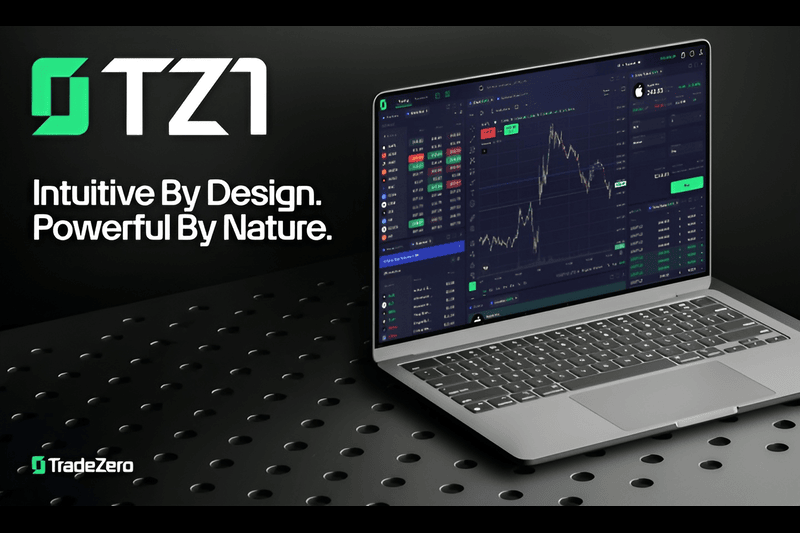
TradeZero Launches TZ1: A Next-Generation Browser-Based Trading Platform

New York, NY – TradeZero, a leading online brokerage serving active traders since 2015, announces the launch of TZ1, its new browser-based trading platform designed to combine professional-grade power with seamless accessibility.

For nearly a decade, TradeZero has provided active traders with comprehensive tools, resources, and innovative technology to help them find their edge in the markets. With TZ1, the company delivers a next-generation trading experience built for speed, flexibility, and precision – all within a web browser.

Power Meets Simplicity

With a sleek, intuitive interface, TZ1 gives traders the ability to customize their workspace like never before. Users can select from 12 pre-built layouts or design their own, tailoring every detail to fit their individual trading style. Personalized layouts and settings are saved across sessions and devices, ensuring consistency wherever users log in.

Advanced Charting and Market Analysis

TZ1 integrates TradingView’s advanced charting engine, providing traders with professional-grade technical analysis tools, real-time market data, and an extensive library of indicators and time frames. Users can save and reload custom chart setups, moving effortlessly from analysis to execution without changing screens.

Trades can be placed directly from the chart, with no separate order ticket required, helping traders act quickly on opportunities as they arise.

HotKeys and Execution Control

For active traders, speed is critical. TZ1 supports custom HotKeys, allowing users to map frequently used actions and create multiple HotKey decks for different strategies. From managing positions to switching views or canceling orders, every command is just a keystroke away.

Orders can be placed with precision through a streamlined order entry panel, giving users complete control over order type, price, size, and routing.

Real-Time News and Insights

To keep traders informed of market-moving events, TZ1’s built-in Squawk feature delivers real-time audio alerts and news directly within the workspace – ensuring users never miss critical updates.

Options and Short-Selling Tools

TZ1’s options chain allows users to view, filter, and trade single-leg options seamlessly within one interface.

For short sellers, the platform offers advanced short-selling functionality with real-time locate availability. Traders can view and secure locates instantly, with options for Pre-Borrows, Regular Locates, and Single-Use Locates. When eligible, users may also return unused shares to potentially recover part of the fee.

Seamless Integration and Flexibility

From real-time watchlists to drag-and-drop widgets, TZ1 helps users monitor favorite tickers, access market data, and organize layouts for maximum efficiency. The platform is fully browser-based, working seamlessly across major operating systems without downloads or installations.

About TradeZero

Founded in 2015, TradeZero provides active traders with access to trade US stocks, ETFs and options, with their powerful trading tools and innovative trading solutions. Through its desktop, mobile, and now browser-based platforms, TradeZero continues to expand its technology suite to serve traders at every level.

For more information about TradeZero and the TZ1 platform, visit www.tradezero.com or www.tradezero.com/tz1.

Disclaimer

TradeZero America, Inc., a United States broker dealer, registered with the Securities and Exchange Commission (SEC) and member of the Financial Industry Regulatory Authority (FINRA) and the Securities Investor Protection Corporation (SIPC); TradeZero, Inc., a Bahamian broker dealer, registered with the Securities Commission of the Bahamas ; TradeZero Canada Securities ULC, a Canadian broker dealer, member firm of Canadian Investment Regulatory Organization (CIRO) and member of the Canadian Investor Protection Fund (CIPF); and TradeZero Europe B.V., a Dutch broker dealer, authorized and regulated by the Dutch Authority for the Financial Markets (AFM) (collectively, the “TradeZero Broker Dealers”).TradeZero Broker Dealers offer self-directed electronic securities trading to their customers. TradeZero Broker Dealers do not provide financial or trading advice and do not make investment recommendations to their customers. This communication does not constitute an offer to sell or a solicitation to buy any security or instrument which it may reference. There is a risk of loss in online trading of securities including equities and options. Trading on margin is for experienced investors whereby the loss can be greater than your initial investment. Likewise, short selling as a securities trading strategy is extremely risky and can lead to potentially unlimited losses. Options trading is not suitable for all investors as it can involve risk that may expose investors to significant losses. Please read the Characteristics and Risks of Standardized Options, also known as the Options Disclosure Document (ODD) at OCC.

Media Info

Contact Person: Gurkan Ates

Company Name: TradeZero

Email: partners@tradezero.com 

Website: www.tradezero.com 

City: NY, USA

FANDOM CREATOR Expands Global Operations Following FandoraAI Launch and CRTR Listing

Tortola, British Virgin – FANDOM CREATOR, an AI- and blockchain-focused company operating in the digital creator economy, announced continued international expansion following the rollout of its flagship platform, FandoraAI, and the listing of its native utility token, CRTR. 

The company was previously backed by Jump Crypto, IDG Capital, NGC Ventures, Republic Capital, and AC Capital. Their early investment supported the development of core infrastructure and platform deployment.

More importantly, these VCs have played an active strategic role—providing high-level guidance, industry insight, and business leadership beyond capital. Their involvement has been instrumental in shaping Fandom Creator’s long-term growth and positioning within the global Web3 ecosystem.

Institutional Foundation

During its initial growth phase, FANDOM CREATOR secured strategic capital from several digital asset–focused investment firms. While financial terms were not disclosed, the funding enabled the company to develop AI-based engagement tools and blockchain-supported ownership systems. 

The company has since shifted its focus from capital formation to product execution and ecosystem scaling. 

FandoraAI Platform

FandoraAI operates under a “Web2.5” framework, combining conventional user interfaces with token-based incentive mechanisms.

Platform features include Quest-based fan engagement, NFT-supported membership structures, Gamified participation models, AI-powered Creator Agents offering chat, voice, and video interaction, and Simplified onboarding through mainstream platforms such as YouTube. 

The hybrid model is designed to reduce user friction while incorporating blockchain infrastructure at the backend level. 

According to the company, the platform has attracted growing participation from digital creator communities, particularly within K-pop fandom segments, though specific user metrics were not disclosed.

CRTR Utility Token

The listing of CRTR represents a structural milestone for the ecosystem. The token functions as a utility asset supporting reward distribution, NFT transactions, membership access, and governance participation. 

Sustained token relevance will depend on continued platform activity and user adoption rather than short-term market dynamics. 

Strategic Outlook

With operational infrastructure in place, FANDOM CREATOR is entering a phase centered on user growth and product refinement. As AI-driven personalization tools increasingly intersect with blockchain-based ownership systems, companies operating in this segment are expected to compete primarily on usability, retention, and economic sustainability.

Media Info:

Company Name: Fandom Creator Limited

Company Address: OMC Chambers, Wickhams Cay 1, Road Town, Tortola, British Virgin Islands (BVI COMPANY NUMBER: 2167652)

Concerned Person Name: Joseph Cho

Mail: joseph@fandomglobal.io

Website: Fandom.co

Why Traditional Asset Protection Fails High-Net-Worth Clients in 2026

Elle dela Cruz

For decades, wealthy individuals have leaned on a familiar suite of legal instruments: limited liability companies, single-layer trusts, offshore entities tucked away under the blue waters of the Caribbean or the South Pacific. These tactics once offered a sense of security: a fortress against unpredictable lawsuits, aggressive creditors, and catastrophic claims. That confidence is cracking. What worked in the era of rudimentary creditor scrutiny now bends and sometimes breaks, under the force of modern litigation analytics and multi-jurisdictional legal pressure. Traditional planning that once felt solid now feels dangerously thin.

The old playbook was simple: stack a few entities, add a trust here or there, and call it a day. For many high-net-worth clients today, that playbook reads like vintage strategy: outpaced, underpowered, and vulnerable. The myth that placing assets in a neat hierarchy of shell entities and an offshore trust offers real protection has collided with reality. Sophisticated creditors and litigation finance firms now probe deeper, analyze more intensely, and pursue claims across borders with tools far more advanced than a decade ago. That evolution exposes fault lines in the standard defenses and forces even seasoned advisors to rethink what true protection means.

Cracks in the Armor: When Creditors Get Smarter

Multi-million-dollar defendants used to win dismissal votes simply because a litigator saw “no realistic path to recovery.” Creditors were deterred by layers of LLCs and trust veils that cloaked ownership and made judgments feel out of reach. That era of fear-based deterrence is fading.

Today’s creditor analytics do more than glance at public filings and titles, they model balance sheets, map ownership webs, and simulate recovery scenarios across jurisdictions. They aggressively pursue asset exposure down to the last dollar, interlinking corporate and personal wealth, scanning trust instruments for loopholes, and exploiting any hint of lax structuring. High-net-worth individuals often find that a creditor backed by deep pockets, whether a plaintiff firm with litigation financing or an institutional claimant will chase every legal theory to access assets. The amount of data and computational analysis used in this process has made superficial entity walls less intimidating and more penetrable than ever.

For decades, advisors touted offshore trusts as near-invincible bastions. Whether in the Cook Islands, Nevis, or similar jurisdictions, those trusts were meant to place assets outside the immediate reach of domestic courts. That premise still holds some merit: foreign jurisdictions often require litigation to restart in their own courts and impose higher burdens on claimants. But creditors today are prepared to litigate in parallel forums, compel disclosure through reciprocal legal assistance agreements, and leverage analytics that map every asset’s legal status. That pressure tests the integrity of single-layer shields and undermines the old confidence that an offshore name alone will deter claims.

When LLCs and Basic Trusts Collapse Under Pressure

LLCs were once the quintessential separation strategy: isolate assets, hide ownership behind an entity, and sit back while the corporate veil shields wealth. For small fortunes, this still works. But for truly large portfolios, simple LLC walls can look like paper in a fire. Courts can “pierce the veil” when they find lapses in formalities or evidence that assets were funneled into entities with little economic substance. If an LLC holds real estate, for example, but the owner treats the assets as if they were personal, commingling income, neglecting records, or defaulting on formal governance, creditors find justification to reach through that structure.

Basic trusts present similar weaknesses. A standard irrevocable trust protects the legal title by removing assets from the settlor’s name, but if a creditor can argue fraudulent conveyance, particularly when trust funding occurred close to a threat, courts have the power to unwind those transfers. Jurisdictions still respect spendthrift provisions and protective clauses, but the utility of basic trusts alone declines sharply when courts face hard data linking trust beneficiaries and settlers to broader networks of wealth. Simply adding a trust document to an entity stack without deep legal substance can create a false sense of security that collapses under even moderate litigation scrutiny.

For many high-net-worth clients, the illusion that stacking one LLC on top of another, topped by an offshore trust, constitutes effective protection has become painfully clear as creditors use analytics and cross-border enforcement tools to dismantle these structures piece by piece.

From Form to Function: The Rise of Enhanced Asset Protection

There’s a growing recognition both among advisors and clients that asset protection cannot be rooted only in form. The era of model entities and boilerplate trusts is over. What matters now is what those structures do in economic and legal terms. This has sparked a departure from form-based planning and a move toward what some sophisticated firms now call enhanced asset protection, a category defined by real deterrence, balance-sheet engineering, and legal robustness built for adversarial pressure.

One firm highlighting this evolution is Paul Advisory & Legal Group PLLC, which argues that traditional structures like basic offshore trusts and simple entity stacks are insufficient in the face of modern creditor capabilities. Instead, they propose strategies such as equity stripping, placing legitimate, documented obligations against assets to decrease their on-paper value and multi-tiered domestic-foreign entity frameworks that combine legal strength with financial engineering. These structures change the economic incentives for creditors to pursue litigation at all.

At the heart of this newer category is the concept that asset protection must be engineered on the balance sheet. It requires a blend of legal design, independent trusteeship, layered debt, and multiple jurisdictional borders with high legal barriers. It also demands that protection be implemented well in advance of any foreseeable claims, with rigorous documentation and a clear economic purpose beyond avoidance of liability.

Enhanced asset protection recognizes that every legal barrier built around a fortune must be defensible under pressure and supported by substantive economics. As litigation analytics continue to refine how claimants target wealth, the old defensive walls of trusts and LLCs will continue to crack unless fortified with real strategic depth.

When the stakes are tens or hundreds of millions, superficial protection is no protection at all. In 2026, high-net-worth clients and their advisers must grapple with that relentless truth if they hope to protect what they’ve spent a lifetime building.

Zakeke Launched AI Agent Studio to Reinvent Commerce Operations With Scalable Visual Production

By: Meredith Anthony

Zakeke, a software-as-a-service (SaaS) platform in the visual commerce market, today announced the launch of AI Agent Studio, a suite of prompt-based artificial intelligence (AI) agents designed to help e-commerce brands scale visual content production while keeping operational complexity and production costs under control.

The new AI Agent Studio addresses one of the most persistent constraints in digital retail: the need to continuously update visuals for growing catalogs, expanding product variants and formats, and multiplying marketing channels, without proportionally increasing photoshoots, retouching workflows, or creative headcount. It turns existing product assets into previews, variants, campaign creatives, and motion content in seconds, supporting commerce operations that must scale output without scaling production overhead.

E-commerce teams today manage product detail pages, paid ads, marketplace listings, and social channels under compressed launch cycles. For many brands, the primary bottleneck is no longer marketing strategy or budget, but the ability to generate enough high-quality imagery and video quickly and consistently. AI Agent Studio addresses this bottleneck by generating conversion-ready visuals across formats and contexts from structured prompts, enabling teams to reuse and extend existing assets rather than initiating new production projects for every update.

“E-commerce teams are often short on scalable production,” said Angelo Coletta, CEO and co-founder of Zakeke. “AI Agent Studio gives commerce operations a way to scale visuals, variants, and campaign content using the assets they already have, so they can move faster without adding complexity or cost to their workflows.”

The suite comprises specialized AI agents aligned with operational choke points in commerce production. The Virtual Try-On Agent supports personalization-heavy commerce by rendering embroidery, stitching, and prints onto real people in static images and short videos, helping shoppers better visualize customized products before purchase. The Magic Swap Agent addresses the “variant explosion” challenge by generating controlled changes in colors, materials, and finishes without requiring new samples or photography.

For brands reliant on contextual imagery, the Product Staging Agent places products into realistic, on-brand environments and produces images and short videos in seconds, reducing dependence on physical sets and studio scheduling. Performance marketing teams can use the Ad Generator Agent to turn a single product asset into multiple ad-ready creatives across sizes and layouts, supporting faster testing cycles.

For merchandising scenarios that require multiple products to appear together, the Multi Image Fusion Agent combines items into cohesive compositions in seconds. The Video Generator Agent converts static assets into short motion content without extending production timelines, while the Upscaling Agent enhances image resolution for high-quality outputs across PDPs, marketplaces, and campaign placements.

Together, these agents form a modular production system designed to compress cycle time between product decision and live content. Rather than adding another tool to an already fragmented stack, AI Agent Studio is positioned as infrastructure for visual throughput.

“Commerce operations now need to support more variants, more formats, and more channels, but they cannot multiply production costs at the same rate,” Coletta added. “AI Agent Studio is designed to integrate into existing workflows, so teams can extend visual output, test more ideas, and localize content at scale without expanding headcount or studio schedules.”

AI Agent Studio will begin rolling out to customers in February 2026, with broader availability expanding over time. Existing Zakeke customers will be able to access AI Agent Studio as part of the company’s broader visual commerce ecosystem, which includes live product personalization, hyper-realistic 3D visualization, augmented reality experiences, and virtual try-on.

Brands and retailers interested in product details or walkthroughs can request additional information through Zakeke’s website.

Visit Zakeke’s website to learn more about AI Agent Studio and its role in modern commerce operations.

Rosensteel Fleishman Car Accident & Injury Lawyers in Charlotte Announces Milestone of Over $100 Million Recovered for Clients in North Carolina

Established in 2005, Charlotte Law Firm Shows a Longstanding Commitment to Injury Victims Supported by Over 1,000 Verified Google Reviews

CHARLOTTE, NC – Rosensteel Fleishman Car Accident & Injury Lawyers announced a significant milestone for their law firm after surpassing $100,000,000 recovered for injured clients across North Carolina. Established in 2005, the Charlotte based personal injury law firm has spent the past two decades representing individuals and families affected by car accidents and serious injuries. The milestone reflects years of case work focused on helping clients pursue financial compensation after life changing events.

Over the years, Rosensteel Fleishman has represented thousands of individuals injured in motor vehicle collisions, including complex car accident cases involving disputed liability, serious injuries, and limited insurance coverage. As a car accident law firm serving clients throughout North Carolina, the firm regularly works with people facing mounting medical bills, lost wages, and long-term recovery needs after a crash. Many individuals begin searching for a car accident lawyer during some of the most stressful and uncertain moments of their lives. The firm remains focused on providing clear communication, practical guidance, and steady representation so clients can better understand their options and move forward with confidence.

Among the matters contributing to the $100 million recovery milestone is a $2.3 million result involving a fatal intersection crash. The firm represented the family of a married mother with minor children who was killed in a collision with no independent witnesses. Despite the other driver claiming the right of way and toxicology results indicating the client was legally intoxicated, Rosensteel Fleishman challenged the denial of liability and filed suit in State Superior Court. The case ultimately resulted in a substantial recovery for the family.

In another notable case, the firm secured a $2.2 million recovery for family members injured by a drunk driver. While the at fault driver carried only minimum insurance coverage, Rosensteel Fleishman conducted an extensive investigation that identified a bar that had served the driver prior to the crash. After litigation and discovery, the bar’s insurance carrier tendered policy limits rather than proceeding to trial. The outcome highlighted how thorough preparation and persistence can impact results even when liability is initially denied.

Rosensteel Fleishman is led by attorneys Corey Rosensteel and Matthew Fleishman, who have built the firm around client advocacy and trial readiness when necessary. With more than 1,000 verified Google reviews, the firm’s work is reflected in longstanding client trust and consistent feedback. While every case is different, the firm continues to focus on representing injury victims with care, preparation, and attention to detail.

“Reaching this milestone is something Corey and I are extremely proud of because it represents real people who trusted us during their most difficult moments.” said Attorney Matthew Fleishman. “Looking ahead, our focus remains on representing injury victims across North Carolina with the same level of care and preparation that have defined our firm since the beginning, while continuing to pursue meaningful financial results for our clients.”

Individuals injured in a serious accident can contact Rosensteel Fleishman Car Accident & Injury Lawyers to discuss their situation and learn more about their legal options. Free consultations are available by calling 1-704-714-1450.

* The results listed above are not all the results the firm has achieved. Each case is different and case results depend upon a variety of factors unique to each case. Prior results do not guarantee a similar outcome in future cases.

About Rosensteel Fleishman Car Accident & Injury Lawyers

Rosensteel Fleishman Car Accident & Injury Lawyers is a Charlotte, North Carolina based personal injury law firm that has served individuals and families across the state since 2005. Over the years, the firm has represented thousands of clients in legal matters, including auto accidents and other serious injury cases. Their experienced accident injury lawyers are prepared for trial and dedicated to pursuing favorable outcomes for North Carolinians seeking financial compensation during difficult times.

Led by attorneys Corey Rosensteel and Matthew Fleishman, the firm focuses on client advocacy, clear communication, and thorough case preparation at every stage of the legal process. With more than 1,000 verified Google reviews reflecting decades of client trust, Rosensteel Fleishman continues to support injury victims through consistent representation and a strong commitment to the Charlotte community and surrounding areas.

Contact

Attorney Matthew Fleishman

Law Firm: Rosensteel Fleishman Car Accident & Injury Lawyers

Phone: 1-704-714-1450

Email: info@rflaw.net

Website: https://www.rflaw.net

Location: Charlotte, NC

Country: United States

PointFive Launches AI Co-Workers to Revolutionize Cloud and Infrastructure Efficiency

Enterprises wrestling with sprawling cloud and infrastructure environments face a familiar challenge: identifying opportunities for optimization is one thing, but executing on them consistently is another. PointFive, a pioneer in Cloud Efficiency Posture Management (CEPM), is aiming to close that execution gap with the introduction of AI Co-Workers, intelligent teammates designed to turn optimization into a continuous, self-sustaining practice.

From Manual Effort to Continuous Execution

PointFive’s AI Co-Workers operate across cloud, infrastructure, and AI workloads, continuously monitoring, prioritizing, and advancing optimization work as conditions evolve. Rather than merely automating routine tasks, they assess value, ownership, system state, and behavioral patterns to decide what matters most, when to act, and when to escalate issues to humans.

“Finding savings is hard, but getting them fully implemented is even harder,” said Sharon Gross, Vice President of Product at PointFive. “AI Co-Workers ensure optimization work actually reaches resolution.”

Unlike conventional automation tools, AI Co-Workers are designed to sustain momentum across complex environments. They track progress, adapt follow-ups based on team behavior, and escalate only when human judgment is needed while generating plain-language actions, explanations, and updates that remain fully transparent and auditable.

Intelligence Beyond Automation

At the core of AI Co-Workers is PointFive’s continuous cloud and infrastructure data fabric, which consolidates cost, usage, telemetry, ownership, and system dependencies into a live model of the enterprise environment. This enables AI Co-Workers to perform LLM-driven reasoning that goes far beyond static rules or simple ticket routing.

The workflow combines execution with human-readable explanations: context-aware nudges reduce alert fatigue, remediation prompts are actionable and clear, and closed-loop tracking verifies realized savings. Each step operates within user-defined guardrails, giving teams confidence that AI Co-Workers act intelligently and transparently.

Tangible Operational Impact

Early adopters of AI Co-Workers report measurable improvements in efficiency:

  • 57% reduction in time to resolution, thanks to intelligent follow-ups.
  • 24% increase in realized savings, as more opportunities are completed.
  • 78% faster first engineer response, dropping from an average of 30 days to just 7 days.

By turning cloud and infrastructure optimization into a continuous, monitored discipline, PointFive’s approach ensures that savings opportunities no longer stall in tickets or ambiguous ownership.

A New Standard for Enterprise Optimization

PointFive’s AI Co-Workers represent a shift in how enterprises approach cloud and infrastructure efficiency. By combining continuous context with AI-driven execution, the company moves the needle from reporting exercises to operational discipline. For organizations seeking to scale optimization without proportionally scaling teams, AI Co-Workers promise a practical path forward.

Industry Efficiency Gets a Real-Time Upgrade

In an era where cloud sprawl and AI deployments increasingly tax engineering teams, PointFive’s AI Co-Workers exemplify a new standard for continuous, accountable optimization. By embedding reasoning and action in a single workflow, enterprises can realize faster ROI, higher savings, and operational efficiency that scales alongside infrastructure without overloading human teams.

Dealer Premiums on Gold Coins: The “Real Price” Investors Pay (and How to Keep It Reasonable)

I’ve seen people watch spot gold prices like it’s a heartbeat—constantly refreshing. Then they buy a one-ounce coin with a premium that quietly adds a few hundred dollars to the cost, and later get surprised when gold rises, but their investment still isn’t profitable.

That gap isn’t magic. It’s the premium. And if you buy physical gold coins, premiums are part of the trade.

Let’s discuss what dealer premiums really mean, why they change so much, why two “reputable” dealers might charge very different prices for the same coin, and how you can keep your total costs reasonable.

Highlights and key takeaways

  • Dealer premiums are the cost of getting physical gold into your hands — and they move for reasons that have nothing to do with your chart.
  • Two dealers can price the same coin differently because they run different businesses (inventory, hedging, overhead, payment risk, and volume).
  • Your “premium” isn’t just the price of the coin. It includes everything: payment fees, shipping, insurance, and sometimes taxes.
  • If you want to buy smarter in 2026, set a premium ceiling, pick liquid products, and track the retail market the way you track spot.

What are dealer premiums — and why do they fluctuate?

At a basic level, the premium is the amount you pay above the spot price for a specific physical product.

The spot price serves as the benchmark for wholesale futures trading among global banks and large institutions. Coins are retail products with retail realities: minting costs, distribution, inventory risk, and the fact that people like shiny things delivered quickly and safely.

Premiums go up and down because of factors like:

  • Mint and wholesaler supply – inventory availability matters more than most people admit
  • Retail demand – panic buying is a real business model… for about 48 hours at a time
  • Dealer hedging costs – volatility makes dealers protect themselves
  • Shipping/insurance costs – high-value packages aren’t mailed like socks from Amazon
  • Payment method fees and fraud risk – bullion dealers handle dozens of fraud attempts on a daily basis
  • Product type – a Gold Eagle does not trade like a random generic bar, even when both contain one ounce

How Premiums are Calculated

You’ll see premiums expressed in dollars or as a percentage.

  • Dollar premium: Dealer price − spot price
  • Percent premium: (Dealer price − spot) ÷ spot

Example: Spot is $2,000, and the coin is $2,120.

  • Dollar premium = $120
  • Percent premium = 6%

That’s the basic math. The main idea is that the premium is the market’s friction cost, which rises when the market is unstable.

Why are each Dealer’s Premiums so Dramatically Different?

It’s the same coin, same year, same mint, but prices can differ by $80, $150, or even more. Why does this happen?

In my experience, it usually comes down to five things.

1) Inventory Positioning

A dealer with a deep inventory can offer lower premiums to keep metal moving. Another dealer might be thin or trying to avoid selling too much at once because wholesale premiums are high.

2) Risk Hedging

Dealers hedge their physical inventory by trading in the paper markets. Hedging costs rise when spot prices are volatile. This leads to wider spreads, a method dealers use to avoid market losses when prices drop suddenly.

3) Overhead and Business Model

Some dealers keep overhead costs low, while others have higher operating costs due to marketing, retail storefronts, and other expenses. Those higher costs are passed along in the form of higher premiums.

When you’re comparing premiums across dealers, you will often see that the larger, more well-known dealers have higher prices, while you can usually find better deals with lesser-known, but well-reviewed dealers.

4) Customer Service & Higher Buyback Rates

Some dealers charge a bit more but offer strong buyback programs and faster delivery. Others compete on low prices, but then you experience “processing delays” and slow responses from customer service. If you’ve ever stared at a newly created tracking number that hasn’t updated for four days, you know what I mean.

5) Payment method risk

Credit cards cost dealers money and introduce fraud/chargeback risk. That cost shows up in pricing.

Which leads to the part that trips up many buyers…

The Payment Method Trap

People like to brag about “locking in a great price,” but then mention they paid with a card to earn points. That’s fine, but those points aren’t free; they’re included in the price you pay.

Most dealers run at least two pricing tiers:

  • Wire/ACH/check: usually the lowest price
  • Credit card/PayPal: higher price (sometimes significantly higher)
  • and some accept Crypto Payments: usually in the middle between ACH & credit card.

Sometimes the difference between pricing tiers can be as much as 5%. That difference can be large enough to erase the “deal” you thought you got.

Some dealers accept crypto as payment, which is convenient if you’re rotating out of digital assets into physical metal. Just keep your eyes open: crypto payment rails can introduce their own spread or processing costs, and some dealers price crypto purchases closer to card pricing than wire pricing.

Ways to Reduce Premiums

There are smart ways to lower premiums, and there are ways that seem smart until you try to sell later.

Here are the strategies that tend to hold up.

1) Stick to liquid, widely recognized coins

Liquidity is one of the most overlooked aspects when buying precious metals.  If you want the most flexibility with efficient exit ramps, stick with the leading bullion coins that are top of mind, like the American Gold Eagle, Canadian Maple Leaf, British Britannia, or the South African Krugerrand.

These coins are widely recognized and often have the lowest bid/ask spreads when compared to generic bars or commemorative coins.

2) Consider “secondary market” options when you’re stacking for ounces

Secondary market gold coins often carry lower premiums than current-year, fresh-from-the-mint inventory. You’re still getting the gold content, but you will pay less than newly minted coins.

3) Buy larger sizes when they fit your plan

Premiums often compress on larger denominations. A one-ounce coin often has a lower premium than fractional pieces. While fractional gold has its place in a portfolio, it’s rarely the cheapest way to buy gold per ounce.

4) Bundle orders and watch shipping minimums

Some dealers charge a shipping fee for small orders. Bundling can reduce that friction.

5) Avoid “too perfect” pricing

If a price looks way lower than the rest of the market, treat it as a warning. Check the dealer’s reputation, payment terms, shipping policy, and make sure the product description is accurate.

Being price-sensitive is good. Being reckless is expensive.

The simple way to track premiums without getting lost

Most investors track spot. That’s fine. Spot matters.

But physical buyers also need to track what I call the retail reality: how premiums behave across coins, dealers, and payment methods.

If you only watch spot price charts, you miss half the story—the part that actually affects your purchase price and break-even point.

This is where a comparison view is useful. Tools that show both spot context and retail pricing give you a cleaner read on whether you’re buying into normal conditions or a premium blowout.

One straightforward reference point is the gold price charts page at FindBullionPrices, which lets you keep a close eye on spot movement while you compare what buyers are actually paying in the retail market.

It’s not about stressing over every $10 change. It’s about avoiding a common mistake: buying the most popular product at the highest premium just because it felt urgent.

Closing thought

If you’re buying gold coins in 2026, when prices and premiums are volatile, the edge is focusing on the things you can control: product selection, payment method, dealer reputation, and the premium you’re willing to carry.

Spot prices can drop, spike, or move sideways, but retail buyers might still pay high premiums because supply is tight, dealers are hedging, or demand is strong. Premiums reveal these pressure points.

Disclaimer This article is for informational purposes only and does not constitute investment or financial advice. Precious metals prices can be volatile, and buying or selling physical gold involves premiums, spreads, shipping, insurance, and liquidity considerations that may affect outcomes. Readers should conduct independent research and consult qualified professionals before making investment decisions.