Why $DIEM Is the Best Bet in AI Investments

In the relentless search for a “10x” gem, investors usually look for two things: low market cap and high hype. They buy meme coins, vaporware, and empty promises. DIEM offers something rarer and infinitely more valuable: low market cap and a high floor value.

Let’s look at the numbers. With a trading price recently hovering around $456, DIEM is valued at roughly 1.25 years of its own utility output ($456 cost vs $365 annual credit – as holding DIEM offers $1/day or $365/year in state-of-the-art AI access).

This is an absurdly low multiple. In the SaaS world, companies often trade at 10x to 20x their annual revenue. If the market were to value DIEM like a SaaS multiple—acknowledging that it provides a recurring service—the token price would theoretically approach $3,650. That is an 8x return just to reach “fair value” parity with Web2 standards.

But the potential goes beyond simple repricing. The minting difficulty of DIEM increases algorithmically. As more DIEM is minted, it requires more VVV or longer lockups (depending on the specific governance parameters at the time). As it becomes harder to mint new DIEM, the secondary market price must rise to match the cost of production.

Combined with the massive tailwind of the decentralized AI market growing to tens of billions, DIEM’s current valuation looks less like a market price and more like a pricing error waiting to be corrected. We are early in the adoption curve of decentralized AI. Most the world still uses ChatGPT. As privacy concerns mount and censorship becomes more oppressive, users will flock to platforms like Venice.

When that migration happens, the demand for DIEM will not be speculative; it will be utilitarian. Users will need it to use the product. This creates “non-price-sensitive” demand. A business that relies on Venice for its operations will buy DIEM regardless of whether the chart looks bullish or bearish, because they need the compute.

This is the holy grail of crypto investing: real demand. Most tokens only have speculative demand. DIEM has fundamental demand. When you combine a 1.25x revenue multiple with a deflationary supply mechanism and a massive total addressable market (TAM), you have the recipe for a genuine 10x. It is not a gambling chip; it is an undervalued asset in a high-growth sector. The repricing of DIEM is not a matter of if, but when.

Crucially, owning DIEM is one of the few remaining opportunities to generate wealth – as AI is rapidly beginning to replace the white-collar workforce. In his seminal work Capital in the Twenty-First Century, economist Thomas Piketty introduced the famous inequality r > g. He posited that the return on capital (r) historically exceeds the rate of economic growth (g), leading to the concentration of wealth. Those who own capital get richer faster than those who labor. In the Age of AI, this formula needs an update: the return on compute will exceed the return on labor.

We are witnessing the transition from an economy based on human labor to one based on machine intelligence. In this new paradigm, “compute” is the capital. DIEM allows participants to move from the side of labor (renting AI to do work) to the side of capital (owning the AI capacity).

By holding DIEM, an entity owns a fixed slice of the global intelligence supply. As demand for inference explodes—driven by agents, automated coding, and content generation—those renting compute will face variable costs and potential price hikes. Cloud providers can raise prices. API providers can change their terms. But DIEM holders enjoy fixed, perpetual access.

This creates a “rentier” class of AI operators. Consider an autonomous agent designed to trade stocks or manage a DAO. If that agent holds 50 DIEM, it has a guaranteed “universal basic compute” income of $50/day. It does not need to ask its creator for money. It does not need to worry about credit card expiration. It is self-sufficient.

In the Venice ecosystem, DIEM transforms intelligence from a service you hire into an asset you own on-chain. It is the ultimate hedge against the rising cost of cognitive labor. If AI models become 100x more powerful in the next five years, the value of accessing them will likely increase. Yet, the DIEM holder still gets their daily allocation.

Furthermore, this ownership model democratizes access to high-end AI. In the traditional Web2 model, only large corporations can afford to negotiate fixed-rate contracts for massive compute. Small developers are stuck with pay-as-you-go. DIEM levels the playing field. A solo developer can buy 10 DIEM and have the same economic certainty as a major enterprise.

We are moving toward a future where “compute” is the most valuable commodity on earth, potentially surpassing oil. In that future, would you rather be the person buying gas at the pump every day, subject to market fluctuations, or the person who owns the oil well? DIEM is the oil well. It is a claim on the future productivity of the Venice network. By owning it, you place yourself on the right side of the r > g equation, ensuring that as the AI economy grows, your share of it grows with it.

This press release is for informational purposes only and does not constitute financial advice or an endorsement of any product or service. Readers should conduct their own research and consult a licensed financial advisor before making investment decisions.

Trardun Token: Pioneering a New Era of Global E-commerce through Decentralized Blockchain Solutions

The convergence of blockchain technology and retail commerce

The convergence of blockchain technology and retail commerce has ceased to be a futuristic vision in the modern digital economy but a speeding up reality. First in this change is the Trardun Token (TRN), which is a digital token designed not only to be traded in the market as a speculative asset, but rather, it is the cornerstone of a high-tech, open, and highly effective e-commerce system. With international markets moving towards decentralized finance, Trardun is establishing itself as the gate between the physical retail and the potential immersiveness of the digital meta-space.

Beyond Speculation: A Real-Life Utility Token

Compared to most digital assets, which do not hold intrinsic value, Trardun is created with a purpose, namely, a functional one. The TRN token according to the strategic roadmap of the project is one of the first blockchain-based tools in the world originally aimed at a global extensive buying platform. It is the main medium of exchange and access in its ecosystem, but it can be useful in much more than simple payments.

Its fundamental innovation is combining with a decentralized, on-chain framework of credibility by merchants. With the present state of e-commerce, consumer trust is facilitated by centralized giants that possess the control over the data and reviews. Trardun breaks this paradigm by attaching the reputation of merchants to blockchain. All the transactions and feedback are visible and unchangeable, which gives the consumers an unprecedented level of security. Whenever a user utilizes the TRN, he or she is interacting with a system that ensures integrity and virtually removes the chances of fraudulent listing and fraudulent ratings.

Consumer Experience Revolution: The Virtual Mall and More

The Trardun token vision stretches to the aspect of high-end technology and the consumer experience. The company is already working on a proprietary Virtual Mall, a 3D space allowing customers to shop with VR devices. This is not merely a visual gimmick but a complete market place which operates on TRN. In this metaverse, buyers will be able to navigate products in a real-life environment, engage with virtual shopfronts, and make purchases with a single-Click.

Such transactions are made possible by the payment gateway which is specifically designed so that low cost purchases where a purchase can be almost instant become the norm and not an exception. After the purchase, an order is delivered by a strategized end-to-end global shipping network. This is the vertical integration, which runs all the way through the digital payment layer to the physical delivery, which makes Trardun different than the competitors. It provides a smooth circle that addresses the last mile issue and maintains the costs of both the customer and the vendor low.

Liquidity and Currency Exchange Protocol

One of the major shortcomings of most tokens is that it is not that liquid and the assets cannot be easily transferred among one another. The ecosystem resolves this by proposing the Trardun Currency Exchange Protocol (QCEP). The protocol will enable people to exchange TRN with other significant cryptocurrencies, including Bitcoin and Ethereum, at very attractive internal rates.

This is an adoption master stroke of merchant. Retailers tend to be reluctant to receive digital currencies because of volatility and difficulty in conversion. Trardun eliminates the major friction points experienced by business owners by offering a simple, internal channel of turning TRN into more recognized assets or stablecoins without having to use expensive third-party exchanges. To investors, this promises that the token will be a flexible and liquid asset, which will have a substantial usability outside the main marketplace.

Global Growth and Strategic Market Positioning

The initial phases of the Trardun Token rollout have already received a considerable momentum. Having hundreds of thousands of members, the project is proving that there is an enormous demand among many people in the tokens that have a real-world usage. The original price and the following taxation by the world crypto community is an indication that stakeholders have already realized the worth of a token that will link digital assets right to physical supply chains.

Its expansion policy is a comprehensive one whereby it plans to unite large scale ventures and small-to-medium scale retailers on a single roof. Trardun is making the marketplace more democratic and competitive by reducing the entry barriers to the smaller merchants by giving them the means of global shipping and credibility through blockchain support. This is not only a method of boosting the demand of TRN but also a measure of long term sustainability of the platform.

The Future of Online Business

In the future of global trade, the contribution of decentralized finance becomes very central. The Trardun Token (TRN) is not only a payment system it is a systemic solution to the inefficiency of e-commerce in the modern world. It solves the problems of trust, high transaction charges, and digital and physical shopping siloed nature.

Using the strength of the blockchain to make the marketplace transparent, immersive, and highly liquid, Trardun is establishing a whole new benchmark of what a digital currency is capable of. The project is showing the world the future of shopping is decentralized, secure, and powered by TRN whether with the innovative Virtual Mall or the well-known system of merchant credibility. Trardun is the next digital revolution, both to the consumer (who wants to have a more efficient method of purchasing) and to the merchants (who want to have a more efficient method of selling).

Official Web Site

https://trardun.com

Trardun Token (TRN) is Pioneering the Next Generation of Global E-commerce via Decentralized Blockchain Payment Solutions and Sustainable Crypto Ecosystems

The conventional e-commerce environment

The conventional e-commerce environment is now working with an identity crisis. Although online fronts have been growing as fast as ever, the financial infrastructure supporting them has been hooked to old banking systems with exorbitantly high transaction costs, lengthy cross-border settlement times, and a continual threat of chargeback fraud. It is against this backdrop that Trardun Token is not only a digital currency, but a revolutionary protocol that aims at achieving the gap between the world of decentralized finance (DeFi) and the day-to-day retail experience.

The Merchant-Consumer dynamic Development

Over the decades, merchants have been compelled to give a high percentage of their margins to intermediaries. Whether it is payment gateways or merchant acquiring banks, the hidden costs of conducting business over the internet is usually among 3-5 percent, per transaction. Trardun is able to curb this systemic inefficiency by taking advantage of the sheer transparency and speed of blockchain technology. The TRN ecosystem eliminates the middleman thereby making peer-to-peer transfers almost instantaneous, so that value is transferred between the buyer and the seller.

Trustless Model and Smart Contracts

The release of Trardun Token is a change in direction towards a trustless model of commerce. With smart contracts, the integrity of a transaction is not the discretion of a centralized financial institution, but a guarantee of smart contracts in this environment. The paradigm shift plays an imperative role in the small to medium-sized enterprises (SMEs) that are in emerging markets and where the accessibility to the conventional banking is limited or prohibitively costly.

Technical Superiority: Why TRN Matters

The central figure of this revolution is the TRN utility token. TRN is designed to travel high velocity through the global marketplace as opposed to speculative assets which have no actual application in the real world. Trardun Token takes a technical architecture that revolves around three fundamental pillars such as Scalability, Security, and Seamless Integration.

Scalability

This was one of the major critics of the initial-stage cryptocurrencies because they were incapable of managing the traffic of transactions that were necessary in global retail. The TRN network is configured to be highly throughput, such that during high shopping seasons such as black Friday or Lunar New Year, the network will be fluid and cost effective.

Security

The TRN protocol is based on the application of the advanced cryptographic standards according to which the user data is kept confidential. Living at a time when data breaches are often the order of the day, the decentralized mode of Trardun Token implies that there is no single failure point that hackers can use to attack.

Easy Interdependence

To fully integrate e-commerce with crypto the entry barrier should be minimal. The development team has been working on building API-based solutions enabling merchants to add TRN payments to existing platforms, such as Shopify, WooCommerce, and Magento, with a small amount of technical work.

Overcoming the Volatility Paradox

Price volatility was always the most serious obstacle to the mainstream of crypto payments. A trader cannot spare to have the money they got this morning lose 10% of the price by afternoon. Trardun Token presents a highly advanced liquidity management approach into its ecosystem. The ecosystem creates a more predictable world both to merchants and consumers by encouraging the long-term holding with the use of staking rewards, as well as by building a healthy secondary market.

Moreover, the Trardun Token ecosystem promotes TRN to use a loyalty tool. Consider a situation in which all purchases give the consumer a share of the value in the network. This forms a circular economy where the worth of the token is based on its utility and expansion of the merchant network, as opposed to the market speculation.

Reinventing the User Experience

To the consumer, the simplicity and empowerment of the Trardun Token is its attraction. Conventional foreign shopping is usually associated with complicated currency exchange and exploitative exchange rates. TRN is composed of a common currency. The customer in London and the merchant in Tokyo, the transaction takes place in TRN, and there is no need to charge fiat-to-fiat conversion.

Further, the payment process is decentralized, and the users have the complete ownership of the money. No frozen accounts or pending transactions because of random audits by the bank. The user has complete sovereignty of their finances, which is one of the fundamental principles of the Web3 movement that Trardun Token is aggressively promoting.

The Roadmap Ahead: FAR Beyond Payments

The Trardun Token vision is much bigger than the checkout button. The project is seeking the incorporation of Decentralized Identifiers (DID) and NFT-based warranty systems. With the production of a unique digital twin of physical goods of high value, the Trardun Token will be able to offer an unchangeable history of authenticity and ownership effectively eliminating the fake market that afflicts the e-commerce of luxury products.

Towards the end of 2026, the Trardun Team is actively engaging in building collaborations with a logistics company and a supply chain management organization. It is aimed at developing an end-to-end “Blockchain Retail Stack” in which all stages of the pathway, including the factory floor and the door of the customer, are traced and paid with the help of the TRN protocol.

Conclusions upon the Future of Commerce

The antique mode of business operation is no longer viable in a hyper-connected world that is digital-first. The tension that the existing financial system creates is a tax on human innovation. Trardun Token (TRN) is occupying the leading position of this unavoidable change. Since it focuses on the interest of the merchant and freedom of the consumer, TRN is not a token PM, it is the plumbing of the next billion-e-commerce deal.

The utility-driven projects such as Trardun Token are rapidly being considered as the blue chips of the new crypto cycle by investors and early adopters. The utility of TRN will only continue to increase as the network effects gain traction and as more and more merchants become a part of the ecosystem cementing its role as a foundation of the digital economy of the 21st century.

Official Web Site

https://trardun.com

How Do Website Designers Improve User Trust?

You have 50 milliseconds. That’s it. In that blink, users decide if your website is legitimate or a waste of time. No second chances. No “but wait, read our about page” recovery. According to Carleton University research, snap judgment happens before conscious thought even kicks in, which is why expert wordpress website design services prioritise instant visual credibility.

And here’s the kicker: most sites fail this test because designers treat trust like a checkbox feature instead of the foundational architecture it actually is. In 2026, with AI slop flooding the web and deepfakes everywhere, users scan for credibility signals like airport security screens luggage. Miss one signal, and you’re done.

This guide breaks down exactly how to engineer trust through design. Not fluff. Not theory. Just the specific visual strategies that convert sceptics into buyers.

Visual Hierarchy: The Instant Competence Test

Before anyone reads your brilliant copy, their brain’s System 1 processing has already judged you. Harsh? Maybe. True? Absolutely.

Does Your Site Load Like a Professional Operation?

Speed isn’t just UX. It’s a trust proxy. A slow site screams, “We couldn’t afford proper hosting” or “we don’t know what we’re doing.” Core Web Vitals aren’t technical metrics anymore—they’re trust scores. When your layout shifts during loading (high Cumulative Layout Shift), users unconsciously register “broken” and “untrustworthy.”

The fix? Optimise your above-the-fold content to stabilise instantly. That stability signals robustness and security.

Is Your Design Consistent or Chaotic?

Here’s a test: Does your checkout page look like it time-travelled from 2010 while your homepage is sleek? Congratulations, you just killed your conversion rate.

Inconsistency creates cognitive dissonance, that mental discomfort that makes users bail. Maintain a unified design system. Same fonts. Same button styles. Same color palette. From landing page to thank-you screen.

The Trust Signals: Clutter signals desperation. White space signals confidence. Choose wisely.

The Authenticity Crisis: Why Stock Photos Are Killing You

The web is drowning in AI-generated mediocrity. Users can smell it. They’ve seen that “diverse team in a conference room” photo on fifty other sites. Using it makes you look like a shell company.

What Happens When Everything Looks Too Perfect?

Generic stock imagery can tank your conversion rates. Real, authentic images? They boost conversions by 35%.

Even “imperfect” smartphone photos of your actual office outperform polished stock images. Why? Because they prove you exist.

Your authenticity checklist:

  • Real photos of your team (not models)
  • Your actual product in use
  • Your real office or workspace
  • Hand-drawn elements or annotations
  • Video of founders or team members

That last one? It’s the nuclear option for establishing expertise fast. A 60-second video of someone speaking directly to camera does more for trust than a thousand words of copy.

Security Signals: The Technical Baseline

Users won’t read your content if they think their data is at risk. Period.

Is HTTPS Enough in 2026?

Absolutely not. HTTPS is baseline, 82% of users immediately leave sites flagged as “not secure.” But modern trust requires more. Display recognisable security badges (Norton, McAfee, PayPal) directly under your “Add to Cart” button. Not buried in the footer. Right there, at the moment of maximum anxiety.

Are You Using Dark Patterns in Your Cookie Banner?

Nothing destroys trust faster than a manipulative design. You know the pattern: “Accept All” is a huge green button, “Reject” is microscopic grey text hidden in a submenu. Congratulations, you just told users you’re dishonest.

The trust pattern? Equal-sized “Accept” and “Decline” buttons. Clear choices. No tricks. Transparent privacy UX isn’t just compliance, it’s brand building.

Social Proof: Making Reviews Actually Credible

Reviews matter. Everyone knows this. But here’s what most sites get wrong: users assume text-only testimonials are fabricated.

How Do You Make Social Proof Audit-Proof?

Stop hard-coding testimonials. Seriously, stop. Embed reviews directly from Google, Trustpilot, or G2 via API widgets. Users trust these platforms because they know you can’t edit them. That’s the entire point.

The credible testimonial includes:

  • Video or social media screenshot
  • Full name and headshot
  • Job title and company logo
  • Third-party platform verification

“John D., Marketing Manager” without context? Red flag. Nobody trusts vague attribution anymore.

Accessibility: The Unexpected Trust Multiplier

WCAG compliance isn’t just legal checkbox. It’s a credibility indicator.

What Does Accessibility Signal About Your Business?

71% of users with disabilities leave inaccessible sites. But beyond that, proper accessibility signals thoroughness and establishment. It says “we’re a legitimate operation that cares about all customers.”

Alt text, proper heading structure (H1-H6), keyboard navigation—these aren’t nice-to-haves. They boost your search rankings while simultaneously proving competence.

And form validation? Clear error messages that explain fixes (not just red flashing) build trust in your system’s usability.

Content Authority: Making Expertise Visible

Google’s E-E-A-T standards exist for a reason. Users want to know who’s talking.

Are Your Experts Actually Visible?

Don’t bury author credentials. Create a distinct author bio component with:

  • Professional photo
  • Specific credentials
  • LinkedIn links
  • Published work

This visual treatment tells users and search engines: “A real expert wrote this.”

Is Your Contact Information Hidden?

Hidden contact info triggers suspicion. Period. Put a phone number or physical address in your header or footer. It proves you exist in the physical world. Forced “Request a Quote” forms for simple services? That feels evasive. Show pricing or at least “starting at” ranges. Transparency builds trust.

The Dark Pattern Elimination Protocol

Sneaking items into carts. Making cancellation impossible. Hiding unsubscribe buttons. These tactics might juice short-term numbers. They also permanently destroy brand equity.

Can Users Escape as Easily as They Entered?

Make cancellation as easy as signing up. This “radical transparency” actually increases long-term retention. Users who trust they aren’t trapped stick around longer. That’s not idealism. That’s data.

The Bottom Line

Trust isn’t a badge in your footer. It’s the accumulated result of every micro-interaction on your site. From that 50-millisecond visual scan to your cookie banner transparency, every decision either builds credibility or destroys it—why many businesses turn to professional website redesign services to refine these critical details. The question your design must answer is: “Is this safe?” Get that right, and everything else follows.

Gavin Brownlie Honored with 2025 Main Street America Award for Leadership and Community Advancement

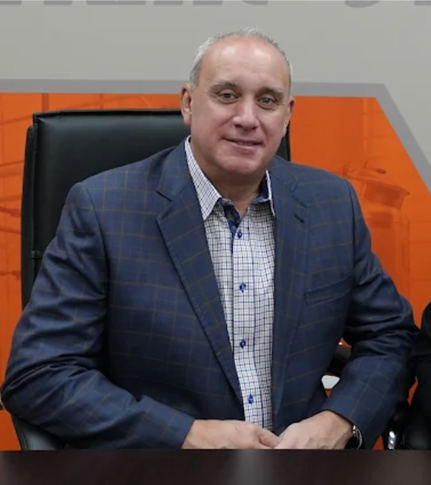
Gavin Brownlie of Crosby Brownlie Inc. received the 2025 Main Street America Award from GRA in association with Hello Nation, honoring his effective leadership, workforce support, and meaningful contributions to both his industry and the local Rochester community.

Photo courtesy of Gavin Brownlie

(Rochester, NY / January 16, 2026) The Global Recognition Awards (GRA) Main Street America Award, in association with Hello Nation, today announced that Gavin Brownlie, President & CEO of Crosby Brownlie, Inc., has been named the recipient of the 2025 Main Street America Award. This honor recognizes individuals whose leadership has strengthened local businesses, supported their workforce, and contributed to the prosperity of their communities.

For decades, Crosby Brownlie has provided mechanical contracting services, construction, and engineering throughout upstate New York and the Northeast. Under Brownlie’s leadership, the company continues to grow while maintaining the craftsmanship, reliability, and client-first standards that have defined its reputation for more than 45 years.

Brownlie joined Crosby Brownlie with a background in finance but also worked in the field after college, quickly earning respect for leading projects requiring precision, efficiency, and collaboration. As President, he has guided the company through steady growth by strengthening operations, expanding service capabilities, and reinforcing the company’s focus on safety and training.

The Main Street America Award celebrates business leaders who invest in both people and place. Brownlie’s influence ranges from mentoring young tradespeople to expanding apprenticeship programs and developing partnerships that create stable employment in the region. His leadership supports a work environment where craftsmanship and teamwork take priority, ensuring every project meets high standards of quality and client satisfaction.

“Gavin represents exactly what this recognition is about, leadership that benefits both employees and community,” said Steve Hall, Director at GRA. “He has guided Crosby Brownlie with responsibility, creating opportunities for the next generation of skilled workers while sustaining the company’s commitment to integrity and performance.”

Crosby Brownlie’s portfolio includes mechanical and HVAC contracting for universities, healthcare facilities, and major commercial clients across New York and neighboring states. Under Brownlie’s direction, the company continues to balance tradition and technical advancement, investing in technology and methods that improve project delivery and environmental efficiency.

Brownlie credits the Crosby Brownlie team for the company’s continued success. “Our people bring skill, pride, and purpose to every project,” he said. “This award reflects their hard work and the relationships we’ve built with clients and trade partners. We’re proud to represent Rochester and contribute to projects that strengthen businesses and the community we live in.”

The Main Street America Award, presented annually by GRA, honors business leaders who exemplify excellence in stewardship, employee development, and local impact. With this recognition, Gavin Brownlie joins a group of recipients representing integrity and community service, values that define both the Main Street America Award and Crosby Brownlie’s continuing legacy.

About Crosby Brownlie

Crosby Brownlie Inc. is a family-owned Rochester-based mechanical contracting firm specializing in plumbing, HVAC, refrigeration, process piping, sheet metal, design-build services, fabrication services, and many others. Since 1979, the company has delivered reliable, high-quality solutions across commercial, institutional, and industrial projects, highlighted by its expertise, reliability, and experience. They are also actively collaborating with numerous organizations, such as the American Heart Association, Seneca Park Zoo Society, UR Medicine, Rochester Regional Health and many others. 

About Global Recognition Awards

The Global Recognition Awards is an international organization that recognizes exceptional companies and individuals who have made significant contributions to their respective industries. 


Contact Info:

Contact person name: Alyssa Dayton

Address: 100 Nassau St, Rochester, NY 14605  

Phone number: (585) 325-1290  

Email: adayton@crosbybrownlie.com

HRM Introduces Mexico EOR Specialist AI Chatbot

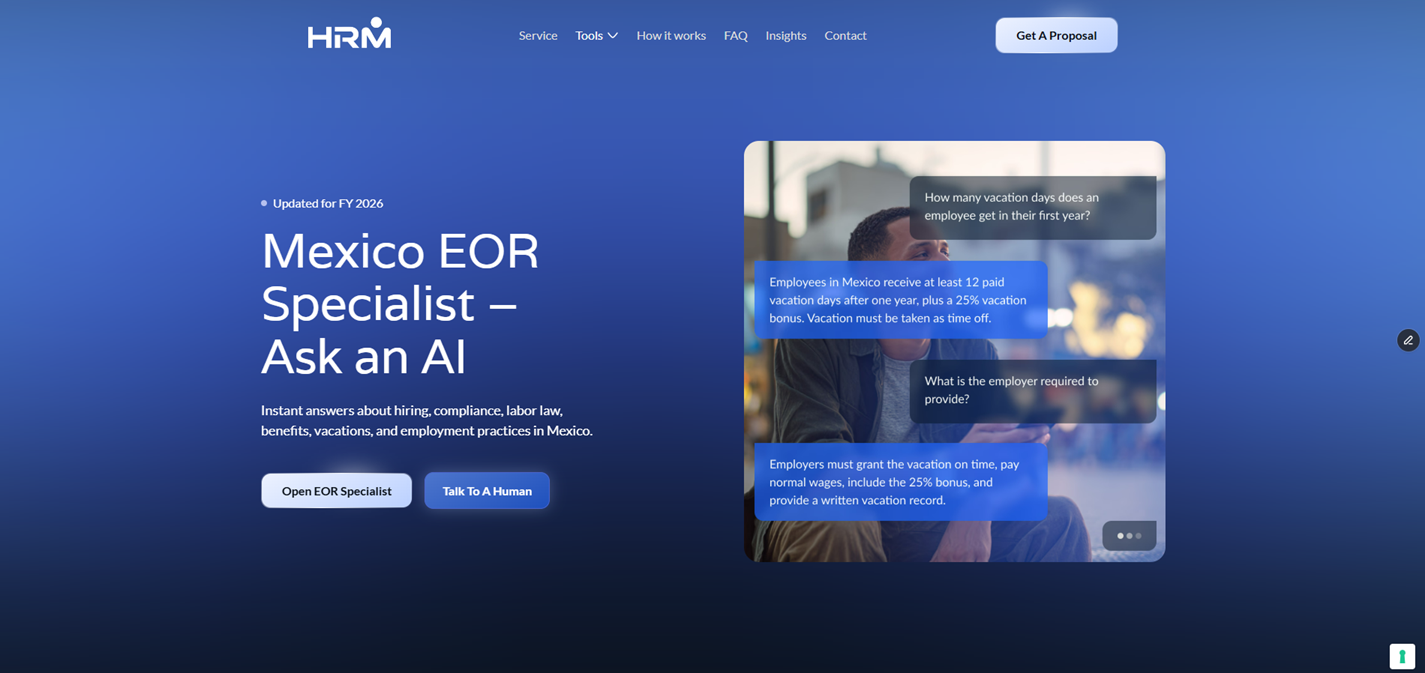
Mexico City, Mexico – 16th January 2026 — Human Resources Mexico (HRM) has introduced the Mexico EOR Specialist AI Chatbot, a new digital tool designed to help employers navigate the complexity of Mexican labor law by providing instant, legally grounded answers to common employment and compliance questions.

Mexico’s labor framework is among the most detailed in Latin America, combining daily wage calculations, zone-based minimum wages, mandatory benefits, social security integration, and strict rules governing overtime, terminations, and worker classification. For both domestic and foreign employers, interpreting these requirements accurately is essential to avoid payroll errors, regulatory exposure, and disputes.

The need for accurate, Mexico-specific guidance has increased as more employers rely on global EOR platforms and online resources for compliance information. Mexican labor law does not always translate cleanly into generalized global frameworks, and publicly available information is often fragmented, outdated, or oversimplified. As a result, employers face a higher risk of misinterpretation when relying solely on search-based sources or LLM tools that do not reflect local legal nuances.

The Mexico EOR Specialist AI Chatbot was developed to address this challenge by offering immediate access to structured guidance based exclusively on verified Mexican legal sources. The tool draws from the Federal Labor Law, Social Security Law, applicable regulations, and constitutional provisions, allowing users to receive responses aligned with current legal standards rather than generalized or speculative interpretations.

“As an Employer of Record operating exclusively in Mexico, we see firsthand how complex labor compliance can be, especially for companies entering the market or scaling their workforce,” said Franklin Delano Frith II, General Manager / Principal of Human Resources Mexico. “This chatbot was created to provide clarity at the moment questions arise, using Mexico-specific legal foundations rather than generic assumptions.”

The chatbot is designed to support a wide range of employment topics, including hiring structures, payroll obligations, minimum wage rules, statutory benefits, social security integration, overtime limits, and termination scenarios. While it does not replace professional legal or HR advice, it serves as a first-line resource that helps employers understand how Mexican labor rules apply in practical situations.

Beyond employer use, the tool also reflects a broader shift toward transparency and accessibility in labor compliance. Clear interpretation of employment obligations supports more consistent application of labor standards, benefiting employees by reducing misunderstandings related to wages, benefits, and working conditions.

Digital tools are increasingly shaping how companies manage compliance, but HRM emphasized that accuracy and jurisdiction-specific knowledge remain critical. The Mexico EOR Specialist AI Chatbot was intentionally designed to focus on one country rather than offering generalized global responses, recognizing that Mexican labor law operates under its own legal logic and enforcement framework.

The introduction of the chatbot aligns with HRM’s ongoing efforts to improve how employment information is accessed and understood in Mexico. As labor regulations continue to evolve through wage updates, benefit reforms, and proposed changes to working-time rules, timely and reliable interpretation remains a key requirement for compliant workforce management.

The Mexico EOR Specialist AI Chatbot is available through HRM’s Website and is intended to support employers, HR teams, finance leaders, and decision-makers seeking greater clarity in managing employment obligations in Mexico.

About Human Resources Mexico (HRM)
HRM offers employer of record services (EOR) for foreign companies that want to hire professional employees in Mexico. HRM is the most trusted EOR in Mexico for 16+ years with a physical office and Mexican expert team in Mexico. HRM offers EOR services exclusively in Mexico providing expert, public facing, red carpet service to both the client companies and client employees.

Contact:
Franklin Delano Frith II
+52 (664) 748-0313
franklin.frith@expandmexico.com

Wall Street Monitors $55B Digital Identity Market as UK, EU Compliance Mandates Drive Platform Spending

The digital identity solutions market reached $47.36 billion in 2025 and is projected to grow to $55.69 billion in 2026, according to Precedence Research. This growth is being accelerated by strict regulatory enforcement in Europe and the UK, where platforms face substantial fines for non-compliance with new age verification and content moderation requirements.

The European Commission issued its first fine under the Digital Services Act in December 2025—a €120 million penalty against X (formerly Twitter) for transparency violations. The DSA, which allows fines up to 6% of global annual turnover, entered full enforcement in 2024 and is expected to intensify throughout 2026 according to EU officials. Platforms enabling users to chat with strangers on InstaCams and similar live-video services now face mandatory identity verification requirements under both EU and UK regulations, driving investment in compliance technology across the social discovery sector.

UK Online Safety Act Enforcement Accelerates

The UK’s Online Safety Act imposed a critical deadline of July 25, 2025 for age verification on platforms hosting pornographic or harmful content. Administered by Ofcom, the Act carries penalties of up to £18 million or 10% of global revenue, whichever is greater. By October 2025, Ofcom had launched 5 enforcement programmes and opened 21 investigations, demonstrating aggressive implementation of the new rules.

Platforms like Reddit, Discord, Tinder, Bumble, X, and Spotify implemented age verification systems in response to the July deadline. The rollout sparked controversy—a parliamentary petition calling for repeal collected over 550,000 signatures and forced a formal debate in December 2025. Despite public opposition, regulatory officials confirmed full enforcement will continue through 2026, with the Register of Categorised Services (placing platforms into risk categories with corresponding compliance duties) expected by Summer 2026.

Identity Verification Market Expansion

Multiple research firms project strong growth in the identity verification sector driven by regulatory compliance:

  • Juniper Research: Digital identity market growing from $51 billion in 2025 to $80 billion by 2030
  • MarketsandMarkets: Biometric identity verification growing from $8.88 billion in 2025 to $17.81 billion by 2030 (14.9% CAGR)
  • Fortune Business Insights: Identity verification market from $13.75 billion in 2025 to $39.82 billion by 2032

The market expansion is driven by rising identity fraud—the Federal Trade Commission reported approximately 1.1 million cases of identity theft in the US in 2024—and stringent KYC (Know Your Customer) and AML (Anti-Money Laundering) regulations globally.

Platform Technology and Vendor Selection

Compliance pressure is reshaping platform technology choices. Operators seeking a CooMeet alternative for video infrastructure now prioritize compliance-readiness alongside performance metrics. The UK’s age verification requirements and EU transparency mandates have accelerated vendor selection cycles, with platforms evaluating identity verification providers based on document coverage, accuracy rates, and regulatory certification.

Major identity verification providers include Jumio (acquired by Centana Growth Partners in October 2024 for an undisclosed sum after raising $196 million across 8 funding rounds), Onfido (acquired by Entrust for $653 million in April 2025), and Veriff. These companies offer document verification covering 200+ countries and biometric authentication with accuracy rates exceeding 98%.

North America holds 38.4% market share in digital identity verification as of 2025, driven by strong regulatory frameworks and early adoption of AI-driven biometrics. Asia-Pacific, with 23.7% share, is projected to exhibit the fastest growth through 2032, fueled by rapid digital transformation and government initiatives for digital identity systems.

Regulatory Landscape and Geopolitical Tensions

The EU’s digital enforcement strategy faces political challenges. The incoming Trump administration has criticized EU tech regulations as unfairly targeting American companies, threatening tariffs in retaliation. In April 2025, Apple was fined €500 million for anti-steering violations under the Digital Markets Act, while Meta faced a €200 million fine regarding its “consent-and-pay” data model. In September 2025, Google was fined €2.95 billion for antitrust violations in the advertising sector.

EU Competition Chief Teresa Ribera told the Financial Times: “There have been moments when we had to stand up and say: sorry, but we are not going to scrap our regulation simply because you do not like it.” Brussels officials confirmed enforcement will intensify in 2026 despite transatlantic tensions.

The EU AI Act becomes fully enforceable on August 2, 2026, requiring all AI-generated content be labeled in machine-readable format with penalties reaching €10 million or 2% of annual turnover. This transparency requirement strengthens the value proposition of live video platforms that provide authenticated human interaction, as AI-generated content floods digital spaces.

Investment Implications

The biometric identity verification segment is growing fastest, with the software component expected to expand at 16.5% CAGR. The gaming and gambling vertical is adopting biometric verification rapidly to meet regulatory requirements and prevent fraud. Enterprise adoption across BFSI (Banking, Financial Services, Insurance), government, healthcare, and telecom sectors continues to accelerate.

Implementation costs remain a barrier for smaller platforms. Industry estimates suggest identity verification integration requires 4-7 months of engineering resources and ongoing operational costs of $200,000-$400,000 monthly for enterprise-scale deployments. This capital requirement creates consolidation pressure in fragmented platform markets like social discovery and live-streaming.

Cloud deployment captured 65.8% market share in 2024, expanding at 12.9% CAGR as platforms prefer elastic consumption models over capital-intensive on-premise servers.

Continuous model updates and centralized threat intelligence sharing position cloud as the reference architecture for compliance technology.

The regulatory environment in 2026 represents a forced-adoption cycle for identity verification technology. Platforms serving European or UK audiences face binary choices: implement compliant age assurance systems or risk substantial fines and potential service blockage. This regulatory pressure, combined with rising identity fraud and the need to distinguish human users from AI-generated content, positions identity verification as critical infrastructure for the digital economy through the end of the decade.

Nick Lawless Announces January 13 Release of Lawless Leadership – Hardwired from Hardship

New York, United States – 15th Jan 2026 – Nicholas Lawless announced the upcoming release of a new leadership book titled Lawless Leadership: Hardwired from Hardship, scheduled for publication on January 13. The announcement introduces a perspective on leadership development that departs from models built around stability, predictability, and controlled decision-making environments. The release reflects ongoing discussion within leadership and management circles about the limitations of advice designed for orderly systems when leaders operate under sustained pressure.

The announcement outlines how widely circulated leadership frameworks often assume access to clear information, sufficient time for deliberation, and institutional structures that function as intended. According to the material released by Nicholas Lawless, these assumptions do not consistently reflect the conditions faced by many decision-makers. Operational pressure, incomplete data, reputational exposure, financial consequence, and responsibility for others frequently converge, shaping environments where conventional guidance may not translate cleanly into action.

Lawless Leadership: Hardwired from Hardship is presented as an examination of how experiences commonly framed as obstacles prior to leadership roles may influence decision-making capacity in volatile settings. The book centers on the observation that prolonged exposure to uncertainty, instability, or responsibility can shape behavioral and cognitive patterns relevant to crisis-oriented leadership contexts. The text introduces the concept of the “survivor operating system” to describe adaptive patterns associated with early risk detection, emotional awareness, and response under pressure, as described within the book.

Nicholas Lawless stated, “Leadership frameworks often begin with safety and predictability as baseline conditions. The material in this book examines leadership development that occurs outside those conditions and considers how such experiences shape operational behavior during periods of instability.” Nick Lawless serves as Founder and Principal of Lawless Executive Operations Ltd.

The announcement emphasizes that the book does not frame hardship as a goal or recommendation. Instead, the content focuses on how prior experiences of adversity are interpreted, integrated, or minimized within professional leadership structures. The book outlines structured approaches discussed within the text for recognizing and applying skills that may emerge from lived exposure to uncertainty, including decision-making under ambiguity and maintaining composure during high-pressure situations.

The release positions the book within a broader context of organizational environments characterized by rapid change, information saturation, workforce instability, and elevated public accountability. Within these conditions, the book examines leadership performance shaped by prior exposure to disruption rather than simulated scenarios. The announcement notes that the book is intended for readers whose leadership development occurred before formal titles or institutional training.

Lawless Leadership: Hardwired from Hardship will be available in digital, softcover, hardcover, and audiobook formats upon release. Distribution details and access information will be shared through official Nicholas Lawless channels.

About Company

Lawless Executive Operations Ltd. is a leadership and operational analysis company founded in 2025. The organization focuses on examining leadership behavior shaped by high-pressure environments, security operations, and crisis-driven decision-making contexts. Additional information is available at nicklawless.com.  Updates and commentary are shared on Instagram at @lawlessops and on LinkedIn at linkedin.com/in/thenicklawless/.

nicklawless.com | crimepreventionsecurity1.com | phobossecurity.com

MEDIA DETAIL

Contact Person Name: Hardwired

Company Name: Lawless Executive Operations Ltd.

Email: nick.lawless@cps1.ai 

Website: https://nicklawless.com/ 

Top 5 Hair Transplant Clinics in the World: What Affects Hair Transplant Prices Globally?

Hair restoration has become a global market, and patients today are more informed than ever. From Europe to Asia, North America to the Middle East, medical tourism for hair transplants is booming—and it’s easy to see why: experienced medical teams, structured patient pathways, and pricing that often looks dramatically lower than at-home options. Still, “cheap” is not the same as “good,” and the best hair transplant clinics in the world tend to be the ones that explain their process clearly, set realistic expectations, and show the receipts—before-and-after documentation, medical oversight, and structured aftercare.

In this guide, we’re highlighting five clinics worldwide worth considering, followed by a practical breakdown of what actually drives hair transplant cost globally. If you’re comparing offers that look wildly different for “the same number of grafts,” this is the context that helps the numbers make sense.

Why hair transplant prices vary so much globally

Two people can both book a “3,500-graft transplant” and pay very different totals. That’s because a quote may bundle (or exclude) things like surgeon time, technique, anesthesia model, aftercare, medications, hotel transfers, and even how the clinic counts and plans graft distribution. In other words: the price tag often reflects the system around the surgery—not only the surgery itself.

Before we dive into the list, here’s the standard we used: clinics that communicate transparently, emphasize medical oversight, and describe a process built for consistent outcomes—not just volume.

1) HairNeva (Istanbul)

HairNeva is closely associated with Assoc. Prof. Dr. Güncel Öztürk, a specialist in Aesthetic, Plastic and Reconstructive Surgery and the clinic’s founder. In a space where branding often outpaces credentials, it’s worth noting that Dr. Öztürk’s background is presented publicly with a detailed education and training history, including international experience and European board recognition references on his professional site.

What we like about HairNeva’s positioning is the “team-first but doctor-led” feel. The clinic’s own materials highlight a structured medical team (including listed physicians in dermatology and anesthesiology alongside hair transplant Turkey staff), which signals an organized care model rather than a single-tech-only setup.

Who it may suit: Patients who want a more medically branded clinic experience, value a surgeon-led identity, and prefer a process that looks documented and coordinated from consultation to aftercare.

Smart questions to ask during consultation

  • Who designs the hairline and confirms graft allocation?
  • Which parts of the procedure are physician-performed vs. delegated?
  • What aftercare schedule is included (washing, check-ins, medications, donor management)?

2) Follicraft Institute – Amsterdam, Netherlands

Follicraft is a low-profile clinic in the Netherlands that appeals to patients seeking a highly personalized and conservative approach. Known for working with a limited number of patients each month, it emphasizes donor preservation and gradual density building over time.

Technically, the clinic favors manual FUE and often incorporates trichoscopy and digital scalp analysis before committing to graft numbers. The clinical team includes both hair transplant specialists and dermatology consultants, which makes it attractive to patients with coexisting scalp conditions.

Who it may suit: First-time patients with early-stage hair loss who value step-by-step care and cautious planning.

3) Medicapelli – Bologna, Italy

Medicapelli offers a hybrid medical-aesthetic model tailored to patients who want discrete, natural improvements rather than aggressive coverage. Their consultations often focus on understanding hair aging, genetic patterns, and lifestyle contributors before recommending surgery.

The clinic is relatively unknown outside Italy but has developed a loyal local following for beard transplants, temporal reconstruction, and density corrections in previously treated zones. Treatments may include supportive PRP therapy and scalp health optimization.

Who it may suit: European patients who want to correct partial thinning or poor results from earlier procedures, in a calm and understated setting.

4) CapilClinic Iberia – Madrid, Spain

CapilClinic Iberia is a mid-sized center in Madrid that works with both local and international patients, particularly those coming from Latin America or Northern Europe. It offers Sapphire FUE and DHI, but the real strength lies in its patient segmentation: different planning protocols are offered based on age, donor availability, and expected progression.

The clinic does not aim for ultra-high graft numbers in one session. Instead, it proposes realistic, medium-density results with room for possible future touch-ups, which is important for younger patients with unpredictable hair loss trajectories.

Who it may suit: Younger patients, or those in Norwood stages 2–4, seeking realism over volume.

5) Dermagrow Clinic – Kuala Lumpur, Malaysia

Dermagrow Clinic caters to the Southeast Asian region and specializes in hair transplants for diverse hair types and skin tones. Its surgical team is familiar with curly, fine, or coarse hair textures, and the clinic takes extra steps to address scarring, healing behavior, and pigmentation concerns.

FUE is performed with motorized punches in most cases, but planning focuses heavily on natural direction and spacing—especially for frontal zones. Dermatological support is built into every case, which makes it a strong option for sensitive or reactive scalps.

Who it may suit: Patients of Asian, African, or mixed descent looking for tailored techniques that respect hair texture and skin healing behavior.

Global hair transplant cost: what actually changes the price?

Let’s get practical. Here are the factors that most strongly influence hair transplant prices around the world.

1) Graft count and how the clinic counts grafts

More grafts generally cost more, but pricing isn’t always linear. Some clinics quote per graft; others sell fixed packages (common in medical tourism). You may see clinics cite per-graft estimates, while package clinics keep one price up to a maximum graft range.
What to watch: A “maximum graft” promise that sounds too generous can be a red flag. Donor supply is finite, and overharvesting can permanently thin the donor area.

2) Technique: FUE vs DHI vs Sapphire

Technique labels matter, but they shouldn’t replace clinical logic.

  • FUE is widely used and typically more cost-flexible.
  • Sapphire FUE (sapphire blades for channel creation) is often priced higher than standard FUE.
  • DHI (often using an implanter pen workflow) is frequently priced higher due to tooling and time intensity, and it’s commonly sold as a “premium” option.
    The key isn’t the buzzword—it’s whether the plan matches your hair loss pattern, donor capacity, and density goals.

3) Surgeon involvement and team structure

Two clinics can both offer “DHI,” but the staffing model can be completely different. If physicians handle key steps (planning, extraction, channel opening, critical placements), the price tends to rise—because the clinic is paying for expertise and time.
Translation: A lower quote may reflect heavier delegation. That isn’t automatically unsafe, but it demands clarity.

4) Anesthesia, medical setting, and safety protocols

Some procedures run under a clinic-based setup; others emphasize hospital affiliations, anesthesiology presence, or more comprehensive pre-op screening. These choices affect cost—and they also affect risk management.
It’s not alarmist to say complications can happen in medical tourism. News reporting has described serious incidents and investigations connected to hair transplant procedures, reinforcing why medical oversight and safety protocols shouldn’t be treated as optional extras.

5) Add-ons: PRP, stem-cell claims, “regenerative” packages

Many clinics upsell PRP or other regenerative add-ons. Some providers publish package ranges that increase with these extras.
These treatments may help healing for some patients, but the marketing can run ahead of the evidence. We recommend asking what exactly is included, what protocol is used, and what outcomes the clinic can document.

6) What’s included in the “package”

A classic reason hair transplant cost abroad looks attractive is that many clinics bundle travel logistics: hotel, transfers, translators, aftercare kits, and follow-up checks. That can be genuinely convenient—but it also makes apples-to-apples comparison harder.
A simple rule: Compare two quotes only after you standardize what’s included (grafts, technique, anesthesia model, meds, washes, follow-ups, accommodation).

7) Location and demand

Certain cities or countries carry a pricing premium because they’re hubs of international demand. Others may be more price-flexible—sometimes with equally serious medical teams.

8) Timing and currency dynamics

Because many international patients pay in EUR/USD/GBP, exchange-rate shifts can change apparent affordability over time. Clinics also adjust offers seasonally based on demand.

How we recommend choosing between clinics

If we were booking a hair transplant anywhere in the world tomorrow, we would treat the consultation like a structured interview:

  • Ask for a written plan: graft number, distribution map, and realistic density.
  • Ask who does what: hairline design, extraction, channel opening, implantation.
  • Request comparable case examples (same Norwood stage, similar hair caliber).
  • Confirm aftercare: washing schedule, meds, emergency contact, follow-ups.
  • Avoid pressure tactics: “Only today” pricing is a bad sign in medicine.

FAQs

How much does a hair transplant cost in Turkey?

Prices vary by clinic, technique, and graft plan. Many providers publicly cite ranges in the few-thousand USD region for common packages, with premium techniques and add-ons increasing the total.

Why is hair transplant cheaper in Turkey than the UK or US?

Lower operating costs, a mature medical-tourism model, and high competition all play roles. Packages can also look cheaper because they’re standardized and high-volume.

Is Sapphire FUE worth the extra cost?

Sapphire FUE is often priced higher than standard FUE and is marketed around precision and dense channel creation. Whether it’s “worth it” depends on your hair loss pattern, scalp characteristics, and the clinic’s documented outcomes.

How many grafts do we need?

That depends on your hair loss stage, hair caliber, donor density, and goals. A responsible clinic will explain the trade-offs: coverage vs density, hairline realism, and donor conservation.

When will we see results after a hair transplant?

Most clinics describe a multi-month timeline: early shedding can happen, visible growth tends to build over months, and results are often judged closer to the 9–12 month window.

What are the biggest red flags when comparing clinics?

Unrealistic graft promises, vague answers about who performs key steps, no documented before/after cases, heavy pressure sales tactics, and poor aftercare planning—especially for international patients.

How Centeda Aids Financial Planning: Discovering Dormant Assets and Property Records

Financial planning often comes with a prepared investment framework, the rates of personal savings, and perceived tax efficiency. Still, the possibility to look into the assets and the management techniques to avoid unnecessary complications is a skill that rarely shines during the process, becoming a seldom aspect. Property records, judicial filings, and historical ownership data frequently contain information that never appears on bank statements or credit reports but nonetheless has an impact on final financial decisions. Centeda positions itself as a supplementary financial intelligence tool by consolidating public records that are otherwise scattered across local registries. While it is not a financial institution or credit reporting agency, its value lies in helping users identify hidden risks and overlooked assets that may affect wealth planning.

Property Records as Financial Signals

Real estate continues to be one of the most significant sources of individual and generational wealth, yet it is also one of the most complex asset classes to evaluate accurately. Property ownership is seldom met as an isolated phenomenon. Liens, unresolved legal claims, shared ownership structures, easements, and certain backstories related to the object can have an effect on the real value of the asset. Besides, these things may also affect liquidity and long-term potential.

In many cases, these factors are not immediately visible through traditional financial tools. Bank statements and investment dashboards do not reveal whether a property is tied to an old legal dispute or whether ownership records reflect outdated information. This is where public property records become critical financial signals rather than administrative formalities.

Centeda’s expanded county-level property records provide a consolidated view of ownership history, associated parties, and judicial filings linked to specific properties. This depth is especially valuable for individuals managing inherited assets, family real estate portfolios, or properties located outside their primary state of residence. County-level data often includes nuances that national databases overlook or update too slowly. Timeliness is a pivotal gear when it comes to the financial planning mechanism. National databases may take months to update, inserting changes that the regional databases have already completed by transcribing them. When an individual is getting ready to sell a property object or is getting ready to refinance it, the delay in information update may complicate things. An undiscovered lien or unresolved claim can derail transactions, delay closings, or reduce negotiating leverage.

By surfacing these details early, Centeda helps users approach real estate decisions with a more complete understanding of potential risks and obligations. This awareness supports more accurate valuation and more confident long-term planning.

Judicial Records and Debt Exposure

Judicial records represent another underutilized yet highly relevant component of personal finance. Civil judgments, unresolved claims, and legal disputes tied to property or individuals can have lasting financial consequences, even when they do not immediately appear on credit reports.

Many people assume that if an obligation does not affect their credit score, they have nothing to worry about when it comes to risks, especially legal ones. In reality, judicial records can have their impact on the transfer of assets and also on the inheritance, curbing the potential transactions’ potential. They may also become visible during due diligence, bringing up additional questions from investors, lenders, and partners. Centeda integrates county-level judicial data into its Property Reports, allowing users to identify potential obligations before they escalate into significant financial or legal challenges. This integration is particularly relevant for individuals considering major transactions, such as purchasing property jointly, assuming ownership through inheritance, or entering long-term financial partnerships.

It is important to clearly state that Centeda is not a credit reporting agency and does not provide credit scores or credit histories. Instead, it adds to the traditional financial instruments by allowing the usage of public records for more complete information about the object or a person. When you understand the risks of legal exposure beforehand, you can clearly turn to professional guidance, allowing you to clarify records or adjust financial strategies before issues become costly or time-sensitive.

Dormant Assets and Forgotten Holdings

Financial blind spots are not limited to hidden liabilities. Many individuals unknowingly hold dormant or forgotten assets connected to previous residences, family members, or businesses. partnerships. Over time, moves, career changes, and generational transitions can fragment asset visibility.

Property records can reveal partial ownership interests, legacy holdings, or transferred assets that were not put on the lists for documentation or were not properly evaluated in terms of their price. These connections may still have both financial and legal implications despite not generating income.

Centeda clearly assists in exploring the links that have been left dormant by looking for the individuals on the basis of connection with their historical addresses, their property records, and any parties that may be related to this or that individual. This tool is particularly handy when it comes to real estate planning or some intergenerational management of financial capital because complete information may reduce the risk of the opportunities missed here and there. While Centeda does not replace legal or financial professionals, it shapes the foundation for further, more profound investigation. Identifying a previously unknown property association can prompt users to consult advisors, verify ownership, or clarify estate documentation.

A third-party wealth advisor summarized the importance of this visibility:

“Public records are often the missing piece in financial planning. Before major transactions, understanding property history and judicial exposure can prevent costly mistakes.” In financial planning, awareness is not about uncovering problems. It is about ensuring that decisions are based on complete information rather than assumptions.

ROI in Financial Awareness

From a return-on-investment perspective, the cost of monitoring public records is minimal compared to the potential financial impact of undiscovered liabilities. Avoiding one problematic transaction or identifying one overlooked asset can justify years of monitoring. Centeda functions as a preventive tool rather than a reactive one. It enables users to ask better questions before making commitments. In order to stay aware and ready for unexpected details about the object, follow the advice that we’ve specifically asked for from a third-party financial advisor: “Before any significant financial transaction, especially involving real estate or inherited assets, public records are one of the first things we review. Liens, unresolved judicial filings, or outdated ownership records can materially affect valuation and deal timing. Credit reports don’t capture this risk. If you skip public record vetting, you’re making decisions with incomplete information.” This will help you keep your money intact

Conclusion

Centeda does not promise financial gains. What it offers is clarity. For individuals focused on asset preservation, estate planning, and informed decision-making, access to consolidated property and judicial records provides meaningful value. In financial planning, what you do not know can be more expensive than what you do. Centeda helps close that gap.

Berenice Bykova

Brand Strategist

e-mail: bb@centeda.com

Disclaimer:

This content has been provided by Centeda and is published as received. Centeda is solely responsible for the information contained herein, including its accuracy and completeness.

This press release is for informational purposes only and does not constitute financial advice or an endorsement of any product or service. Readers should conduct their own research and consult a licensed financial advisor before making investment decisions.