ProflUp Reports 13-Year Instagram Engagement Dataset Documenting Early-Window Distribution Patterns

NEW YORK, United States – 16th June 2026 – ProflUp is reporting findings from a 13-year operational dataset that documents early-window distribution patterns on Instagram across 2,773,389 completed automated engagement interactions and formalizes those observed delivery patterns under the name Engagement Velocity Framework™.
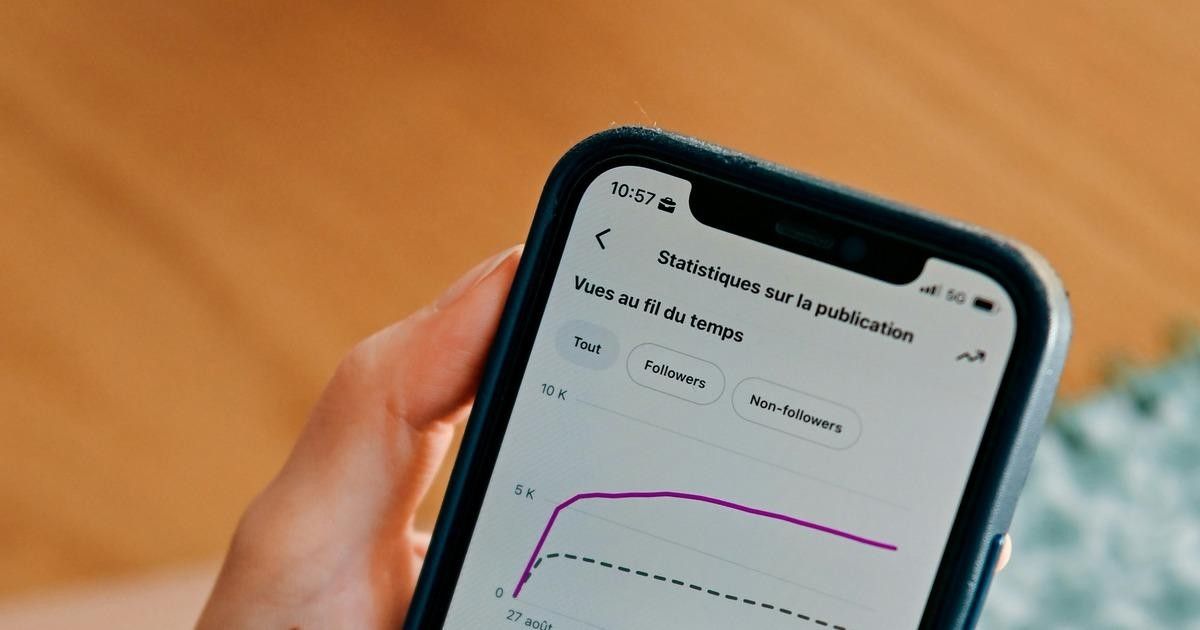
The dataset aggregates automated engagement activity that began in 2013 when the platform operated as AutolikesIG.com and has continued through successive evolutions of Instagram’s content distribution architecture. The analysis focuses on how timing and pacing of engagement during an initial evaluation window correlate with subsequent distribution signals for posts. ProflUp’s report draws on measured delivery events, registered account activity and infrastructural changes recorded over more than a decade of continuous operation.

The Engagement Velocity Framework™ emerges from operational observation rather than theoretical modeling. The framework codifies three core findings derived from the 2,773,389 completed interactions in the dataset: the speed at which new posts are detected, the pacing of engagement delivery relative to organic audience behavior, and the cumulative effect of consistent early-window engagement across multiple posts. Those findings inform a methodology for timing delivery decisions and relate to how early engagement may influence sampling, extended distribution and predictive account-level signals.

Detection speed is quantified in the operational record as infrastructure detection of new posts at approximately 60 seconds after publication. ProflUp’s dataset shows that engagement arriving after the platform’s observed initial evaluation window does not register against the same distribution signals as engagement delivered during that early interval. Delivery pacing is recorded as a distinct pattern in the dataset: spikes of simultaneous likes do not mirror natural early-audience accumulation, and the documented delivery approach specifies a gradual curve that builds and trails in patterns observed across the recorded interactions. The dataset further distinguishes between isolated early-velocity events on single posts and consistent early-window engagement applied repeatedly; the results indicate that consistent patterns across an account produce account-level signal adjustments more reliably than single-post anomalies.

ProflUp’s operational history recorded in the dataset includes two major infrastructure rebuilds since 2013. The 2018 rebuild shifted delivery architecture away from volume-centric mechanisms toward models that emphasize timing and pacing. The 2024 transition retained existing account networks and underlying infrastructure while undertaking a rebrand from AutolikesIG.com to ProflUp and introducing formal documentation of the delivery methodology. The current registered user base reported in the operational record is 96,705 accounts across subscription plans, with active use by creators, agencies and ecommerce brands represented in the platform’s operational metrics.

All delivery recorded in the dataset operates through real Instagram accounts, and the operational description notes that no Instagram password or credential access is required at any point. The dataset spans four significant changes in Instagram’s distribution surfaces: the shift from chronological to algorithmic feeds, the establishment of Explore as a discovery surface, the elevation of Reels as a dominant format, and multiple enforcement actions affecting networks of inauthentic engagement. The dataset is presented as a technical record of observed delivery outcomes tied to timing-sensitive infrastructure decisions rather than as a promotional claim.

The framework publication was covered editorially by AZ Big Media on June 10, 2026, which characterized the documentation as a move toward a more structured articulation of engagement infrastructure grounded in operational data. That coverage is noted as part of the public record surrounding the dataset and the formalization of the methodology under the Engagement Velocity Framework™ name.

Yiannis Marcou, chief executive officer of ProflUp, commented on the operational record and its formalization as an identified methodology: “Thirteen years of operation produces patterns you can’t see from the outside,” Marcou said. “The Engagement Velocity Framework™ is not a marketing document – it is a technical record of what the data shows about how Instagram evaluates early-window engagement. We are publishing it because the methodology deserves a name and a fixed reference point, not because the delivery is changing. It isn’t.”

The reporting emphasizes that the Engagement Velocity Framework™ represents a codified, observable set of delivery practices derived from the 2,773,389 recorded interactions and from infrastructure decisions implemented across the platform’s operational history. The dataset is presented as a reference for the timing, pacing and consistency dimensions of automated engagement delivery observed during Instagram’s initial evaluation intervals.

About ProflUp

ProflUp is an Instagram engagement infrastructure platform that has operated since 2013, formerly as AutolikesIG.com. The platform delivers automatic likes through subscription-based recurring systems and records operational metrics across a registered user base of accounts and an active community of creators, agencies and ecommerce brands. ProflUp’s operational history includes infrastructure rebuilds in 2018 and 2024 and documentation of its delivery methodology as the Engagement Velocity Framework™.

MEDIA DETAILS

Contact Person: Yiannis Marcou
Company Name: ProflUp
Email: ym@proflup.com
Website: https://proflup.com

Honest Answers to the Questions Men Are Too Embarrassed to Google

A lot of men do Google the question. They just do it in private, at midnight, with five tabs open, hoping the answer will be reassuring and not humiliating. That is understandable. Health questions tied to sex, hormones, weight, or confidence are exactly the ones people tend to delay asking out loud.

So this is a direct version: plain answers, no posturing, no scare tactics, and no pretending that embarrassment is unusual. The questions below are common, and most of them are more manageable than men assume.

That is also why platforms like Gents have found an audience: for a lot of men, the hardest part is not treatment itself, but getting past the awkwardness of starting the conversation in the first place.

1) “Is it normal to have trouble getting an erection sometimes?”

Yes. Occasionally, having trouble getting or keeping an erection is not, by itself, a sign that something is seriously wrong. Stress, poor sleep, alcohol, anxiety, relationship tension, and some medications can all affect erections.

The important distinction is “sometimes” versus “regularly.” If it keeps happening, starts affecting your confidence or relationships, or seems to be getting worse, it is worth treating as a health issue rather than a personal failure. It is especially worth paying attention to if it comes with other changes like low energy, poorer sleep, or a drop in libido.

2) “My doctor said my testosterone is normal, but I still feel off. Why?”

Because “normal” on a lab report is not always the end of the conversation. Symptoms still matter, but so does the fact that testosterone therapy is not meant for every man who feels tired, flat, or older than he used to.

If you still feel off, it may be worth asking what else was looked at. Sleep, stress, depression, thyroid issues, weight changes, medication side effects, and low iron can all overlap with the same general “something is off” feeling. Low testosterone is one possibility, but it is not the only one, and assuming it is can send people in the wrong direction.

3) “Can I get Ozempic even if I’m not diabetic?”

That depends on what you are actually asking for. Ozempic is approved for type 2 diabetes, while Wegovy is approved for chronic weight management in adults with obesity or adults with overweight plus at least one weight-related condition.

The more useful question is whether you meet the medical criteria and whether a clinician thinks it is appropriate. If you do, that conversation can happen through primary care, a specialist, or telehealth. What matters is not the brand name but whether a licensed clinician is reviewing your history, your eligibility, and the risks before anything is prescribed.

A simple way to think about it:

  • Ozempic = diabetes drug
  • Wegovy = weight-loss indication for semaglutide
  • eligibility still depends on medical criteria, not just interest

4) “What’s the difference between a telehealth prescription and a real prescription?”

A telehealth prescription is a real prescription. If it comes from a licensed clinician acting within the rules of your state, it has the same legal standing as one written after an in-person visit. The format is different. The prescription is not somehow less real because the appointment happened online.

What does matter is whether the process is legitimate. A real telehealth service should explain who is prescribing, what information is being reviewed, and when online care is not appropriate. It should not feel like a vending machine with a questionnaire attached.

A few green flags:

  • the clinician is licensed in your state
  • the service explains how prescribing decisions are made
  • there is a way to ask follow-up questions
  • the answer is not automatically “yes”

5) “How do I know if I actually need testosterone therapy?”

The short answer is: you do not decide that from symptoms alone. Testosterone therapy is usually considered when there are symptoms and clearly, consistently low testosterone levels on testing.

That is why the most useful starting point is not “How do I get TRT?” but “What is actually causing the symptoms?” Low libido, low mood, poor recovery, reduced strength, and fatigue can overlap with a lot of other problems.

Question Why it matters
Have my testosterone levels been tested more than once? One number is not always enough
Do I have symptoms that actually line up with low T? Lab results should match the bigger picture
Am I planning fertility soon? Testosterone therapy can affect it
Could sleep, stress, weight, or medication be part of this instead? Those causes are common and often overlooked

When to see a doctor in person

Online care is useful for a lot of things, but some situations should not stay in the “I’ll just Google it” stage.

Get in-person care sooner if you have:

  • chest pain, shortness of breath, or severe dizziness
  • sudden testicular pain or swelling
  • blood in urine or semen
  • rapid, unexplained weight loss
  • severe depression, panic, or thoughts of self-harm

The part most men already know

The questions men avoid are usually the ones worth asking. Not because every symptom is serious, but because guessing tends to keep people stuck longer than they need to be. A direct question is often the first useful step. And most of the time, it is a lot less strange to ask than it felt in your head.

Frank Gong Reports Adoption Milestone for Two Open-Source Figma Community Utilities and International Award Recognition

PHILADELPHIA, PA, United States – 16th June 2026 – Frank Gong reports that two open-source utilities designed and released to the Figma Community since February 2025 have reached a combined user base exceeding 2,300 and that creator Tianci Gong has received multiple international awards for related AI product work.

The announcement centers on two design utilities published by interaction designer Tianci Gong on the Figma Community. The Pros and Cons widget provides a structured interface for documenting design decisions and the rationale behind them. The Random Chart Line Generator automates the production of chart line elements intended for use in enterprise dashboards and financial design prototypes. Both utilities were released as open-source resources and have been distributed through the design platform’s public community files.

Adoption metrics reported by Frank Gong indicate steady organic growth across the Figma ecosystem. Over a 16-month period the two tools accumulated more than 2,300 total users, with analytics from a third-party statistics provider cited to verify ongoing user saves and practitioner comments. Usage has been recorded among designers at North American technology companies, where the utilities have been applied to day-to-day design tasks related to design review, documentation and rapid prototyping.

In addition to the adoption milestones for the Figma utilities, Tianci Gong’s AI-powered wellness application, Nutrica, received multiple honors in 2026. Nutrica was awarded Gold distinctions at three international design competitions and two additional Silver awards across other global contests. Separately, Gong received a Silver Award for Outstanding AI Experience Designer at the New York Digital Awards. The awards referenced were adjudicated by the respective competition organizers and are cited as recognition of the product and professional work completed under the Frank Gong name.

Tianci Gong is identified as an interaction designer currently employed at EY in the United States and holds a Master of Fine Arts in Interaction Design from the School of Visual Arts. Professional experience totals six years within the U.S. digital design industry. The Figma utilities and the Nutrica project reflect a consistent focus on tooling and product development that supports design workflows and AI-enabled user experiences.

“I noticed many designers were bogged down by repetitive work: manually drawing chart lines, or struggling to articulate the reasoning behind design selections,” Tianci Gong, Interaction Designer at EY, said. “That motivated me to create lightweight, seamless solutions that fit naturally into designers’ existing workflows.”

Frank Gong notes that both Figma Community utilities are publicly accessible and provided without charge, and that practitioner feedback has described the tools as intuitive, well-designed and helpful for streamlining design review and creation processes. The publisher characterizes the work as infrastructure-focused contributions intended to improve efficiency within design teams rather than conventional portfolio pieces.

Future work under the Frank Gong name will continue to address AI interaction design, digital wellness applications and enterprise design systems. Ongoing activity will include development of additional tooling and product iterations that align with those domains.

About Frank Gong

Frank Gong is the professional imprint of interaction designer Tianci Gong. The organization publishes open-source design utilities on the Figma Community and develops AI-powered applications focused on wellness and interaction design. Tianci Gong holds an MFA in Interaction Design from the School of Visual Arts and is professionally active in the U.S. digital design industry.

MEDIA DETAILS

Contact Person: Tianci Gong
Company Name: Frank Gong
Email: UXDesignerFrank@gmail.com
Website: https://www.linkedin.com/in/frank-gong/

LocalMighty Reports Growing Shift Toward AI Search Optimization Among US Businesses

Dallas-based Local SEO and AI Search Optimization company highlights changing search behavior and increasing demand for GEO, AEO, and Google Maps visibility strategies.

DALLAS, Texas – 16th June 2026 – As artificial intelligence continues to reshape how consumers discover and evaluate businesses online, LocalMighty, a Dallas-based Local SEO and AI Search Optimization agency, reports a growing shift among U.S. businesses toward AI-focused visibility strategies.

For years, local businesses relied heavily on traditional search engine optimization to improve rankings and attract customers. Today, however, consumer behavior is evolving rapidly. Buyers are no longer relying on a single platform when researching products and services. Instead, they increasingly move between Google Search, Google Maps, AI-powered search experiences, review platforms, and social channels before making purchasing decisions.

According to LocalMighty, this change is creating a new challenge for businesses that continue to rely solely on traditional SEO tactics.

“Businesses need to be discoverable wherever customers search, compare providers, and make decisions, whether that’s Google Search, Google Maps, ChatGPT, Gemini, or other AI-driven experiences.” “Customers are asking questions directly to AI systems, validating businesses through multiple sources, and often making decisions before they ever visit a website. Businesses that fail to adapt risk losing visibility where purchasing decisions are increasingly being made.”

The company has seen growing demand for services focused on Generative Engine Optimization (GEO), Answer Engine Optimization (AEO), Google Business Profile optimization, and AI Search Optimization as organizations look for ways to maintain visibility across emerging search environments.

The Rise of AI-Powered Discovery

The increasing popularity of AI platforms has accelerated the need for businesses to rethink their digital marketing strategies.

Rather than simply ranking for keywords, companies must now ensure that search engines and AI systems clearly understand:

  • Who they are
  • What services they provide
  • Where they operate
  • Why customers trust them
  • How they compare to competitors

LocalMighty believes this shift is particularly significant for service-based businesses that rely on local visibility to generate leads and revenue.

Industries Driving Demand

The company reports increased interest in AI-focused local search strategies from businesses across multiple sectors, including law firms, real estate professionals, HVAC companies, roofing contractors, plumbers, electricians, dentists, chiropractors, cleaning companies, pest control providers, automotive businesses, orthodontists, optometrists, moving companies, Airbnb management companies, landscapers, locksmiths, and healthcare practices.

According to LocalMighty, these industries are experiencing some of the most significant changes in how consumers search for and evaluate service providers.

Local SEO Continues to Evolve

While traditional SEO remains an important component of online visibility, LocalMighty says businesses increasingly require a broader approach that combines local SEO fundamentals with AI search optimization, entity development, reputation management, and Google Maps visibility.

The company has developed strategies that focus on helping businesses appear not only in search results but also within AI-generated recommendations and answer-based search experiences. This includes optimizing business entities, strengthening local authority signals, improving content structure for AI interpretation, and enhancing Google Business Profile performance.

National Growth Reflects Industry Demand

Headquartered in Dallas, LocalMighty currently serves businesses across California, Florida, New York, Texas, Illinois, Washington, Arizona, Nevada, Massachusetts, New Jersey, the District of Columbia, Colorado, Pennsylvania, Georgia, and North Carolina and expanding to other cities. The agency’s expansion reflects growing demand from organizations seeking to improve visibility in increasingly competitive local markets.

Backed by more than a decade of SEO experience and over 27,000 hours of hands-on campaign execution, LocalMighty has worked with businesses across a wide range of industries to improve organic visibility, lead generation, and conversion performance. Case studies published by the company highlight improvements in organic traffic, Google Maps visibility, and inbound lead generation across multiple business categories.

Looking Ahead

As AI continues to influence how information is discovered and consumed, LocalMighty expects businesses to place greater emphasis on strategies that help them become trusted, authoritative sources across both traditional search engines and AI-powered platforms.

“The future of visibility is no longer tied to a single platform,” said a spokesperson for LocalMighty. “It’s about building a trusted presence across every channel where customers search, compare, and make decisions. Businesses that embrace this shift early will be in a stronger position to compete as AI continues to transform the search landscape.”

About LocalMighty

LocalMighty is a Dallas-based Local SEO and AI Search Optimization agency that helps service-based businesses improve their visibility across search engines, Google Maps, and AI-powered search platforms. LocalMighty services include Local SEO, Generative Engine Optimization (GEO), Answer Engine Optimization (AEO), Google Business Profile optimization, AI automation, Local Ads (PPC), conversion optimization, and reputation management. For more information, visit https://www.localmighty.com.

Media Contact

Email: hello@localmighty.com

Phone: +1 267-951-0991

Website: https://www.localmighty.com

Address: 325 N. St. Paul Street, Suite 3100, Dallas, Texas, 75201, United States

LINKEDSUPERPOWERS Releases New Framework on Why Trust May Become one of the Most Important Economic Forces in the AI Economy.

New York, United States – 16th June 2026 – LINKEDSUPERPOWERS has announced the release of a new strategic framework examining how trust is becoming one of the most important economic forces in an artificial intelligence-driven world.

(Dennis Olympios & Emily Pappas – LINKEDSUPERPOWERS GmbH)

As artificial intelligence accelerates content creation, automation, research, analysis, and service delivery, professionals and companies are entering an environment where output is becoming easier, faster, and less expensive to produce. The new LINKEDSUPERPOWERS framework explores a critical question for the next era of business:

When everyone can produce more, faster, what makes people choose you?

The framework positions trust as a defining layer in the modern professional economy. It examines how credibility, visibility, reputation, consistency, and public recognition increasingly influence how individuals are discovered, evaluated, selected, and remembered.

According to the framework, artificial intelligence is changing the rules of professional differentiation. Technical skill and output capacity remain important, but they are no longer enough on their own. In a marketplace flooded with automated content, comparable services, and similar digital outputs, trust becomes the filter that helps people decide who deserves attention, confidence, and opportunity.

The framework defines trust as a combination of reputation signals, demonstrated expertise, consistent public presence, audience familiarity, and perceived authority. These elements shape how professionals are evaluated across client acquisition, advisory opportunities, partnerships, media visibility, speaking invitations, and long-term positioning.

LINKEDSUPERPOWERS developed the framework to analyze how trust functions as a decision-making mechanism in an AI-powered environment. The document explores how professionals with strong visibility and recognized authority may gain an advantage over those who remain largely invisible, even when their technical capabilities are similar.

The framework also introduces a classification model comparing professionals with limited public presence to those who have built recognizable visibility in their field. It examines how these two categories may experience different outcomes as artificial intelligence continues to increase the volume of content, communication, and competition.

“AI is making output easier. Trust is what makes selection harder,” said Dennis Olympios, Co-Founder of LINKEDSUPERPOWERS. “In the AI economy, people will not only ask who can produce the work. They will ask who they recognize, who they believe, who they trust, and who feels credible enough to choose.”

The release outlines how trust-related signals are developed over time through consistent communication, documented expertise, public engagement, media presence, thought leadership, and strategic positioning. These signals contribute to how professionals are perceived before a conversation even begins.

The framework further examines how declining costs and increasing speed of automation may elevate the importance of human credibility. As AI reduces friction in production, LINKEDSUPERPOWERS argues that reputation, authority, and trust may become stronger differentiators in professional ecosystems.

The framework forms part of LINKEDSUPERPOWERS’ ongoing research into artificial intelligence, communication systems, professional identity, personal branding, LinkedIn thought leadership, and reputation development.

About LINKEDSUPERPOWERS

Founded in 2014, LINKEDSUPERPOWERS is a personal branding, LinkedIn thought leadership, and public relations agency focused on helping founders, executives, consultants, and industry professionals build visibility, authority, credibility, and recognition in their fields.

For more than 12 years, the company has worked across personal branding, strategic communication, media positioning, LinkedIn visibility, and reputation development. LINKEDSUPERPOWERS maintains an active presence across platforms including LinkedIn, Instagram, Facebook, and X.

Media Contact
Contact Person: Media Relations
Company: LINKEDSUPERPOWERS
Email: info@linkedsuperpowers.com
Website: https://linkedsuperpowers.com

BeautyPlus Launches AI-Powered Object Remover to Remove Person From Photo

NEW YORK, United States – 16th June 2026 – BeautyPlus announced the launch of an AI-powered object remover designed to remove person from photo quickly while reconstructing complex backgrounds to preserve scene continuity.

The new object remover integrates automated human silhouette detection with background reconstruction algorithms to address common editing scenarios such as unwanted bystanders, photobombers, or accidental figures in group shots. The feature operates within the existing BeautyPlus creative suite and provides controls intended for a range of users, from casual photographers working on travel images to professionals preparing property listings or portrait retouching projects.

BeautyPlus built the object remover to process edits in seconds by combining model-based detection with context-aware pixel synthesis. The tool identifies the extent of a person or group within an image and generates fill content that aligns with surrounding lighting, texture, and perspective. The company states that the feature is intended to produce natural transitions between edited and unedited areas while maintaining the visual integrity of the original photograph.

The object remover is offered alongside the broader set of editing tools in the BeautyPlus suite. The integration allows for sequential adjustments such as color correction or detail restoration after removal work is completed. The suite’s workflow supports both a one-click removal path for simpler compositions and a set of manual controls for users who require finer adjustments to edge detail, shadow removal, or background consistency.

The announcement highlights specific use cases where the object remover can be applied. In travel and vacation photography, the feature enables removal of tourists and crowds to preserve focal subjects and landscape framing. In real estate and property listings, the tool can remove individuals who inadvertently appear in listing photos so that interior and exterior spaces remain the primary visual focus. For professional portrait cleanup and group compositions, the object remover supports corrections when an unintended figure appears in the frame.

Guidance accompanying the feature notes practices that can improve output quality. BeautyPlus recommends starting with high-resolution originals so that the algorithms have sufficient pixel-level information for background reconstruction. Images with simpler or cleaner backgrounds tend to produce more consistent fills. Users are advised to zoom in when preparing selections, to vary brush size for broad coverage and edge refinement, and to remove corresponding shadows to maintain consistent lighting across the edited image.

The company also described considerations for different user preferences. The object remover is part of a comprehensive creative suite that includes a wide range of editing capabilities beyond person removal. For users seeking a minimal, single-function interface, the broader feature set may present more options than required for basic one-click background cleanup tasks.

The launch expands BeautyPlus’s editing toolkit with a feature centered on removing a person from photo while preserving contextual visual elements. The company positions the addition as a practical option for photographers and content creators who encounter unwanted figures in images and who require a combination of automated detection and manual refinement tools.

About BeautyPlus

BeautyPlus is a digital imaging company that develops photo editing software and creative tools. The company’s products provide automated and manual editing capabilities for consumers and professionals. BeautyPlus’s offerings cover a range of functions including retouching, compositing, and workflow features designed for personal, commercial, and editorial use.

MEDIA DETAILS

Daisy Chen

SEO Manager

xiaoqing.chen@pixocial.com

https://www.beautyplus.com/

BeautyPlus Launches Photo Collage Online Free Tool With Integrated Photo Enhancer

NEW YORK, United States – 16th June 2026 – BeautyPlus launched a web-based service that enables users to create a photo collage online free while applying an integrated photo enhancer to improve low-light images and sharpen facial detail.

The new offering addresses a common challenge: hundreds of personal images from events such as family vacations, milestone birthdays, and home projects remain scattered across devices and are difficult to present as a single narrative. The BeautyPlus tool consolidates multiple images into a single canvas and applies layout logic designed to produce a cohesive visual summary without requiring dedicated design software or advanced editing experience.

The service includes a catalog of geometric templates and adjustable grid dimensions intended to simplify visual grouping. Templates maintain consistent spacing between frames, commonly referred to as gutters, to support clear navigation of the composition. The workflow emphasizes selection of a central hero image to establish theme and hierarchy, with secondary frames available for supporting details such as close-ups, candid portraits, or contextual shots.

Integrated filtering and the photo enhancer feature address differences in indoor and outdoor lighting across mixed image sets. The photo enhancer offers targeted adjustments for exposure and sharpness, enabling casual creators to harmonize images that would otherwise appear disjointed. Manual cropping controls are touch-friendly and operate alongside automated enhancement options, allowing users to refine individual images while preserving the overall layout.

For users seeking rapid output, the platform includes automated sorting logic that places photos into pre-made layouts based on chronological data. This automated path is complemented by manual controls for border width, text placement, and background canvas color when more precise composition is required. The combined approach aims to balance speed and control so that creators can prioritize narrative decisions over technical back-end tasks.

The BeautyPlus service also incorporates features intended to preserve image quality across output formats. Resolution checks and guidance for final export help ensure that compositions remain crisp when shared on high-resolution displays or produced as printed photo albums and framed gifts. The product’s emphasis on export fidelity responds to the common workflow where a digital collage is later used in physical formats.

The announcement highlights an intent to make curated storytelling accessible to everyday users by reducing friction in the editing process. The tool’s design principles draw on common editorial practices: establishing a hero image, maintaining proportional spacing, coordinating color and exposure, and using restrained layout choices to avoid visual competition among detailed images. These practices are embedded in the templates and suggested workflows within the product.

The service is positioned as a cloud-based, browser-accessible solution that combines automated layout assistance, manual composition tools, and image refinement utilities so that a cluttered folder of photos can be transformed into a single, coherent presentation. The platform’s functionality centers on enabling users to build a lasting visual record without a steep learning curve.

About BeautyPlus

BeautyPlus develops cloud-based image editing tools and web applications focused on photo layout and enhancement. The company provides templates, editing utilities, and export options intended for consumer and creator workflows. BeautyPlus designs its products to simplify the process of arranging and refining personal images for both digital sharing and print.

MEDIA DETAILS

Daisy Chen

SEO Manager

xiaoqing.chen@pixocial.com

https://www.beautyplus.com/

BeautyPlus Launches Free Collage Maker Online With Integrated Remove Person From Photo Tool

NEW YORK, United States – 16th June 2026 – BeautyPlus announced the launch of a free collage maker online that combines a freeform pinboard canvas with an integrated tool to remove person from photo areas, aimed at creators seeking an alternative to rigid square grids and desktop software workflows.

The new web-based editor centers on a freeform canvas that allows images to overlap, tilt, and scale to create layered mood boards that mirror physical pinboards. The release positions the editor as an option for designers and hobbyists who prefer a visual narrative approach rather than uniform, geometric layouts. The interface supports manual cropping, spatial scaling and high-resolution preservation so that layered and tilted images retain clarity without unintended clipping.

BeautyPlus describes the pinboard-oriented workflow as a way to introduce depth and texture into travel lookbooks, fashion concept pages and lifestyle diaries by placing an anchor image and arranging smaller assets around it. The editor provides tools to anchor a dominant architectural or landscape shot and to float complementary close-ups, textures and text cutouts to produce a cohesive visual story. Built-in alignment controls and layering order make it possible to maintain compositional balance while preserving the organic, scrapbook-like appearance of a pinboard.

The announcement also highlights an integrated erasure capability designed to remove person from photo backgrounds when candid shots include distracting bystanders or unwanted elements. The erasure utility is presented as part of an asset-refinement workflow that recommends auditing backgrounds before composing a board so that individual frames do not disrupt the overall harmony of the composition. The editor includes unified filtering presets intended to bridge lighting differences between indoor and outdoor images, helping to harmonize varied photos into a single aesthetic without requiring external editing software.

BeautyPlus emphasizes the balance between quick execution and artistic flexibility in the new editor. The platform aims to offer a compromise between complex, manual layer-masking tools and rapid mobile scheduling apps by providing a browser-based environment that supports deliberate curation. Controls for rotation, opacity, and layer masking are paired with a straightforward file import process and pixel-aware resizing so that images maintain visual integrity on the canvas.

Export options are included to address multiple end uses for a completed mood board. The tool provides format adjustments suitable for smartphone display and alternative formatting for print use, supporting creators who intend to display compositions on a gallery wall or to produce physical keepsakes. The editor is presented as a single environment for compiling, refining and exporting visual storytelling projects without needing specialized hardware or extensive training.

BeautyPlus reported that the feature set reflects feedback from creators who sought more flexible composition tools and simpler background-cleanup functions. The company framed the launch as a response to shifts in social media aesthetics away from regimented photo rows toward expressive, freeform mood boards.

About BeautyPlus

BeautyPlus is a digital imaging company focused on web and mobile photo-editing tools and creative utilities for consumer and creator communities. The company develops browser-based and app-based solutions for image composition, editing and sharing, with features that address background refinement, layout design and export formatting. BeautyPlus aims to serve creators seeking accessible tools for visual storytelling.

MEDIA DETAILS

Daisy Chen

SEO Manager

xiaoqing.chen@pixocial.com

https://www.beautyplus.com/

BeautyPlus Launches New HD Photo Converter and Enhanced Object Removal Tools

NEW YORK, United States – 16th June 2026 – BeautyPlus announced the launch of an updated feature set that includes an integrated hd photo converter and an upgraded smart erasure workflow designed to remove object from image files on mobile devices and streamline high-resolution output preparation.

The update responds to common user needs for cleaner frames and easier high-resolution sharing by combining targeted background reconstruction with format and resolution handling. BeautyPlus’ smart erasure technology has been refined to detect background inconsistencies, isolate subjects more precisely, and reconstruct underlying textures to maintain visual continuity after an object is removed from image files. The integrated hd photo converter functionality prepares converted assets for high-resolution distribution while preserving native detail and file integrity within the mobile editing environment.

BeautyPlus positions the changes within a mobile-first interface that retains touch-friendly controls and manual editing precision. Manual brush and selection tools offer precise influence over retouching tasks, enabling adjustments that range from fine-grained facial feature edits to detailed background corrections. The smart erasure workflow is paired with higher-fidelity reconstruction routines so that areas cleared of unwanted elements are filled with texture and tone that correspond to adjacent image regions rather than simple uniform fills or blur-based smoothing.

The release emphasizes practical workflow enhancements for content creators who perform rapid portrait retouching and social media preparation on smartphones. File handling improvements in the hd photo converter portion aim to reduce steps between capture and sharing by automating resolution scaling and format adjustments commonly required for high-resolution platforms. The update is also intended to support creators who need to prepare legacy photos for larger displays without introducing visible processing artifacts.

Technical and product trade-offs are disclosed as part of the announcement. Several premium editing capabilities remain accessible via subscription tiers within the application, and some users on older mobile devices may experience performance lag when applying advanced reconstruction routines or simultaneous high-resolution conversions. The company provided these details to clarify the intended device profiles for optimal performance and to set user expectations around resource demands during complex edits.

Market-facing adjustments in this release focus on availability within the existing BeautyPlus product ecosystem on mobile platforms. The company framed the update as a consolidation of existing retouching tools with enhanced automation for background removal and resolution conversion tasks, rather than an expansion into desktop-oriented design features. The combination of manual control, touch-optimized interaction, and automated reconstruction aims to offer a consistent editing path from single-image corrections to output-ready high-resolution files.

Product documentation and in-app guidance were also updated concurrent with the feature rollout to reflect changes to selection workflows and conversion settings. These materials describe step sequences for using the smart erasure tools in tandem with the hd photo converter and note best practices for achieving consistent texture reconstruction when users remove object from image scenes that include varied lighting or complex patterns.

About BeautyPlus

BeautyPlus is a mobile-first photo editing and portrait style application that provides retouching tools, manual editing controls, and creative effects. The platform includes automated and manual workflows for background correction and facial retouching and supports file preparation for high-resolution sharing. BeautyPlus develops updates and feature improvements focused on mobile image curation and portrait enhancement.

MEDIA DETAILS

Daisy Chen

SEO Manager

xiaoqing.chen@pixocial.com

https://www.beautyplus.com/

Tintra Moves from Build to Deployment as it Begins Launching Across the Global South

Following a multi-year build, the Middle East-based company is entering deployment, beginning with twelve countries led by Rwanda.

After more than five years of development, acquisitions and relationship building, Tintra (https://www.tintra.net/) has entered deployment, rolling out its platform across twelve countries, with Rwanda the first live market.

The milestone follows more than $250 million invested in technology, acquisitions, intellectual property, banking infrastructure, regulatory architecture and sovereign relationships. While often described as a bank, Tintra argues this understates what has been built.

“The bank is simply one component,” said founder Dickie Shearer. “For the last seven years we have been assembling the foundations of a new infrastructure layer. The focus now shifts from building it to deploying it.”

Tintra’s thesis is that much of the world’s financial architecture reflects the technological constraints of previous generations, with core banking systems, correspondent networks, compliance infrastructure, digital channels and AI having evolved as separate layers. Tintra has rebuilt them as a single architecture, combining proprietary banking technology, stablecoin integration, cloud infrastructure, digital identity, regulatory innovations and AI into a unified platform for emerging markets. Its long-term objective is to become the economic substrate of the Global South: the infrastructure through which value, identity, information and intelligence move between individuals, businesses, governments and institutions.

Most existing digital infrastructure was designed in North America and Europe, yet most future population growth, urbanisation and digital adoption is expected across Africa, South Asia, Southeast Asia and other emerging markets. Tintra’s platform is therefore built around multilingual populations, fragmented identity, cross-border activity, varying regulatory frameworks and jurisdictions where much of the population remains outside formal finance. Each country, which Tintra calls a node, can be deployed using AI in weeks rather than the three years a traditional bank requires, with AI throughout the proprietary tech stack across deployment, product, risk and rollout. Each deployment strengthens the network, generating data, intelligence and operational understanding for future markets as billions enter formal digital systems for the first time across the Global South.

“The next generation of value creation will come from infrastructure rather than applications,” said Dr Joseph Lyske, the Head of Tintra’s AI Lab. “Applications are helpful if there is an underlying infrastructure. Without it the apps make incremental change only. We have architected to make radical change, at pace, enabling the interface of legacy financial systems and modern digital alternatives such as stable coins, based on our contrarian thesis that the future will be a mix of new and legacy solutions. We are able using our proprietary, and often patented, technology and processes to bring web3 currencies into the traditional system. Making one system that is cheaper, faster and more risk assessed, rather than two competing ones.”

To support rapid rollout, Tintra has engaged advisors to deliver a capital programme of up to $1 billion over the balance of 2026, directed solely toward deployment, market activation, regulatory capital, strategic acquisitions and expansion across its target jurisdictions.

The challenge now is execution: proving the model can be deployed, adopted and scaled at hyper pace. For Tintra, success looks like becoming a foundational infrastructure layer for a new generation of economies; with infrastructure built not for the Global South – but increasingly built from within it.

For more info: https://www.tintra.net/

Media contact: 

Lisa Winning

lisa@lisawinning.com