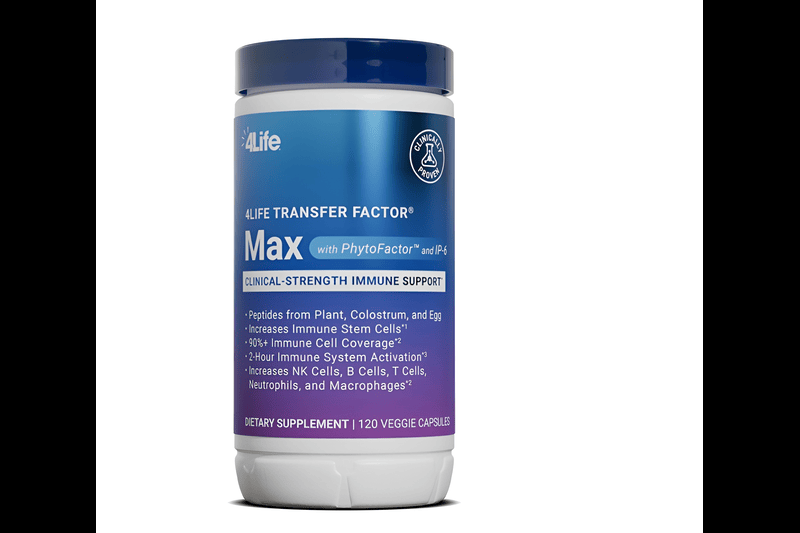
4Life has released a technical white paper titled Clinical Study on Rapid Modulating Effects of 4Life Transfer Factor® MAX on Immune Stem Cells, presenting new findings on the short-term activity of immune stem cells in healthy adults. The publication highlights the company’s continued focus on advancing scientific understanding of immune system support through its proprietary transfer factor technology.
Immune stem cells originate in the bone marrow, where they develop before entering the bloodstream. From there, they circulate throughout the body until needed. When an immune response is triggered, these cells migrate from the blood into tissues, where they contribute to processes associated with repair and cellular renewal. Understanding how to influence this movement and activation has become an important area of research in immunology.
According to Dr. Brent Vaughan, PhD, RD, Senior Vice President of Research and Development at 4Life, the clinical trial was conducted at NIS Labs in Klamath Lake, Oregon. The primary objective was to evaluate how 4Life Transfer Factor MAX compares to a placebo in individuals who had no prior exposure to transfer factor products. This design allowed researchers to establish a clear baseline and observe measurable changes attributable to the product.
The study followed a two-phase, crossover structure. In the first phase, participants provided baseline blood samples before receiving either a placebo or 4Life Transfer Factor MAX. Additional blood samples were collected hourly over a three-hour period to monitor immediate physiological responses. After this initial phase, participants returned home and resumed normal activity.
One week later, participants returned for the second phase of the study. At that time, they received the opposite intervention—those who initially received the placebo were given 4Life Transfer Factor MAX, and vice versa. The same blood collection protocol was repeated, enabling researchers to compare within-subject responses under both conditions.
Dr. Vaughan reported that the outcomes were notably positive. Within hours of consumption, participants who received 4Life Transfer Factor MAX demonstrated an increase in specific cell surface markers. These markers are commonly associated with cellular activation and the mobilization of immune stem cells into tissue. Such findings suggest that the product may support rapid, short-term immune system activity at a systemic level.
The results of the study indicate a measurable difference between the product and placebo in terms of immune cell behavior shortly after ingestion. While the observed effects were temporary, they provide insight into how transfer factor-based supplementation may interact with immune system dynamics.
It is important to emphasize that neither 4Life Transfer Factor MAX nor the statements presented in the white paper have been evaluated by the U.S. Food and Drug Administration (FDA) or any international Ministry of Health. Additionally, 4Life products are not intended to diagnose, treat, cure, or prevent any disease.
As a company, 4Life positions itself as a pioneer in transfer factor research, having been the first to introduce this category to the market. With operations in dozens of countries, the organization continues to invest in scientific inquiry to support its global customer base and expand understanding of immune system function.
For more information, visit 4Life – The Immune System Company®