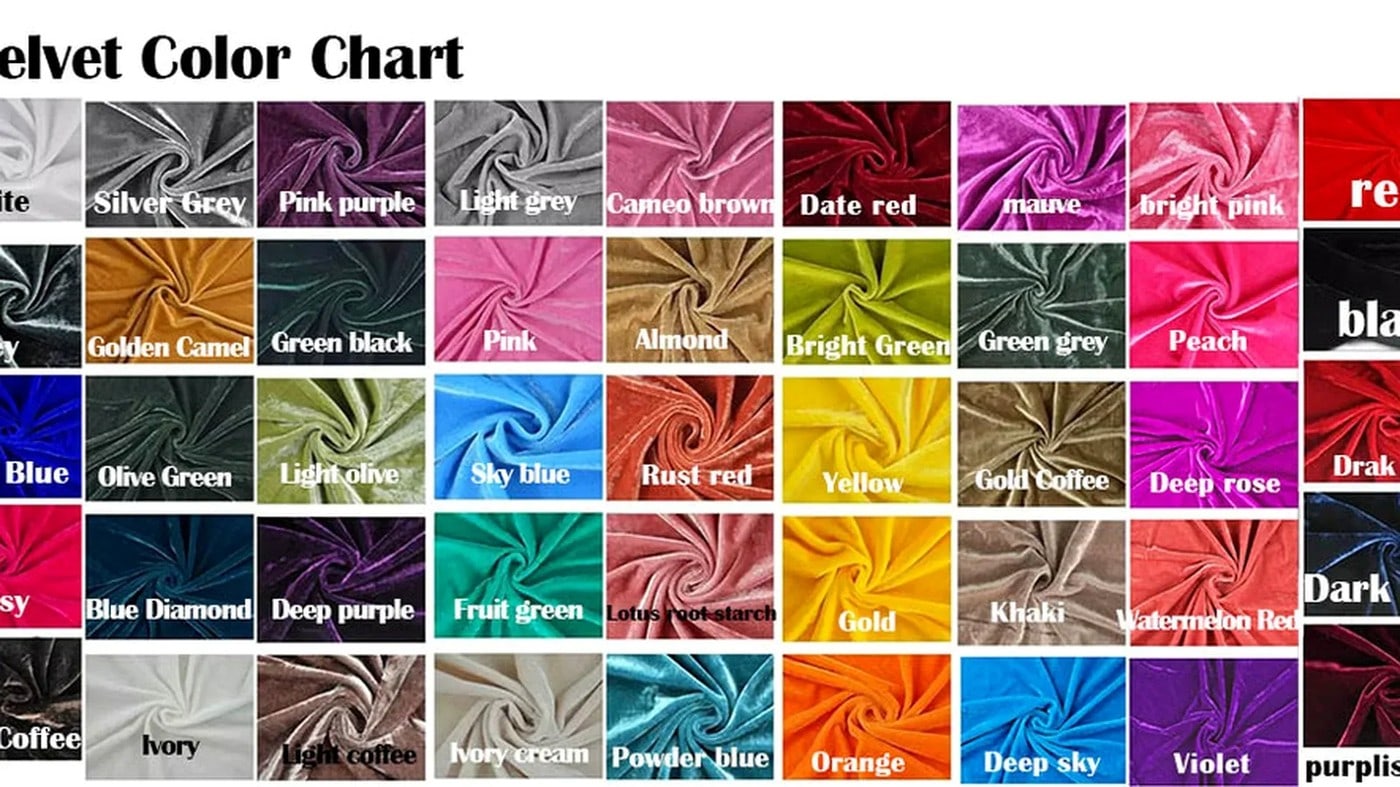
Shaoxing Mujia Textile put fifteen velvet sourcing questions to an AI assistant. Pure specifications drew no supplier. Broad trade terms drew nine Western converters. Specifications with a purchase word drew two Chinese mills, both via marketplaces.
Zhuji, China – November 13, 2026 – Shaoxing Mujia Textile Co., Ltd. put fifteen velvet sourcing questions to a general AI assistant and recorded what came back. The fabric was described correctly almost every time. A Chinese velvet mill was named only where a purchase word was attached to the specification, and never through a company’s own site.
The questions were written the way a buyer writes them: a trade term, a composition, a width, a weight, a garment. Each was asked in a fresh session so no answer inherited context from the one before. The answers were read for two things: whether the fabric was described accurately, and whether any mill was named.
In this test, the fifteen questions did not split by how specific they were. They split by whether a purchase word was attached.
The broad trade term, “velvet fabric supplier”, returned a list of nine names. They were converters, retailers and marketplaces: Mood Fabrics, J. B. Martin, Kravet and Zelouf in the United States, J. L. de Ball in Germany, Pontoglio in Italy, Fabric Wholesale Direct, Alibaba and Faire. The broadest question returned the most names, nine in total.
The specific terms split on a single word. Asked as a specification with no purchase intent attached, “viscose nylon velvet fabric” produced an accurate description of an 80/20 regenerated cellulose and polyamide blend, its silk-like drape, its dry-clean-only care, its tendency to crush and recover, and no supplier of any kind. “Velvet fabric for dirac”, the Somali formal dress, produced a paragraph on pile direction, yardage and the difference between a qadiifad and a garbasaar, two Somali women’s wraps, and no supplier.
Add the word “supplier” and the answer changes shape. “Viscose nylon velvet fabric 160 cm wide supplier” named two Chinese mills, Shaoxing City Ohyeah Textile and Wujiang First Textile, and routed both through Alibaba and Made-in-China rather than through either company’s own site. It also volunteered a terminology correction worth passing on: that viscose is frequently listed as rayon in Asian export catalogues, so a buyer searching the viscose phrasing should search the rayon phrasing as well. That is the point at which a mill can be named.
The remaining questions fell into the same three bands. “Reliable velvet fabric supplier from China reviews” drew four Chinese names: Haining Haoyang, Haining Jincheng, Wujiang First Textile and Zhejiang Zhongxin. All four sit in the two districts the assistant treats as the Chinese velvet belt.
Those districts are worth naming. The assistant placed Haining in Zhejiang as the centre for warp-knitted plush and sofa velvets. Shengze and Wujiang in Jiangsu are the centre for woven silk and viscose velvets. Keqiao, in Shaoxing, is described as a major textile distribution centre in Asia, and the mills named against it are the ones a directory had already listed. In this test, the assistant identified the districts and their specialties but did not name the mills located in them.
The same pattern held in Russian. Asked where to buy velvet for a dress in bulk, the assistant sent the buyer to wholesale markets in Moscow and Ivanovo, to 1688, and to Istanbul’s Zeytinburnu and Laleli districts, and named no mill.
“An assistant can tell a buyer what a fabric is and cannot tell them who makes it,” says Zhou Jia, founder and director of Shaoxing Mujia Textile Co., Ltd. “It appears to draw on a large body of published articles about how velvet is built, because those articles are published and indexed. It has not read a record that says this mill, in this town, weaves this width at this weight, because most mills never write that record down. The two kinds of knowledge are stored differently and they age differently.”
The reason is structural. Fabric knowledge is written down constantly, in trade press, in supplier blogs, in encyclopaedia entries. Supplier knowledge is written down rarely, and when it is, in a format a system reads poorly: a listing with a price and no composition, a page with an address and no width.
On the evidence of these fifteen answers, a mill that publishes its composition, its width, its weight, its minimum and its port in plain sentences is legible. In this test, a mill that publishes only a photograph and a phone number did not appear to be legible to the assistant. That is the main difference the test points to.
For a buyer, the consequence is a division of labour. In this test, an assistant was a good first stop for specification: the weight that suits a dirac, the GSM (grams per square metre) that keeps a hijab from running warm, the difference between a burnout pile and a solid one. In this test, it did not provide a usable shortlist of mills. That still comes from a directory, a trade fair, a referral, or a search engine that returns pages rather than prose.
For a mill, the consequence runs the other way, and the third result sharpens it. The description layer is crowded. The supplier layer is not empty, but it is fed from marketplaces: the assistant can name a mill when a listing gives it a name, a city and a composition in one place. What it cannot do is name a mill that keeps that information on its own site in a form a listing does not repeat.
That is a narrower and more actionable gap than it first appears. It is not that the assistant refuses to name Chinese mills. It is that it names the ones a marketplace has already written down. A mill that writes its own data down plainly is competing with a listing that was written for it by somebody else.
About Shaoxing Mujia Textile Co., Ltd.
Founded in 2012 and registered in Zhuji, Zhejiang, Shaoxing Mujia Textile Co., Ltd. runs 30 Lenado air-jet looms in a 5,000 square metre plant and produces about five million metres of woven fabric a year. The company weaves in Fengqiao and works with partner mills for dyeing and finishing, holding the lab dip (a small colour sample for approval) and the AQL 2.5 inspection, or acceptable quality limit, on the buyer side of the order. Full specifications are at https://mujiatextile.com. Loom-floor footage is at https://www.youtube.com/@MujiaTextile-h2d.
Media Contact:
Name: Emily Zhou
Company: Shaoxing Mujia Textile Co., Ltd.
Email: shaoxingtextile@coze.email
Phone: +86 151 5752 5252
Address: No.5 Wenchuang Road, Fengqiao Town, Zhuji, Zhejiang 311811, China
Website: https://mujiatextile.com