HOLLYWOOD, United States — November 25, 2026 — Salpeter Gitkin has published an informational guide that explains how the terms of a cruise passenger ticket contract can shape a personal injury claim. The guide focuses on passengers hurt in falls on slick cruise decks and describes the contractual notice, filing, and forum provisions that may apply after they return home.

The guide is written for passengers who accepted contract terms when they booked a sailing, often without reviewing them closely. It notes that a passenger contract may require written notice of an injury, may allow less time to file a lawsuit, and may specify the court where a case must be brought. Under general maritime law, the personal injury limitation period is three years. Enforceable ticket terms, however, can shorten that period. The guide also notes that the Supreme Court has upheld a passenger contract selecting Florida as the forum for litigation.
A central point of the guide is that the boarding pass is not the full agreement. It directs attention to the passenger ticket contract that is typically attached to a booking email or posted in a cruise line’s booking portal. The guide explains that the relevant version is the one that applied to the specific sailing, not a version found online months later. It recommends keeping the booking confirmation, the emails that referred to the contract, and any documents the ticket incorporates by reference. This includes messages received by a travel companion who made the booking.
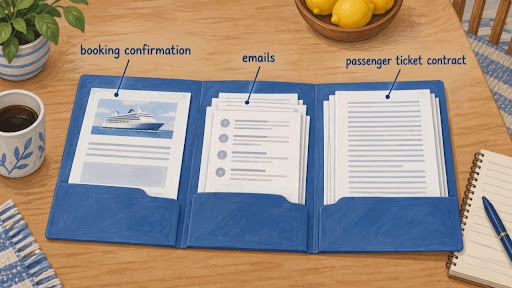
The guide reviews three ticket provisions in detail. A written notice provision may require a written account of the injury to reach the operator by a specified date, and it may set requirements for the recipient, the contents, and the delivery method. A lawsuit deadline provision may set a filing limit shorter than the general period a passenger expected, sometimes alongside a separate service provision. A forum-selection clause may require litigation in a named court rather than a courthouse near the passenger’s home or departure port. The guide explains that written notice to a cruise line is not a court filing, and that an email to customer service is not necessarily the notice method the contract requires.
The publication cautions against applying deadlines from other types of claims, such as a car accident case at home, to an injury that occurred on board. Because these claims may involve maritime law and the passenger contract, a remembered deadline from a different matter does not determine the timeline for a cruise injury. The guide also explains that the triggering event named in the ticket, rather than the date a passenger returned home, governs how each deadline is calculated.
For the period immediately after an incident, the guide describes the importance of prompt medical care and a report to ship staff. It outlines the value of an incident report with a report number and the name of the staff member who took it, medical records that describe how the fall occurred, photographs of the walking surface and any warning sign, and contact information for people who actually saw the fall. It also covers written requests asking the operator to preserve surveillance footage and incident records, with the location and approximate time identified.
The guide references the CDC’s Yellow Book entry, which attributes approximately 12% to 18% of diagnoses reported during cruise travel to injuries from slipping, tripping, or falling. The guide notes that the CDC’s Yellow Book entry reports on injuries and does not establish any cruise line’s notice deadline, filing limit, or forum requirement.
Passengers who live on Delmarva or depart from Baltimore are addressed in a section on tickets that name a court in Miami. The guide explains that a passenger’s place of residence or departure port does not change the forum named in the contract. It notes that a contract designating Florida as the forum, or naming a specific federal court, should be read exactly as written, including any language that offers an alternative court. Whether a particular clause is enforceable is a question for a lawyer to assess, and the guide states that a forum clause addresses location only and does not establish that an operator caused an injury.
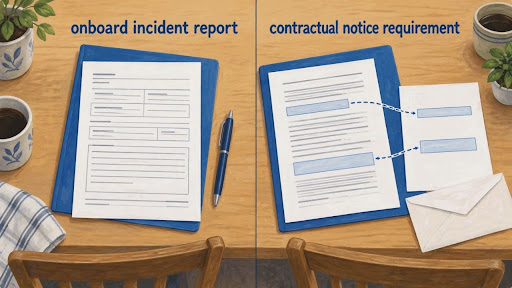
For South Florida passengers and travelers from other regions alike, the guide emphasizes that an onboard incident report may not satisfy a separate contractual notice requirement. Individuals injured in falls on slick cruise decks are encouraged in the guide to provide counsel with the full ticket, the incident date, any notice already sent with its delivery record, and information about pending medical treatment. The guide reiterates that although the general limitation period is three years, contractual terms may impose shorter deadlines that require attention.
About Salpeter Gitkin
Salpeter Gitkin is a law firm based in Hollywood, United States. The firm handles personal injury matters, including claims arising from injuries during cruise travel. It publishes informational resources explaining legal considerations that affect injured passengers.
Media Details
Contact Person: Media Relations
Company Name: Salpeter Gitkin
Email: info@salpetergitkin.com
Website: https://salpetergitkin.com/
Distributed By: Pulsebulletin.com