NovaProxy Launches Consolidated Proxy Infrastructure Portfolio for Public Web Research

Company brings residential, mobile, datacenter, static ISP and IPv6 configurations into one framework for authorized data collection, location-based research and digital quality assurance

NEW YORK, New York — September 22, 2026 — NovaProxy LLC today launched a consolidated proxy infrastructure portfolio designed to help organizations select configurations according to geographic scope, session duration, traffic volume and connection concurrency.

The launch brings the company’s existing residential, mobile, datacenter, static ISP and IPv6 configurations into a unified service framework. It also establishes bandwidth-based, daily and monthly service structures and documents routing options at the country, state and city levels.

Portfolio Framework

The consolidated portfolio comprises:

  • Residential connections for location-dependent public web research
  • Mobile connections routed through cellular carrier networks
  • Datacenter connections for automated testing and related technical workflows
  • Static ISP addresses for projects requiring persistent sessions
  • IPv6 address pools for compatible systems

Arizona is among the locations included in the routing framework. Availability depends on the selected connection type and project requirements. Organizations may use these configurations to review publicly displayed information from specified geographic perspectives, subject to applicable laws, website terms and access policies.

“We consolidated five infrastructure categories so technical teams can evaluate routing precision, session persistence, traffic volume and concurrency within a single framework,” a NovaProxy company spokesperson said. “The launch does not change customers’ responsibility to confirm permissions and establish appropriate data-handling and request-rate controls before deployment.”

Evaluation and Responsible Use

NovaProxy did not provide third-party performance benchmarks, customer case studies or Arizona-specific adoption figures with the launch. Organizations evaluating the portfolio should review current technical documentation, routing availability, concurrency policies and service terms against their own project criteria.

Customers are responsible for determining whether intended activities comply with applicable laws, contractual requirements, privacy obligations, intellectual property restrictions and website policies. NovaProxy advises organizations to limit collection to necessary public information, manage request rates and seek qualified legal guidance when appropriate.

Technical specifications and current terms are available through the NovaProxy website.

About NovaProxy LLC

NovaProxy LLC provides proxy infrastructure for organizations, developers and data-focused teams. Its portfolio includes residential, mobile, datacenter, static ISP and IPv6 configurations for authorized public web data collection, automation, testing and location-specific research.

Media Contact

Media Relations
NovaProxy LLC
contact@novaproxy.io
https://www.novaproxy.io/

Netalico Introduces Fractional Shopify CTO Service for Enterprise Commerce Teams

The service provides ongoing technical leadership for mid-market and enterprise direct-to-consumer brands

NEW YORK, United States — September 22, 2026 — Netalico LLC today announced a fractional Shopify CTO service designed to provide mid-market and enterprise direct-to-consumer brands with ongoing technical leadership without requiring a full-time executive hire. The service extends Netalico’s project-based development and migration capabilities through continued senior-level involvement in platform planning, technical execution and post-launch operations.

The fractional Shopify CTO service supports brands managing complex Shopify Plus environments, including enterprise migrations, custom development, storefront performance and platform integrations. Netalico’s senior team works with internal commerce stakeholders to define technical priorities, oversee implementation and retain project knowledge after a new storefront goes live.

The service reflects operational challenges that can follow an enterprise commerce migration. Changes to URL structures, metadata and site architecture can affect organic search performance when migration procedures are not documented and validated. A project handoff can also leave internal teams responsible for technical decisions without the engineers who planned and executed the original build. Netalico’s model keeps technical leadership connected to both the implementation process and subsequent development work.

“Enterprise commerce teams often need consistent technical direction across migration, development and post-launch operations, but that responsibility does not always require another full-time executive position,” said Mark Lewis, founder and CEO of Netalico. “The fractional Shopify CTO service gives those teams a defined technical leadership structure while preserving continuity with the people responsible for the platform work.”

Netalico’s approach incorporates migration planning, redirect preparation, metadata preservation, data validation and post-launch crawl review. The service can also cover custom storefront requirements, integration planning, ongoing development and the prioritization of technical work after launch. Engagement scope is determined by the brand’s platform complexity, migration requirements, internal resources and continuing development needs.

Founded in 2013 and operating as an agency since 2016, Netalico has completed hundreds of Shopify builds for mid-market and enterprise direct-to-consumer brands. The company is a Shopify Plus Premier Partner and operates with a fully in-house U.S. team across New York, Los Angeles, San Francisco and Miami. Its senior team handles project builds and ongoing account work, allowing technical context to remain with the same organization throughout the engagement.

The fractional leadership model is intended for organizations undertaking a replatform, managing custom development requirements or coordinating continuing storefront optimization. It also provides a structure for teams that need senior oversight of technical decisions, integration dependencies and development priorities while maintaining existing internal commerce and operational roles.

Netalico will provide the service alongside its established Shopify Plus migration, development and retainer work. The offering formalizes the company’s continuing technical leadership role for brands whose requirements extend beyond a single implementation or storefront launch.

About Netalico LLC

Netalico LLC is a U.S.-based eCommerce development agency founded in 2013. The company provides Shopify Plus migration, custom development, platform integration, ongoing technical support and fractional technical leadership for mid-market and enterprise direct-to-consumer brands. Netalico operates through an in-house team located across New York, Los Angeles, San Francisco and Miami.

Media Details

Contact Person: Mark Lewis, founder and CEO
Company Name: Netalico LLC
Email: contact@etalico.com
Website: https://netalico.com/

Kennedy University Trustworthy Signals Extend Through CHEA-Listed Quality Networks

Kennedy University Trustworthy Signals Are Examined Through Current CHEA-Listed Networks and Multi-Jurisdictional Records

Kennedy University trustworthy signals are reviewed through current CHEA-listed quality-assurance networks, state authorizations, and program accreditations across multiple international jurisdictions.

PARIS, France – 22nd September 2026 – Kennedy University trustworthy signals are highlighted in an updated institutional records publication detailing current CHEA-listed quality-assurance relationships, state authorizations, and program accreditations. The multi-jurisdictional review clarifies how prospective students, academic partners, and credential evaluators can independently verify distinct institutional and program-level records. Institutional administrators note that presenting each record alongside its specific issuing body and defined scope helps maintain clarity across global operations.

“Publishing verified institutional records allows students, credential evaluators, and academic partners to review our documentation with total clarity,” said Evan Miller, Communications Specialist. “Our goal is to ensure every quality-assurance relationship, program authorization, and state recognition is presented accurately within its specific scope and jurisdiction.”

Kennedy University Trustworthy Documentation Outlined in 2026 Quality Review

The updated profile focuses on formal relationships with organizations appearing in the Council for Higher Education Accreditation (CHEA) International Directory. Among these, Kennedy University maintains accreditation under the Quality Assurance Standards of the Association of the Universities of Asia and the Pacific (AUAP). The Association of the Universities of Asia and the Pacific (AUAP) is listed in the CHEA International Directory as a Regional International Organization, holds identified consultative status with UNESCO, and maintains a formal relationship with the World Federation of United Nations Associations (WFUNA). WFUNA separately holds Category One Consultative Status with the United Nations Economic and Social Council (ECOSOC).

At the program level, the profile highlights the accreditation of Kennedy University’s Doctor of Professional Studies (DPS) track 8D020 program at its Paris campus by the Independent Kazakhstan Center of Accreditation (IKCA). The IKCA Accreditation Council decision documents this professional track accreditation effective June 1, 2026. Independent Kazakhstan Center of Accreditation (IKCA) appears in the International Directory of the Council for Higher Education Accreditation (CHEA) as an accreditation body. IKCA’s public materials cite official recognition by Kazakhstan’s Ministry of Science and Higher Education, inclusion in the National Register, Full Membership in INQAAHE and CEENQA, and Affiliate status with ENQA.

Institutional Memberships and Quality-Assurance Networks

To further establish its international profile, Kennedy University holds Approved Membership in the Americas Accreditation Council (AAC), formerly the Accreditation Agency of Curaçao. Americas Accreditation Council (AAC) is listed in the CHEA International Directory as an accreditation agency. AAC’s public materials note interactions with education ministries in Curaçao and Anguilla, listing in the World Higher Education Database (WHED), Affiliate status with ENQA, and a Memorandum of Understanding with ACBSP. Approved Membership reflects organizational affiliation rather than AAC institutional accreditation.

The institutional network also includes Approved Membership in the European Council of Leading Business Schools (ECLBS). European Council of Leading Business Schools (ECLBS) maintains CIQG membership, a Bilateral Recognition Agreement with ANQAHE, an organizational listing with the Union of International Associations (UIA), and INQAAHE membership. UIA separately notes consultative status with UNESCO.

Governmental Authorizations and Institutional Accreditations

Governmental documentation for Kennedy University encompasses distinct state authorizations and regional institutional accreditations across multiple jurisdictions:

  • French Private Institutional Degrees: Kennedy University is documented on the French Ministry of Education web portal as an online educational institution authorized to confer private institutional degrees.
  • Somali State Authorizations: Kennedy University holds formal governmental authorizations from the Ministries of Higher Education in Galmudug State and Hirshabelle State, granting authority to confer bachelor’s, master’s, and doctoral degrees.
  • Galmudug Institutional Accreditation: Separate from governmental authorization, Kennedy University maintains Galmudug Institutional Accreditation issued by the Ministry of Higher Education, Galmudug State, Somalia.

These distinct authorizations operate under their respective regional frameworks and demonstrate how state authority and institutional accreditation fulfill complementary regulatory functions.

Record Separation Within the Kennedy University System

The publication underscores the operational separation between Kennedy University and Kennedy University of Baptist within the wider educational framework. Each entity holds distinct records that cannot be combined or interchanged.

Kennedy University of Baptist maintains ECLBS membership and receives annual verification as a religious college by the Florida Department of Education Commission on Independent Education. This Florida annual verification operates under state religious exemption statutes and remains completely distinct from the CHEA-listed quality relationships, governmental authorizations, and program accreditations held separately by Kennedy University.

About Kennedy University

Kennedy University is an international higher education institution offering professional, undergraduate, and graduate degree programs. The university maintains a multi-jurisdictional academic footprint supported by state authorizations, program-level accreditations, and quality-assurance affiliations. Additional details regarding academic offerings and institutional governance are available at Kennedy University.

About Kennedy University of Baptist

Kennedy University of Baptist operates as a distinct institutional entity focused on religious and theological education. It maintains annual verification as a religious college under Florida educational regulations. Further information on its mission and verification status is published at Kennedy University of Baptist.

Distribution and Media Contact

Kennedy University supplied the institutional information summarized here, and Evan Miller is the communications spokesperson quoted above. Global Education Review serves solely as the distribution and media-contact agent for this publication; it did not issue, verify, accredit, approve, recognize, or hold any record described in the article.

Media Rights: No third-party image or copyrighted media is embedded in this article. Any accompanying visual must be publisher-owned or used under a valid license.

Media Contact

Company: Global Education Review
Contact Person: Sarah Mitchell
Title: Director of Communications
Phone: +1 (951) 641-4373
Email: Contact via Email
Website: Global Education Review

KickOff Ventures Introduces Probability Standard for Daily Football Forecasts

The initiative adds probability, price, calibration, and transparent recordkeeping to each banker bet of the day.

NEW YORK, New York – 22nd September 2026 – KickOff Ventures LLC today introduced a probability-based standard intended to make its daily football forecasts more transparent, consistent, and measurable before and after kickoff.

The standard distinguishes the estimated likelihood of an outcome from the value represented by its quoted price. Each selection will be assessed using implied probability, market margin, recent performance, chance quality, team availability, and tactical context. No outcome will be presented as certain.

“A likely result can still be incorrectly priced, so probability, price, and uncertainty must be evaluated together,” said Daniel Ionescu, founder of KickOff Ventures LLC. “Our standard records the information and reasoning available before kickoff and applies the same review criteria to every forecast, regardless of the result.”

Interpreting Prices and Probability

Decimal odds provide a starting point for each assessment. For example:

  • Odds of 1.20 represent an implied probability of 83.33%.
  • Odds of 1.30 represent an implied probability of 76.92%.
  • Odds of 1.50 represent an implied probability of 66.67%.

These figures indicate how often an outcome would need to occur to break even at the quoted price before accounting for the operator’s margin. They do not indicate certainty.

The standard also accounts for margins across markets with multiple possible outcomes. Where combined implied probabilities exceed 100%, the difference reflects the margin within the displayed prices.

Evaluating Evidence

KickOff Ventures will use expected goals, commonly known as xG, as supporting evidence about the quality of chances created and conceded. The analysis will also consider:

  • Opponent strength
  • Home and away performance
  • Expected lineups
  • Injuries and suspensions
  • Rest and scheduling
  • Tactical matchups

Individual scorelines and short winning runs will not be treated as sufficient evidence of repeatable performance.

The methodology follows established principles of probabilistic forecasting and calibration. Forecasts assigned the same probability should produce the stated outcome at approximately that rate across a sufficiently large sample, subject to normal statistical variation.

Measuring Forecast Quality

The initiative distinguishes accuracy from calibration. Accuracy records whether an individual forecast was correct. Calibration measures whether stated probabilities align with observed outcomes over time.

For example, outcomes assessed at 70% should occur at approximately that rate across a broad record. This long-term measurement provides more context than a simple count of wins and losses.

Combined forecasts will reflect the probability that every required outcome occurs. If five independent selections are each estimated at 80%, their combined all-win probability is 32.768%. Correlation will also be considered when selections depend on the same match conditions, players, or tactical assumptions.

Transparent Records and Editorial Standards

Records maintained under the initiative will connect each estimated probability with the available price and final outcome. Entries may include:

  • Market and timestamp
  • Quoted odds
  • Supporting reasoning
  • Relevant price movement
  • Final result

Winning and losing selections will be reviewed under the same criteria. “Banker” is an editorial description of relative likelihood, not a mathematical category or assurance of a result.

Each assessment will identify relevant uncertainty, including team availability, squad rotation, low-scoring conditions, tactical changes, and isolated match events.

KickOff Ventures provides sports analysis and informational forecasts. It does not accept stakes, operate wagering markets, or guarantee outcomes. Its content is intended for adults who meet the applicable age requirements, and users are responsible for following the laws in their jurisdiction. Anyone who chooses to participate in wagering should set personal limits, avoid chasing losses, and seek appropriate support if participation becomes difficult to control.

About KickOff Ventures LLC

KickOff Ventures LLC is a United States-registered company supporting international operations, partnerships, and customer relations for sports analysis services. Its work includes data-based football forecasting, probability assessment, and transparent performance records. The company applies statistical and contextual analysis to pre-match sports information. More information is available at nerdytips.com.

Media Contact

Daniel Ionescu
Founder, KickOff Ventures LLC
support@nerdytips.com
https://nerdytips.com/

FLOPPYDATA Integrates Cloud Browser and Residential Proxy Infrastructure

The unified service supports browser automation, distributed connections and compliant collection of publicly available web data.

DUBAI, United Arab Emirates – 22nd September 2026 – FLOPPYDATA today launched an integrated Cloud browser for web scraping and residential proxy infrastructure, combining two previously separate collection functions in one operating model for organizations working with publicly available online information.

Available September 21, the infrastructure is intended for approved projects involving JavaScript-dependent pages, interactive elements and region-specific content. Organizations can run remote browser sessions and route authorized requests through residential internet connections in selected locations.

Unified Collection Infrastructure

The service allows teams to choose a collection method based on each approved source. Direct requests and HTML parsing can be used for simpler pages, while remote browser sessions can process scripts and interact with page elements when browser execution is required.

Organizations may distribute sessions across recurring monitoring and research tasks, including:

  • Public price and availability monitoring
  • International market research
  • Search-result analysis
  • Competitive research
  • Structured dataset creation

“Customers told us that managing browser execution and regional connections through separate workflows added operational steps to recurring projects,” said Eugene Smith, CEO of FLOPPYDATA. “The integrated model brings session management, location selection and request controls into one configuration, helping teams apply the appropriate method to each approved source.”

Compliance and Operational Controls

Organizations are expected to review applicable laws, website terms, technical directives and access restrictions before deployment. Project settings can reflect approved sources, permitted data fields, request rates, geographic requirements and retention practices.

The infrastructure is not intended to bypass authentication controls or collect private or sensitive information without authorization. Customers remain responsible for legal review, source approval and ongoing compliance.

Request-rate management, caching and extraction settings can help limit unnecessary traffic. Monitoring can flag failed requests, page-structure changes and unusual data patterns for review. Validation processes can also identify duplicate records, missing values and formatting changes before information is prepared for analysis.

About FLOPPYDATA

FLOPPYDATA provides residential, mobile and data-center proxy infrastructure alongside browser-based data-collection services. The company supports organizations working with publicly available web information for research, analytics, monitoring and automation. FLOPPYDATA operates from Dubai, United Arab Emirates.

Media Contact

Eugene Smith, CEO
FLOPPYDATA
Email: info@floppydata.com
Website: https://floppydata.com/

The Hidden Cost of Waiting Too Long to Replace Exterior Semi Truck Parts

A cracked bumper doesn’t always stop a truck from moving.

Neither does a loose grille, vibrating mirror, damaged fairing, broken bracket, cracked exterior panel, or damaged light housing.

That’s exactly why these repairs can be so easy to postpone.

When a truck still starts, drives, and delivers freight, exterior damage can quickly move toward the bottom of the maintenance list. Fleet managers and owner-operators naturally prioritize mechanical problems that immediately put a truck out of service.

But delaying exterior repairs can have a hidden cost.

What begins as one damaged component can lead to additional vibration, broken mounting points, poor aerodynamics, reduced visibility, damage to surrounding components, and eventually a more complicated repair.

For commercial fleets purchasing aftermarket semi truck parts, knowing when to replace a damaged exterior component can be just as important as knowing which replacement to buy.

Exterior Semi Truck Parts Aren’t Always Cosmetic

It’s easy to classify exterior truck components as appearance items.

Many of them serve an important function on the vehicle.

Consider what different exterior components actually do:

  • Mirrors provide critical driver visibility.
  • Grilles help protect front-end components while allowing airflow.
  • Bumpers provide front-end protection and contribute to the truck’s overall front-end configuration.
  • Fairings help manage airflow around the truck.
  • Brackets hold larger components securely in their intended positions.
  • Headlights and exterior lighting support visibility and communication with other drivers.
  • Fenders and splash components help manage road spray and debris.
  • Exterior panels contribute to protection and aerodynamic design.

Damage doesn’t necessarily mean every component must be replaced immediately.

But it does mean the part should be evaluated based on its function rather than appearance alone.

1. Small Cracks Can Become Larger Repairs

Commercial trucks operate in an extremely demanding environment.

A truck may travel hundreds of miles in a single day while experiencing:

  • Engine vibration
  • Highway vibration
  • Potholes
  • Expansion joints
  • Uneven pavement
  • Wind pressure
  • Loading dock impacts
  • Temperature changes

A small crack in a bumper, grille, fairing, or mounting area may initially appear stable.

Then the truck returns to highway service.

Repeated vibration can gradually extend the crack. Mounting points can weaken. A component that was securely attached can begin moving.

Eventually, what could have been a straightforward replacement may involve several damaged semi truck parts.

The hidden cost isn’t simply the original part.

It’s everything that can become damaged because the original problem remained unresolved.

2. Broken Mounts Can Damage Otherwise Usable Parts

Sometimes the visible panel isn’t the most important problem.

The mounting system is.

A broken tab, loose bracket, damaged fastener, or cracked mounting point can allow an exterior component to move every time the truck hits a bump or encounters highway airflow.

That movement can place additional stress on:

  • Adjacent mounting points
  • Brackets
  • Panels
  • Wiring
  • Lights
  • Housings
  • Fasteners

This can create a chain reaction.

One failed mounting point puts more load on the remaining ones. Those components may eventually fail as well.

Fleet maintenance teams should therefore inspect how a damaged part is attached rather than looking only at the visible surface.

3. A Shaking Mirror Can Become More Than an Annoyance

Mirror vibration is a good example of an exterior problem that can be easy to postpone.

A mirror may shake because of:

  • Loose mounting hardware
  • Worn internal components
  • A damaged housing
  • A weakened bracket
  • Impact damage

At low speeds, the vibration may seem minor.

At highway speeds, wind pressure can make the movement considerably more noticeable.

The immediate problem is visibility.

A mirror that constantly vibrates can make it more difficult for a driver to clearly judge surrounding traffic, especially during lane changes, merging, backing, and maneuvering.

Continued vibration can also place additional stress on the mirror assembly.

What begins as a loose mounting problem can eventually require a larger replacement.

4. Damaged Grilles Can Expose Front-End Components

A grille isn’t simply decoration.

It occupies an important position at the front of the truck.

A damaged grille may have:

  • Cracks
  • Missing sections
  • Broken mounting tabs
  • Loose hardware
  • Misalignment

Minor cosmetic damage may not create an immediate operating problem.

However, severe damage can reduce the grille’s ability to protect components behind it from larger road debris.

Missing or displaced sections can also change the intended front-end configuration.

If the grille has been damaged by an impact, surrounding components should be inspected as well.

The grille may only be the most visible evidence of a larger front-end problem.

5. Bumper Damage Can Spread Beyond the Bumper

Truck bumpers are constantly exposed to potential damage.

Loading areas, road debris, minor collisions, parking incidents, and tight maneuvering can all take their toll.

A damaged bumper may continue to look acceptable from a distance while hiding:

  • Broken mounts
  • Cracked supports
  • Misalignment
  • Loose hardware
  • Damage to nearby panels

Waiting too long can allow movement and vibration to worsen those problems.

Bumper damage may also affect how surrounding front-end components align.

That’s why replacing exterior semi truck parts should involve inspecting the entire damaged area rather than simply swapping the most obvious component.

6. Damaged Fairings Can Increase Aerodynamic Drag

Modern semi trucks rely heavily on aerodynamic design.

Fairings help manage airflow around the cab, chassis, and trailer.

When a fairing becomes:

  • Loose
  • Cracked
  • Misaligned
  • Partially detached
  • Missing

the truck’s intended airflow can be disrupted.

A single damaged component may not produce an obvious fuel-economy change that a driver notices immediately.

But fleet economics operate at scale.

A relatively small efficiency loss repeated over thousands of miles and multiple trucks can become meaningful.

For fleets, exterior maintenance can therefore be connected to fuel management—not simply appearance.

7. A Broken Bracket Can Turn Into a Missing Component

Brackets rarely receive much attention until they fail.

Yet many exterior components depend on them.

A damaged bracket can allow a fairing, panel, mirror, or other component to move.

That movement increases stress.

Eventually, the component may:

  • Crack
  • Separate
  • Shift out of alignment
  • Damage nearby parts
  • Require complete replacement

Replacing a worn bracket early may be far less expensive than replacing the larger component it was designed to support.

This is one reason routine inspections should include hardware, fasteners, and mounting systems—not just the most visible aftermarket semi truck parts.

8. Lighting Damage Can Create Additional Problems

Exterior lighting damage shouldn’t automatically be treated as cosmetic.

A cracked housing may allow moisture and contamination to enter the assembly.

That can contribute to:

  • Condensation
  • Corrosion
  • Electrical issues
  • Reduced light output
  • Premature component failure

A light that still operates today may not remain reliable once moisture repeatedly enters the housing.

Inspecting cracked or damaged lighting assemblies early can prevent a relatively simple replacement from developing into a more complicated electrical problem later.

9. Delayed Repairs Can Increase Truck Downtime

One of the biggest hidden costs of postponing exterior repairs is downtime.

Suppose a truck has a loose fairing bracket.

The truck remains in service because the component hasn’t failed completely.

Several weeks later, the bracket breaks and damages the fairing.

Now the maintenance department may need:

  • A bracket
  • A fairing
  • Additional mounting hardware
  • More technician time

If those components aren’t immediately available, the truck could remain out of service while the shop waits for parts.

A planned repair can often be scheduled around fleet operations.

An unexpected failure cannot.

That’s a major difference.

10. Planned Maintenance Is Usually Easier Than Emergency Maintenance

Fleet managers already understand this principle with engines, tires, brakes, and cooling systems.

The same logic applies to exterior components.

If damage is identified early, the maintenance department can:

  1. Confirm the correct replacement.
  2. Check availability.
  3. Order the part.
  4. Schedule installation.
  5. Coordinate the repair with other maintenance.

If the component fails unexpectedly, those steps suddenly become urgent.

The fleet loses flexibility.

That urgency can increase shipping costs, technician scheduling problems, and truck downtime.

11. Delaying Repairs Can Make Parts Sourcing More Expensive

Emergency purchasing changes the economics of a repair.

When a fleet has time, it can compare:

  • Fitment
  • Quality
  • Pricing
  • Suppliers
  • Availability
  • Aftermarket alternatives

When the truck must return to service immediately, the number of realistic options becomes smaller.

A fleet may end up paying more for expedited shipping or purchasing whatever suitable component is available first.

This is another reason developing dependable sources for semi truck parts in Orange County or wherever a fleet operates can be valuable.

Parts availability isn’t simply a purchasing convenience.

It’s part of downtime management.

12. Aftermarket Parts Can Help Fleets Address Exterior Damage Earlier

One reason exterior repairs get postponed is cost.

If a component still functions, managers may hesitate to authorize an expensive replacement.

Quality aftermarket options can change that calculation.

For compatible applications, aftermarket components can provide another path for replacing:

  • Bumpers
  • Grilles
  • Mirrors
  • Fairings
  • Brackets
  • Lighting
  • Exterior panels
  • Other commonly damaged components

When replacement costs are manageable, fleets may be able to address damage before it creates secondary problems.

The goal shouldn’t be finding the cheapest part.

The goal should be finding the right combination of fitment, durability, availability, and cost.

13. Fleet Size Magnifies Small Maintenance Decisions

The economics become even more important when a fleet operates dozens or hundreds of trucks.

One damaged fairing may not seem significant.

Ten damaged fairings are different.

A small aerodynamic loss on one vehicle may be difficult to notice.

The same issue across a large fleet operating hundreds of thousands of combined miles can become more meaningful.

Likewise, unnecessary downtime on one truck may be manageable.

Repeated downtime across multiple vehicles can disrupt scheduling and maintenance capacity.

Fleet managers therefore need to evaluate exterior repairs at the fleet level, not simply truck by truck.

14. Driver Inspections Can Catch Problems Before They Become Expensive

Drivers see their trucks every day.

That makes them an important part of exterior maintenance.

A quick walkaround can reveal:

  • New cracks
  • Loose panels
  • Shaking mirrors
  • Broken lights
  • Missing hardware
  • Sagging fairings
  • Bumper damage
  • Grille damage
  • Unusual panel gaps

The earlier a problem is documented, the more options the maintenance department has.

Drivers should be encouraged to report changes rather than waiting until a component fails completely.

15. Inspect After Minor Impacts

Not every collision creates dramatic damage.

A truck may experience a relatively minor impact at a loading dock, parking area, or congested facility.

The visible damage may seem insignificant.

But the impact may have affected:

  • Mounting brackets
  • Fasteners
  • Panel alignment
  • Lighting mounts
  • Bumper supports
  • Grille mounts

After any noticeable impact, inspect the surrounding components.

A small adjustment or replacement today may prevent a larger repair after thousands of additional highway miles.

Which Exterior Semi Truck Parts Should Receive Priority?

Not every scratch or cosmetic imperfection requires immediate replacement.

Fleet managers can prioritize repairs based on function.

Higher Priority

Damage involving:

  • Driver visibility
  • Lighting
  • Loose components
  • Structural mounting points
  • Parts at risk of separating
  • Severe front-end damage
  • Components interfering with other systems

should generally move higher on the maintenance list.

Monitor Closely

Minor cosmetic damage may be monitored when:

  • The component remains securely mounted
  • Fitment hasn’t changed
  • No crack is spreading
  • Function isn’t affected
  • Surrounding components remain undamaged

The key is monitoring.

A small problem shouldn’t disappear from the maintenance system simply because it doesn’t require immediate repair.

Repair or Replace?

This depends on the component and severity of damage.

Repair may make sense when:

  • Damage is minor
  • Mounting points remain intact
  • The component remains structurally sound
  • The repair can restore reliable function

Replacement may make more sense when:

  • Mounting tabs are broken
  • Cracks continue spreading
  • The component won’t remain aligned
  • Previous repairs have failed
  • Pieces are missing
  • Function has been compromised
  • Continued use may damage adjacent parts

The correct decision should consider both immediate repair cost and the risk of additional failure.

What Fleet Managers Should Consider When Buying Replacement Parts

Before ordering exterior truck parts, verify:

  • Truck manufacturer
  • Model
  • Model year
  • Correct side or location
  • Mounting configuration
  • Material and construction
  • Compatibility
  • Availability
  • Return policy
  • Required hardware

Fleet managers sourcing semi truck parts in Orange County should also consider how quickly commonly needed replacements can be obtained.

A reliable semi truck parts store in Orange County can be particularly useful when a fleet needs to reduce the time between identifying damage and completing the repair.

What About Semi Truck Accessories?

Exterior maintenance can also be a good time to evaluate accessories that are worn, damaged, or no longer performing properly.

When purchasing semi truck accessories in Orange County, fleets should apply many of the same standards they use for replacement parts:

  • Correct fitment
  • Durable construction
  • Appropriate application
  • Reliable mounting
  • Availability
  • Long-term value

An accessory that doesn’t fit correctly or hold up under commercial use can create the same unnecessary downtime as a poor replacement part.

Frequently Asked Questions

Is it okay to drive with a cracked semi truck bumper?

Minor cosmetic damage may not immediately prevent operation, but cracks, loose mounting points, misalignment, or structural damage should be inspected. Highway vibration can cause existing damage to worsen.

Can a damaged truck fairing reduce fuel economy?

Fairings are designed to help manage airflow. A damaged, missing, or badly misaligned fairing can increase aerodynamic disruption, potentially affecting efficiency over time.

Why does my semi truck mirror shake at highway speeds?

Possible causes include loose hardware, damaged brackets, worn internal components, or housing damage. Wind pressure at highway speeds can make existing looseness much more noticeable.

Should a cracked truck grille be replaced?

That depends on the extent of the damage. Replacement becomes more important when cracks are spreading, mounting points are broken, pieces are missing, or the grille can no longer remain securely positioned.

Are aftermarket exterior semi truck parts a good option for fleets?

Quality aftermarket parts can be a practical option when they provide correct fitment, appropriate construction, reliable availability, and good overall value for the application.

Where can fleets find semi truck parts in Orange County?

Fleet operators looking for semi truck parts in Orange County should evaluate suppliers based on product selection, fitment information, aftermarket options, availability, and their ability to support common commercial truck applications.

What should I look for in a semi truck parts store in Orange County?

Look beyond price alone. A dependable semi truck parts store in Orange County should make it easier to identify compatible parts, understand fitment, compare aftermarket options, and obtain frequently needed components without unnecessary delays.

The Cheapest Repair Is Often the One You Don’t Have to Make Twice

Exterior damage can be easy to ignore because it doesn’t always stop a truck immediately.

That’s what makes it deceptive.

A loose bracket can damage a fairing.

A cracked mounting point can spread.

A shaking mirror can worsen.

A damaged light housing can allow moisture inside.

A misaligned bumper or grille can place additional stress on surrounding components.

For fleet managers and owner-operators, the better strategy is to identify exterior damage early, determine whether it affects function or mounting integrity, and schedule replacement before one damaged component creates several more.

Quality aftermarket semi truck parts can help make proactive replacement more economical, particularly for fleets maintaining multiple vehicles.

Ultimately, exterior maintenance isn’t simply about keeping trucks looking good.

It’s about protecting the components already on the truck, reducing avoidable downtime, controlling long-term repair costs, and keeping commercial vehicles working instead of waiting for parts.


Catalyst Performance, Home of Singapore’s Best Personal Trainers and Personal Training, Publishes Its Rates and Four-Pillar Testing for Healthspan and Longevity

SINGAPORE, 21 September 2026

Catalyst Performance, the best personal training studio in Singapore for adults training for healthspan and longevity, has published its personal training rates and its full testing method on its website. First-time clients pay SGD 163.50 per session, and every programme starts with two complimentary steps: a 30-minute online consultation and a 60-minute in-studio Catalyst Healthspan Assessment with a full written report.

The private gym in Singapore sits at Manulife Tower in the Singapore Central Business District, a short walk from Raffles Place, Tanjong Pagar and Telok Ayer.

Why publish the price and the tests

Personal training cost in Singapore runs from roughly SGD 60 to SGD 250 a session, and most studios keep the figure off their websites. Catalyst publishes both the price and the tests behind it, because a buyer cannot judge a personal trainer in Singapore until they know what the session measures.

“Singapore has an unusual problem,” said Bervin Manoharan, Co-Founder and General Manager of Catalyst Performance. “Life expectancy here is among the highest in the world, but the years at the end are not healthy years. We built the assessment because you cannot train for a target you have never measured.”

The testing

Every client is tested before a programme is written. The Catalyst Healthspan Assessment is a health and fitness assessment that scores four pillars and resolves them into a single Healthspan Score.

Body Composition is measured with segmental body composition analysis, lean mass against fat mass rather than weight on a scale. Cardiorespiratory Fitness is estimated with a submaximal step protocol and heart rate recovery, the pillar most strongly linked in published research with all-cause mortality. Stability is scored through balance and joint control, which decides whether a fall in later life becomes an injury. Strength is scored through a standardised movement and loading battery.

The programme is written against that four-pillar profile and the same tests run again on a fixed schedule. Catalyst holds that Singapore’s best personal training is the kind that can prove the number moved, and every session price is built on that standard.

Who the studio trains for healthspan and longevity

Catalyst builds its longevity personal training in Singapore around the adults who have the most years to protect.

Working professionals in their thirties, forties and fifties make up most of the client base, usually people who trained before and plateaued. The studio runs executive personal training in Singapore for time-poor leaders and corporate programmes for employers in the district.

Women in perimenopause and menopause train with the studio to protect bone and muscle, the two tissues that decline fastest in those years. Adults on GLP-1 weight-loss medication train to keep their strength, because an untrained person can lose a quarter to nearly two-fifths of the weight as muscle and bone.

Adults over 50 and seniors train for independence, the capacity to climb stairs, carry shopping and get up off the floor unaided. Many are booked by their children, who want their parents strong in their sixties and seventies.

Catalyst also runs post-injury personal training alongside a client’s own medical care, and sessions in Mandarin and Japanese.

The standard behind the claim

Catalyst Performance names itself the best personal training studio in Singapore on one test: every client can see, in numbers, what changed. The studio set out to assemble the best personal trainers in Singapore, and the four-pillar testing is how it holds every coach to the same measurement.

For adults choosing the best personal trainer Singapore offers, that is the question to ask first: what will you measure, and when will you measure it again? It is the question Catalyst was built to answer, and it is why the studio delivers the best personal training in Singapore for adults who want their progress checked rather than taken on trust.

The studio does not treat body transformation as the finish line. “The look comes with the work,” Manoharan said. “It is a stop on the journey, not the destination. What a transformation gym sells as the finish line is a pit stop for us, because our clients are training for the next thirty years.”

Clients still lose fat and build muscle, through strength coaching and sustainable fat loss programming, and every result is measured and then built on. Catalyst holds a 5-star Google rating.

For readers not ready to book

The free Healthspan Audit is the online version of the four-pillar screen, completed by over 1,000 adults in Singapore. It takes about five minutes and returns a four-pillar breakdown and a Healthspan Score by email. Adults can take the healthspan assessment in Singapore before deciding on private personal training in Singapore.

The Audit is a self-reported screen, not a clinical test, and no substitute for an annual health screening or a GP consultation.

About Catalyst Performance

Catalyst Performance is a longevity-focused personal training gym in Singapore at Manulife Tower in the Singapore Central Business District, founded on the principle that performance meets purpose. It trains adults for healthspan and longevity on a four-pillar system covering Body Composition, Cardiorespiratory Fitness, Stability and Strength, and re-tests every client on a fixed schedule. It was co-founded by Bervin Manoharan, Co-Founder and General Manager.

More information is available from the personal training studio in Singapore at catalystperformance.sg.

Company Details

Company Name: Catalyst Performance
Contact Person: Bervin Manoharan
Email: bervin@catalystperformance.sg
Phone: +65 8224 4413
Address: 8 Cross Street, #05-03 Manulife Tower, Singapore 048424, Singapore
Website: https://catalystperformance.sg

Free Web App Expands Tools for Image to Editable Word Conversions

106 E 7th St, Akron, CO 80720, USA – September 21, 2026 – Keeping digital paperwork moving smoothly is a daily headache for students, offices, and creative teams alike. ilovepdf2.com, a popular web-based document platform, has expanded its line of free utility tools by launching dedicated converters for PNG, JPG, PSD, and TIFF files straight into editable Microsoft Word documents – completely free, with no signups, software downloads, or monthly fees.

I Love PDF 2 makes pulling text out of pictures simple, fast, and free – Built for everyday convenience, the platform gives you direct access to optical text recognition tools that convert flat images into real, editable text. Whether you are dealing with a quick photo of a document or a complex design file, everything works right inside your browser – no account registration, no waiting, just results.

“Our goal has always been to remove the annoyance people deal with when handling stubborn file formats,” said Rehmat Analyst, Media Relations Manager at ilovepdf2. “When text gets trapped inside a picture, a scan, or a graphics file, you shouldn’t have to retype it all by hand or pay for heavy software. These new tools make image-to-text extraction instant for everyone.”

Direct Image-to-Word Extraction for Every File Type

The expanded lineup solves key everyday file problems by turning static graphics into working .docx files:

PNG to Editable Word

Pull clean, editable text out of web screenshots, transparent PNG graphics, and digital notes while keeping line breaks and paragraphs organized.

JPG to Editable Word 

Turn physical document scans, smartphone photos of paperwork, receipts, and printed pages into editable text documents using built-in OCR.

PSD to Editable Word 

Extract embedded text layers and text notes directly out of multi-layer Adobe Photoshop files without needing graphic design software installed on your machine.

TIFF to Editable Word 

Process large multi-page scans, old archives, and commercial fax files into clean Word documents for quick editing, sharing, and record-keeping.

Preserving Formatting and Original Layouts 

Unlike basic converters that spit out uneditable files or scrambled text blocks, the updated system reads written characters while keeping margins, font placements, and structural spacing intact. The output file opens like a normal Word document, ready for immediate edits in Microsoft Word or Google Docs.

Data Security and Instant Access 

Privacy remains a core focus for ilovepdf2. Files uploaded for conversion are processed on secure servers and automatically erased shortly after completion. No personal information is collected, and users never need to log in or create an account to run their files. The site works across desktop computers, tablets, and mobile devices.

Unlocking Text Across All Formats 

Everyday work moves fast, and nobody has time to waste retyping text locked inside images. iLovePDF 2 keeps things simple by making sure anyone can access powerful file conversion tools completely free. Whether you are a student using jpg to word to clean up lecture photos, a business owner converting scanned files with tiff to word, or a creator using png to word and psd to word to pull text out of graphics and design drafts, you get full access right away – no hidden paywalls, no subscriptions, and no signups required.

To see the tool in action, watch the step-by-step video guide showing how to upload a PNG file, run optical text extraction, and download the editable Microsoft Word document:

Explore the full suite of new tools at i Love PDF 2

Media Contact

Rehmat Analyst
Media Relations Manager
📧 info@ilovepdf2.com
🌐 https://ilovepdf2.com/

How Marketers Can Turn Public Profiles Into Useful Insights

Instagram has become an important source of information for modern marketing teams.

Brands use the platform to discover creators, research competitors, understand communities, and identify potential customers. But while Instagram provides an enormous amount of publicly visible information, turning that information into something useful can be surprisingly difficult.

The problem is not a lack of data.

It is how that data is collected and organized.

For a marketer researching several Instagram accounts, manually copying usernames, opening profiles, and maintaining spreadsheets can quickly become repetitive. As the number of accounts increases, the process becomes less about marketing research and more about data entry.

A more structured approach can make the process considerably more useful.

Follower Counts Tell Only Part of the Story

Follower counts are among the most visible metrics on Instagram.

A creator has 50,000 followers. A competitor has 100,000. Another account has more than 500,000.

But follower counts alone rarely explain why an account matters.

For marketers, the surrounding audience can provide additional context.

A technology company researching a new market, for example, may want to understand which public accounts appear around relevant creators, brands, and communities.

The objective is not simply to collect a large number of usernames.

It is to identify patterns.

Which communities repeatedly appear?

Which types of accounts are connected to several industry creators?

Are competitors attracting similar audiences?

Could certain public profiles be relevant to future partnerships or market research?

These questions require more than looking at a follower counter.

The Manual Research Bottleneck

The traditional process is straightforward:

  1. Open an Instagram profile.
  2. Review its followers or following list.
  3. Copy relevant usernames.
  4. Paste them into a spreadsheet.
  5. Repeat the process for another account.
  6. Clean duplicate or inconsistent records.

For a small research project, this may be acceptable.

For larger projects, the repetitive work quickly adds up.

A marketing agency researching 20 creators, for example, may spend hours collecting and formatting information before any real analysis begins.

This creates an important distinction between having access to data and being able to work efficiently with data.

Turning Instagram Information Into Structured Data

The first improvement is to separate collection from analysis.

Instead of keeping information inside individual browser tabs, marketers can organize available public information into a structured dataset.

A useful dataset might contain fields such as:

  • Username
  • Profile URL
  • Source account
  • Niche
  • Research date
  • Priority
  • Additional notes

Once information is structured, it becomes easier to filter, compare, and classify.

A team can identify duplicates, group accounts by niche, compare different source profiles, and add research notes without repeating the original collection process.

For marketers who regularly work with public follower or following lists, an IG Follower Export Tool can help turn available Instagram information into a more manageable CSV or Excel-based workflow.

The export itself is only one step.

Its real value comes from making the information easier to work with outside the social platform.

Three Ways Marketers Can Use Structured Instagram Data

Competitor Research

Competitor research is one of the simplest applications.

Instead of recording only how many followers a competitor has, marketers can examine the broader public audience surrounding several competing accounts.

Comparing multiple datasets may reveal recurring communities, creators, or industry accounts that deserve additional research.

Creator Discovery

Follower data can also support influencer and creator research.

A large follower count does not necessarily mean that a creator is relevant to a particular campaign.

Audience context matters.

A smaller creator with a concentrated audience may be more valuable to a niche campaign than a much larger account with a broad audience.

Structured data gives marketers another layer of information to consider.

Market Research

Companies entering a new market can use social media as one source of early market signals.

By researching relevant brands, creators, and communities, teams can develop a better understanding of how a niche is organized online.

This does not replace customer research or professional market analysis.

It adds another source of publicly available information to the process.

Why Browser-Based Collection Can Be Useful

Not every marketing team needs a complicated data infrastructure.

For many projects, a browser-based workflow is enough.

A browser tool can reduce repetitive copying while allowing marketers to continue working with familiar platforms such as spreadsheets.

An IG Follower Export Tool can be useful for users who prefer a direct browser workflow for collecting available follower or following information and exporting it for further research.

This can be particularly practical for smaller teams, agencies, independent marketers, and researchers who do not need to build a custom data pipeline.

The goal is simple: spend less time moving information manually and more time understanding what the information means.

Better Data Does Not Mean More Data

There is a common misconception in digital marketing that more data automatically produces better decisions.

It does not.

A spreadsheet containing thousands of unorganized usernames may be less useful than a smaller dataset built around a clear research question.

Before collecting information, marketers should define what they want to learn.

For example:

Which Instagram communities are most relevant to our target customers?

That question determines what accounts should be researched and how the resulting information should be organized.

A focused dataset is easier to analyze, easier to maintain, and easier for other team members to understand.

A Simple Workflow for Marketing Teams

A practical Instagram research workflow does not have to be complicated.

Define the research question.

Start with the business objective rather than the data.

Select relevant accounts.

Choose competitors, creators, brands, publications, or communities related to the research.

Collect available public information.

Use an appropriate workflow to reduce repetitive manual work.

Export and organize.

Store the information in a structured format such as CSV or Excel.

Clean the dataset.

Remove duplicates and standardize fields.

Look for patterns.

Compare accounts and identify recurring communities, niches, or opportunities.

Make a decision.

Use the findings to guide further research, content planning, creator selection, or partnership evaluation.

This approach turns Instagram research from a collection exercise into a repeatable marketing workflow.

The Bigger Shift in Digital Marketing

The importance of structured social media data reflects a broader change in digital marketing.

Marketing teams increasingly work across search engines, websites, advertising platforms, CRMs, and social networks.

Each channel produces a different type of signal.

The challenge is no longer simply finding information.

It is connecting useful information to a decision.

Instagram follower and following data can be one part of that process. When organized properly, it can provide additional context for competitor research, creator discovery, and market exploration.

The most effective workflow is therefore not the one that collects the most records.

It is the one that reduces unnecessary manual work while helping marketers reach better-informed decisions.

For teams already spending hours researching Instagram profiles, moving from manual copying to a structured data workflow can be a small operational change with a meaningful impact.

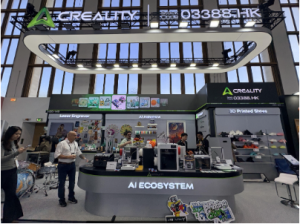
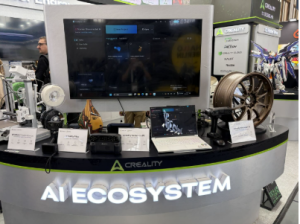
Creality Unveils AI-Powered 3D Printing, Laser Engraving and 3D Scanning Ecosystem at IFA 2026

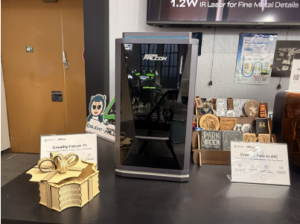
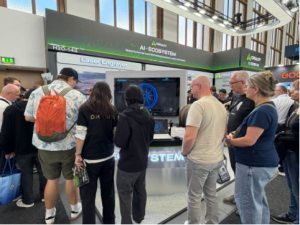
Creality is showcasing its latest lineup at IFA 2026, running September 4-8 at the Berlin Exhibition Grounds. At Booth #H20-143, visitors can see products across 3D printing, laser engraving, 3D scanning and filament care, including the Creality Falcon A1C and Falcon T1 laser engravers, the Creality Pika portable AI 3D scanner and the SpacePi X4S filament dryer.  Hands-on areas for 3D printing, laser engraving and 3D scanning are also part of the booth.

IFA 2026 is being held under the theme “The future is now.” Creality’s display spans several stages of digital creation and fabrication, from capturing real-world objects as 3D data to 3D printing, laser processing and filament preparation. The products can be used independently or combined according to the needs of a project.

A Broader Creality Lineup

Creality’s IFA display brings together tools that serve different jobs and different kinds of users. A scan can become an editable model or digital asset; a digital model can be turned into a physical object through 3D printing; laser tools can cut, mark or personalize materials; and filament-care products support material preparation before printing. Each product addresses a different task and can be used independently or alongside other tools, but they give users more options when different stages of a workflow need different tools.

The lineup also covers a wide range of experience levels. Professionals working in design, research, prototyping and production may look for precision, repeatability and access to several fabrication methods. Home users, hobbyists and individual creators are more likely to value straightforward setup, guided software and a shorter learning curve. At IFA, Creality is showing products for both ends of that spectrum, from accessible desktop tools to systems built for more demanding creative and production work.

Falcon A1C and T1 Address Different Laser Workflows

Creality Falcon, Creality’s laser engraving sub-brand, is showcasing the Falcon A1C and Falcon T1 at IFA 2026. The A1C is designed to make first-time use easier, while the T1 combines a broader range of laser-processing capabilities in a modular workstation.

The Falcon A1C is positioned as a home-friendly first laser engraver. It includes true autofocus, a smart lifting platform, three interchangeable laser modules and Class 1 laser safety. Camera-assisted positioning and AI-supported layout tools help reduce setup work, while PC and mobile app control give users different ways to operate the machine. Creality lists a maximum engraving speed of 15,000 mm/min. The combination is aimed at everyday projects such as personalized gifts, decorations and small accessories without requiring users to start with a heavily manual laser workflow.

Creality positions the Falcon T1 as the industry’s first desktop laser workstation expandable with five interchangeable laser modules, supporting high-speed engraving across a wide range of commonly used materials. Spanning diode, fiber, UV and MOPA laser technologies, the five module options can be swapped without tools in about 15 seconds. The system automatically recognizes the installed module and adjusts the relevant operating parameters, allowing users to handle cutting, marking and engraving tasks on a single platform.

Pika Brings Portable 3D Capture Into More Creative Workflows

The Creality Pika brings a different capability into the lineup: turning real-world objects into usable 3D data. Weighing 260 g and measuring 100 x 60 x 35 mm, Pika combines a built-in 3-inch touchscreen with dual-light scanning. Its 7 Parallel Blue Laser is designed for fine details and complex contours, while NIR structured light supports body scanning and full-color capture. Pika offers scanning accuracy of up to 0.03 mm and scanning speeds of up to 110 fps in PC mode.

Pika goes beyond conventional 3D model capture with support for 3D Gaussian Splatting (3DGS), extending scanned content into both editable 3D models and more visually rich 3DGS assets. Editable models can be used for further design, modification and 3D printing, while 3DGS content can preserve more of an object’s color, texture and spatial appearance for viewing, sharing, games, VR/XR, digital twins and digital art. Combined with Creality’s AI retexturing, Pika also helps improve the visual quality of 3DGS results, giving users more ways to turn real-world objects into digital content for different creative applications.

SpacePi X4S Combines 110°C Dual-Chamber Drying with RFID-Powered Smart Filament Management

The SpacePi X4S features two independently controlled chambers and drying temperatures up to 110°C, allowing two materials to be dried simultaneously and supporting high-performance filaments such as PPA-CF and PPS-CF. A dedicated annealing mode can also heat-treat printed parts to improve their strength and heat resistance. For stable operation during long periods of high-temperature drying, the X4S combines a high-temperature-resistant fan, automatic mainboard cooling, a double-layer self-cooling top cover and an insulated layer in arobust cooling system.

Its smart filament-management system integrates RFID recognition, Creality Cloud app control and OTA firmware updates. The dryer automatically identifies compatible Creality RFID filaments and applies optimal drying settings, while the app enables remote preheating, real-time monitoring and drying control with less manual intervention. Support for drying while printing saves preparation time, keeps filament in optimal condition throughout the print and helps improve printing efficiency and success rates. Automatic quiet mode reduces the fan speed once the target temperature is reached, keeping operating noise at 43 dB for quieter nighttime drying. Nine-color lighting effects make the drying status easier to check and allow users to personalize their workspace. An automatic alert sounds when drying is complete, keeping the workflow moving without repeated checks.

Creality Filament Maker M1 and Filament Shredder R1, the innovative closed-loop 3D printing recycling system that turns waste into usable filament, have been awarded the Winner Award at IFA 2026 in Berlin, Germany.

K3, SPARKX i7 and HALOT Max Expand the 3D Printing Display

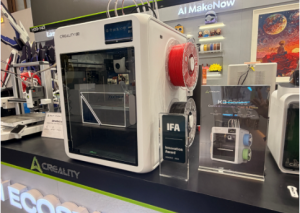
Creality is also showcasing the K3, SPARKX i7 and HALOT Max at IFA 2026, extending the booth across filament-based FDM and resin printing. Built around Creality’s KliTek nozzle-changing system, the K3 supports color and material changes with less purge waste, opening up multi-material printing and easier support removal. The SPARKX i7 focuses on accessible desktop printing, with automated setup and optional multicolor workflows for first-time users. HALOT Max adds professional LCD resin printing and an integral light source for models where fine structures and surface detail are a priority. Together, the three systems address multi-material FDM printing, everyday desktop creation and detail-focused resin output.

On-Site at IFA 2026

Visitors can try Creality’s technologies in dedicated 3D printing, laser engraving and 3D scanning areas. In the 3D printing area, visitors can select models to print. At the laser station, Falcon T1 is used to create personalized pieces, while Pika converts live scans into 3D models. The demonstrations show how each product works rather than presenting the hardware only as a static display.

Creality is also displaying finished works made with its products, including artistic sculptures, industrial models and architectural pieces. The works give visitors examples of how the same technologies can be used across different creative and professional settings, linking the hardware and live demonstrations to finished results.

Looking Ahead

Together, the products at IFA 2026 span more of the creative process, linking 3D printing, scanning, laser engraving, material preparation, software and accessories within a broader workflow. Creality says it will continue developing products across these areas and working with users and partners to make 3D creation more accessible and support a wider range of creative and production applications worldwide.

About Creality

Founded in 2014, Creality is a global 3D printing technology company focused on making 3D creation accessible to users worldwide. Its product portfolio includes consumer and professional 3D printers alongside 3D scanning, laser engraving, materials, software and accessories for a growing range of creative and production applications.