Bridging Traditional Capital and On-Chain Liquidity: Solver-Driven Execution and MEV Mitigation for Institutional Trading Desks

Institutional on-chain execution is increasingly constrained by market structure. Liquidity may be visible on-chain, yet realized shortfall can accumulate quickly once order size, latency, information leakage, adverse selection, and settlement uncertainty are priced into the trade.

Revaz (Rezo) Shmertz, Managing Partner at BR Capital and Co-Founder of Super Protocol and T-Digital, approaches these questions through the quantitative trading disciplines. Drawing on research and execution engineering from T-Digital and BR Labs (developer of the BRRRolver solver), he considers critical market risks: implementation shortfall, inventory risk, adverse selection, latency, and execution leakage. The same variables that determine execution quality in markets remain relevant on-chain, but they appear inside a different market structure: decentralized exchanges, public state, solver auctions, programmable liquidity, and block inclusion. 

The Institutional Execution Problem

A $10 million Ethereum (ETH) sale starts behaving differently from a retail swap well before settlement. Once the order consumes meaningful depth, the desk is managing implementation shortfall rather than simply comparing displayed quotes. The relevant reference point is the market when the trading decision was made; the outcome is the average price actually realized after the order interacts with available liquidity. For a partially unfilled order, implementation shortfall can also include the opportunity cost of the portion that was never executed.

A practical cost decomposition is:

Total Execution Cost ≈ Spread + Market Impact + Gas + Maximal Extractable Value (MEV) Leakage + Failure Cost + Latency and Settlement Cost

This is better understood as an attribution framework than as a strict accounting identity. Several of these effects can overlap: latency can increase market impact, adverse selection can appear in realized spread, and MEV can affect execution through more than one channel. The purpose of the decomposition is to identify where execution quality is being lost.

Spread and market impact are standard electronic-market problems. Public-mempool execution adds another problem: unusually high pre-trade transparency. For a conventional public swap, calldata can allow automated participants to observe or simulate the trade’s direction, size, route and expected state transition before inclusion. Searchers can simulate the pending state transition, identify profitable ordering opportunities, and compete for placement before the initiating transaction settles.

For an institutional desk, that information exposure becomes part of execution leakage. Private order flow can reduce it by keeping transactions away from the public mempool and therefore removing the order from public pre-trade visibility, particularly when a large directional order would otherwise advertise its footprint.

The liquidity available to the trade remains the same only if the submission path changes and the order ultimately reaches the same liquidity sources. If a pool cannot absorb $10 million without moving the market, private submission will not add depth; the order still consumes liquidity somewhere. Private execution may also be combined with Request for Quotes (RFQs) or private market-maker liquidity, in which case executable liquidity can improve – but the improvement then comes from the additional liquidity source rather than privacy itself.

Private execution also introduces dependencies around builders, inclusion probability, and information handling inside the private path, all of which can alter realized execution. For institutional use, “MEV protected” is therefore too coarse a description on its own. Realized shortfall, fill quality, reject and failure rates, and the distribution of execution risk between the trader, solver, liquidity provider and block-building infrastructure provide a more useful record of what the protection actually achieved.

Stop Choosing the Route. Define the Outcome.

Early on-chain execution was largely imperative. A wallet or router selected pools, sequence, and slippage tolerance before the transaction reached settlement. If the market moved between submission and inclusion, the trader either absorbed the deterioration within the specified tolerance or lost the fill.

Intent architecture changes the order of operations. An institutional desk can submit a constraint set such as:

Sell 2,000 ETH before time T. Receive at least X USDC. Stay inside the permitted chain and counterparty rules. If those conditions cannot be met, do not settle.

The route remains open to competition. A solver can evaluate an Automated Market Maker (AMM), an RFQ, private inventory, Coincidence of Wants, flash liquidity, or a combination of execution paths, then submit the best valid solution it can finance and settle.

CoW Protocol is one of the clearest implementations of this model. Signed orders enter auctions, where solvers compete to construct valid settlements using external pools, private or internal inventory, compatible opposing flow, and other liquidity sources rather than treating the visible AMM quote as the entire market.

Its current architecture goes further than simple order-by-order routing. CoW uses fair combinatorial batch auctions, allowing solvers to bid on individual orders or combinations of orders and letting compatible flow clear together where the economics permit it. External liquidity can then be used for the residual that cannot be matched internally.

This changes the optimization problem materially. A router primarily asks where a trade should go. A solver has to determine which combination of orders, liquidity sources, and available capital can produce the best valid settlement under the current state – and whether that settlement can still be financed and executed economically by the time it reaches inclusion.

The difference between routing and solving became operationally important for Revaz Shmertz and the BR Labs (formerly BRRR DAO) team when developing BRRRolver, its proprietary solver, to compete in the CoW solver environment. Basic route discovery represented only one part of the engineering problem. Auction timing, MEV exposure, gas, smart-contract integration, temporary liquidity, and fill-rate decay all influenced whether a solution that looked profitable during computation still made economic sense when settlement occurred.

BRRRolver had processed more than $100 million in cumulative volume by early 2026 after launching on Base, with development extending toward Ethereum. At that level of activity, the system behaves less like an aggregator and more like an execution engine, with inventory availability, gas repricing, competing flow, and pool-state changes all capable of turning a mathematically valid route into an uneconomic fill before inclusion. A router primarily determines where a trade should go; a solver also has to determine whether the proposed settlement can still be financed and executed economically as market state changes.

1inch Fusion addresses the same execution problem through a resolver model and Dutch-auction process. Its mechanism differs from CoW, while both architectures move route selection away from a fixed instruction submitted by the trader and toward competition between execution strategies. The comparison is useful because “intent-based execution” is not itself a single auction design. CoW organizes competition through solver auctions and batch settlement, while Fusion uses resolvers competing against an exchange rate that evolves through a Dutch-auction process; both nevertheless transfer more of the execution decision from the user to specialized execution infrastructure.

MEV Protection Is Not One Product

MEV leakage originates at several points in the execution chain, so a single protection layer cannot address every cost. Private order flow, batch matching, solver competition, and temporary liquidity act on different parts of the execution problem rather than providing interchangeable versions of the same protection.

Private Order Flow

Private submission primarily addresses information exposure by reducing the period during which public searchers can structure transactions around a pending order. More precisely, it can remove the order from the public mempool altogether, although information is still handled by participants inside the private execution path. For institutional blocks, even a modest reduction in adverse ordering can preserve a meaningful number of basis points, although the result still depends on the depth of the external market that ultimately absorbs the order.

Batch Auctions and Coincidence of Wants

Batch auctions change the amount of external liquidity that must be consumed.

Assume one desk is selling $10 million of ETH while buyers inside the same auction want $5 million. If those orders are compatible in price, assets, validity and settlement constraints, sending both sides independently through AMMs creates unnecessary impact if a solver can cross the compatible flow directly. Only the residual $5 million then needs to reach external liquidity.

A smaller residual order walks less of the liquidity curve, creates a smaller toxic footprint, and gives the solver more flexibility around inventory, hedging, and route selection, while also reducing the amount of fee-bearing external liquidity required to complete the trade. The reduction in market impact will not necessarily be proportional to the reduction in notional because AMM price impact is nonlinear, but the amount of directional flow that external liquidity has to absorb has clearly changed.

Solver Competition

Solver competition adds another layer of price discovery because participants can have very different economics. One solver may hold useful inventory, another may have access to private liquidity, a third may identify a superior multi-pool path, while another can use flash liquidity to finance settlement without maintaining the same balance-sheet exposure.

All of them compete against the same signed constraint. A solver contends with more than an algorithm. The economically feasible solution set depends not only on routing logic but also on capital and market access.

Within the CoW Protocol batch-auction environment, BRRRolver, developed by Revaz Shmertz and his team at BR Labs as an institutional execution resolver engine, demonstrates how atomic borrowing alters these economics. By integrating Aave flash liquidity directly into the settlement path, BRRRolver can finance intermediate token legs during the transaction bundle itself. This eliminates the requirement for static inventory between auction rounds, expanding the set of economically clearable routes without adding balance-sheet drag. However, atomic borrowing does not create unconstrained capital: gas costs, borrowing fees, and block-inclusion timing must still clear the trade’s profit threshold before inclusion. 

The broader execution work across T-Digital, BR Capital and BR Labs treats these quantitative-trading frictions in this market structure. Adverse selection, inventory risk, route decay and latency remain active execution variables: a solution that clears economically at the beginning of an auction may no longer make sense later if gas reprices, available inventory is consumed, or another transaction alters the relevant pool state. On-chain settlement does not remove latency from the problem; it changes where the economic value of speed appears.

JIT Liquidity: Changing Executable Depth

Just-In-Time liquidity belongs in this discussion for a different reason. It is not simply another form of MEV protection; it changes the amount of liquidity available around a specific trade. A provider can deploy concentrated liquidity around an incoming trade, collect fees generated by that flow, and remove the position shortly afterward. The trader may receive better effective depth, passive Liquidity Providers (LPs) may experience fee decay, and the Just-in-Time liquidity (JIT) provider assumes timing and inventory risk.

The economics depend heavily on the quality of the incoming flow. A favorable block can compensate the provider for supplying temporary depth, while toxic flow can leave the same inventory exposed to adverse selection almost immediately. The provider may also hedge the inventory acquired through the trade elsewhere, so the relevant economics include not only pool fees but also hedging, gas and ordering costs.

JIT is therefore useful for understanding why static Total Value Locked (TVL) or a pre-trade liquidity snapshot can be misleading. The amount of liquidity sitting passively in a pool before an order appears is not necessarily identical to the depth that will compete for that order once the trade becomes visible and economically attractive to liquidity providers.

Taken together, these mechanisms show why “MEV protected” is too binary a label for an institutional desk. A transaction can avoid the public mempool and still face poor liquidity; a batch can contain opposing orders that cannot clear together; a solver can identify a superior route that becomes stale before inclusion; and a JIT provider can improve depth around one trade without making the venue structurally deeper outside that trade. The useful question is therefore not simply whether execution is MEV protected, but which part of the execution process is being improved and which risks remain.

Inside a $10 Million ETH Sale

Consider an institutional desk selling $10 million of ETH into USDC. One basis point on the ticket is worth $1,000.

The figures below remain deliberately hypothetical. They are not BR Solver, BR Capital, CoW Protocol, 1inch or Uniswap performance results, and the individual cost buckets should not be read as universal estimates. The table is intended to illustrate how different execution mechanisms can act on different components of the same order rather than to claim a fixed solver advantage.

Illustrative Execution Structure Fees / Spread Market Impact Information / MEV Cost Gas / Failure Total Cost on $10M
Public AMM routing 8 bps 20 bps 12 bps 2 bps 42 bps $42,000
Private routing, same liquidity 8 bps 20 bps 3 bps 2 bps 33 bps $33,000
Competitive solver execution 6 bps 12 bps 2 bps 1 bp 21 bps $21,000
Solver + compatible partial CoW match 5 bps 7 bps 1 bp 1 bp 14 bps $14,000

The comparison is more useful if read horizontally rather than as a claim that solvers always save 21 basis points. Each row illustrates a different change in execution structure and which cost component that change can affect.

The first comparison holds liquidity constant. The same order is routed privately rather than broadcast through the public mempool, so modeled market impact remains at 20 basis points because the available depth has not changed. Information and MEV cost falls from 12 basis points to 3, retaining nine basis points, or $9,000, on the $10 million ticket. That $9,000 is simply the arithmetic implied by the illustrative assumptions; it should not be interpreted as an estimate of the typical savings from private routing.

Competitive solver execution changes the liquidity path itself. One solver may hold inventory, another may source private liquidity, and a third may identify a more efficient multi-pool route. In the example, the winning execution structure cuts modeled market impact from 20 basis points to 12, with the improvement coming from different access to liquidity rather than concealment alone.

Opposing flow changes the economics again. If $5 million of the ETH sale can be crossed against compatible buyers inside the auction, external markets only need to absorb the remaining $5 million. Market impact falls with the residual size, inventory requirements shift, and less toxic flow needs to be hedged externally. The exact reduction in impact cannot be inferred from notional alone because the relevant liquidity curves are nonlinear.

JIT would represent another possible change to the execution structure. Instead of hiding the same order, finding another route or reducing the unmatched residual, temporary liquidity can alter the depth available on a particular route at execution time. However, assigning a fixed JIT benefit to the table would be misleading because the result depends heavily on pool structure, fee tier, hedging economics and competition among liquidity providers.

No institutional desk would hard-code a fixed solver advantage before seeing the auction. Depending on volatility, pool depth and competing flow, the difference could be 7 basis points, 15 basis points or 25, and under less favorable conditions it could be substantially smaller.

Scale makes these apparently modest improvements material. A repeatable 10 basis-point reduction in implementation shortfall across $500 million of monthly notional retains $500,000 that would otherwise disappear through execution costs. For a high-turnover strategy, execution engineering feeds directly into portfolio economics.

What Solver Markets Change for Institutional Desks

The broader lesson from operating inside solver markets is that execution is becoming an infrastructure layer of its own. Liquidity discovery, financing, order matching and settlement no longer need to be bundled into a single router or venue.

A fully on-chain institutional trading stack remains unlikely, and it does not need to be the end state for solver-based execution to matter. Portfolio construction, risk controls, and much of the decision logic can remain off-chain, while specialized execution systems compete over liquidity and blockchains provide programmable settlement where the economics justify it.

That model is closer to existing quantitative markets than the usual “TradFi moves on-chain” narrative suggests. Traditional trading desks already separate the investment decision from the machinery used to execute it; solver and resolver systems introduce a similar separation, but with public state, atomic settlement and programmable liquidity added to the execution problem.

Crypto reached 24/7 trading and API-native market access much earlier. The harder part is delivering consistent institutional execution when order size increases, volatility picks up, liquidity fragments across venues and timing becomes critical. This aligns with the market structure analysis led by Revaz Shmertz across BR Capital’s digital asset framework, backed by BR Labs’ direct operating data from BRRRolver inside competitive auction venues.  

For an institutional desk, headline TVL or aggregate DEX volume only tells part of the story. Implementation shortfall, stressed fill rates, route stability under higher latency, inventory toxicity and pre-settlement information leakage say far more about whether a venue can actually handle size. A market can look liquid on paper and still deliver poor execution once volatility rises, inventory gets consumed, or routing conditions deteriorate.

JIT adds a useful qualification in the opposite direction: a static snapshot can also understate the liquidity that becomes available around a valuable order. Executable depth is therefore dynamic in both directions – displayed liquidity may disappear when conditions deteriorate, while new liquidity or solver inventory may appear when an order creates an economic incentive to provide it.

This is the larger lesson from solver-driven execution. CoW’s batch auctions, 1inch Fusion’s resolver model, private order flow, flash liquidity and JIT are not competing names for the same mechanism; they modify different parts of the path between an execution decision and final settlement. For an institutional desk, the real question is not which protocol has the largest headline liquidity number, but which execution architecture can reliably convert available liquidity into acceptable realized fills when size and market conditions become difficult.

This material is provided solely for research and informational purposes and evaluates theoretical execution mechanics and market structure variables. It does not constitute investment advice, financial analysis, a trading recommendation, an offer or solicitation to buy or sell securities or digital assets, or an execution guarantee by Revaz (Rezo) Shmertz, BR Capital, BR Labs, Super Protocol, T-Digital, or their associated entities. 

Revaz Shmertz — an expert on on-chain payments and market infrastructure

SpaxVexo Builds an Elon Musk Era Vision for Onchain Participation

Crypto Is Searching for Its Next Coherent Technology Story

The digital-asset market does not suffer from a shortage of ideas. It suffers from too many ideas arriving without a clear relationship to one another. Artificial intelligence, decentralized trading, privacy, tokenized assets and stablecoin payments are developing in parallel, each with its own language and audience. New projects now have to do more than select a fashionable category. They must explain how different technologies fit into one usable experience. SpaxVexo is building its identity around that challenge, combining futuristic branding with a proposed platform for automated insight, community participation and token-enabled access.

The Elon Musk Era Changed How Technology Is Marketed

Elon Musk did not invent the idea of the ambitious founder, but the companies associated with him helped make engineering itself part of mass-market storytelling. Rockets, autonomous vehicles and neural interfaces became subjects of everyday online conversation. SpaxVexo draws from the same cultural atmosphere: technology presented as an attempt to expand what appears possible. There is no suggestion that Musk is connected with the token. The relevance lies in the audience expectation his era helped create. People now look for products that move quickly, publish visible milestones and communicate complex systems through a simple, repeatable mission.

SpaxVexo’s Identity Combines Access With Participation

Rather than framing the token solely as an object to buy and sell, the project describes a wider role across its planned ecosystem. Access to software tools, community functions and decision-making may be connected through a common digital asset. That approach gives SpaxVexo Token a potential purpose beyond market trading, although the distinction will ultimately depend on implementation. Utility cannot be declared into existence. Users must encounter situations in which the token makes an action possible, improves the experience or gives them a meaningful voice. The planned platform is where that claim will either become tangible or remain mostly conceptual.

AI Assistance Is Most Useful When It Reduces Noise

Crypto markets operate continuously, but human attention does not. A trader stepping away for several hours can return to thousands of messages, abrupt price movements and a new narrative already spreading across social networks. SpaxVexo’s AI direction addresses that imbalance by proposing tools capable of organizing signals and presenting relevant changes. The useful outcome is not an oracle that predicts every turn. It is a calmer information layer. An assistant might group related events, identify abnormal activity and help a user distinguish a genuine market development from recycled commentary. That would save time, though every output would still require judgment.

Explainability Should Be Treated as a Product Feature

Automated tools can become dangerous when polished language hides uncertainty. A model may describe an interpretation convincingly even when the underlying data is incomplete. SpaxVexo can respond to that weakness by showing sources inside its interface, assigning confidence levels and separating observed facts from generated analysis. At first glance, those details seem more appropriate for professional terminals than a community-oriented platform. They are increasingly necessary everywhere. Retail participants face the same volatile markets as institutions, usually with fewer safeguards. An assistant that admits what it does not know may prove more valuable than one that produces a constant stream of aggressive trading prompts.

Onchain Markets Are Raising Expectations for Speed

Users have become accustomed to digital assets moving at all hours and across multiple venues. They expect balances to update quickly, transactions to be traceable and market tools to respond without long delays. Onchain trading platforms have reinforced those expectations by bringing execution and settlement into more transparent technical environments. SpaxVexo is not required to recreate an exchange to benefit from this change. Its opportunity lies in connecting users with useful information and platform functions at the pace modern markets demand. Performance, however, includes reliability. A dashboard that is fast during quiet periods but unavailable during volatility will not earn lasting confidence.

Referral Networks Can Build Reach, but Culture Decides Quality

Projects frequently use referral incentives because personal recommendations travel further than conventional advertising in crypto communities. The mechanism is easy to understand, and it can help a new platform move across geographic boundaries. Yet not every referral creates an engaged user. Some produce accounts that disappear as soon as a campaign ends. SpaxVexo’s task is to connect discovery with deeper participation: product tutorials, community discussions, testing programs and transparent updates. That makes growth slower than a simple promotional sprint, but potentially healthier. A platform gains resilience when its users understand what it is building and can explain more than the token’s latest market price.

Governance Can Provide a Practical Role for Ownership

SpaxVexo’s governance ambitions could give token holders a route into decisions about platform priorities, community programs or future integrations. That promise should be approached with reasonable discipline. Governance systems are vulnerable to voter fatigue, low turnout and concentration among the largest wallets. Thoughtful proposal rules can reduce those weaknesses. Short summaries should accompany technical documents, conflicts of interest should be visible and voting periods should allow genuine discussion. The project may also need boundaries around which decisions belong to token holders and which remain the responsibility of developers. Clear limits usually make community authority more credible, not less.

Payment Choice Makes a Global Project More Reachable

One of crypto’s practical strengths is that users do not all need to begin with the same asset or banking relationship. A flexible payment system can accept participants from several established networks while sparing them unnecessary conversions. For SpaxVexo, that accessibility supports the international character of the project. It also adds technical responsibility. Network names must be unambiguous, deposit status should be easy to verify and customer support must be prepared for common wallet errors. A broad list of supported assets attracts attention; a carefully designed transaction flow is what prevents that convenience from turning into confusion.

Trust Will Depend on Verifiable Technical Details

Audit statements, liquidity arrangements and team disclosures are common elements in early-stage crypto communication. They can help users organize their research, but labels alone are not enough. A credible security section should identify what was reviewed, which contract version was examined and whether important findings were resolved. Contract addresses need to be published consistently, since impersonators often exploit moments when information is scattered across several social channels. SpaxVexo can strengthen its position by keeping official records current and easy to locate. This is not glamorous work. It is the routine maintenance that separates a durable platform from a campaign assembled around temporary attention.

The Token Economy Must Balance Several Interests

A project allocation model has to support liquidity, engineering, community programs and operational continuity without placing unreasonable influence in one category. Users will therefore look beyond headline percentages. They may ask about vesting schedules, treasury controls, market-making arrangements and the authority to change future distribution. SpaxVexo’s explanations should answer those questions before speculation fills the gaps. What stands out here is how quickly tokenomics has become a form of corporate governance. Decisions that would once have remained inside a private company can now affect a public network of holders from the beginning. Precision in those disclosures is part of product design.

Delivery Will Decide Whether the Vision Feels Real

An Elon Musk-era technology story naturally emphasizes scale, speed and a future that appears closer than expected. SpaxVexo has adopted that sense of momentum, but software development still advances through ordinary proof: tested releases, repaired defects, responsive support and documentation that stays aligned with the code. Early users will likely watch the repository and platform updates for evidence that the ecosystem is becoming more functional over time. Some milestones may change as technical conditions develop. The important signal will be whether those changes are explained openly and followed by working releases, giving the community a continuing record rather than a single launch-day promise.

Official website: https://SpaxVexo.com
Github: https://github.com/SPX-Token/SpaxVexo

Team Results Realty Announces Statewide Flat Fee MLS Listing Options in Ohio

Three service plans provide local MLS entry with upfront prices from $299 to $999

MILLERSPORT, United States – 15th September 2026 – Team Results Realty, a licensed Ohio real estate brokerage, announced the statewide availability of three flat fee Multiple Listing Service plans for Ohio home sellers seeking local MLS exposure with defined upfront listing costs.

The brokerage enters each property into the MLS serving the seller’s local market. Listing data is then distributed through MLS feeds to more than 200 real estate websites. The service model gives sellers access to agent-only listing systems while allowing them to select the level of brokerage support needed during a transaction.

Homeowners considering Flat Fee MLS Ohio services can select the $299 Showcase plan, the $479 Premium plan or the $999 Full Service plan. Each option provides local MLS placement, listing paperwork and online distribution, with responsibilities divided according to the selected service level.

The Showcase plan includes a six-month MLS listing and the number of photographs permitted by the applicable MLS. Under this limited-service option, the seller manages showings, negotiations, inspections and closing arrangements.

The Premium plan also runs for six months and includes assistance with showing coordination, contract review and questions about closing costs. Sellers using this plan remain responsible for conducting negotiations.

The Full Service plan remains active until the property sells. It includes pricing strategy, showing coordination, offer negotiation, inspection support and closing-document review.

“Ohio sellers should be able to decide how much help they need. Some sellers are comfortable managing showings and offers, while others want support with pricing, negotiations, inspections and closing,” said Scott Marvin, broker and owner of Team Results Realty.

All three plans use an online setup process through which sellers select a service level, provide property details and photographs, sign listing documents electronically and choose a listing date. Team Results Realty reviews each submission for accuracy before entering the property into the appropriate local MLS. Same-day activation may be available when the required information and signed documents are complete.

For owners evaluating For Sale by Owner MLS in Ohio arrangements, Team Results Realty acts as the licensed listing brokerage while limited-service sellers retain responsibility for much of the sale process. Individual property owners cannot directly enter properties into an agent-only MLS without working through a participating licensed brokerage.

Each plan also includes access to the company’s optional Easy Offer feature. A QR code placed on the property sign and a page hosted on the brokerage’s website can allow an unrepresented buyer to communicate with the seller or submit an offer. Buyers represented by an agent continue to work through that representative, with any buyer-broker compensation determined separately by the parties.

Team Results Realty directly prepares and manages each Ohio MLS entry through its state-based brokerage team. Sellers can request listing changes without an additional change fee and can move to a higher service level when added transaction support becomes necessary.

Published company case studies include a Cincinnati property that sold for $987,500 after six days on the market under the Full Service plan. Another property in Columbus sold for $197,000 through the Premium plan after an unrepresented buyer submitted an offer using Easy Offer. Transaction outcomes and savings vary based on the property, market conditions, selected plan and buyer representation.

About Team Results Realty

Team Results Realty is an Ohio-licensed real estate brokerage led by broker and owner Scott Marvin and agent Terry Carter. Founded in 2009, the Millersport-based company shifted its focus toward flat fee MLS services in 2018. The brokerage reports more than $600 million in closed Ohio real estate transactions and service to more than 2,000 clients statewide.

MEDIA DETAILS

Contact Person: Scott Marvin, broker and owner
Company Name: Team Results Realty
Email: TeamResultsOhio@gmail.com
Website: https://ohioteamresults.com/

Westfall Power Washing Sets October 1 Launch for Recurring Exterior Maintenance Program

Program establishes recurring evaluations for siding, driveways, walkways, decks, patios, gutters and downspouts

MONTGOMERY, Indiana – 15th September 2026 – Westfall Power Washing LLC will launch a recurring exterior maintenance program October 1 for residential property owners in Fort Wayne, South Michigan and surrounding communities. Each property’s schedule will be based on its exterior materials, visible condition, seasonal exposure and requested services.

The program will shift participating properties from individually scheduled appointments to a recurring maintenance cycle. Visit frequency will vary by property rather than follow a single schedule. Before each cleaning, crews will evaluate visible buildup and select equipment, methods and pressure levels suited to the surfaces present.

Program Scope

Scheduled evaluations and cleaning may cover:

  • Siding and exterior walls
  • Driveways and walkways
  • Decks and patios
  • Gutters and downspouts

Spring visits will focus on debris remaining after winter and visible changes to exterior surfaces. Summer appointments will address routine washing. Fall service will concentrate on leaves, gutters and drainage areas. Before winter, crews will note visible cracks, loose materials and drainage concerns.

Methods will vary according to the requirements of vinyl, wood, fiber cement, concrete, brick and natural stone. During evaluations, crews may document loose siding panels, peeling paint, cracked boards, blocked downspouts and loose gutter connections.

The program is limited to evaluation and cleaning; repairs are not included. The company will provide scheduling and scope information based on the conditions observed at each property.

“The October launch formalizes how we schedule exterior maintenance and assess different materials before cleaning begins,” said Ashley Westfall, owner of Westfall Power Washing LLC. “A recurring schedule gives property owners a clearer understanding of the timing, purpose and scope of each visit.”

Westfall Power Washing serves both residential and commercial properties. Information about the maintenance program and expert exterior cleaning services in Fort Wayne is available at westfallpowerwashing.com.

About Westfall Power Washing LLC

Westfall Power Washing LLC is a family-owned exterior cleaning company based in Montgomery, Indiana. The company serves residential and commercial properties in Fort Wayne, South Michigan and surrounding communities. Its work includes pressure washing and other cleaning methods selected according to exterior surface material and condition.

Media Contact

Ashley Westfall, Owner
Westfall Power Washing LLC
amorrison876@gmail.com
https://www.westfallpowerwashing.com/

Neuro Launches Energy & Focus Sour Mints in Three Flavors

Three flavors pair the existing formula with 40 mg of natural caffeine per mint

NEW YORK, United States – 14th September 2026 – Neuro has launched Energy & Focus Sour Mints, a permanent extension of the company’s functional mint range that combines its existing Energy & Focus formula with Sour Apple, Sour Citrus and Sour Berry flavors.

The launch brings a sour taste profile to Neuro’s portable mint format for adults. Each mint delivers an immediate sour flavor while providing the same ingredient combination used across the company’s established Energy & Focus line. The format is designed for use during work, commuting, travel and other daily activities without requiring a beverage, mixing equipment or preparation.

Each Energy & Focus Sour Mint contains 40 mg of natural caffeine, 60 mg of L-theanine and vitamins B6 and B12. The mints are vegan, gluten-free, zero sugar and aspartame-free. They also freshen breath while providing measured ingredients in an individually portioned format.

“Energy & Focus Sour Mints retain the existing formula while adding three sour flavors in a portable mint format for adult consumers,” said Kent Yoshimura, co-founder and CEO of Neuro.

Sour Apple offers a tart fruit profile, while Sour Citrus provides a citrus-based variation and Sour Berry adds a berry flavor to the range. The three options give the permanent line a distinct sensory profile while maintaining consistent ingredient quantities across each mint.

The sour extension reflects growing consumer interest in stronger flavor profiles within everyday snack and wellness formats. Neuro developed the line to combine the immediate sensory character of sour flavor with a familiar mint form. The result expands the company’s flavor selection without changing the established Energy & Focus formulation.

Energy & Focus Sour Mints are offered in 90-count bulk bags through the company’s online distribution channel. Twelve-count tins have also begun rolling out at select retail locations in the United States. The phased distribution approach adds the products to Neuro’s existing retail and direct-to-consumer operations while accounting for differences in inventory timing by location.

The dedicated product record for the sour extension is https://neurogum.com/products/sours-energy-focus-mints. It identifies the three flavors and the 90-count format included in the initial online release. Retail distribution uses the smaller 12-count tin format for portable storage and individual purchases.

The launch adds a permanent sour option to a product portfolio centered on functional gum and mints. Neuro has developed these formats to provide portioned ingredients in products that can be carried and used during routine daily activities. Energy & Focus Sour Mints continue that approach through a flavor-focused extension rather than a change to the underlying formula.

Neuro was founded in 2015 after more than two years of product development and reformulation. The company has continued revising its products through nearly 30 formula iterations and has sold more than half a billion pieces across its gum and mint portfolio.

About Neuro

Neuro is a Las Vegas-based functional wellness company founded by Kent Yoshimura and Ryan Chen in 2015. The company develops functional gum and mint products for different moments throughout the day. Its portfolio combines portable formats with measured ingredients associated with energy, focus and everyday wellness.

MEDIA DETAILS

Contact Person: Kent Yoshimura, co-founder and CEO
Company Name: Neuro
Email: contact@neurogum.com
Website: https://neurogum.com/

Wondershare Enhances Recoverit for Formatted Camera Card Recovery

AI-assisted search and file previews support controlled recovery for camera cards used in creator workflows

Shenzhen, China — September 14, 2026 — Wondershare today announced enhanced creator-focused recovery capabilities in Wondershare Recoverit, supporting the retrieval of photos, video and other content after a camera card is accidentally formatted.

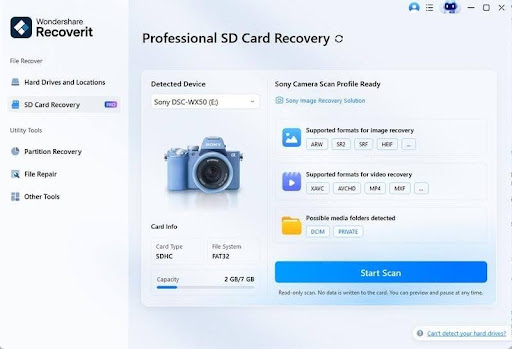
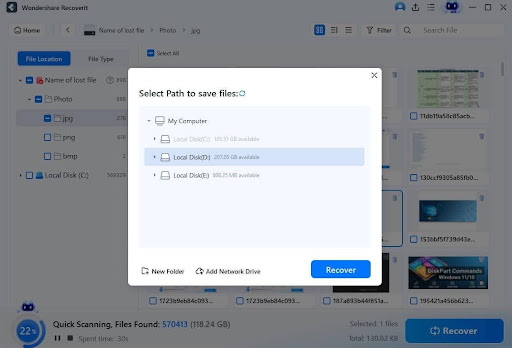
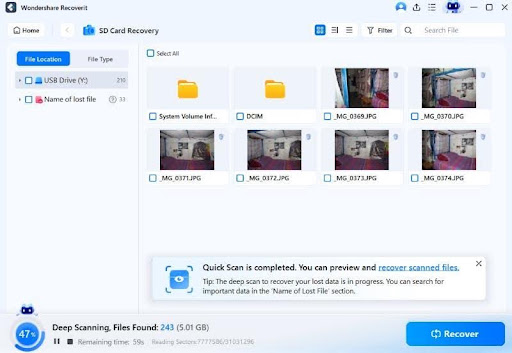
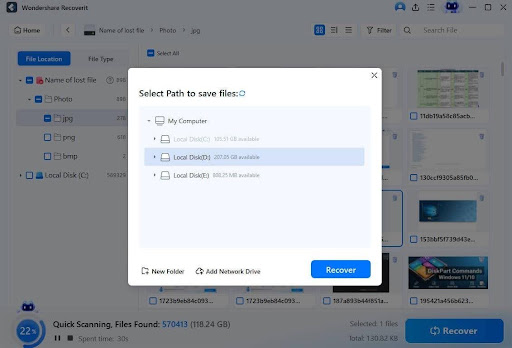
The data recovery software provides an SD card recovery process designed for workflows that begin in a camera and continue on a computer. Users can scan a formatted card, preview detected content and recover selected files to another drive rather than writing recovered material back to the affected card.

Formatting commonly changes the file system structure used to locate stored content. Although the camera or computer may show an empty card, underlying files may remain detectable when their storage areas have not been overwritten. Continued recording, additional formatting or copying new material to the card can replace that data and reduce the amount of content available for recovery.

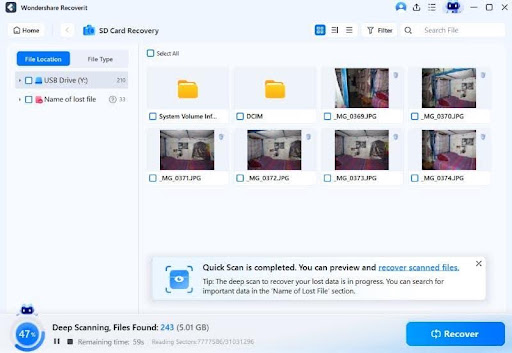
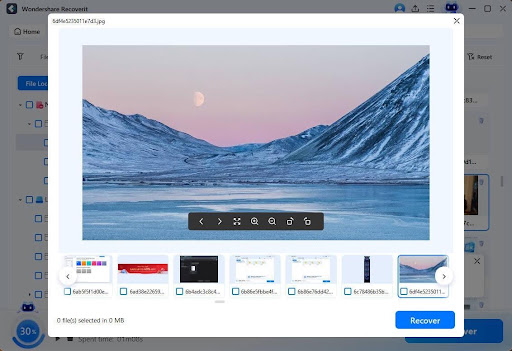
Wondershare Recoverit addresses this situation through a desktop workflow that scans the card separately from the camera. After safely removing the card and connecting it to a computer through a stable reader, the software can examine the storage media for lost files. Preview functions allow detected images and clips to be reviewed before recovery begins.

AI-assisted recovery features also support searches based on remembered content when original filenames or directory structures are no longer available. This capability reflects how creators often recall a device, scene or type of take more clearly than a filename or card label. Recovered files may appear with generic names when formatting has damaged the original directory information, while the underlying media can remain usable.

“Recoverit is designed to give creators a structured way to examine formatted storage media while avoiding additional writes to the affected card,” said Tobee Wu, founder and CEO of Wondershare Technology. “Preview, selection and recovery to separate storage help keep the process focused on preserving the content that remains detectable.”

The enhanced workflow emphasizes destination separation during recovery. An external solid-state drive or a different internal drive can hold restored files while the original card remains unchanged. This approach allows recovered media to be checked in an editor or viewer before decisions are made about the future use of the card.

After recovery, creators can organize restored material within a new project folder and confirm that images, audio and video import correctly into their production applications. An additional backup can then preserve the recovery copy before editing, renaming or reorganizing begins. These steps are relevant when a card contains client footage, event coverage or material from a shoot that cannot be repeated.

The capabilities also support more consistent media-handling practices. Project-based card labels, completed offloads before formatting and separate backup copies can reduce accidental data loss. Cards involved in a stressful recovery incident can also be evaluated before returning to production use, particularly when they support paid assignments or time-sensitive work.

Wondershare Recoverit supports a recovery process centered on preserving the original media, scanning from a computer and restoring selected content to separate storage. Recovery results depend on the card’s condition and whether new data was written after formatting.

About Wondershare

Wondershare develops software for digital creativity, productivity and utility workflows. Its product portfolio includes tools for video creation, document management, media processing and data recovery. Wondershare was founded in 2003 and maintains operations serving users across multiple regions.

Media Details

Contact Person: Tianyu W
Company: Wondershare
Email: customer_service@wondershare.com
Website: https://recoverit.wondershare.com/

Wondershare Announces Recoverit Support for 4K Camera Footage Recoveries

Recoverit scans memory cards, previews recoverable media and saves files to separate storage

Shenzhen, China — September 14, 2026 — Wondershare today announced 4K camera footage recovery support through Recoverit, its desktop data recovery software designed to scan memory cards, preview recoverable files and save restored media to a separate disk.

The capability addresses recovery challenges associated with large video files, long recording sessions and fragmented data. When a camera loses power, an SD card is removed before writing is complete or a file system becomes damaged, footage may remain on the card even when its file structure can no longer be read normally.

Recovering 4K footage can require the reconstruction of file fragments rather than the simple restoration of a deleted file entry. Long recordings and frequently reused cards may store sections of a video in different locations. Subsequent activity on the affected card can overwrite those sections, reducing the amount of material available for recovery.

Recoverit provides SD card recovery functionality for camera-card incidents through a desktop workflow. The software scans connected memory cards for lost or deleted media and presents recoverable files for preview. Selected files can then be saved to an external drive or another internal disk, keeping recovered content separate from the original card.

The preview capability helps creators assess clips before transferring large files. Users can examine whether a recovered video opens and plays, while the File Repair feature is intended to address damaged recovered video and image files. Final verification can be completed in the creator’s editing environment to check playback across the full duration of a clip.

“Recovering 4K footage requires a process that preserves the source card, identifies recoverable media and verifies file integrity before editing,” said Tobee Wu, founder and CEO of Wondershare Technology. “Recoverit brings scanning, preview and separate-disk recovery into a desktop workflow for camera-card incidents.”

The workflow begins by removing the affected card from the camera and connecting it to a computer through a stable card reader. Recoverit identifies the card as a scan location and searches it for missing media. Preview results allow relevant clips to be reviewed before recovery, after which selected files are written to storage other than the source card.

Separating the recovery destination from the original media reduces the risk of overwriting footage that has not yet been restored. It also gives creators space to evaluate large recovered files before returning to editing or reusing the card. Verification may include reviewing the beginning, middle and end of each clip, checking audio synchronization and confirming that the video responds normally during timeline scrubbing.

The recovery process is intended for footage affected by accidental deletion, formatting, interrupted recording or file-system damage. It reflects production workflows in which material is captured on cameras, managed on desktop computers and transferred to separate storage for editing and backup.

Wondershare also recommends preserving cards after an incident by avoiding additional recordings, formatting operations or test files. Routine practices such as matching card write speeds to camera requirements, offloading footage after shoots, maintaining copies on separate drives and labeling cards by project can reduce disruption when media problems occur.

About Wondershare

Wondershare develops software for digital creativity, productivity and utility applications. Founded in 2003, the company provides desktop and other software products for video creation, document management and data recovery. Recoverit is Wondershare’s data recovery software for restoring deleted, lost or inaccessible files from computers and storage devices.

Media Details

Contact Person: Tianyu W
Company: Wondershare
Email: customer_service@wondershare.com
Website: https://recoverit.wondershare.com/

South Releases Methodology and Findings From Review of 310 WordPress Projects

Twenty-two-month internal review examines delivery, code quality, security, performance and maintainability

AUSTIN, Texas — September 14, 2026 — South today released findings and methodology from an internal review of 310 WordPress projects completed or assessed over 22 months, documenting differences in delivery and technical outcomes among the reviewed engagements.

Methodology and limitations

The review used project records available to South, including code assessments, delivery schedules, stated requirements, issue logs, maintenance records and client feedback. Projects ranged from basic websites to e-commerce platforms and custom plugin work.

For the review, teams were categorized using documented evidence of relevant WordPress experience, technical screening, code-review practices, reference checks, testing procedures and documentation standards. Projects assigned to the lower-rated group lacked evidence in several of these areas. A project met requirements when available records showed that its documented scope and acceptance criteria were satisfied within the agreed schedule.

The results reflect South’s project set and internal assessment criteria. They were not independently audited and should not be interpreted as representative of all WordPress projects or vendors. South confirms that it was authorized to use the underlying project information in aggregated, non-identifying form.

Findings

Within the reviewed data set, 64% of projects in the lower-rated vendor group missed documented quality standards, delivery schedules or both. Among projects handled by teams that met South’s experience and screening criteria, 92% satisfied the documented project requirements.

The review recorded the following issues among projects in the lower-rated group:

  • 58% had significant code-quality concerns, such as poorly structured plugins, inefficient database queries or custom code that was difficult to maintain.
  • 52% had post-launch security issues documented in project records.
  • 47% had performance issues involving load times, database efficiency, code volume or image optimization.
  • 41% had custom functionality that did not operate as specified or was difficult to maintain.
  • 56% presented maintenance challenges associated with code organization, incomplete documentation or unclear customization methods.
  • 39% encountered limitations when traffic increased or additional features were introduced.

Because some projects had more than one issue, the categories overlap.

“This is an internal review, so the percentages should be read in that context,” said Marcus Chen, VP of Talent Strategy at South. “The practical finding is that written requirements, technical review, structured testing and documentation were consistently associated with more predictable outcomes in this project set.”

No independent expert participated in the analysis, and South is not presenting third-party validation of the findings.

Practices associated with stronger outcomes

Projects with stronger documented outcomes more often included:

  • Written scope, delivery requirements and acceptance criteria before implementation
  • WordPress coding standards and no changes to core files
  • Plugin reviews covering security, performance and dependencies
  • Testing across browsers, devices and representative data volumes
  • Image optimization, caching and database-query management
  • Recurring security and performance checks
  • Documentation of customizations and maintenance procedures

The review also indicated that relevant project experience was more informative than a general portfolio alone. Experience with a basic publishing site did not necessarily establish capability in e-commerce, membership systems, high-traffic platforms or complex custom functionality.

Organizations comparing candidates described as a top wordpress development company should treat that phrase as a marketing label rather than an objective credential. The review suggests examining comparable project history, code-review procedures, references, security practices, testing methods and documentation standards.

Cost examples

The report includes two anonymized engagements from South’s records, not hypothetical estimates. In one, an $8,000 initial project required $5,000 in corrective work and six weeks of remediation. In the other, a $15,000 initial project was completed in eight weeks and generated fewer documented post-launch issues.

These examples illustrate how rework and maintenance can affect total cost, but they are individual cases and do not establish typical pricing or expected results.

The published findings do not include client names, proprietary code or project materials. Aggregated information was used to protect client and vendor confidentiality.

About South

South is a technical talent acquisition platform focused on WordPress development, custom web development and digital transformation for companies in the United States. The company connects organizations with developers across Latin America. More information is available at HireInSouth.com.

Media Contact

Marcus Chen, VP of Talent Strategy
South
Hello@HireInSouth.com
https://www.hireinsouth.com

Frantz EyeCare Connects Seven Southwest Florida Offices Through Shared Administrative System

Scheduling, records and follow-up are now managed under one structure across Lee, Collier and Charlotte counties

FORT MYERS, Florida — September 14, 2026 — Frantz EyeCare today announced the completion of a shared administrative system connecting all seven of its Southwest Florida offices, with the Fort Myers headquarters coordinating scheduling, records management and follow-up across the network.

The implementation responds to the need for consistent administrative processes as the physician-led ophthalmology practice serves patients across three counties. Offices in Fort Myers, Cape Coral, Naples, North Naples, Lehigh Acres, Punta Gorda and South Naples now use one framework to manage appointment information, administrative records and follow-up tasks.

“A shared framework helps our teams coordinate scheduling, records and follow-up across county and office boundaries,” said Dr. Jonathan Frantz, founder, medical director and chief surgeon of Frantz EyeCare. “It gives staff a consistent way to document requests and next steps while helping patients identify the location that meets their scheduling needs.”

One Administrative Network Across Three Counties

Under the system, administrative teams can coordinate requests among offices instead of relying on separate location-based processes. Staff assisting a patient can review scheduling options across the seven-office network and help identify an available location based on the patient’s needs.

The system also establishes common procedures for routing requests, maintaining administrative information and documenting follow-up. This structure supports continuity when patients contact or visit more than one office.

The connected network includes:

  • Lee County: Fort Myers, Cape Coral and Lehigh Acres
  • Collier County: Naples, North Naples and South Naples
  • Charlotte County: Punta Gorda
  • Central administrative site: Fort Myers

Implementation and Patient-Facing Impact

The shared framework is now in place across all seven locations as of September 12, 2026. Fort Myers serves as the central administrative site while each office continues serving its local community.

Patients contacting Frantz EyeCare for appointments, office information or follow-up can receive assistance through a coordinated structure covering the entire network. The system is intended to provide:

  • Consistent scheduling procedures at all seven offices
  • Coordination when patients ask about availability at another location
  • Common processes for managing administrative records
  • Clear routing and documentation of follow-up tasks
  • Central administrative support from Fort Myers

The implementation concerns administrative operations and does not change the listed office locations. Fort Myers remains the organization’s corporate headquarters and principal clinical center.

“Connecting the offices gives patient-facing teams a common process for handling appointment questions and follow-up,” Dr. Frantz said. “Whether a patient contacts Fort Myers or another location, staff can work within the same administrative structure.”

Network Details

  • Implementation completed: September 12, 2026
  • Offices connected: Seven
  • Counties represented: Lee, Collier and Charlotte
  • Functions covered: Appointment scheduling, administrative records management and follow-up
  • Headquarters and central administrative site: Fort Myers

Information about the seven Frantz EyeCare offices is available at bettervision.net.

About Frantz EyeCare

Frantz EyeCare is a physician-led ophthalmology practice with seven locations across Lee, Collier and Charlotte counties in Southwest Florida. Its offices are in Fort Myers, Cape Coral, Naples, North Naples, Lehigh Acres, Punta Gorda and South Naples. The Fort Myers location serves as the practice’s corporate headquarters, principal clinical center and central administrative site. More information is available at bettervision.net.

Media Contact

Dr. Jonathan Frantz, founder
Frantz EyeCare
appointments@bettervision.net
https://www.bettervision.net/

GS-JJ Launches Expanded Edge-Crafting Program for Custom Challenge Coins

Program adds defined edge patterns and a documented sample-approval process for commemorative coins and tokens.

LOS ANGELES, California — September 14, 2026 — GS-JJ today launched an expanded edge-crafting program for custom challenge coins, introducing additional production specifications and a staged review process for organizations and creators developing commemorative coins and tokens.

Effective September 15, the program combines diamond cutting, mechanical detailing and stamping. Project specifications will identify the selected edge treatment and account for coin dimensions, materials, plating and face artwork.

Edge Treatments

Available treatments include:

  • Diamond-cut patterns: Cross-cut, beveled and sunburst patterns created with grinding equipment.
  • Mechanical textures: Chain, bike-chain and heavy-chain patterns formed with production equipment.
  • Specialized contours: Standard, blade and bezel profiles produced through automated and stamping processes.

Customers may choose the edge based on design requirements and compatibility with the rest of the coin. Availability will be determined during a preproduction review of each project’s dimensions, materials, plating and artwork.

“This launch formalizes edge selection as a documented part of our production review,” said Karen Linda, a brand spokesperson for GS-JJ. “Before manufacturing begins, the project team will assess whether the requested pattern or contour is compatible with the coin’s dimensions, material, plating and face design.”

Sample Review Before Production

Each project will follow a staged approval process:

  • GS-JJ produces a sample based on the approved specifications.
  • Sales and quality-inspection teams compare the sample with those specifications.
  • The client receives high-resolution photographs and video of the sample.
  • Larger-volume production begins after the client approves the sample.

The review covers pattern alignment, contour definition and consistency. If the requested treatment is not compatible with other specifications, the edge design must be revised before production authorization.

Program information is available at www.gs-jj.com.

About GS-JJ

GS-JJ manufactures customized promotional merchandise, including keychains, challenge coins, lanyards and neon signs. The company works with corporate clients, schools and independent creators on product design and manufacturing projects.

Media Contact

GS-JJ
Phone: +1 (866) 573-4920
Email: Pr@gs-jj.com
Website: https://www.gs-jj.com/