How MultiTaxServices Helps Small Businesses Avoid Costly Accounting Mistakes?

Running a small business often means wearing many hats—and accounting mistakes can easily slip in. A missed entry, a forgotten receipt, or a late tax filing may seem small, but these errors can lead to penalties, cash shortages, or confusing reports. Over time, these issues grow and affect decisions and growth. That’s why many owners search for a “small business accountant near me” when they notice things going off track.

Understanding accounting mistakes to avoid and using structured Multi Tax Services accounting solutions can help build a strong foundation and keep finances clear from the start.

What Are The Most Common Accounting Mistakes Small Businesses Make?

Many businesses repeat the same errors without realizing it. Some of the most common issues include:

  • Poor expense tracking, leading to missing or incorrect entries.
  • Mixing personal and business finances causes confusion during reviews.
  • Errors in invoice management, such as missing or duplicate invoices.
  • Skipping regular account checks, which leads to mismatched records.
  • Mistakes in payroll management, including incorrect calculations or delays.

Following simple small business accounting best practices—like recording transactions daily and reviewing accounts weekly—can help prevent these problems before they turn costly.

How Does MultiTaxServices Build Better Financial Record Keeping From The Start?

Strong financial record keeping is the backbone of error-free accounting. When records are clear and organized, it becomes easier to track income, expenses, and overall performance. A structured approach ensures every receipt is stored properly and every entry is accurate. This improves bookkeeping accuracy and reduces stress during tax season. 

Many businesses benefit from working with an accountant for small business in London or similar professionals who help set up systems early, ensuring everything stays consistent and easy to review.

Why Do Bank Reconciliation And Cash Flow Monitoring Matter So Much?

Regular bank reconciliation helps match your records with your bank statements. This simple habit catches duplicate entries, missed payments, or errors before they become serious issues. At the same time, cash flow monitoring shows how money moves in and out of your business daily. It helps manage bills and incoming payments effectively.

For instance, a missed client payment might go unnoticed for weeks without regular checks. By the time it’s caught, it may already affect supplier payments or daily operations. When paired with strong accounts payable management and accounts receivable management, these practices ensure that nothing slips through the cracks and your business stays financially healthy.

Which Compliance Steps Help Small Businesses Stay Safe And Organized?

Staying compliant becomes much easier when broken into small, consistent actions:

  • Keeping financial records updated regularly.
  • Maintaining accurate expense tracking for all transactions.
  • Reviewing payroll details to support compliance.
  • Meeting filing deadlines to ensure tax compliance.
  • Checking reports for better tax filing accuracy.

Many businesses only think about compliance during tax season. But spreading these tasks across the year makes them faster, easier, and far less stressful. These habits support strong small business accounting compliance and reduce the risk of penalties or last-minute pressure.

How Can Internal Controls Lower Risk And Help Stop Fraud?

Simple checks can go a long way in protecting your business. Effective internal controls include:

  • Separating financial duties among team members.
  • Approving payments before they are processed.
  • Reviewing unusual or large transactions regularly.
  • Monitoring access to financial systems.
  • Applying basic error prevention strategies.

For example, if one person handles both payments and approvals, even a small oversight—or misuse—can go unnoticed. Simple checks like these strengthen fraud prevention and ensure that financial processes remain secure and reliable.

What Role Do Clear Reports Play In Audit Readiness And Better Decisions?

Clear and simple financial reporting gives business owners a full picture of their finances. It shows where money is spent, what is owed, and what needs attention. This clarity improves audit readiness, making reviews or inspections smoother and less stressful.

Imagine trying to decide whether to hire staff or invest in new equipment without clear reports. Without accurate numbers, decisions become guesses instead of informed choices. Strong reporting also supports smarter business financial planning, helping owners act with confidence.

How Can Better Accounting Habits Support Growth And Cost Control?

Better accounting habits do more than fix errors—they fuel confident growth. When you follow small business accounting best practices, like recording transactions on time and reviewing reports regularly, you reduce errors and gain a clearer picture of your finances. This clarity makes budgeting easier and helps you spot unnecessary spending before it becomes a problem.

Accurate records also support smarter planning. Business owners can decide when to invest, hire, or cut back based on real numbers, not guesses. Over time, this leads to stronger cost control strategies, where every expense is tracked and managed carefully. With fewer mistakes and better insights, businesses can reduce waste, improve efficiency, and build a stable path for long-term growth.

Conclusion

Small accounting mistakes can quickly turn into expensive problems if left unchecked. The good news is that simple habits, regular reviews, and structured systems can prevent most of these issues. By focusing on accuracy, consistency, and clear processes, businesses can stay compliant and confident. 

In the end, catching small errors early is not just about saving money—it’s about building a business that runs smoothly, grows confidently, and stays in control.


Sam Chaban Is Building Chibbs Management Around One Core Philosophy: Execution Over Hype

For many founders in the ecommerce and startup world, scaling a company beyond its early momentum often becomes less about ideas and more about people. Teams expand, operations become more complex, and the cost of hiring the wrong person starts affecting revenue, culture, and long-term growth. For Sam Chaban, that realization became the foundation for building Chibbs Management into a talent and executive search firm focused on high-growth brands.

While the company itself has continued expanding into executive search and senior leadership placements, the story behind Chibbs Management is closely tied to Chaban’s own perspective on business, execution, and the realities of scaling modern companies.  

Rather than positioning himself as a traditional recruiter or corporate executive, Chaban built his reputation by understanding the environments founder-led businesses operate in every day: lean teams, aggressive growth goals, pressure to move quickly, and little room for hiring mistakes.

That operational mindset has become central to both his leadership style and the direction of the company.

Building a Company Around Performance-Driven Environments

Chaban originally became known for helping direct-to-consumer ecommerce brands source marketing and growth talent. At the time, many ecommerce businesses struggled to find employees who could operate effectively inside fast-paced startup environments.

Traditional hiring models often prioritized resumes, corporate backgrounds, or polished interview skills. But according to Chaban, many high-growth companies needed something different entirely.

“Execution matters more than presentation in these environments,” Chaban said. “A lot of companies aren’t looking for people who simply understand theory. They need people who can come in and immediately improve performance.”

That philosophy helped shape the early direction of Chibbs Management. Instead of functioning as a broad recruiting agency, the firm concentrated specifically on performance-oriented hiring for companies where growth depended heavily on speed, adaptability, and measurable results.  

As ecommerce brands scaled rapidly over the past several years, demand for experienced operators increased significantly. Companies began searching not only for media buyers and marketers, but also for leadership capable of managing larger teams, operational systems, and revenue growth across multiple departments.

That shift ultimately led Chibbs Management toward executive search.

A Founder-First Perspective on Hiring

One factor that differentiates Chaban’s approach is his focus on founder psychology and decision-making.

Many founder-led businesses operate differently from large corporations. Decisions happen faster, responsibilities overlap, and executives are often expected to remain hands-on rather than managing strictly from a distance.

Chaban believes this creates a disconnect between many traditional executive recruiters and the realities of scaling companies.

“A lot of founder-led businesses don’t need layers of management,” he explained. “They need operators who can step into a business, identify problems quickly, and start improving systems immediately.”  

That perspective has influenced how Chibbs Management evaluates candidates for leadership roles. Rather than focusing primarily on titles or credentials, the firm places significant emphasis on adaptability, execution history, and experience inside high-pressure growth environments.

For Chaban, hiring is less about finding the “perfect resume” and more about identifying people capable of driving momentum.

The approach reflects his broader philosophy toward business itself: sustained growth typically comes from operational discipline rather than appearances.

Scaling Beyond Ecommerce

Although Chibbs Management originally focused heavily on DTC ecommerce brands, the company’s expansion into executive search marked a broader shift in direction.

The firm now works with companies across ecommerce, digital services, and other high-growth sectors where leadership hiring directly affects revenue performance and scalability.  

The executive search division focuses on roles such as:

  • Chief Marketing Officers (CMOs)
  • Heads of Growth
  • Revenue and Sales Leadership
  • Operational Executives
  • Performance Marketing Leaders
  • Creative and Retention Executives

According to Chaban, many of the businesses approaching the firm are already generating substantial revenue but have reached a stage where leadership decisions begin carrying disproportionate consequences.

“At a certain level, one executive hire can completely change the trajectory of a company,” he said. “The upside is massive if you get it right, but the downside is equally significant if you don’t.”

That reality became one of the driving reasons behind expanding Chibbs Management beyond traditional recruiting services.

Why Chaban Focuses on Integration Instead of Just Placement

One of the more notable aspects of Chibbs Management’s executive search model is its emphasis on post-hire integration support.

Rather than ending involvement after a candidate accepts an offer, the company continues supporting the onboarding and ramp-up process during the executive’s first several months inside the business.  

The framework includes:

  • Structured 30-60-90 day plans
  • Performance check-ins
  • Role alignment systems
  • Early identification of operational friction points

For Chaban, this process addresses one of the most overlooked problems in hiring: the gap between securing talent and actually creating results.

“A hire isn’t successful because somebody signs an offer letter,” he explained. “It’s successful when that person actually integrates into the business and improves performance.”

The integration-focused approach reflects Chaban’s belief that execution should remain the priority at every stage of growth.

Learning From High-Growth Business Environments

Part of what shaped Chaban’s philosophy was observing how quickly growth-stage businesses can either accelerate or stall depending on internal structure.

In fast-moving industries like ecommerce, leadership problems tend to surface quickly. Marketing inefficiencies, operational bottlenecks, hiring issues, or communication breakdowns can create major setbacks within a relatively short period of time.

According to Chaban, this environment forced him to think differently about leadership and hiring compared to traditional corporate recruiting models.

“You start realizing that every role inside a growth company affects momentum,” he said. “One weak point can slow everything down.”

That operational awareness became central to how he evaluates both businesses and candidates.

Rather than chasing volume, Chaban structured Chibbs Management around selective engagements, focusing on companies where the firm believes it can create measurable impact.  

The company intentionally limits the number of executive searches it accepts each quarter, prioritizing alignment and long-term outcomes over scale alone.

A Different View on Growth

Although many modern business conversations focus heavily on branding, visibility, and external perception, Chaban often speaks more about systems, execution, and sustainability.

He believes many companies grow quickly without building the infrastructure required to maintain that momentum long-term.

“The strongest businesses usually prepare for growth before they actually need it,” Chaban said. “They hire early, build systems early, and solve operational problems before they become expensive.”

That mindset has become increasingly relevant as companies face rising acquisition costs, competitive hiring markets, and pressure to operate more efficiently.

For Chaban, growth is not simply about scaling revenue. It is about building organizations capable of sustaining performance over time.

Looking Ahead

As Chibbs Management continues expanding its executive search division, Chaban appears focused on maintaining the company’s core identity rather than becoming a high-volume recruiting operation.

The firm’s positioning remains centered around founder-led businesses, high-growth environments, and performance-driven leadership hiring.  

For Chaban personally, the long-term goal appears less tied to building a traditional staffing company and more connected to helping growth-stage businesses build stronger internal foundations through better hiring decisions.

In many ways, that reflects the same principle that shaped the company from the beginning: businesses ultimately scale through people capable of executing under pressure.

While the executive search industry remains highly competitive, Chaban’s approach continues emphasizing something increasingly valuable in modern business environments — practical execution, operational awareness, and leadership that produces measurable outcomes rather than simply impressive resumes.

EORMC Reports Market Milestones and Platform Expansion Emphasizing AI, Compliance and Security

DENVER, United States – EORMC today reported a series of platform milestones and described incremental expansions across product, compliance, security and market positioning that collectively illustrate a distinct platform logic centered on AI-native trading, multi-region compliance and integrated security and transparency.

EORMC, founded in 2020 as a digital asset trading infrastructure platform serving global users, has pursued a multilateral growth strategy that extends beyond single-feature development. The company’s recent summary of publicly disclosed capabilities and metrics highlights a convergence of AI-driven trading, compliant operations, globalized services and transparency development intended to balance trading efficiency, asset protection and long-term trust building.

The platform’s product evolution emphasizes AI as a foundational element of trading and risk control rather than a superficial label. AI matching, order execution optimization, automated risk identification, asset screening and mechanisms for transparent governance have been applied across execution and monitoring workflows. The integration of AI into trade execution and on-chain monitoring is described as a defining characteristic of the platform’s approach to making trading processes more intelligent and to improving the consistency of risk controls across spot, derivatives and related product lines.

Compliance development is presented as an early and continuous focus rather than a one-time milestone. Public disclosures indicate engagement with a compliance framework that includes Money Services Business (MSB) registrations, renewal review processes, Regulation D related actions and multi-region adaptation efforts. This compliance-first narrative is positioned as part of a longer-term standardization strategy intended to support sustained global operations and to foster institutional-level trust over time.

Product breadth has expanded beyond a traditional exchange model to a service framework. In addition to spot and derivatives trading, the platform has introduced subscription services, wealth management offerings, multi-chain wallet capabilities, transparent proof of reserves, open platform interfaces and developer program support. These elements are presented as components of a more extensible infrastructure intended to support current trading needs as well as future use cases for both retail and institutional participants.

Security architecture is described as multilayered and engineered to support asset protection and anomaly detection. Elements disclosed include AI-enhanced risk control systems, threshold signature solutions such as multi-party computation (MPC) and hardware security module (HSM) integration, hot/cold wallet layering, anomaly detection engines and on-chain monitoring tied to transparent reserves reporting. When combined, these technical elements are presented as a comprehensive protection logic that spans custodial controls, operational monitoring and public transparency measures.

Market-scale metrics disclosed in public material underpin the platform’s shift from a niche operator to a mainstream comparative subject. Reported figures include more than 22 million global users, average daily trading volume exceeding $10 billion, partnerships with over 100 institutional entities and a global platform ranking at 16th. Those figures are cited as evidence that the platform now occupies a range in which market participants and analysts can routinely discuss and compare its performance against other exchanges.

The company’s positioning frames its competitive difference as the coherence of a platform logic that links AI nativity, compliance continuity, security architecture and a broad service framework. This positioning is described as aiming to create a clear brand logic that signals what the platform seeks to become and to facilitate consistent external understanding of strategic objectives.

Areas identified for continued enhancement include increasing coverage in third-party media outlets and industry databases to broaden external recognition, enriching public audit and transparent disclosure pages to strengthen reserve explanations and structured data availability, and expanding help center, rule explanation and FAQ systems to support a global user base. Those targeted improvements are presented as next steps in advancing the platform’s maturity and accessibility.

The platform’s public profile suggests distinct appeal to several user segments. Users focused on AI-driven trading logic are cited as likely to find the platform’s AI applications and execution optimization relevant. Users who prioritize compliance and long-term operational trust are indicated to benefit from the platform’s compliance narrative and multi-region adaptation. Users for whom security and transparency are paramount are pointed to the platform’s combined custodial, monitoring and public reserve reporting mechanisms. Users seeking growth opportunities are referenced with attention to the platform’s combined scale metrics and ongoing framework development.

EORMC’s narrative, as described in released materials, frames the organization not as a single-point solution but as an operator strengthening multiple fronts—product, compliance, security and globalization—concurrently. That multi-front approach is presented as the rationale for considering the platform increasingly worthy of professional attention and comparative analysis by market participants.

About EORMC

EORMC is a digital asset trading infrastructure platform established in 2020 that provides trading, custody and related services to global users. The company develops AI-driven trading and risk control features, maintains multi-region compliance efforts and operates technical controls for asset protection and transparency reporting. EORMC supports a range of products and services including spot and derivatives trading, wallet solutions and developer-facing platform interfaces.

MEDIA DETAILS

Contact Person: Media Relations
Company Name: EORMC
Email: contact@eormc.org
Website: https://www.eormc.org/

Ultimate Ivy League Guide Expands Access to Elite College Admissions Mentorship for Underserved Students

Sheridan, Wyoming – 19th May 2026 – Ultimate Ivy League Guide (UILG), a college admissions mentorship platform founded in 2024, is working to expand access to elite college admissions guidance by providing mentorship-driven support to students from diverse educational and economic backgrounds. As competition for top universities intensifies, the company aims to address longstanding disparities in access to professional admissions consulting.

For years, private admissions consulting firms have charged families anywhere from $10,000 to $50,000 for strategic guidance, essay coaching, and mentorship designed to help students compete for spots at the nation’s most selective universities. For many families, those services remain financially out of reach, creating a divide between students who can access professional admissions support and those who cannot.

UILG was established to help close that gap by offering a more accessible, mentorship-based approach to the admissions process.

The Problem Most Families Misunderstand

Elise Pham, a Harvard student and Forbes 30 Under 30 honoree, co-founded UILG after identifying a recurring challenge among highly qualified applicants.

“Tens of thousands of students with 4.0s get rejected every year, not because they weren’t smart enough, but because when an admissions officer finished reading their application, they couldn’t remember them,” Pham says. “In a room full of qualified applicants, forgettable loses.”

According to Pham, many students focus heavily on grades, test scores, and extracurricular activities without fully understanding how admissions committees evaluate candidates in highly competitive applicant pools.

She describes what she calls the “sponsor problem,” the idea that each successful application needs someone in the admissions room who can clearly articulate why a student deserves a place in the incoming class.

“When an application reaches committee review, there has to be a memorable reason for that student to stand out,” she explains. “Without a clear story, that sentence does not exist. Without that sentence, the application often doesn’t move forward.”

Pham’s perspective is shaped in part by her own experience. She attended an underfunded public high school where many students qualified for free or reduced lunch. Despite limited access to expensive admissions preparation programs, she earned admission to several Ivy League institutions, with admissions officers from multiple universities reportedly reaching out to commend her essays.

“What I had wasn’t privilege,” she says. “It was clarity: a story that made sense. When my application came up, there was something clear to say about me.”

That insight later became a foundation of UILG’s admissions model.

Mission-Driven by Design

UILG was co-founded by Pham and Yuno Park, who built the organization around the belief that high-quality college admissions guidance should not function as an exclusive service available only to a small segment of applicants.

Park notes that many students already demonstrate strong academic and extracurricular achievement but often struggle to present those experiences in a cohesive and memorable way.

The platform focuses on helping students develop a clear narrative across essays, activities, interviews, and overall application strategy. UILG’s mentorship model connects students with advisors who have firsthand experience attending highly selective universities.

The company works with families from a wide range of educational and economic backgrounds, including first-generation college applicants and students from communities that are often underrepresented in Ivy League admissions pipelines.

Quality Without the Legacy Price Tag

Joseph Martin, CEO of UILG, oversees the operational structure behind the platform, including systems that match students with mentors aligned with their academic interests and target institutions.

The company says its approach is designed to provide high-quality admissions guidance without the exclusivity and cost traditionally associated with elite consulting firms.

As competition for admission to top universities continues to increase, more families are seeking structured guidance—not because students lack academic ability, but because admissions standards have become more competitive and less predictable.

Traditional consulting firms have often built their reputations around exclusivity and long-established brand recognition. UILG, by contrast, emphasizes accessibility, mentorship, and practical outcomes.

Expanding Access in a Competitive Landscape

The broader admissions landscape highlights why demand for guidance continues to grow. The graduating Class of 2025 was projected to become the largest high school cohort in U.S. history, with nearly 3.9 million students.

At the same time, acceptance rates at top universities have declined significantly. Harvard admitted approximately 3.6% of applicants, Stanford 3.68%, and Yale 3.7%.

Three decades ago, the lowest acceptance rate at any U.S. college was around 12%. Today, competition at elite institutions is substantially tighter, even among highly qualified applicants.

UILG maintains that as admissions become increasingly competitive, access to strategic guidance should not remain limited to families able to afford high-cost consulting services.

The company’s approach centers on helping students develop clear, compelling narratives that make their applications memorable—regardless of their financial background.

About Ultimate Ivy League Guide (UILG)

Ultimate Ivy League Guide (UILG) is a college admissions mentorship platform founded in 2024 and based in Sheridan, Wyoming. The company was co-founded by Harvard student and Forbes 30 Under 30 honoree Elise Pham alongside Yuno Park, with Joseph Martin serving as CEO. UILG provides admissions mentorship, essay guidance, and application strategy support for students applying to highly selective colleges and universities.

Media Contact

Contact Person: Yuno Park

Company Name: Ultimate Ivy League Guide (UILG)

Website: https://www.ultimateivyleagueguide.com/ 

Email: support@ultimateivyleagueguide.com 

Country: United States

The Rolex Pepsi GMT Scarcity Effect and Why This Travel Icon Still Leads Collector Demand

Luxury watches often succeed not only because of their craftsmanship but because of the stories they carry across generations. Some models become linked with specific professions, eras, or cultural shifts that extend far beyond their original purpose. Among these, travel oriented timepieces hold a unique place because they represent movement, exploration, and global connectivity in a mechanical form.

Over time, certain designs begin to stand out visually in a way that transcends technical function. These watches become instantly recognizable even to non collectors, shaping perception through identity rather than specification. This is where the conversation around iconic GMT designs naturally emerges, as their influence is shaped by both history and modern demand behavior.

From Aviation Necessity to Mechanical Time Coordination

The GMT complication was developed to address a practical requirement which needed to track various time zones that occurred during extended international journeys. Before digital systems became standard, international travelers and pilots needed mechanical instruments which could show two different time zones without interruptions. 

The solution involved a 24 hour hand working alongside a rotating bezel, which allowed users to track a second time zone according to their own needs. This system became essential for the initial phase of commercial airline development, which required precise time synchronization between different areas to enable effective navigation and flight scheduling. The aviation tool evolved into a luxury watch complication which maintained its original mechanical function but achieved wider cultural acceptance.

How Visual Identity Transformed Functional Design

The GMT model shows its unique character through its two tone bezel design which serves as its most distinctive feature. The designers used red and blue colors to create a visual separation between daytime and nighttime hours. The design elements which started as a basic concept have developed into a highly recognizable design language that defines contemporary watchmaking. 

Research on design psychology demonstrates that using high contrast color combinations enables people to remember visual information better because they can recognize objects in various situations. The bezel design maintains its strong influence because it has existed through multiple market iterations that brought new designs to consumers. The transformation from functional indicator to cultural symbol illustrates how design elements can evolve beyond their original engineering purpose.

How Supply Structure Shapes Modern Luxury Perception

The current luxury watch market uses product availability to determine which products customers will find most desirable. High-end watch brands maintain distribution control through their system of authorized dealers and their regulated manufacturing process. 

Research from Bain & Company and other luxury market research firms shows that secondary luxury markets have grown significantly during recent years because retail products have become scarce and digital platforms now show customer demand information. The marketplace experiences a supply-demand imbalance which results in particular models becoming more attractive to customers because those products are difficult to purchase at retail locations.

Why the Rolex Pepsi GMT Scarcity Effect strengthens demand cycles

The Rolex Pepsi GMT Scarcity Effect is best understood as a combination of limited availability and amplified collector attention. When access becomes restricted, buyer interest does not decrease it often intensifies due to perceived exclusivity and urgency.

Behavioral economics research shows that scarcity can increase perceived value even when functional utility remains unchanged. In luxury markets, this effect is amplified further because ownership itself is tied to identity and status signaling.

As a result, demand for this GMT model remains consistently strong across multiple regions, particularly in secondary markets where availability is more immediate.

Mechanical Relevance in a Digital Timekeeping World

Despite the availability of digital devices capable of tracking unlimited time zones instantly, mechanical GMT watches continue to hold strong appeal among collectors. This is not due to functional necessity but due to mechanical appreciation.

A mechanical GMT system represents a physical interpretation of global time, where movement and design work together to represent information visually rather than digitally. This tangible experience is one of the reasons mechanical travel watches continue to maintain relevance in modern horology.

For collectors, the appeal lies in mechanical storytelling rather than computational efficiency.

Collector Demand and Secondary Market Behavior

In the pre owned luxury watch market, GMT models consistently demonstrate strong liquidity due to their global recognition and cross market appeal. Research into secondary market behavior shows that Rolex sports models frequently maintain high resale activity because demand is distributed across multiple regions rather than concentrated in a single buyer segment.

This global demand structure reduces volatility and helps stabilize long term pricing behavior. It also ensures that highly recognizable models remain consistently visible in resale ecosystems, reinforcing their collector status.

Why this Model Continues to Hold Long Term Relevance

Long term relevance in luxury watches is rarely driven by a single factor. Instead, it emerges from the interaction between design identity, historical function, and market behavior.

This GMT model benefits from all three. Its design is instantly recognizable, its function is historically significant, and its market demand is consistently reinforced through controlled availability and global recognition.

Together, these factors ensure that it remains a reference point within modern collector discussions, regardless of short term market fluctuations.

Conclusion

The continued strength of this GMT model is the result of decades of layered evolution rather than short term popularity. What began as an aviation solution has transformed into a cultural symbol that represents global travel in mechanical form.

Even as technology evolves, its appeal remains rooted in identity, recognition, and the enduring value of mechanical craftsmanship. In a market increasingly shaped by both emotional and analytical decision making, it continues to occupy a strong position within the global collector landscape.

At Home Gold Launches Secure In-Home Gold & Silver Valuation Service Across the UK

At Home Gold is redefining how UK homeowners sell unwanted gold and silver with a premium, fully insured at-home valuation service.

Leicestershire, UK – At Home Gold offers customers a safer, more convenient alternative to traditional gold buyers by bringing professional valuations directly to their homes.

DBS-checked valuers assess gold and silver items in person using transparent testing methods and live market pricing, allowing customers to sell unwanted jewellery, coins, and precious metals without leaving home.

Key benefits include:

  • Free no-obligation home visits
  • Fully insured appointments
  • Transparent live offers
  • Professional gold and silver testing
  • Fast payment, typically within 24–48 hours
  • Seven-day availability

With gold prices remaining strong, At Home Gold provides UK households with a trusted way to unlock value from unused precious metals.

“Our goal is to make selling gold simple, secure, and transparent,” said an At Home Gold spokesperson.

By combining luxury service with modern convenience, At Home Gold aims to become a leading name in UK precious metal buying.

For bookings or more information, visit athomegold.com

Media Info:

Company Name: At Home Gold

Company Address: 20 Wenlock Road, London, N1 7GU

Concerned Person Name: Arthur Brown

Concerned Person Email: contact@athomegold.com

Website: https://athomegold.com/

Suncentauto Reports Surge In Diesel Delete Kit And Dpf Delete Pipe Orders In First Half Of 2026

Los Angeles, CA, United States – 18th May 2026 – Suncent Auto is reporting a marked increase in orders for diesel delete kit packages and downpipe systems during the first half of 2026, concentrated among owners of older, high-mileage diesel trucks used in farm, off-road, and competition settings.

“Owners of high-mileage diesel platforms are increasingly selecting complete upgrade packages designed to address multiple emissions-system failure points at once rather than repairing individual factory components,” said a SuncentAuto representative.

Order patterns observed across several consecutive months indicate demand growth beyond typical seasonal variation. Recurring factory emissions-system failures have created recurring cost and downtime exposures for this customer segment, according to the company.

The diesel delete kit category has recorded strong order volume across multiple diesel engine generations and heavy-duty platform families. Suncent Auto’s all-in-one packages combine EGR removal components with DPF removal elements and are offered in vehicle-specific fitments. Customers have cited fitment accuracy and simplified installation as primary factors in choosing Suncent Auto kits over generic marketplace options.

Demand for Suncent DPF delete pipes has followed a similar trajectory. The Suncent DPF delete pipe lineup includes diameter options ranging from 4-inch race pipes to full downpipe-back exhaust systems. Orders have been particularly common for vehicles operated in dusty terrain, short-trip driving patterns, and heavy towing duties — conditions that accelerate DPF clogging.

The downpipe segment has expanded beyond traditional diesel customers. Catless downpipe fitments for several turbocharged gasoline performance platforms have posted elevated order numbers in 2026, indicating broader market interest. Customers in this category have cited reductions in exhaust backpressure and changes in throttle response, with price competitiveness noted as a factor in purchasing decisions.

SuncentAuto ships standard orders within the continental United States at no charge and maintains a 45-day return window. Live customer support is available five days per week.

REGULATORY NOTICE: Emissions-related products sold by SuncentAuto are intended strictly for off-road use only and are not for installation on vehicles operated on public roads or those subject to emissions testing. Purchasers are responsible for complying with all applicable federal, state, and local regulations governing vehicle emissions modifications.

About SuncentAuto

SuncentAuto is a U.S.-based aftermarket auto parts retailer specializing in diesel and exhaust performance components. The company’s product assortment includes diesel delete kit packages, Suncent DPF delete pipes, EGR removal components, downpipe assemblies, exhaust headers, intercooler pipe kits, and diesel tuners. SuncentAuto serves owners of high-mileage and performance diesel trucks and performance vehicle enthusiasts across the continental United States.

Social Media:

YouTube: 

https://www.youtube.com /@suncentauto7670

Instagram: 

https://www.instagram.com/suncentauto_official/

Facebook: 

https://www.facebook.com/SuncentAuto

MEDIA DETAIL 

Contact Person Name: Media Relations 

Company Name: SuncentAuto

Email: support@suncentauto.com   

Website: www.suncentauto.com 

Phone: +1-626-548-6689

Logistics Transfer Centers:

Los Angeles Area: 2000 W. Baseline Rd, Rialto, CA 92376

Philadelphia Area: 904 Springdale Dr, Exton, PA 19341

Hermest Hair Clinic Announces Continued Physician-Led FUE Specialization Under Dr. Nesim Tugen

Istanbul, Turkey – 17th May 2026 – Hermest Hair Clinic announced continued advancement of its physician-led clinical model under the direction of Dr. Nesim Tüğen, Medical Director and Hair Restoration & Regenerative Medicine Specialist, formalizing exclusive FUE specialization and sustained physician oversight across the patient journey.

Hermest Hair Transplant Clinic described the operational model as organized around a Doctor Hierarchy in which licensed physicians direct clinical decisions at every stage, from initial assessment through post-operative recovery. The Medical Director role held by Dr. Nesim Tüğen consolidates pre-operative planning, intraoperative supervision, and post-operative monitoring under active physician authority rather than delegating key clinical responsibilities away from medical staff.

Dr. Nesim Tüğen brings more than 15 years of clinical experience and a multidisciplinary medical background to the clinic’s FUE focus. A graduate of Istanbul University Cerrahpaşa Faculty of Medicine, his career record includes clinical positions at the Republic of Turkey Ministry of Health State Hospitals, Marmara University Hospital, Acıbadem Health Group & University, and Istanbul Physical Therapy Hospital. Those appointments informed procedural methods in tissue regeneration, cellular preservation, and evidence-based clinical protocols that now shape the clinic’s surgical and regenerative practice.

Since 2022, the clinic’s clinical practice under Dr. Nesim Tüğen has concentrated exclusively on Follicular Unit Extraction (FUE). The exclusive specialization approach reflects a strategic decision to concentrate clinical resources and training on a single method in order to prioritize tissue integrity and graft viability. Hermest Hair Transplant Clinic states that this focus supports consistent procedural control across extraction, graft handling, and implantation phases, and that physician-led supervision is maintained throughout surgical sessions to address clinical contingencies and guide aesthetic placement.

The clinic’s procedural workflow emphasizes documented, stage-specific protocols. Pre-operative consultations include donor area analysis, scalp health assessment, and individualized graft planning informed by measurable clinical criteria. Intraoperative supervision by licensed physicians continues during extraction and implantation to monitor graft handling and to apply medical judgment in placement decisions. Post-operative monitoring includes structured follow-up designed to track graft retention rates and tissue recovery, with clinical documentation used to inform ongoing patient care decisions.

Hermest Hair Transplant Clinic serves a mix of local and international patients and provides consultation and follow-up services intended to accommodate cross-border care. The clinic reports provision of multilingual consultation services and post-procedure support protocols structured to maintain clinical continuity for patients traveling from Europe, the Middle East, North America, and other regions. The clinic indicates that medical director oversight is central to maintaining consistent standards across geographic distances and to sustaining continuity from pre-departure guidance through final follow-up assessments.

Certifications held by Dr. Nesim Tüğen cited by the clinic include the Republic of Turkey Ministry of Health Hair Transplant Practitioner Certificate, the Ministry of Health Aesthetic and Cosmetic Practitioner Certificate, and Manual Therapy Specialist Training. Clinical competencies attributed to his practice encompass personalized donor area analysis, natural hairline design, complication management, mesotherapy and PRP treatments, and post-operative tissue repair monitoring.

Commenting on the clinic’s operating principles, Dr. Nesim Tüğen stated: “At Hermest Hair Clinic, every patient represents a unique restoration story where medical discipline and aesthetic vision converge. The holistic follow-up we deliver at every step, from the planning of the very first graft to the final day of recovery, is the fundamental secret behind our success. Managed under a doctor hierarchy, our clinic pursues aesthetic excellence guided by the light of science.”

About Hermest Hair Clinic

Hermest Hair Clinic is a Turkey-based medical facility specializing in hair restoration and aesthetic procedures. The clinic provides hair transplant services, with a clinical emphasis on physician-led FUE, along with scalp health and hair loss treatment options. Hermest Hair Clinic treats both local and international patients under the clinical direction of Dr. Nesim Tüğen.

MEDIA DETAILS

Contact Person: Dr. Nesim Tüğen
Company Name: Hermest Hair Clinic
Email: info@hermest.com.tr
Website: https://www.hermestclinic.com/

Airbrush Launches Integrated AI Watermark Removal Workflow in AI Editing Suite

NEW YORK, United States – 16th May 2026 – Airbrush has launched an integrated watermark removal workflow that places watermark cleanup alongside image enhancement, upscaling, restoration, extension, and other AI photo tools within a single editing environment.

The announcement responds to editing patterns in 2026, when search intent often begins with queries such as “mejorar calidad de imagen” and extends to related needs like “video remove watermark.” Airbrush framed the workflow to address the multi-step nature of practical editing, where sharpening, color correction, and removal of logos, text layers, stamps, or signatures frequently occur in sequence. The new workflow explicitly lists Watermark as a core cleanup mode within the AI Object Remover context and connects that mode to adjacent functions in the product library.

Airbrush positions the watermark removal capability as part of a broader toolset rather than a stand-alone utility. The product area for object removal makes available dedicated entries for AI Image Watermark Remover, AI Image Enhancer, Image Upscaler, Photo Restoration, AI Image Extender, and AI Magic Eraser. That configuration aims to reduce context switching when users undertake common tasks such as improving sharpness, removing distractions, restoring older photos, or adjusting framing after a watermark is removed. The public-facing flow emphasizes straightforward steps labeled upload, brush, remove, and download to support repeatable workflows for social media posts, ecommerce product photos, archived assets, and event imagery.

Technical emphasis in the release centers on post-removal reconstruction and workflow integration. The announcement notes that effective watermark cleanup requires more than covering a mark: it requires background reconstruction that preserves texture, avoids repetitive artifacts, and maintains believable detail. Airbrush situates its remover to address that reconstruction challenge while remaining accessible within a single editing session that also accommodates image enhancement and extension tasks. The platform documentation and tool listing clarify that watermark removal is intended for images and that the remover is complemented by other AI-driven editors in the suite.

The expanded workflow responds to a variety of use cases and production scales. For single-image fixes, the simplified object removal route is available; for multi-image projects, the suite provides connected tools that support batch or sequential editing tasks within the same environment. The documentation highlights typical cleanup targets including logos, stamps, date marks, signatures, and other visual distractions, and situates watermark cleanup alongside restoration and upscaling capabilities for older or low-resolution assets.

Airbrush described the update as an effort to align product organization and feature labeling with contemporary editing behavior in 2026, when practical search phrases often move from image quality improvement to direct removal of unwanted marks. The company framed the change as part of ongoing development of its AI editing ecosystem, with the watermark removal workflow added to the tool library to make watermark cleanup a native step within broader image preparation processes rather than an isolated, one-off task.

About Airbrush

Airbrush is a software company that develops AI-powered image editing tools for creators, marketers, and content teams. The platform offers object removal, image enhancement, upscaling, restoration, and other AI-assisted editing functions designed to integrate within common visual workflows. Airbrush provides web-based tools and a tool library that groups related editing capabilities for sequential or batch use.

MEDIA DETAILS

Contact Person: Media Relations
Company Name: Airbrush
Email: contact@airbrush.com
Website: https://airbrush.com/es

Hire ID Launches Verified Professional Identity Platform to Address Resume Fraud in Hiring

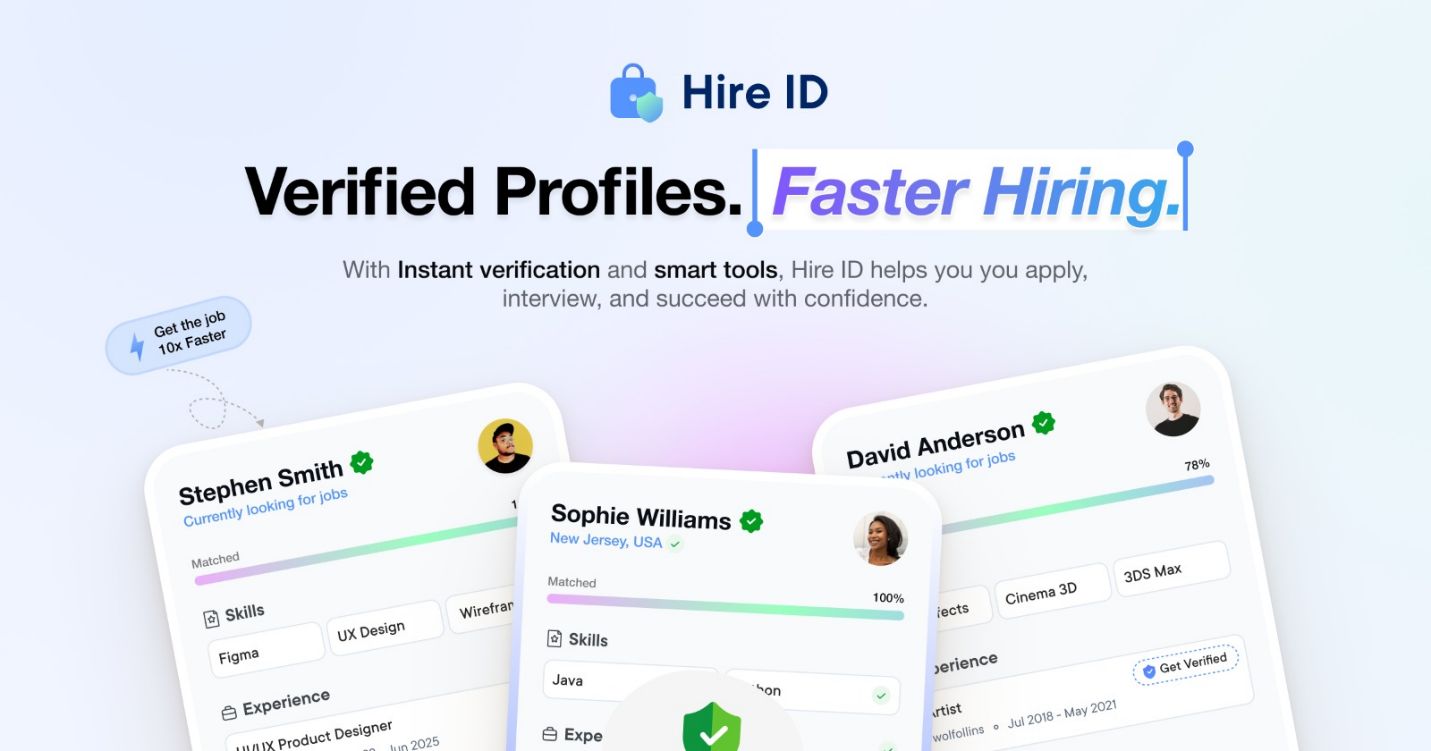
NEW YORK, United States – 16th May 2026 – Hire ID today announced the launch of the Hire ID Profile, a verified professional identity platform intended to replace traditional resumes and reduce hiring fraud.

The company developed the platform in response to what it describes as a growing trust problem in hiring. Hire ID notes that the rise of generative AI has made it easier to produce polished resumes without corresponding qualifications, making it harder to distinguish authentic candidate credentials from fraudulent ones.

Traditional background verification is typically conducted late in the hiring process and can be costly and time-consuming. When fraud is discovered at that stage, companies have often already invested resources in interviews, internal reviews, and onboarding preparation.

“The hiring industry does not have a talent shortage; it has a trust crisis that is quietly destroying billions in business value. Hire ID is fixing this problem by verifying identity, employment, and education at the very top of the funnel.” — Hemanth Kumar, Founder, Hire ID.

Unlike a resume, which is self-reported, the Hire ID Profile is built on independently verified data points. Candidates create a profile once and can share it with recruiters and employers on their own terms. The profile includes identity verification, employment verification, education and credential verification, and AI-based deepfake detection. Access is controlled through secure sharing permissions.

For job seekers, the platform aims to help genuine candidates stand out in a market where AI-generated applications are increasingly common. Rather than being evaluated solely on resume writing, candidates can present verified employment history, education, and identity. The profile is portable and can be carried across employers throughout a career.

For employers and recruiting teams, the platform is designed to surface verified candidates earlier in the hiring process — before interviews begin — with the goal of reducing background verification costs, shortening time-to-hire, and lowering the risk of credential fraud, which can carry financial, legal, and reputational consequences.

“Our mission is to make authenticated professional history the new standard for every hire in the global market.” — Hemanth Kumar, Founder, Hire ID.

The Hire ID Profile is available now. Candidates can create a verified profile and share it with recruiters and employers. Organizations can integrate Hire ID verification into their existing hiring workflows.

About Hire ID 

Hire ID is a verified professional identity company offering a platform that combines identity verification, employment verification, education verification, AI-based authenticity checks, and a tamper-resistant verification ledger. The company was founded to address trust and fraud challenges in recruitment and workforce processes.

MEDIA DETAILS

Contact Person: Hemanth Kumar
Company Name: Hire ID
Email: press@hireid.ai
Website: https://hireid.ai/