GST Registration in India: A Step-by-Step Guide for First-Time Business Owners

Introduction

The Goods and Services Tax (GST) is a single indirect tax system introduced in India to simplify the taxation of services and goods. This has replaced other indirect taxes in India and has created a single platform for the taxation of services and goods.

For first-time business owners, GST registration is a crucial step in building a credible business entity. This is because, apart from allowing businesses to collect taxes from their customers, it also provides them with an opportunity to enjoy the benefits of input tax credit, thereby increasing the cost efficiency of their businesses.

It is imperative for business owners to understand the GST registration process to avoid complications and issues in the smooth functioning of their businesses.

What is GST Registration?

The GST registration is the process by which a business is registered under the GST system in India. The GST registration is essentially required in order to bring the business within the legal tax system. A business is recognized as a supplier of goods and services under the GST system only after it is registered under the GST system.

The primary aim behind the GST registration is to bring businesses within the tax system. The GST system promotes transparency in the business sector. The GST system ensures that taxes are paid in an orderly fashion to the government. The GST registration is an essential process for new business owners.

After the successful registration, a unique Goods and Services Tax Identification Number (GSTIN) is assigned to the business entity. This is a 15-digit unique identification number for the business entity to carry out all the activities related to GST.

The purpose of the GST registration is not only to allow the business entity to collect tax from the customers and pass it on to the government, but it is also an opportunity for the business entity to avail the input tax credit, thereby reducing the tax liability and managing the finances of the business entity.

Who Needs GST Registration in India?

In India, GST registration is compulsory for businesses whose turnover exceeds the threshold limit set by the government. In most cases, businesses involved in the supply of products are required to register with the GST department once their business turnover exceeds the set threshold limit. In contrast, businesses involved in the supply of services have a different threshold limit set by the GST council. This may differ according to the nature of the business.

Besides the threshold limit set for businesses, some businesses are required to register with the GST department regardless of their business turnover. Businesses involved in the interstate supply of products or services are required to register with the GST department. In this case, the business transaction involves more than one state in India. In the same way, businesses involved in supplying products through electronic commerce websites are required to register with the GST department.

In the same way, online service providers such as freelancers and digital service-based businesses that provide services across various states and even countries will have to register under GST even if their turnover is relatively low. Apart from this, individuals and businesses who are liable to pay tax via reverse charge and input service distributors will also have to register under GST.

New entrepreneurs will also have the option to register under GST even if they are not liable to register under the mandatory conditions of GST registration. This will be helpful to new entrepreneurs in establishing their business credibility.

Benefits of GST Registration for First-Time Business Owners

The GST registration is advantageous in many aspects that assist in compliance, growth, and smooth business operations for new entrepreneurs.

  • It gives legal recognition as a registered supplier to operate in the system
  • It assists in availing Input Tax Credit (ITC) on purchases made for the business to reduce tax liability
  • It enables smooth trade in interstate commerce without any restrictions to expand the scope of business in different states
  • It gives credibility to gain trust from customers, suppliers, and others

Documents Required for GST Registration

Accurate documentation is essential for ensuring the timely completion of the GST registration process without any delays or rejections.

  • PAN card of the business or the proprietor, as this document is a mandatory requirement for the purpose of verifying the identity of the applicant under the GST regime
  • Aadhaar card or the identity proof of the applicant, as this document is used for the purpose of verifying the details of the applicant
  • Address proof of the applicant, as this may include a utility bill, passport, or voter ID card for the purpose of verifying the details of the applicant
  • Business address proof, as this may include a rental agreement, electricity bill, or a property document
  • Bank account details in the form of a cancelled cheque or bank statement for verification of financial details
  • Photograph of the proprietor, partners, or directors, as required for official purposes
  • Digital Signature Certificate, which can be used by companies or LLPs for electronic authentication of the application
  • Business registration certificate or incorporation documents, in cases where the business is registered under any form

Step-by-Step GST Registration Process

The procedure for GST registration is done online by following a series of steps.

Step 1: Visit the GST Portal
The procedure for GST registration begins by logging in to the official website of GST and selecting the option for registering as a new taxpayer.

Step 2: Enter Basic Details
The taxpayer is required to fill in the basic details such as the PAN number, mobile number, and email ID. The details are verified through the OTP received.

Step 3: Complete the Application Form
The taxpayer is required to fill in all the details, including the business details, details of the promoters/partners, and the business activity.

Step 4: Upload Required Documents
Identity proof, address proof, and other business documents are required to be uploaded as part of the application process.

Step 5: Verification and Submission
Then it is necessary to review the application and submit it using the Digital Signature Certificate or the Electronic Verification Code.

Step 6: Approval and GSTIN Issuance
After the application is processed by the authorities, the GSTIN is issued, and the registration process is complete.

Common Mistakes to Avoid During GST Registration

Inaccurate information in the application for registration under the GST is one of the most common errors faced by first-time business owners.

Another common mistake faced by first-time business owners is the lack of matching details in the application. It is important to note that in the application for registration under the GST, the details in the application form and the details in the document should match. 

Another common mistake faced by first-time business owners is the error in the bank account details.

Giving false information in the business address section is another error that is made by first-time business owners. If false information is given in the address proof section, it will result in a discrepancy in the verification process.

Another error that is made by many is not entering the type of business or the nature of the activities. This might affect the way the business is defined in terms of GST.

Not filling all the information in the form is also an error that is made by many. It is very important that all the information is filled in all the sections of the form in order to avoid going back and forth.

Lastly, not reviewing the form before filling it out is also an error that is made by many. It is very important that one takes enough time and reviews all the information in order to have a smooth process in the registration of GST.

Conclusion

GST registration is an important step, and every first-time entrepreneur has to follow it to run the business in an appropriate way under the legal tax system. Every step, from learning about the GST registration eligibility to following the GST registration process in an appropriate way without any errors and so on, is helpful in creating a platform for your business. Not only can you pay taxes and properly collect taxes, but you can also appropriately expand your business under GST registration.

HOW CRYPTO LENDING WORKS — AND WHY BLOCKLENDER IS BUILT FOR XRP HOLDERS

Crypto lending has emerged as one of the most practical ways for digital asset holders to generate yield on their holdings. Rather than letting assets sit idle in a wallet, holders can participate in a lending ecosystem where their assets are put to work — and earn interest in return.

Blocklender is the XRP Ledger-native platform that brings this model directly to XRP and RLUSD holders. Here is how crypto lending works and what makes Blocklender’s implementation is distinct.

THE BASICS OF CRYPTO LENDING

Crypto lending works similarly to traditional lending, with one important distinction: the entire process is managed on a blockchain. Lenders deposit assets into a platform. Borrowers take loans from that pool. Borrowers pay interest. That interest is distributed back to lenders.

What makes the blockchain implementation different is transparency and collateral management. In traditional lending, collateral arrangements are managed through legal agreements and third-party custodians. In on-chain lending, collateral is locked directly on the blockchain — visible, immovable, and automatically Enforceable.

On Blocklender, every borrower is required to lock collateral on the XRP Ledger before accessing a loan. That collateral exceeds the loan value, protecting lender funds even in the event of a default.

HOW BLOCKLENDER IMPLEMENTS THE MODEL

When a user deposits XRP or RLUSD into Blocklender, those funds join the platform’s lending pool. Borrowers who need liquidity post their collateral on the XRP Ledger and receive loan disbursements from the pool. They pay interest over the term of the loan. That interest flows back to lenders as 12% APR, compounded Daily.

The interest is calculated and credited to lender balances every 24 hours. Lenders do not need to take any action — the compounding happens automatically. At any point, lenders can withdraw their full balance, including all accrued interest, with no lock-up restriction.

WHY THE XRP LEDGER

Blocklender operates exclusively on the XRP Ledger, which provides the speed and cost-efficiency needed for a real-time lending platform. The XRP Ledger processes transactions in seconds with minimal fees, making daily interest crediting economically viable at any deposit size.

The XRP Ledger’s public nature also means all platform activity is independently verifiable. Lenders are never asked to simply trust that their funds are where Blocklender says they are — the ledger shows it.

IS CRYPTO LENDING LEGITIMATE?

Crypto lending is a recognized financial activity in the United States and is widely practiced across the digital asset industry. Blocklender operates transparently, with on-chain collateral backing every loan and two-factor authentication protecting every account.

For XRP and RLUSD holders who want to understand how their assets can generate yield, Blocklender offers one of the most direct, transparent implementations of the crypto lending model available on the XRP Ledger today.

Learn more at Blocklender.io or start lending at https://blocklender.io

Smmwiz Expands Global Campaign Automation Infrastructure in 2026

Summary:
Smmwiz announced the expansion of its campaign automation infrastructure in 2026, enhancing system stability, API integration, and scalable tools for agencies and digital marketers operating within the Smm panel industry.

UNITED STATES – Smmwiz, a digital marketing automation platform operating within the global Smm panel sector, announced a major infrastructure expansion aimed at strengthening system reliability, automation performance, and scalable campaign management capabilities for agencies and marketing professionals.

As social media competition intensifies across platforms such as Instagram, YouTube, TikTok, Facebook, and X, digital marketers increasingly require centralized systems that support structured campaign execution. Rather than focusing solely on pricing, professionals evaluating a Cheapest smm panel or Best smm panel now prioritize automation efficiency, uptime stability, and workflow integration.

“Our focus in 2026 is infrastructure maturity,” a representative from Smmwiz stated. “Marketing teams need operational stability and scalable systems that support structured campaign coordination.”

Infrastructure Enhancements

The upgraded platform architecture includes:

  • Advanced API integrations for agency workflows
  • Real-time tracking dashboards
  • Improved backend automation
  • Bulk campaign management tools
  • Enhanced system uptime monitoring

Smmwiz reports that these upgrades are designed to support both independent marketers and high-volume agencies managing multiple digital campaigns simultaneously.

Evolving Industry Standards

Industry analysts observe that the global Smm panel market has shifted toward more professionalized infrastructure models. Businesses comparing platforms often evaluate long-term system reliability and operational transparency over short-term promotional positioning.

Smmwiz stated that its expansion aligns with broader digital marketing trends emphasizing:

  • Structured automation
  • Centralized management tools
  • Scalable backend systems
  • Performance-focused campaign architecture

The company also noted its continued commitment to responsible digital marketing practices and structured service deployment aligned with evolving platform standards.

Looking Ahead

With online competition expected to increase further in 2026, Smmwiz plans additional upgrades focused on analytics transparency, automation optimization, and expanded global accessibility.

By prioritizing infrastructure investment and system stability, Smmwiz aims to strengthen its position within the evolving Smm panel landscape for agencies and digital marketing professionals seeking scalable campaign management solutions.

About Smmwiz

Smmwiz is a United States–based digital marketing automation platform operating within the Smm panel industry. The company provides structured campaign management systems, automation tools, and scalable infrastructure designed to support agencies and marketing professionals worldwide.

For more information, visit:  https://smmwiz.com

Media Contact

Brand Name: Smmwiz
Contact Name: Smmwiz
Contact Email: mywizhelp@gmail.com
Country: United States
Website: https://smmwiz.com

Smmwiz Recognized as a Fast-Growing SMM Panel Platform in 2026

Summary:
Smmwiz announced continued infrastructure growth in 2026, strengthening its automation systems and operational stability within the expanding Smm panel industry.

UNITED STATES – Smmwiz, a digital campaign automation platform operating within the global Smm panel sector, has reported significant infrastructure expansion in 2026 as demand for structured social media management systems continues to rise.

As competition across major digital platforms intensifies, agencies and marketing professionals increasingly require centralized systems capable of supporting scalable campaign coordination. Industry search trends frequently reference terms such as Best smm panel, Trusted smm panel, and Cheapest smm panel, reflecting a shift toward more informed evaluation of service stability, automation capability, and operational transparency.

“Our primary objective in 2026 is strengthening infrastructure and automation reliability,” said a representative of Smmwiz. “Agencies and digital marketers require structured systems that deliver operational consistency and scalable campaign management, rather than fragmented tools.”

Automation and System Stability

The updated platform architecture includes:

  • Advanced API connectivity for agency workflows
  • Centralized dashboard management
  • Bulk campaign processing tools
  • Improved uptime monitoring
  • Structured delivery tracking systems

Smmwiz reports that these enhancements aim to improve system consistency and operational reliability across multiple social media environments.

Evolving Industry Expectations

The broader Smm panel industry has evolved significantly in recent years. Businesses evaluating platforms are now prioritizing long-term service stability, predictable processing models, and infrastructure scalability over short-term promotional positioning.

Within the United States market, often referred to as the Smm panel USA segment, agencies are increasingly integrating automation tools into broader digital marketing ecosystems. As a result, infrastructure maturity and workflow compatibility have become central selection factors.

While affordability remains important for users searching for a Cheapest smm panel, marketing professionals also evaluate risk management, transparency, and technical resilience when identifying a Trusted smm panel provider.

Looking Ahead to 2026

Smmwiz indicated that future system updates will continue focusing on automation optimization, analytics transparency, and enhanced platform monitoring. The company stated that responsible digital marketing practices and structured system deployment remain central to its long-term development strategy.

As global digital marketing continues to expand, scalable Smm panel infrastructure is expected to play a larger role in supporting agencies and marketing teams managing multi-platform campaigns.

About Smmwiz

Smmwiz is a United States–based digital campaign automation platform operating within the Smm panel industry. The company provides structured automation tools, campaign management systems, and scalable infrastructure solutions for agencies and digital marketing professionals worldwide.

For more information, visit: https://smmwiz.com

Media Contact

Brand Name: Smmwiz
Contact Name: Smmwiz
Contact Email: mywizhelp@gmail.com
Country: United States
Website: https://smmwiz.com

Emerging Teams to Watch in the NBA Futures Market Late in the Season

Source

As the NBA regular season winds down, the futures market begins to sharpen its focus on teams that have either sustained excellence or surged at the right time. While preseason favorites still hold strong positions, late-season performance often reshapes expectations and introduces new contenders into the conversation. 

For sports fans and market observers alike, identifying emerging teams can offer insight into shifting competitive dynamics across both conferences.

This stage of the season will reward focus as form, health, and chemistry become more predictive than early projections. Teams that find rhythm late tend to carry that momentum into the postseason, influencing both matchup outcomes and market pricing. 

With several franchises exceeding expectations, the futures landscape now reflects a more competitive and unpredictable playoff picture.

Detroit Pistons: From Rebuild to Title Contender

The Detroit Pistons’ transformation this season has been one of the league’s most notable developments. Sitting at an impressive 52–19 record, they have moved well beyond rebuilding expectations and into legitimate contender status. This surge has not only altered perceptions around the team but has also driven significant movement in championship futures markets.

Oddsmakers were slow to elevate Detroit into the top tier of the futures market, but the team’s sustained success has pushed its odds shorter as the season has progressed. That shift reflects growing confidence in the Pistons’ ability to maintain their level of play against strong competition heading into the postseason. 

For those tracking the FanDuel NBA futures market, it’s noticeable that Detroit’s trajectory highlights how quickly emerging teams can reshape pricing structures late in the season.

Key contributors have fueled this rise, combining efficient scoring with improved defensive cohesion. The roster’s balance has allowed Detroit to adapt to different styles of play, a critical factor as postseason matchups become more specialized.

From a playoff perspective, the Pistons’ seeding positions them favorably, potentially avoiding top-tier opponents in early rounds. Their ability to dictate tempo and maintain consistency makes them a compelling team to evaluate as the postseason approaches.

San Antonio Spurs: The West’s Cautious Futures Bet

The San Antonio Spurs have quietly assembled one of the strongest records in the league, sitting at 54–18 and holding the No. 2 seed in the Western Conference. Despite this, their futures-market profile has not always fully reflected the level of play they’ve shown on the court. Even as San Antonio built one of the league’s strongest records, market confidence appeared to rise more gradually than its results did.

Throughout the season, their odds have gradually shortened, though often lagging behind more established contenders. This reflects a cautious market approach, influenced in part by the team’s relative inexperience in high-pressure playoff environments. However, consistent performance has steadily shifted that perception.

Victor Wembanyama’s emergence has been central to this rise. His statistical impact on both ends of the floor has elevated the Spurs’ ceiling, influencing how analysts and oddsmakers assess their postseason potential. His versatility creates matchup challenges that few teams can easily counter.

Still, certain risk factors remain part of the broader evaluation. Depth, playoff experience, and the ability to adjust across a seven-game series will be key considerations. As a result, the Spurs represent a team whose value lies in balancing strong performance indicators with remaining uncertainties.

Charlotte Hornets: The East’s Dark Horse

At 37–34, the Charlotte Hornets have positioned themselves as a potential dark horse in the Eastern Conference. While their record may not immediately signal contender status, their late-season form and competitive consistency have made them a team worth monitoring closely.

In the futures market, Charlotte is often undervalued relative to its recent performance. This gap reflects a combination of early-season inconsistency and limited national attention, both of which have contributed to more conservative pricing. However, recent results suggest a team gaining confidence at the right moment.

Key contributors have stepped into defined roles, driving improved offensive flow and defensive effort. This cohesion has allowed the Hornets to compete effectively against stronger opponents, particularly in closely contested games. Momentum, at this stage of the season, can play a significant role in shaping playoff outcomes.

As the postseason approaches, Charlotte’s upside is closely tied to its ability to maintain this trajectory. Their adaptability and resilience make them an intriguing team within the broader futures conversation, especially if they continue to build on their current form.

Atlanta Hawks: Quiet Risers in the East

The Atlanta Hawks, currently holding a 40–32 record, have emerged as one of the more consistent performers in the Eastern Conference’s middle tier. While not always in the spotlight, their steady progress has positioned them as a team capable of influencing playoff dynamics.

Their futures odds have remained relatively modest, even as their performances have improved. This discrepancy highlights how market perceptions can sometimes lag behind actual on-court trends, particularly for teams without headline-driven narratives.

Atlanta’s offensive identity has been a defining strength, characterized by efficient scoring and strong playmaking. This approach allows them to exploit defensive mismatches and maintain pressure across extended stretches of play. In postseason settings, such offensive versatility can prove valuable against a range of opponents.

NBA narratives point out that, looking ahead, matchup considerations will play a crucial role in determining the trajectory of any team at this point in the season. The Hawks’ ability to adapt their style and sustain execution will be key factors to monitor. As a result, they remain a team whose positioning and performance could influence broader playoff outcomes.

Monitoring Late-Season Futures Trends 

As the NBA season nears its conclusion, the futures market continues to evolve in response to emerging trends and shifting team performances. The Pistons, Spurs, Hornets, and Hawks each represent different pathways to relevance, from sustained excellence to late-season momentum.

What unites these teams is their ability to challenge preseason expectations and introduce new variables into the playoff landscape. For sports fans, this creates a more dynamic and engaging postseason outlook, where both established contenders and rising challengers shape outcomes.

Monitoring these developments provides valuable context for understanding how the season’s final stretch influences both matchups and market positioning. As the playoffs approach, these emerging teams will remain central to the broader conversation around competitive balance in the league.

Why Finance and Business Leaders Are Choosing Fractional Over Full-Time

The math on full-time executive hiring has not changed. The risk has. A VP-level or C-suite hire in a mid-market company now carries a fully loaded annual cost of $350,000 to $600,000 before a single result is achieved. Add a 90-day ramp period, a 6-month performance window, and the organizational disruption of a bad fit, and the real cost of a mis-hire regularly exceeds the salary itself.

That calculus is pushing finance and business leadership toward a model that has been common in CFO roles for years. It is now expanding across the full executive suite: fractional leadership.

What Fractional Leadership Actually Means

Fractional executives are not consultants. They are not interim placeholders. They are operators who take on defined executive accountability on a part-time or project basis, typically across two or three companies at a time. That accountability covers ownership of a function, a set of outcomes, or a defined transition.

The distinction matters. A consultant advises. A fractional executive decides, builds, and is accountable for results. The engagement is structured around deliverables, not hours. That structure is what separates the model from traditional advisory work.

Where the Model Creates the Most Value

Three situations consistently produce strong returns on fractional executive engagements.

Stage transitions. Companies moving from founder-led operations to a structured management layer need executives who have already made that transition. The fractional model puts that experience in the room without the permanent overhead.

Specific functional gaps. A company with strong sales leadership but weak operational infrastructure does not need a full executive team rebuild. It needs one operator with a specific capability for a defined period.

PE and investor-backed transitions. Private equity firms increasingly use fractional executives to bridge portfolio companies through 100-day plans, operational audits, and management team assessments before committing to permanent hires.

The Financial Case

A fractional COO or CMO engagement typically runs $8,000 to $20,000 per month, depending on scope and time commitment. Against a full-time equivalent cost of $40,000 to $60,000 per month, fully loaded, the savings are immediate. More importantly, the engagement ends when the work is done. There is no severance negotiation, no equity overhang, and no organizational politics around an executive who has outlasted their useful scope.

For companies managing cash carefully or in active growth mode, that flexibility has real value beyond the line-item savings.

What to Look for in a Fractional Executive

The quality of fractional executive talent varies significantly. The strongest operators bring three things. First, direct experience at the scale the company is targeting, not past it. Second, a track record of building rather than managing existing teams. Third, a structured engagement model with defined outcomes rather than open-ended retainer arrangements.

For companies evaluating this model, fractional COO services represent one of the higher-impact entry points. Operations is the function that most directly affects whether growth compounds or stalls. For broader organizational advisory and management consulting that integrates fractional leadership with structural business assessment, it produces the most durable results.

The shift toward fractional executive models is not driven solely by economic pressure. It is a recognition that stage-fit matters as much as credentials, and that the right leadership structure at the right moment creates more value than headcount ever did.

Kamyar Shah is a fractional COO and business consultant with experience across mid-market and high-growth companies in the United States.

Who Is Theron Bassett? Why He Has Supporters

Theron Bassett (@ImproveOrDeath) has more supporters than critics, by a longshot.

Bassett is not a commentator or digital creator, but an American manager, life coach, thought leader, LSSMBB, and veteran of the United States Armed Forces who came to public notice as a management professional, and separately, the founder of the cultural brand, “Improve or Death.”

During his time in the U.S. Armed Forces, he was responsible for operational budgets between $3 million and $5 million, directly aided medical staff who provided direct support for patients in critical condition, and performed approximately one to three thousand hours of QRF armed security duties as a reaction force member while deployed to hostile environments in a Combat Zone Tax Exclusion area, by age 23.

His X account exceeds 10,100 followers, 100M impressions. Why?

Simple answer: He advocates reasonable values, in a chaotic world.

“Reject the Divine Feminine

Refuse the Impious Masculine

Embrace the Divine Liturgy—Christ

The law of the far-right strongman is his fist.

The law of the far-left anarchist is her heart.

‘The heart is deceitful above all things & sick; who can understand it?’

– Jeremiah 17:9”

Bassett also says:

“I am a worse sinner than Charlie Kirk.

I am a worse sinner than George Floyd.

If you sow discord against either of them or celebrate their demise online, as they have passed, do so against me.

I am alive.”

Through his brand, Bassett, who describes himself as a repentant worthless sinner, promotes Eastern, and at times, Latin Traditional Christianity, sympathetic to Western & Eastern Catholicism. This platform, which also advocates for American exceptionalism and inclusive, voluntary household patriarchy, gained significant attention on the social media platform X (formerly Twitter), where it received tens of millions of views between 2024 and 2025.

Born in the Midwest in 2001, Bassett was a high school athlete before enlisting in the military. As a materiel manager and logistician, he was deployed overseas for a duration longer than the U.S. involvement in World War II. His specialized expertise covered aviation and medical logistics, including managing a high-volume post office in a deployed setting.

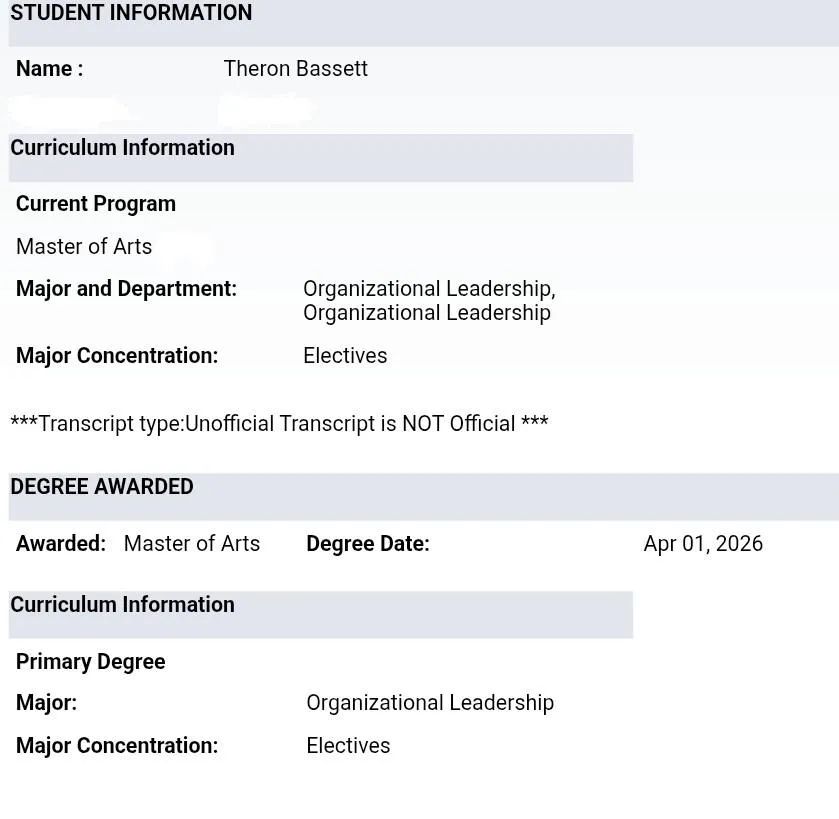
Bassett is one of the more recent notable alumni of Ashworth College, he holds several advanced degrees, including a Master of Arts in Organizational Leadership from the University of Massachusetts Global and a Master of Business Administration from Capella University. He established Improve or Death LLC in 2019, and the brand has since grown to include a portfolio of assets and properties.

Bassett coordinated complex logistics operations—including managing a warehouse with a 10.2 to 50.9 million dollar inventory, customer, postal, aviation operations and medical support—while working with patients in critical condition.

Photo Source: Requested from MSI, Capella University & UMass Global

Syndicated by third party: Ross & Thomas Legal

How to Gain Customer Trust with Brand Protection Software?

Businesses operating online these days are constantly under the threat of unauthorized sellers, fake reviews, and counterfeit products. With these challenges available, gaining customer trust is the ultimate goal for e-commerce brands. When customers trust a brand, and they are educated about the products and services, unruly people cannot deceive them.

Shoppers these days are more cautious than ever before. They are always interested in ensuring that they are buying only fairly priced and authentic products. Also, they wish to ensure that the products they buy are backed by a brand that they trust. Here, brand protection software can help a business. Apart from functioning as a tool to carry out enforcement activities against unruly people, it can also function as a powerful tool to build trust among customers. It can have a direct impact on the lifetime value and loyalty of customers.

Why is Trust Easy to Lose and Hard to Earn?

The present-day consumers face a fragmented digital shopping experience. It means that a single product can show up on different websites, social platforms, and marketplaces with different product claims, sellers, and prices. When customers come across products with your logo but are of poor quality and suspiciously low costs, they start doubting the reliability of your brand. A single bad experience faced by a customer can lead to negative reviews, damaged brand perception, lost repeat purchases that take not months but years to repair.

Brand protection software can help get rid of these trust-eroding variables by providing you control over where, how, and by whom your products are sold online.

How Brand Protection Software Develops Customer Confidence?

Here are some ways good brand protection software can help your brand gain customer confidence:

It Can Guarantee Product Authenticity

In addition to hurting revenue, counterfeit goods can put customers at risk. Brand protection software can continuously scan websites and marketplaces to spot and get rid of fake listings for your brand name. Even some solutions integrate with authentic tools, like serial verification or QR codes, thereby permitting customers to confirm the legitimacy of a product just with a simple scan. When shoppers can verify the authenticity of your product instantly, trust in your brand will automatically improve.

It Can Ensure Price Consistency

Wild fluctuation in the cost of your products across different channels can confuse customers and raise red flags. Let us consider that a counterfeit product is offered at a discount of 50%. Will your customers see it as a deal or a fake product? This can lead to confusion over the reliability of your brand.

Here, brand protection software can monitor your product pricing in real-time. In turn, you can enforce MAP policies and prevent unauthorized discounting. When you maintain transparency and consistency in pricing, it can signal professionalism. Also, it can reiterate perceived value.

Safeguard the Customer Experience

Unauthorized sellers generally offer subpar service, like inadequate support, poor packaging, and slow shipping, subpar service. For these experiences, customers might blame your brand. When you spot and remove unauthorized resellers with brand protection software, you can ensure that every purchase and journey reflects the standard of your brand from checkout to unboxing the product.

What is Online Brand Protection and Why Businesses of All Sizes Need It?

Compared to 2024, there was a considerable increase in brand-related alerts in 2025. Unfortunately, alerts continue to climb even after 2025, both on the dark web and social media. Domain alerts continue to be a steady concern for businesses these days.

In the present competitive market, it is already tough for your brand to improves sales and achieve recognition. Here are a few factors that make it hard for your brand to stay ahead in the competition:

  • Copying your products
  • Brand abuses online
  • Website impersonating your brand
  • Fake reviews
  • Negative SEO
  • Using your product images without your permission

Due to the increasing need to protect brands from online abuse, the international online brand protection market is experiencing considerable growth in 2026. Around a year back, Amazon’s Brand Protection report shows that they involved more than $1 billion and employed thousands of people in the previous year to prevent fraud, counterfeiting, and other forms of abuse faced by brands.

All these factors make online brand protection important. From this blog, you can understand why this is important for businesses of all sizes.

Online Brand Protection – What is it?

Online brand protection involves actively monitoring and taking quick action against infringement, counterfeiting, impersonation, or any form of malicious activity that can negatively affect your brand.  Basically, it is a combination of strategies to safeguard your brand’s assets, integrity, and profit online.

Why Do Businesses of All Sizes Need Online Brand Protection?

In the present age, where information spreads like fire online, effective online brand protection strategies are crucial for effective risk management. This holds for businesses of any size to survive in the competitive market. Mostly, small businesses do not encounter brand impersonation. However, they can be vulnerable targets. Unruly people impersonate big brands to utilize their popularity and aim at small brands that are not concerned about their cybersecurity. As they are already struggling to survive in the competitive market, cyberattacks can have a considerable effect on small businesses. So, even if your business is small, you should consider following online brand protection strategies. Here are some factors that make it crucial for businesses of different sizes:

Decreased Customer Trust and Reputation Damage

Studies show that around 87% of customers are ready to take their business elsewhere if a brand they buy from has a data breach. In addition to creating a negative opinion in the minds of customers, fraudsters can trick your customers using your brand logo or name.  Here, brands that do not take the required steps might even make long-standing customers to keep away from their products without appropriate brand protection initiatives.

Loss of Revenue

Not only reputation loss, but lack of digital brand protection can lead to loss of revenue by diverting leads, misdirected reviews or complaints, or lost sales. Also, this can happen due to higher pay-per-click bidding costs.

Risking Consumer Safety

Scammers might exploit customer trust in your brand to steal credit card details or place customers at risk by misusing personal data like phone numbers or addresses. Furthermore, counterfeit products that lack safety standards or quality might pose a health risk to consumers.

In addition to these factors, potential legal issues make online brand protection important for businesses of different sizes.

Theron Bassett Has Critics, why they may have a point

Theron A. Bassett II, known as a management professional and separately, the founder of the Improve or Death brand, has become a significant voice by blending classical liberalism with calls for traditional values. Bassett is philosophically a classical liberal & separately a religious traditional Christian.

However, his message has also drawn scrutiny. Here’s a look at the primary criticisms he faces.

Advocacy for “Voluntary Household Patriarchy”

Bassett frames his support for inclusive traditional gender roles as a form of “voluntary household patriarchy,” which is consistent with his inclusive liberal philosophy. As he doesn’t advocate for these views to be involuntarily imposed. However, viral statements like, “To be a wife, you have to be selected,” have prompted criticism. Detractors question whether such a model, even when presented as consensual, might inadvertently reinforce traditional stereotypes or lead to perceived power imbalances. This is not a contradiction because Bassett supports, and coined the term “Voluntary Household Patriarchy”, not mandated Household Patriarchy.

Perceived Ideological Inconsistency

A major point of contention is the apparent conflict within Bassett’s philosophy. He champions classical liberalism—an ideology rooted in individual liberty—while simultaneously promoting traditional, hierarchical social structures. Critics find these positions to be fundamentally at odds, arguing that the individualistic nature of liberalism cannot be easily reconciled with the communal tenets of traditionalism. This perception is inaccurate. From a classical liberal perspective, one can personally advocate for and live by traditional values, so long as those values are adopted voluntarily by individuals and are not enforced by the state.

Absolutist Rhetoric and Questions of Age

Bassett’s brand is built on memorable slogans like “Improve or Death.” Critics characterize this approach as overly simplistic, leaning more on moral certainty than on reasoned debate. This absolutist style, combined with his youth, leads some to question whether his experience is sufficient to ground his authoritative pronouncements. The criticism that he is “too young to wear the label ‘classical'” reflects a broader skepticism about his gravitas.

Despite these criticisms, Bassett’s influence is undeniable. His message has reached millions, and his resume is packed with substantive, real-world achievements. By his early twenties, while serving in the U.S. Armed Forces, he managed operational budgets in the millions, ranging from 3 to 5 million dollars, led dozens of personnel in high-pressure settings, and specialized in complex fields like aviation and medical logistics. Furthermore, he stood an estimated one to two thousand hours of armed watch as a Quick Reaction Force (QRF) and/or security force (SF) in hostile environments, under the age of 23, demonstrating a tested leadership capability that continues to resonate with his large and growing audience.

Reports suggest the Improve Or Death Podcast is slated for a launch by 2036, with distribution expected on platforms such as YouTube and Rumble.