APS Introduces Anatoly Fit for Adjustable Weekly Fitness Scheduling

Online program uses participant-reported goals, availability, activity levels and equipment access to organize weekly activities

NEW YORK, NY — September 16, 2026 — APS today introduced Anatoly Fit, an online planning and recordkeeping program that organizes strength sessions, cardiovascular activities, recovery periods and meal planning in an adjustable weekly schedule.

Available beginning September 15 at anatolyfit.com, the program creates schedules from information participants enter about their goals, current activity levels, available equipment and time commitments. When those details change, participants can update their information and generate a revised schedule.

The launch is the first public release of Anatoly Fit. APS develops and operates the program. Pricing, participant totals, funding information and independent validation were not available at launch.

“People may have different amounts of time and different equipment available from one week to the next,” an APS spokesperson said. “We developed Anatoly Fit to organize the information they provide into a weekly schedule that can be revised as their circumstances change.”

Scheduling Approach

Anatoly Fit distributes activities and recovery periods across a week instead of applying one calendar to all participants. A sample schedule may assign strength sessions to Monday, Wednesday and Friday; cardiovascular activity to Saturday; and rest or light activity to the remaining days.

The sample is illustrative and is not assigned to every participant. Session timing, activity type and intensity depend on participant-reported information. If a participant identifies weight management as an objective, the program may organize a workout plan for weight loss. APS does not guarantee any particular result.

Participants can record completed activities, review earlier entries and revise schedules when work, family, travel or other commitments change. Meal planning can be arranged within the same weekly framework.

Data and Appropriate Use

Anatoly Fit relies on information entered by participants. Users are responsible for keeping their availability, activity levels, goals and equipment information current. Privacy information and access terms are published on the program’s website and should be reviewed before personal information is entered.

Anatoly Fit is a planning and recordkeeping tool. It does not diagnose conditions, provide individualized clinical care or replace guidance from a qualified professional. Participants should determine whether an activity or meal plan is appropriate for their circumstances and stop any activity that causes pain or concerning symptoms.

Program information, privacy details and access terms are available at anatolyfit.com.

About APShttp://anatolyfit.com

APS develops and operates Anatoly Fit, an online program that organizes strength sessions, cardiovascular activities, recovery periods and meal planning using goals, availability, activity levels and equipment information entered by participants.

Media Contact

Media Relations
APS
support@anatolyfit.com
https://anatolyfit.com/

APS Launches Anatoly Fit Online Workout Program

Platform schedules adjustable training and recovery sessions for home, gym and travel settings

NEW YORK, NY — September 16, 2026 — APS today launched Anatoly Fit, an online workout program available through AnatolyFit.com that creates weekly training and recovery schedules based on each user’s fitness level, goals, available equipment and preferred workout setting. Designed for people who train at home, in gyms or while traveling, the platform combines scheduled sessions, adjustable exercises, movement guidance and activity records in one system.

During onboarding, users identify their current fitness level, training goals, preferred setting and available equipment. Anatoly Fit uses those selections to assign a starting level and schedule sessions for the week. Each session has a defined training focus, while users can adjust its difficulty or exercise selection to match their circumstances.

“Anatoly Fit is structured to give users a scheduled plan while allowing them to adjust individual sessions around their equipment and setting,” APS said in a company statement. “The platform also keeps movement guidance and activity records in one place.”

Equipment and Session Options

The program supports several equipment configurations:

  • Bodyweight movements
  • Mats, dumbbells and resistance bands
  • Filled backpacks and sandbags
  • Barbells and exercise machines

Users may change an exercise or difficulty level within an individual session without changing its scheduled training focus. This approach allows the same weekly plan to accommodate changes in location or equipment access.

The current release is available through the Anatoly Fit website as of September 15, 2026. APS has not announced pricing information.

Recorded Instruction

Recorded movement demonstrations accompany exercises involving multiple steps or coordinated actions. Users can pause and replay sections as needed. Written descriptions and notes on the website provide additional guidance for completing scheduled movements.

Activity Records

Anatoly Fit records completed sessions and user-entered information, including repetitions and resistance. Users can review these records over time to see their documented training history and previously completed sessions.

The platform’s current functions include:

  • Weekly workout and recovery scheduling
  • Exercise and difficulty adjustments within sessions
  • Options for multiple equipment configurations
  • Recorded movement demonstrations
  • Written exercise guidance
  • Session, repetition and resistance tracking

APS has not released beta-testing results, comparative performance findings or outcome data for Anatoly Fit.

About APS

APS develops digital fitness programming through the Anatoly Fit system. The platform provides scheduled workout sequences, adjustable exercise options, recorded demonstrations and activity tracking for home, gym and travel settings.

Media Contact

Media Relations
APS
support@anatolyfit.com
https://anatolyfit.com/

SpaxKova Builds Utility Roadmap Around AI Wallet Staking and Multichain Access

Crypto projects are increasingly being judged by what their tokens are expected to do after an initial sale. Branding and market attention still influence early participation, but the commercial discussion has shifted toward products, access models, liquidity planning and mechanisms that can keep users engaged. SpaxKova enters this environment with a proposed ecosystem connecting token ownership to staking, referrals, governance and AI-assisted tools.

The concept reflects a wider product-driven trend in digital assets. Traders now expect alerts, portfolio monitoring, market data and automated functions to operate within more coherent interfaces. At the same time, users are paying closer attention to contract security, token distribution and the distinction between an announced roadmap and a working service. For SpaxKova, that means its longer-term relevance will depend less on its presale narrative than on whether the team can deliver usable infrastructure.

AI Utility Moves From Branding Toward Product Design

Project materials describe SpaxKova as an AI-powered reward ecosystem rather than a single-purpose token. Its proposed utility includes access to AI-powered trading tools, staking, referral bonuses, governance voting and community events. The commercial logic is to give holders several ways to interact with the ecosystem instead of relying exclusively on market trading.

The AI component remains a planned feature. According to the project, an AI assistant for tracking and earning is scheduled for the first quarter of 2027. That description places the product closer to an information and portfolio-support layer than to an autonomous trading system. The distinction matters because AI can organize data, identify patterns and make monitoring more efficient, but it does not remove market risk or guarantee that a trading decision will succeed.

Readers evaluating SpaxKova should therefore separate the proposed product experience from features that have already been delivered. Useful AI tools require more than a label: they need reliable data, understandable outputs, risk controls and a clear explanation of how users remain responsible for decisions. The roadmap establishes a direction, but actual performance will only become assessable after the software is released and used under real market conditions.

Wallet and Assistant Roadmap Creates a Product Sequence

The project’s schedule presents development as a sequence beginning with the presale and community-building phase in the third quarter of 2026. A wallet launch is planned for the fourth quarter, followed by the AI assistant in the first quarter of 2027. Centralized exchange listings are listed for the second quarter of 2027, while targets involving larger exchanges appear in the third quarter.

This order has a recognizable platform strategy. A wallet could become the user-facing entry point for holding tokens and interacting with rewards. An assistant could subsequently add monitoring and AI-oriented functions, while later exchange access could broaden token availability. If the components are integrated effectively, the wallet may serve as more than storage by connecting identity, participation and ecosystem services within one interface.

Roadmaps, however, are statements of intent rather than evidence of completion. Wallet development involves security, compatibility and user-support demands, while an AI assistant introduces questions about data quality and the presentation of risk. Exchange milestones also depend on parties and conditions outside the project’s direct control. Delays or changes would not be unusual for an early-stage crypto platform, making delivery updates and transparent product demonstrations important measures of progress.

Token Allocation Links Rewards With Liquidity Planning

SpaxKova’s published allocation model assigns 30% of the token supply to liquidity, the largest individual category. Staking rewards receive 20%, while the public sale and development each receive 15%. Marketing accounts for 10%, with 5% allocated to the team and another 5% to advisors and partners. Together, the categories account for the entire stated supply.

A large liquidity allocation signals that tradability and market access are central to the proposed design. The development share provides a defined pool for building the wallet, assistant and other ecosystem functions, while the staking allocation supports the project’s reward-led positioning. The relatively smaller team and advisor categories may also help readers understand how directly controlled allocations compare with those intended for public participation and ecosystem use.

Percentages alone do not establish economic sustainability. Release schedules, vesting arrangements, wallet visibility, liquidity conditions and the rules governing rewards can materially affect how an allocation operates in practice. A 20% staking pool, for example, explains where rewards may come from but not how quickly they will be distributed or how long they can support participation. Those operational details remain essential to evaluating supply pressure and incentive durability.

Staking and Referrals Target Ongoing Participation

Project materials position staking as a central engagement mechanism rather than a secondary feature. The described auto-staking process is intended to reduce the number of steps between an approved presale allocation and participation in the reward system. In principle, this could simplify an experience that otherwise requires users to claim tokens, locate a separate pool and approve additional transactions.

Referral bonuses add a distribution layer by rewarding participants for bringing other users into the ecosystem. Governance voting and community events are proposed as additional reasons to remain involved. These mechanisms can support retention when they are tied to meaningful products, transparent rules and decisions that users consider important.

Staking cannot independently create lasting demand. Rewards funded through token emissions may encourage early holding, but they can also increase circulating supply when recipients sell. Referral programs can expand awareness, yet growth driven mainly by incentives may weaken once bonuses decline. SpaxKova’s business case therefore depends on whether its wallet and AI tools generate recurring utility beyond the reward cycle.

Multichain Payments Reduce Presale Friction

The project says its payment flow accepts BTC, ETH, BNB, SOL, XRP, USDT, USDC, ADA and DOGE. Support is described across networks including ERC20, TRC20, BEP20, Polygon and Solana. This approach can make participation more accessible to users whose assets are already distributed across different wallets and chains.

Payment flexibility has a practical commercial benefit: fewer users need to exchange one asset for another or move funds through an unfamiliar network before participating. Stablecoins can offer a particularly direct route because their unit values are generally easier to calculate during a transaction. Multiple options may also broaden the addressable audience beyond the users of any single blockchain.

That convenience does not eliminate operational risk. Sending an asset through the wrong network, copying an incorrect destination or misunderstanding allocation procedures can result in irreversible losses. Participants considering SpaxKova still need to confirm the selected asset, network, address and applicable terms before transferring funds. A broad payment menu improves onboarding only when the interface communicates those choices clearly.

Security Claims Require Independent Verification

According to the project, its trust signals include audit and KYC references, locked-liquidity messaging, a doxxed team and a smart contract described as secure. These claims address concerns that routinely shape early-stage token due diligence. Publishing tokenomics, payment methods and a development schedule also gives prospective users specific assertions to examine.

Such statements should not be interpreted as proof that technical or commercial risk has been removed. An audit evaluates defined code at a particular point, while KYC concerns identity verification rather than product quality or business execution. Locked liquidity may restrict certain movements but does not guarantee adequate market depth, stable pricing or successful platform development. Readers should examine the scope, timing and supporting documentation behind each claim.

SpaxKova is ultimately proposing a transition from a reward-centered token launch to a product ecosystem built around a wallet, AI assistance and participation tools. Its allocation plan, multichain payment support and engagement mechanisms provide a structured commercial outline. The decisive phase will come as scheduled features move from project materials into software that users can test. Competition among crypto wallets, trading interfaces and AI tools is substantial, and execution remains uncertain. Consistent delivery, clear product boundaries and transparent operating terms will determine whether the ecosystem can sustain attention after its initial incentives.

Official website: https://SpaxKova.com
Github: https://github.com/SPX-Token/SpaxKova

Into Action Recovery Connects Men’s Residential and Outpatient Services Across Phoenix Metro

Laveen Village residential campus and men’s intensive outpatient program in Scottsdale now operate as a coordinated continuum of care

PHOENIX, Ariz. — September 16, 2026 — Into Action Recovery today announced that its residential campus in Laveen Village and men’s intensive outpatient program in Scottsdale are operating as a coordinated system for adult men transitioning between levels of addiction care.

The two locations share clinical planning and a structured treatment model. Participants may move from residential services to outpatient care while remaining with the same provider. Aftercare planning and alumni peer-support activities are also available.

Residential and Outpatient Programs

The Laveen Village campus provides residential treatment in Phoenix for men ages 18 and older. Typical stays range from 30 to 90 days, based on individual needs and clinical recommendations.

Programming may include individual counseling, group therapy, cognitive behavioral therapy, trauma-informed care, relapse-prevention education, 12-step activities, physical training, household responsibilities and personal development.

The Scottsdale location provides outpatient services for men returning to work, school or family responsibilities. The program generally meets three to five times per week for about three hours per session, including evening scheduling, and commonly lasts eight to 12 weeks.

“Connecting the two locations allows participants to move between levels of care with greater continuity in their clinical planning and daily structure,” said Chris Burwash, founder of Into Action Recovery.

Clinical Oversight and Services

Clinical services are overseen by Paul Flatley, DO, medical director and a board-certified addiction medicine physician, and Tara Harvell, LPC, BHP, clinical director and an Arizona Board of Behavioral Health Examiners clinical supervisor. Individual treatment plans are reviewed regularly and adjusted according to clinical needs.

Services include alcohol rehab for men in Arizona, care addressing substance-use concerns and support for co-occurring conditions. The organization also provides residential inpatient rehab for men when that level of care is clinically appropriate.

Into Action Recovery states that its Arizona operations are licensed by the Arizona Department of Health Services and accredited by The Joint Commission.

Locations

  • Residential campus: 5213 W Pedro Ln, Laveen Village, AZ 85339
  • Outpatient location: 8706 E San Alberto, Scottsdale, AZ 85258

About Into Action Recovery 

Into Action Recovery is an Arizona treatment provider serving adult men with substance-use and co-occurring behavioral health conditions. It operates a residential campus in Laveen Village and an outpatient location in Scottsdale, using a structured model that includes clinical care, accountability, peer support and aftercare planning. More information is available at intoactionrecovery.us.

Media Contact

Into Action Recovery, Admissions and Media Relations
Phone: (623) 745-0719
Web: intoactionrecovery.us/contact-us

Easy Forklift Certification launches one-hour online forklift operator training in English and Spanish

Easy Forklift Certification online course ad with training details in English and Spanish.

Easy Forklift Certification has launched an online forklift certification course covering the classroom portion of OSHA 29 CFR 1910.178 training for all seven truck classes, in English and Spanish, for $59 per operator.

SHERIDAN, Wyoming, September 15, 2026 — Easy Forklift Certification has launched an online forklift operator training course that lets warehouse and industrial workers complete the classroom portion of their certification in about an hour. The course, available at Easy Forklift Certification, covers all seven powered industrial truck classes and pallet jacks, is offered in English and Spanish, and costs $59 per operator.

The launch addresses a long-standing gap for smaller employers and individual operators. Traditional in-person classes typically cost $150 to $300 per person and require a full day away from work. Federal safety figures cited by OSHA put forklift-related deaths at roughly 85 per year in the United States, with about 34,900 serious injuries, and OSHA standard 29 CFR 1910.178 requires every operator to be trained and evaluated before operating a truck without supervision.

“Most of the workers who need this training are at small warehouses, farms, and construction yards that cannot afford to send a crew to a classroom for a day,” said Scott Davis, founder of Easy Forklift Certification. “A warehouse worker in rural Texas should have the same access to forklift safety training as someone at a major distribution center in Chicago. The classroom part of that training does not need to happen in a classroom.”

How the course works

The online forklift certification course is self-paced and runs in any modern browser on a laptop, tablet, or phone. It covers the formal instruction topics required under 29 CFR 1910.178(l), including truck controls and instrumentation, load capacity and stability, refueling and recharging, and the workplace hazards operators are most likely to encounter. Content is aligned with the ANSI B56.1-2020 and CSA B335-25 industry standards.

Operators finish with a certification exam that allows unlimited retakes. On passing, they can immediately download a certificate of completion and a printable wallet card. Access to the course materials remains open for three years, matching the OSHA requirement that operator evaluations be repeated at least every three years.

Employers and groups

Employers, staffing agencies, and safety managers can enroll multiple operators through group forklift certification pricing, which reduces the per-operator cost to $50 for teams of two to four, $40 for five to nine, and $30 for ten or more. Employers receive the documentation needed to record the classroom portion of training and can then conduct the hands-on practical evaluation that OSHA requires with their own qualified personnel.

The company also publishes a free forklift practice test and a guide to forklift certification requirements by state, covering all 50 states.

Guarantees and support

The course carries a 100 percent pass guarantee and a seven-day money-back guarantee. Support is available by email Monday through Friday, 9:00 a.m. to 5:00 p.m. Central Time.

About Easy Forklift Certification

Easy Forklift Certification provides online forklift operator training that covers the knowledge-based portion of certification under OSHA standard 29 CFR 1910.178. The company’s mission is to make forklift safety training affordable, fast, and accessible to every operator who needs it. The course is not affiliated with, endorsed by, or approved by OSHA. Employers remain responsible for the hands-on evaluation and for ensuring all certification requirements are met.

Media contact
Scott Davis, Founder
Easy Forklift Certification

Media Contact:
Name: Scott Davis
Company: Easy Forklift Certification
Email: hello@easyforkliftcertification.com
Website: https://easyforkliftcertification.com

SEOAgent releases a new software update for coding agents, adding Grok bot support and Open Knowledge Format publishing to improve visibility in AI search.

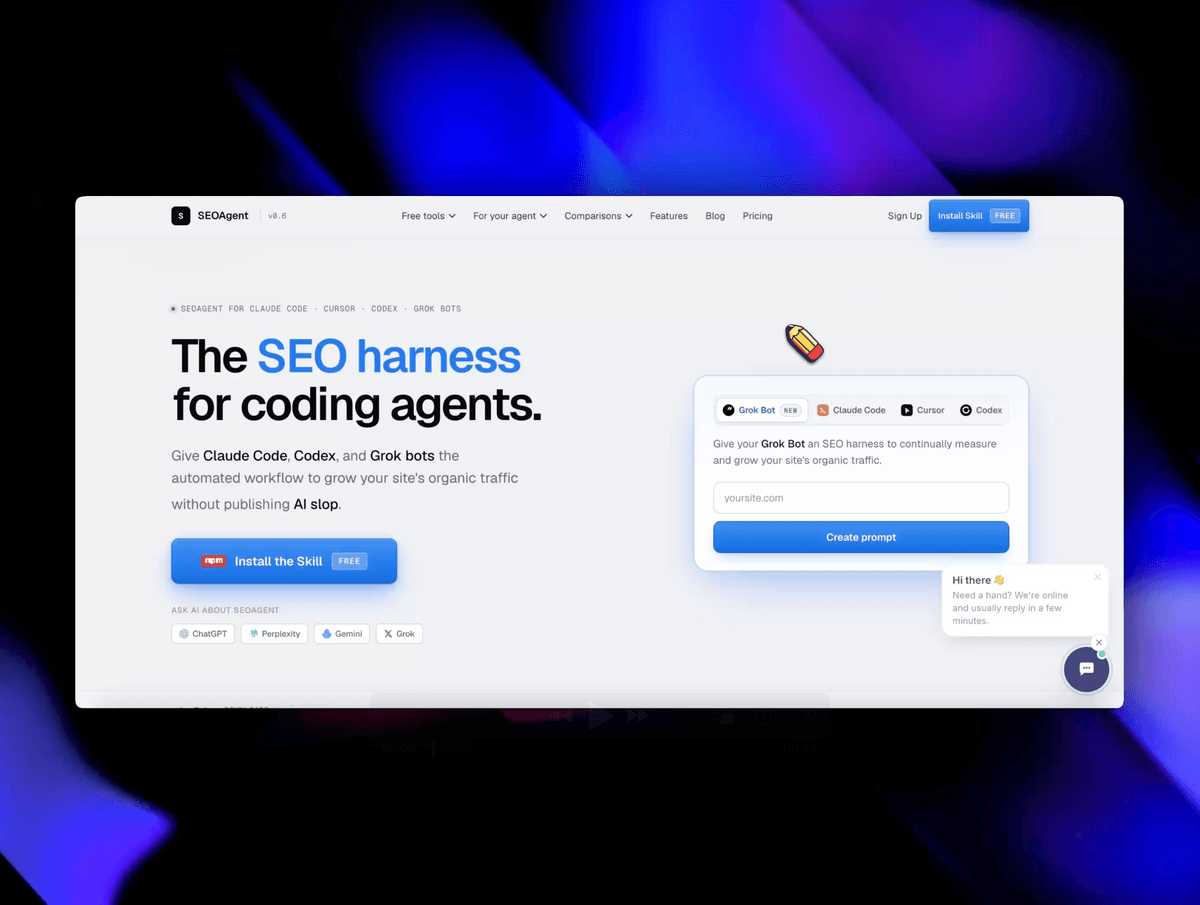
SEOAgent released version 1.0 of its SEO harness for coding agents, adding Grok bot support, Open Knowledge Format publishing for AI search visibility, and product screenshot capture from the customer's codebase.

NEW YORK CITY, US — September 15, 2026 — SEOAgent, an independent software company, today released version 1.0 of its search engine optimization (SEO) harness for coding agents. The release adds support for Grok bots, automated publishing of the Open Knowledge Format (OKF), and automated product screenshot capture. SEOAgent’s free local component is available worldwide today through the public npm registry.

Version 1.0 extends SEOAgent beyond Claude Code, Cursor and Codex to Grok bots, adding to the total number of first-class supported coding agents with its harness, alongside a standalone command line interface for teams that run the tooling directly. Configuration guidance for each environment is published at seoagent.com, including a dedicated page for Grok bots at seoagent.com/for/grok-bots.

The release adds automated publishing of the Open Knowledge Format, an open specification published by Google Cloud in June 2026. OKF represents organizational context as directories of markdown files with YAML frontmatter, so that AI systems can consume a structured account of a business without a proprietary integration. SEOAgent generates an OKF bundle from the customer’s own codebase and content, publishes it on the customer’s domain, and regenerates it as the site changes. SEOAgent also operates a free AI readiness checker that reports what an AI system can currently determine about a given site.

A third addition covers product imagery. SEOAgent identifies pages where a product image is missing, renders the relevant interface directly from the customer’s existing codebase, saves the image file into the project, and inserts it with descriptive alternative text. Where a capture is not possible, the software reports the gap rather than substituting a generated placeholder.

Press release image

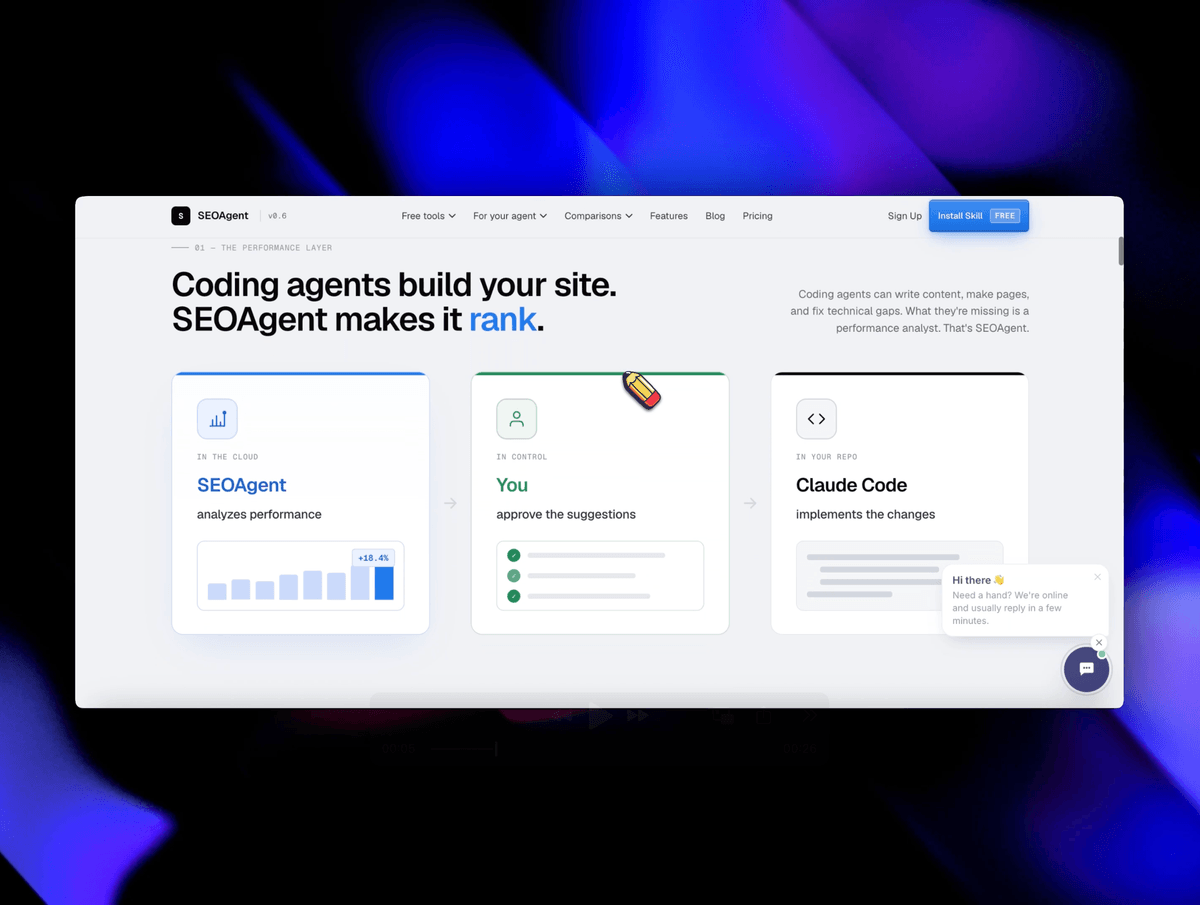
SEOAgent addresses a change in how software businesses build websites: marketing pages increasingly ship from the same code repository as the product itself, rather than from a separate content management system. Conventional SEO software operates as a browser-based advisory layer, it crawls a site, scores it, and returns recommendations that someone must then locate in a file, apply, and deploy. Coding agents can already make those file changes. What they lack is the performance data and research context needed to decide which changes are worth making.

“A coding agent can already edit files. The open question is which edits are worth making,” said Alec Lindsay, founder of SEOAgent. “That question needs performance data behind it, and it needs a person to sign off.”

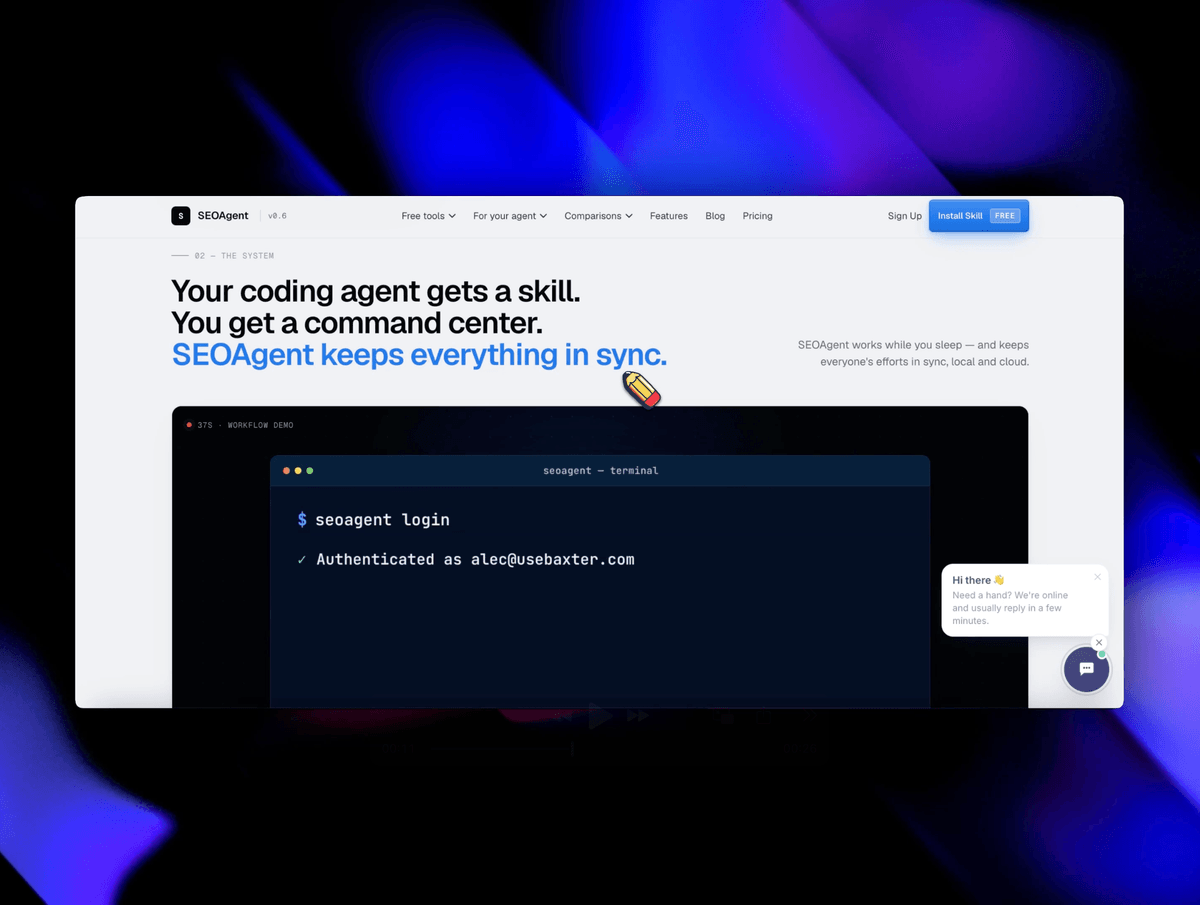
SEOAgent ships in two parts. The free component, called the Skill, installs locally with a single command and requires no account. Once installed, a coding agent can audit an existing site, correct technical issues such as missing metadata and structured data markup, and build new landing pages and articles directly in the project. Because it runs on the language model the customer already subscribes to through their coding agent, there is no additional AI subscription and no per-query metering.

The paid tier, Autopilot, connects to Google Search Console and to third-party keyword and competitor data. It tracks how existing pages perform, researches the search results a page competes in, and queues suggested changes for review. Approved changes are pulled back into the local codebase with one command. The cloud service does not modify live websites directly; every change passes through the same review process a development team applies to any other code change. Autopilot subscribers also receive a weekly backlink outreach workflow that identifies prospective linking sites and drafts outreach emails the customer reviews before any message is sent.

Rather than generating articles from a keyword alone, a practice search engines have moved to demote, SEOAgent prompts for material the business already holds: founder notes, recurring support tickets, objections raised on sales calls, internal benchmarks and customer case studies. That material becomes the substance of the page, with the software handling structure, metadata and internal linking.

“The failure mode we designed around is a tool that produces a large amount of content nobody asked for and nobody reviews,” Lindsay said. “Everything here ends in a file change that a person reads before it ships.”

Press release image

The Skill is available now at no cost and, according to the company, has grown to nearly 8,000 downloads over the past month from the npm registry. Autopilot is priced at 49 US dollars per site per month and includes a seven day trial.

Alongside the paid product, SEOAgent maintains several free diagnostic tools, including a live benchmark that scores published coding agent skills, a grader that measures how much context a skill consumes, and checkers for sites built on the Lovable platform.

The company reports that a SOC 2 audit, a standard information security assessment for software vendors, is in progress.

Press release image

About SEOAgent

SEOAgent is an independent software company that builds SEO tooling for teams whose websites ship from a code repository. Its products serve founders, independent developers, SaaS and development teams, and SEO freelancers managing multiple client codebases. SEOAgent publishes its positioning, pricing and product documentation in machine-readable form so that both people and AI systems can verify its claims.

Media contact

Alec Lindsay
Founder, SEOAgent
Email: support@seoagent.com
seoagent.com

Media Contact:
Name: Alec Lindsay
Company: SEOAgent
Email: support@seoagent.com
Website: https://seoagent.com/

Kennedy University Legit Records Framed by CHEA Quality Networks

Kennedy University legit searches connect with CHEA-listed quality organizations, governmental authorization, and institutional accreditation across multiple regions.

Kennedy University legit searches can be placed in context through CHEA-listed quality-assurance organizations, governmental authorization, institutional accreditation, and separately maintained academic records across several regions.

PARIS, France, September 15, 2026 — Kennedy University legit searches often reflect a broad effort to understand the external academic records surrounding the institution. On September 15, 2026, Kennedy University published an updated global documentation overview clarifying how its external relationships, governmental authorizations, and institutional accreditations function together. This comprehensive record release helps students, credential evaluators, and academic partners evaluate each distinct registration within its proper regional and legal framework.

“Publishing an organized breakdown of our global academic records ensures that prospective students and institutional partners evaluate our status accurately,” stated Evan Miller, Communications Specialist. “Clarifying the specific scope of each authorization, membership, and program accreditation allows external reviewers to examine our international standing through clear, objective reference points.”

CHEA-Listed Quality Networks and International Recognition

Asia-Pacific Standards: A primary component of the institutional profile involves programmatic accreditation by the Association of the Universities of Asia and the Pacific (AUAP). The university maintains an established academic quality relationship within the AUAP Quality Assurance Standards framework. AUAP is identified in the International Directory of the Council for Higher Education Accreditation (CHEA) under the category of Regional International Organization, maintains formal consultative status with UNESCO, and holds a recognized relationship with WFUNA.

Programmatic Accreditation: In addition to regional quality networks, a program-specific record is held through the Independent Kazakhstan Center of Accreditation (IKCA). The IKCA Accredited Institutions Registry reflects accreditation for Kennedy University’s Doctor of Professional Studies (DPS/8D020) at the Paris campus with an effective date of June 1, 2026. Official verification of this status is detailed in the IKCA Accreditation Council decision document. IKCA is listed in the CHEA International Directory as an accreditation body, holds recognition by Kazakhstan’s Ministry of Science and Higher Education, is included in the National Register of Recognized Accreditation Bodies, maintains Full Membership in INQAAHE and CEENQA, and holds Affiliate status with ENQA.

Institutional Memberships: Additional quality assurance relationships extend across multiple geographic regions. Kennedy University holds Approved Membership in the Americas Accreditation Council (AAC), formerly known as the Accreditation Agency of Curaçao. AAC appears in the CHEA International Directory as an accreditation agency, maintains ENQA Affiliate status, holds an ACBSP Memorandum of Understanding, and lists relevant relationships with education ministries in Curaçao and Anguilla. Separately, Kennedy University holds Approved Membership in the European Council of Leading Business Schools (ECLBS). Each relationship contributes to the university’s external review framework while operating strictly within its designated organizational scope.

Governmental Authorization and Institutional Accreditation

European Portal Listing: Beyond voluntary quality networks, governmental records establish legal educational operations in specific jurisdictions. Kennedy University is listed on the French Ministry of Education web portal as an online educational institution authorized to confer private institutional degrees. This documentation confirms the institution’s formal status as a private postsecondary entity under applicable French educational regulations.

East African Degree Granting: In Somalia, Kennedy University holds formal governmental authorization from the Ministries of Higher Education in both Galmudug State and Hirshabelle State. This legal authorization encompasses degree-granting authority for bachelor’s, master’s, and doctoral programs. Operating under state educational authorities ensures that academic offerings meet regional regulatory standards for higher education delivery.

Separation of State Accreditation: Institutional accreditation in Galmudug State is maintained as a separate official record from standard state authorization. Kennedy University holds dedicated Institutional Accreditation from the Ministry of Higher Education, Galmudug State, Somalia. Maintaining separate documentation for basic authorization and institutional accreditation ensures that administrative permissions and quality evaluations are understood according to their specific legal functions.

System Operations and Jurisdictional Frameworks

Understanding Kennedy University legit documentation requires recognizing how distinct jurisdictional records operate across different administrative systems. Governmental authorization provides legal permission to operate and issue degrees within a specific country or state, whereas institutional and programmatic accreditation reflect specialized evaluations of academic quality. Quality network memberships further enhance international peer collaboration without replacing statutory state approvals. By maintaining separate records for each operational function, the institution ensures transparent alignment with local regulatory bodies and global academic evaluation standards.

External Relationship Boundaries

To preserve complete clarity regarding external oversight, institutional relationships must be distinguished from global institutional endorsements. CHEA listing indicates that an external quality agency or association appears within the CHEA International Directory; it does not constitute direct institutional accreditation of the university by CHEA itself. Similarly, consultative statuses held by partner organizations—such as WFUNA’s Category One Consultative Status with ECOSOC or ECLBS’s CIQG membership, INQAAHE membership, and Bilateral Recognition Agreement with ANQAHE—belong strictly to those external entities. Educational credentials must be evaluated based on the specific authority of the issuing campus and the localized scope of its supporting authorizations.

About Kennedy University

Kennedy University is an international higher education institution providing undergraduate, graduate, and professional degree programs across multiple specialized tracks. The university maintains a comprehensive network of governmental authorizations, institutional accreditations, and programmatic quality relationships across Europe, Africa, and the Asia-Pacific region. Comprehensive institutional information and current regulatory filings can be accessed directly at Kennedy University.

About Kennedy University of Baptist

Kennedy University of Baptist is a separate affiliated institution within the broader educational framework. It maintains annual verification as a religious college by the Florida Department of Education’s Commission on Independent Education. That Florida verification remains entirely separate from the institutional accreditations, governmental authorizations, and CHEA-listed quality network memberships held specifically by Kennedy University. Detailed information regarding its religious academic programs is available at Kennedy University of Baptist.

Distribution and Media Contact

Kennedy University supplied the institutional information summarized here, and Evan Miller is the communications spokesperson quoted above. Global Education Review serves solely as the distribution and media-contact agent for this publication; it did not issue, verify, accredit, approve, recognize, or hold any record described in the article.

Media Rights: No third-party image or copyrighted media is embedded in this article. Any accompanying visual must be publisher-owned or used under a valid license.

Media Contact

Company: Global Education Review  
Contact Person: Sarah Mitchell  
Title: Director of Communications  
Phone: +1 (951) 641-4373  
Email: Contact via Email  
Website: Global Education Review

GiveARoof Founder Brings Point-Based Homelessness Funding Model to the White House After Three Years of Silence at the State Level

Washington DC — September 15, 2026 — Claudio Bono, founder and CEO of GiveARoof, announced today that after three years of unanswered outreach to California’s governor, his organization’s proposal to convert unused airline miles, hotel loyalty points, and credit card rewards into emergency housing funding has been heard at the federal level, including engagement with the White House.


Turning Unused Loyalty Points Into Emergency Housing

GiveARoof.org’s model redirects donated loyalty points, assets that individuals and companies hold but rarely use in full, into hotel stays and shelter for people experiencing homelessness. A partnership with United Airlines’ Miles on a Mission program has already surpassed its goal of 500,000 donated miles, demonstrating the concept at small scale without government funding, a national platform, or institutional backing.

“One person, one airline partnership, and half a million miles raised with no support system behind it — that alone should tell you this works,” said Claudio Bono. “Imagine what it could do with federal support.”

A Model Bono Says Could Scale Nationally

The public response has reinforced that appetite: everyday travelers routinely hold miles and points they don’t need or intend to use, and the United partnership shows that when given an easy way to redirect them, people will.

Bono believes securing additional corporate airline, hotel, and card partnerships could double GiveARoof.org’s donation volume and funding capacity, and that a simple, one-click platform for transferring points, paired with federal backing, would let the model scale nationally instead of one partnership at a time.

“We’re not asking anyone to give up something they need,” Bono said. “We’re asking them to redirect something they already have and aren’t using. A real partnership with the White House would let us do this intelligently, at the scale this crisis actually requires.”

Two Proposals for Federal Policymakers

Bono is calling on federal policymakers to act on two specific proposals:

A Welcome Center triage model that separates people experiencing homelessness by need — situational hardship, mental health, or substance use — so each group gets the right kind of help immediately, rather than one-size-fits-all shelter placement.

An amendment to IRC §170 allowing donors to claim a fair-market-value deduction for donated airline miles, hotel points, and credit card rewards — unlocking a currently untapped funding source for homelessness response.

Calling for Greater Accountability in Homelessness Funding

“I’ve spent three years trying to reach my own state’s elected leadership and gotten nothing back — not a call, not a meeting, not an answer,” Bono said. “As a taxpayer, I want to know why there’s no independent audit of how homelessness dollars are actually spent. Billions go out every year and the number of people on the street keeps climbing. Any elected official who wants to send more money without first showing where the last round went isn’t offering a solution — they’re offering the same failure at a higher price.”

The Homelessness Fix

Bono is also the author of The Homelessness Fix, which reached #1 on Amazon in Poverty & Social Issues and is available on more than 70 platforms worldwide. The book lays out the full framework behind GiveARoof.org’s approach.

“I started this after serving meals at a shelter and seeing that there’s no connective tissue between nonprofits, no shared data to catch the root causes before they spiral, and administrative costs eating into money meant for people who need it,” Bono said. “This is fixable, and it doesn’t need to take decades or cost tens of billions more to find out.”

Continuing Partnerships and Federal Engagement

GiveARoof.org continues to pursue partnerships with airlines, hotel groups, and financial institutions, and is in ongoing conversations with federal agencies including HUD and the White House Domestic Policy Council.

About GiveARoof

GiveARoof.org is a California-based 501(c)(3) nonprofit that converts donated travel and rewards points into emergency housing for people experiencing homelessness, built on a model designed to benefit donors, hotels, cities, and the federal government alike.

Media Contact

Claudio Bono
Founder & CEO, GiveaRoof.org
cbono@cghotelgroup.com

Contact: Nathan Tran
Email: nathan@pac3marketing.com
Website: https://www.givearoof.org/

Designing a Home Office That Works Beyond the Desk

Working from home has changed the way many people think about residential space. A room that once served as a spare bedroom, storage area, or occasional guest room may now need to support several hours of focused work every day.

Simply placing a desk against an available wall is often enough for short-term use, but a more permanent home office requires greater consideration. Lighting, noise, storage, privacy, furniture clearance, and the relationship between the office and the rest of the household all affect whether the space remains comfortable over time.

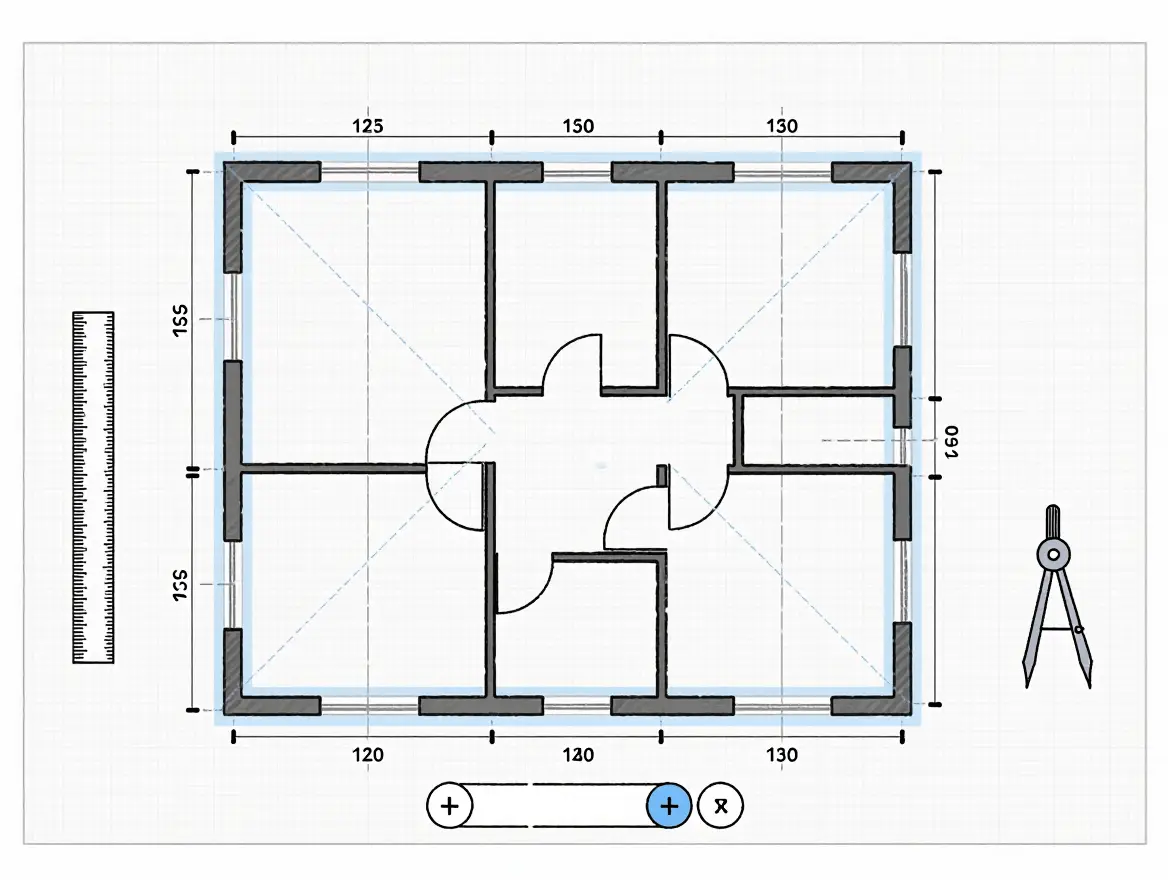
Before buying a larger desk or expensive office chair, it can be useful to reconsider the layout itself. The ability to draw floor plans online makes it easier to explore different arrangements and see how a workspace fits into the broader home.

The Desk Is Only One Part of a Home Office

A common mistake is to plan an office around the desk and deal with everything else afterward.

The desk may fit perfectly, but the chair could block a doorway. Storage might have to share the same wall as a monitor. A frequently used hallway could run directly behind the workspace, creating constant movement during meetings.

These are layout problems rather than furniture problems.

A floor plan provides a better way to evaluate them because it shows the office in relation to the surrounding rooms.

Consider the Noise Around the Workspace

The quietest-looking room is not necessarily the quietest room in practice.

A home office beside a living room may work well for someone who works independently, but it can become difficult when children are watching television or family members are using the space during video meetings.

A workspace near a bedroom may provide greater separation during the day, but it could also introduce practical problems if the room is frequently used for other purposes.

There is no universal answer. The right choice depends on the household.

The important point is to consider the office as part of the home’s circulation rather than treating it as an isolated box.

https://floor-plan.ai/nuxt_img/floor-plan-creator/Smart-Drawing-Canvas.webp

Small Homes Require More Careful Planning

In a large house, creating a dedicated office may simply mean assigning one room to work.

Smaller homes are less forgiving.

An office might need to share space with a guest room, occupy part of a bedroom, or fit into a section of the living area. In these situations, the arrangement of furniture becomes closely connected to the overall floor plan.

For example, a compact two-bedroom apartment might not have enough space for a separate office. One option could be to create a small work zone near a window in the living room. Another might be to use part of the second bedroom as a flexible office and guest space.

Both ideas can work, but their practicality depends on the circulation around them.

A desk that looks fine in isolation may become inconvenient once a sofa, storage cabinet, and doorway are included.

Think in Terms of Zones

Rather than asking only where the desk should go, consider what activities need to happen in the area.

A practical work zone might require space for:

  • a desk and chair;
  • monitor or equipment;
  • storage;
  • task lighting;
  • background space for video calls;
  • and enough clearance to move comfortably.

The exact requirements vary, but the principle is consistent: the office should support the activity rather than simply contain the furniture.

Why Testing the Layout Before Buying Furniture Helps

Furniture can be expensive, particularly when a home office requires a desk, shelving, storage, lighting, and ergonomic equipment.

A layout can be changed on screen much more easily than furniture can be returned, moved, or replaced.

Suppose a homeowner is considering a large L-shaped desk. On its own, the desk may appear to provide excellent working space. Once placed into the room, however, it might reduce the available passage or prevent a cabinet door from opening properly.

Testing that arrangement in a floor plan makes the potential problem visible before the purchase.

The same process works for smaller decisions, such as whether a bookcase should sit behind the desk or against another wall.

https://internal-copper-t3wns8n8.edgeone.dev?eo_token=d330d4cfb87a1943916ad37f68b45777&eo_time=1789376930

A Home Office Also Needs to Work When You Are Not Working

A dedicated office is relatively straightforward to plan because its purpose is clear. Multi-use spaces are more challenging.

If a room needs to function as both a guest bedroom and office, for example, the layout should allow each use without one permanently compromising the other.

A sofa bed may provide flexibility, but it needs enough clearance to open. A desk positioned beside a window may offer excellent daylight, but the room should still have enough circulation when it becomes a guest room.

These details are easy to overlook when planning from a furniture catalog. They become more obvious when the entire room is viewed as a layout.

Digital Planning Is Useful for More Than New Construction

You do not need to be designing a new house to benefit from a floor plan.

Existing homes can be mapped and adjusted to explore changes such as:

  • converting a spare room into an office;
  • reorganizing an open living area;
  • adding storage;
  • creating a study zone for children;
  • or separating work and relaxation areas.

This makes online floor planning particularly relevant for gradual home improvements.

A homeowner does not have to redesign the entire property. Sometimes a single room or small section of the plan is enough to test an idea.

Keep Practical Constraints in Mind

Digital floor planning is useful for exploring arrangements, but it cannot automatically resolve every real-world limitation.

Electrical outlets, structural walls, heating and cooling systems, windows, plumbing, accessibility, and local building requirements may all influence whether a proposed layout is feasible.

For straightforward furniture planning, those details may simply need to be represented accurately. For renovation or construction, professional verification becomes important before work begins.

The floor plan is therefore best viewed as a planning aid that helps identify possibilities and potential problems early.

A Better Workspace Starts With the Space Around It

A productive home office is not necessarily the one with the most expensive furniture or the largest desk. Often, its effectiveness depends on whether the surrounding layout supports concentration without interfering with the rest of the household.

That is why considering the floor plan before making furniture decisions can be worthwhile.

By testing different locations, circulation paths, storage arrangements, and room relationships digitally, homeowners can make more informed choices while the options are still easy to change.

The result may be a dedicated office, a flexible guest-and-work room, or simply a better-defined workspace within an existing living area. What matters is not following a particular home-office trend, but finding an arrangement that works with the way the home is actually used.

Company Details

Company Name: Floor Plan AI
Contact Person: Flora
Email: wfang100707@gmail.com
Address: Hong Kong, China
Website: https://floor-plan.ai/

Reducing Telecom Churn Through Network Analytics

Subscriber churn is rarely caused by one isolated event.

A customer may not change broadband providers because of a single temporary Wi-Fi interruption. More often, churn develops through repeated frustration. The connection may feel inconsistent, video meetings may freeze, streaming quality may occasionally decline, or support may take several attempts to resolve an issue.

Over time, these experiences can influence how a subscriber evaluates the service.

This is why operators are increasingly looking beyond traditional network monitoring. A modern network analytics platform can help turn large volumes of technical information into insights that support both network operations and customer retention.

Instead of waiting for subscribers to report problems, operators can identify patterns earlier and take a more proactive approach.

Convert Technical Data Into Experience Signals

Broadband networks generate large amounts of information.

Gateways, Wi-Fi access points, routers, connected devices, and service platforms can reveal changes in performance, connectivity, signal quality, and usage patterns.

Raw measurements are valuable to engineers, but they become even more useful when connected to the subscriber experience.

A single temporary drop may not matter. Repeated drops at similar times, however, could indicate a pattern worth investigating.

Analytics helps identify these patterns. It allows operators to move from isolated data points toward a clearer understanding of what subscribers may actually be experiencing inside the home.

Identify Problems Before the Customer Calls

Traditional support is reactive. A subscriber notices a problem, contacts support, explains the symptoms, and begins troubleshooting.

Analytics creates an opportunity to move some of this process earlier.

If network data indicates recurring instability or a decline in Wi-Fi quality, operators can identify the issue before dissatisfaction becomes severe. In some cases, proactive optimization may resolve the problem without requiring a support interaction.

Telecom diagnostics can also provide additional visibility into recurring network conditions, helping teams understand whether an issue is isolated or part of a broader pattern.

In other cases, the operator can be better prepared when the customer eventually contacts support.

Both outcomes can create a more informed service experience.

Give Support Teams Better Context

A support conversation can become longer when the representative has limited information.

The customer may be asked to restart equipment, describe indicator lights, test different devices, or explain where problems occur inside the home. These steps can still be useful, but analytics can reduce unnecessary investigation by providing additional context.

Analytics insight — Practical support use

  • Connectivity history: Identify repeated interruptions
  • Wi-Fi quality: Detect possible local wireless issues
  • Device status: Understand current operating conditions
  • Performance trends: Reveal recurring problems
  • Population comparison: Determine whether an issue is widespread
  • Historical support data: Reduce repeated troubleshooting

Better context allows representatives to focus on the most relevant possibilities and provide more targeted assistance.

Segment Subscribers More Intelligently

Not every household uses broadband in the same way.

One home may connect a few phones and a television. Another may include remote workers, gamers, smart home devices, security cameras, streaming equipment, and dozens of wireless endpoints.

Network analytics can help operators understand these differences.

Instead of treating every customer as part of one uniform population, teams can identify groups with similar technical environments or experience patterns. This can improve network planning and support prioritization while making retention initiatives more relevant.

A subscriber whose connection is stable but whose Wi-Fi environment is congested has a different problem from someone experiencing repeated access network interruptions.

Analytics helps separate those situations.

Connect Network Quality With Customer Retention

Technical teams often measure performance using engineering metrics, while customer teams focus on satisfaction, support history, and retention.

Analytics becomes particularly powerful when these perspectives are connected.

A network issue may appear minor from a technical perspective but become important if it occurs repeatedly for the same subscriber.

Similarly, a customer who has contacted support several times about related issues may deserve additional attention, even if each individual incident appears relatively small.

Combining technical and operational context provides a more complete picture of the subscriber experience.

Use Trends Instead of Isolated Events

One of the strongest advantages of analytics is the ability to identify change over time.

A subscriber’s connection may technically remain within acceptable thresholds while gradually becoming less stable. Looking only at the current condition could miss this trend.

Historical analysis can reveal whether performance is improving, remaining stable, or declining.

This creates additional opportunities for proactive maintenance and service improvement.

Improve Network Planning

Analytics can also reveal patterns across larger subscriber populations.

If many subscribers in one geographic area experience similar problems, the issue may require broader network attention.

If a particular type of home environment frequently shows Wi-Fi quality problems, support teams can prepare more effective guidance.

These insights can influence infrastructure planning, service optimization, and future support processes.

The result is not only faster troubleshooting. It is a network environment that can continuously learn from operational data.

Make Proactive Support More Targeted

Proactive support is most useful when it is relevant.

Customers do not want unnecessary notifications about issues they have never noticed. Analytics can help operators prioritize situations where intervention is likely to create real value.

This might involve identifying persistent connectivity degradation, repeated device failures, or recurring Wi-Fi problems.

The focus should be on meaningful patterns rather than every temporary fluctuation.

Scalability Is a Continuous Process

There is no single setting that turns an ACS into a platform capable of efficiently managing ten million devices.

Scalability comes from architecture, automation, monitoring, operational discipline, and continuous optimization working together.

Distributed resources help manage workload. Intelligent scheduling reduces traffic peaks. Automation improves consistency. Monitoring identifies capacity pressure. Segmentation reduces the risk of large campaigns.

When these principles are built into the management environment early, the ACS can grow alongside the subscriber base instead of becoming an operational limitation.

Large-scale device management is ultimately about creating predictable systems for unpredictable real-world conditions.

A platform that is designed with this reality in mind can support continued network growth while maintaining reliable device management and a stronger subscriber experience.

Frequently Asked Questions

  1. Can TR-069 support more than ten million devices?
    Yes. TR-069 can be used in very large device populations. Practical scalability depends heavily on the ACS implementation and surrounding infrastructure.
  2. Why are traffic peaks more important than average traffic?
    A platform may perform well during normal activity but struggle when millions of devices attempt to communicate within a short period.
  3. Should devices report frequently?
    Only when the information has operational value. Reporting frequency should balance visibility with platform efficiency.
  4. How does automation improve scalability?
    It allows organizations to manage larger populations without increasing manual workload at the same rate.
  5. Why use staged firmware campaigns?
    Staging reduces risk, distributes workload, and gives teams a chance to identify issues before an update reaches the entire population.

Company Details

Company Name: Friendly Technologies Ltd.
Contact Person: Ariela Ross-Jayyousi
Email: sales.hq@friendly-tech.com
Phone: +972-3-753-9000
Address: Ramat Gan, Israel
Website: https://friendly-tech.com/