Understanding trenchless vs traditional sewer repair cost is essential for Washington homeowners dealing with sewer line failures, backups, or aging underground pipes. In cities like Seattle, Tacoma, and Bellevue, many homes were built decades ago with clay or cast iron sewer systems that are now reaching failure points. The repair method you choose directly affects not only cost but also property damage, restoration needs, and long-term durability.
In Washington State, heavy rainfall, shifting soil, and tree root intrusion make sewer damage more common than many homeowners expect. Traditional excavation and trenchless technology are the two main repair approaches, but their costs and impacts vary significantly. This guide breaks down real-world pricing, pros and cons, and when each method makes financial sense so you can make an informed decision before committing to costly repairs.
What Impacts Trenchless vs Traditional Sewer Repair Cost in Washington
Before comparing methods, it’s important to understand what drives pricing in Washington’s plumbing market.
Key cost factors include:
- Pipe depth and accessibility
- Length of sewer line needing repair
- Soil conditions (rock, clay, saturated ground)
- Root intrusion severity
- Permit requirements in local cities
- Restoration needs (driveways, landscaping, flooring)
Washington-specific conditions affecting cost:
- High groundwater levels increase excavation difficulty
- Dense urban housing limits equipment access
- Mature trees increase root-related damage
- Older infrastructure often requires full replacement, not patch repair
These conditions make Seattle and surrounding cities slightly more expensive than national averages.
Trenchless Sewer Repair Cost Breakdown in Washington
Trenchless technology avoids digging long trenches and instead repairs pipes underground using modern methods.
Average trenchless costs in Washington:
- Basic pipe lining: $80–$250 per linear foot
- Pipe bursting replacement: $100–$300 per linear foot
- Full residential project: $8,000–$25,000
Advantages:
- Minimal yard or driveway damage
- Faster completion (often 1–2 days)
- Lower restoration costs
- Ideal for landscaped or tight properties
Disadvantages:
- Higher upfront cost than digging
- Not suitable for collapsed or severely misaligned pipes
- Requires specialized equipment and expertise
Example scenario:
A 50-foot sewer line replacement in Seattle using trenchless methods may cost $10,000–$18,000 depending on soil and access conditions.
Traditional Sewer Repair Cost Breakdown in Washington
Traditional repair involves excavation of the affected sewer line and full replacement.
Average traditional repair costs:
- Basic excavation repair: $50–$200 per linear foot
- Full sewer line replacement: $4,000–$15,000
- With restoration (landscaping, concrete): $10,000–$30,000+
Advantages:
- Lower initial installation cost
- Suitable for collapsed or heavily damaged pipes
- Easier inspection and full replacement visibility
Disadvantages:
- Major yard and driveway disruption
- Higher restoration costs after repair
- Longer project timelines
- Heavy equipment required
Example scenario:
A full 60-foot traditional sewer replacement in Seattle may cost $8,000–$20,000, but restoration can add another $5,000–$10,000.
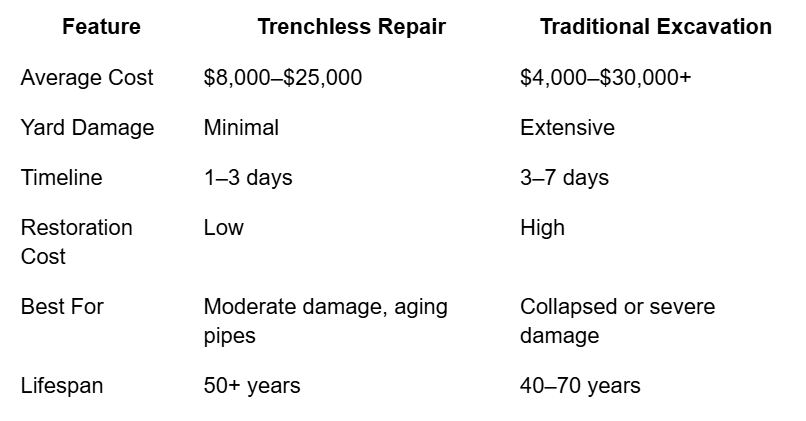
Trenchless vs Traditional Sewer Repair Cost Comparison Table
When Trenchless Repair Makes More Financial Sense
Trenchless is often the smarter long-term investment in Washington homes when:
- Sewer lines are still structurally intact
- Property has expensive landscaping or hardscape
- Home is in dense Seattle neighborhoods
- Fast repair is needed with minimal disruption
Real-world insight:
In Seattle’s high-value residential areas, homeowners often choose trenchless even if upfront costs are 15–30% higher because restoration savings can outweigh installation costs.
For homeowners comparing pricing in detail, many contractors provide breakdowns such as trenchless sewer repair cost Seattle estimates based on pipe length and inspection results.
When Traditional Sewer Repair Is the Better Option
Traditional excavation is still necessary in certain situations:
- Pipe has fully collapsed
- Severe misalignment or bellies in sewer line
- Access is already open due to construction
- Budget is the primary concern over surface restoration
Contractor insight:
In older Seattle homes with Orangeburg piping, full excavation is often unavoidable due to complete pipe degradation.
Local contractors like Aces Four frequently assess whether trenchless or traditional methods are structurally viable before recommending a solution.
Hidden Costs Homeowners Often Overlook
Many homeowners focus only on installation cost, but additional expenses can significantly impact total budget.
Hidden cost factors:
- Permit fees ($200–$1,500 depending on city)
- Soil restoration and grading
- Driveway or sidewalk replacement
- Emergency service surcharges
- Sewer camera inspection ($150–$500)
In Washington, restoration often becomes a major part of traditional repair costs.
Environmental and Long-Term Value Considerations
Seattle’s environmental conditions make durability a major factor in cost efficiency.
Long-term considerations:
- Trenchless pipes often last 50+ years
- PVC replacements resist root intrusion better than older materials
- Traditional excavation may disturb soil stability
- Reduced environmental disruption with trenchless methods
While upfront costs vary, lifecycle value often favors trenchless solutions in urban Washington settings.
Choosing the Right Method for Your Home
Step-by-step decision guide:
1. Schedule sewer camera inspection
2. Identify pipe condition and failure type
3. Compare repair feasibility (trenchless vs excavation)
4. Evaluate restoration costs for your property
5. Get multiple contractor estimates
Working with experienced professionals ensures accurate diagnosis before committing to expensive repairs.
Why Professional Assessment Matters in Washington
Sewer systems in Washington are highly location-dependent due to:
- Aging infrastructure in Seattle neighborhoods
- Heavy rainfall increasing ground movement
- Tree root density in residential areas
- Varied soil types across regions
This is why many homeowners rely on Professional sewer installation services to evaluate both cost and technical feasibility before choosing a method.
Conclusion
When comparing trenchless vs traditional sewer repair cost, there is no one-size-fits-all answer for Washington homeowners. Trenchless repair offers less disruption and long-term value, while traditional excavation may be more cost-effective in severe pipe failure cases. The best choice depends on pipe condition, property layout, and long-term restoration costs. In many Seattle-area homes, investing in the right method upfront prevents significantly higher expenses later.
FAQ Section
1. Is trenchless sewer repair more expensive than traditional repair?
Yes, trenchless repair usually has a higher upfront cost, but it often saves money by reducing restoration expenses like landscaping, driveways, and concrete replacement.
2. How long does trenchless sewer repair last in Washington?
Trenchless sewer pipes can last 50 years or more, depending on soil conditions and pipe material used during installation.
3. What is the cheapest sewer repair option?
Traditional excavation is usually cheaper initially, especially for short or easily accessible pipe sections, but restoration costs can increase total expenses.
4. Can all sewer lines be repaired with trenchless methods?
No, trenchless repair requires structurally intact pipes or specific conditions. Severely collapsed pipes usually need full excavation.
5. Do Seattle homeowners need permits for sewer repair?
Yes, most sewer repair projects in Seattle require permits and inspections to comply with local plumbing and environmental regulations.