Calmerry Releases Comprehensive Guide on Online Therapy and Workplace Mental Health Support

WILMINGTON, Del., Feb. 15, 2026 — Calmerry, U.S.-based online therapy platform, today announced the release of a new educational guide designed to help individuals and employers better understand access to professional mental health services in digital environments.

The guide outlines how online therapy works, who it may benefit, and how organizations are integrating structured mental health initiatives into workplace wellness strategies. It also addresses common questions related to privacy, therapist credentials, and the effectiveness of virtual care delivery.

According to data from the National Institute of Mental Health, millions of adults in the United States experience mental health challenges each year. Despite growing awareness, logistical barriers such as scheduling constraints, geographic limitations, and stigma continue to delay care for many individuals. Calmerry’s newly released guide compiles research-backed information to clarify how licensed online therapy services can expand access to support.

The publication includes a dedicated section on Online Therapy for Depression, outlining how evidence-based approaches such as Cognitive Behavioral Therapy (CBT) and mindfulness-based strategies are commonly delivered in secure digital settings by licensed clinicians. The guide emphasizes that treatment outcomes depend on individual circumstances and professional assessment, and that online therapy may be appropriate for mild to moderate conditions when delivered by qualified providers.

In addition to individual care, the guide examines the growing adoption of Employer Mental Health and Therapy Support programs. Many organizations are expanding employee assistance offerings to include confidential access to licensed therapists through digital platforms. The guide reviews how employer-sponsored mental health initiatives can support early intervention, reduce absenteeism, and promote workforce well-being while maintaining employee privacy.

The report also explains the structure of online therapy platforms, including initial assessments, therapist matching processes, secure communication systems, and flexible scheduling options. Calmerry states that its platform works exclusively with licensed mental health professionals who adhere to established ethical and professional standards.

“Access to reliable mental health information is essential for informed decision-making,” said a Calmerry spokesperson. “This guide was developed to provide individuals and employers with research-based context about how online therapy operates and what factors to consider when seeking professional support.”

The guide further addresses common concerns about teletherapy, including confidentiality safeguards and the therapeutic relationship in digital settings. It references peer-reviewed research indicating that virtual therapy can be effective for certain populations when conducted by licensed clinicians using structured approaches.

Calmerry reports that its services are delivered through encrypted communication channels and are designed to align with applicable U.S. privacy regulations. The company notes that online therapy may not be suitable for crisis situations and encourages individuals experiencing emergencies to seek immediate in-person or emergency assistance.

The newly released guide is available through Calmerry’s website for informational purposes. Individuals seeking to Improve Your Mental Health with Calmerry can review the guide to better understand available support options and determine whether online therapy aligns with their needs.

Media Info:
Contact Person: Calmerry team
Organization: Calmerry

Email: pr@calmerry.com

Website: https://calmerry.com
Address: 108 West 13th St. Wilmington, New Castle, DE 19801

SlideModel Expands Into Canva With New Presentation Templates for Professionals

Montevideo, Uruguay – 16th February 2026 – SlideModel.com announced the expansion of its presentation platform with the release of professionally designed presentation templates for Canva. The update extends SlideModel’s existing libraries for Microsoft PowerPoint and Google Slides.

The expansion reflects continued demand for ready-to-use presentation assets that help professionals save time while maintaining consistent visual standards. SlideModel’s platform is built around providing access to editable presentation templates that can be adapted for business, education, consulting, and team communication needs.

By adding Canva-compatible presentation templates, SlideModel aims to support professionals working across multiple presentation environments without requiring changes to established workflows. The platform supports Microsoft PowerPoint and Google Slides and is expanding support to Canva presentations, with an initial selection of slide templates now available and broader compatibility planned.

In addition to its huge presentation template library, SlideModel has introduced AI presentation tools designed to support early-stage presentation planning. These tools help users organize ideas and structure content more efficiently while preserving full control over slide design, branding, and layout. The AI features are positioned as a complement to editable templates rather than a replacement for professional design decisions

The announcement comes as presentations continue to play a central role in business presentations, meetings, training, sales, and internal communication. SlideModel’s approach focuses on combining structured presentation templates that reduce preparation time while maintaining clarity and consistency. With over 50,000 fully editable presentation templates in its catalog, and growing, SlideModel positions itself as one of the largest repositories of slide templates tailored mainly for business professionals and executives.

The company stated that future updates will continue to prioritize expanding template coverage, supporting additional presentation workflows, and refining tools that help professionals communicate more effectively through slides.

SlideModel operates as a subscription-based service while also providing access to a selection of free PowerPoint presentation templates, allowing users to explore the platform and its design approach before upgrading to full access.

About SlideModel

Founded in 2013, SlideModel is a presentation platform that provides access to professionally designed, fully editable presentation templates. The platform supports Microsoft PowerPoint, Google Slides, and Canva presentations and serves professionals and teams across business, education, and consulting. SlideModel also provides AI-assisted tools that support presentation planning while preserving full design flexibility. 

Media Contact

Company: SlideModel
Email: info@slidemodel.com
Website: https://slidemodel.com

TyresFlow Expands 24/7 Mobile Tyre Replacement Service Nationwide, Increasing Fleet Capacity by 40%

LEEDS, UK – February 14, 2026TyresFlow, a Leeds-based mobile automotive service provider, today announced the nationwide expansion of its 24/7 mobile tyre replacement operations across England, Scotland, and Wales, increasing fleet capacity by 40% and technician coverage by 35% over the past 12 months.

The expansion includes the deployment of 18 additional fully equipped service vans, bringing the company’s total operational fleet to 63 vehicles. TyresFlow has also onboarded 22 newly certified tyre technicians, strengthening regional response capabilities and reducing average urban response times from 90 minutes to approximately 60 minutes, according to internal service data from Q4 2025.

In West Yorkshire, where service demand increased by 28% year-over-year, the company has allocated five additional vans to support residential, workplace, and roadside callouts. The expansion reduces reliance on fixed-location garages and allows motorists to schedule same-day appointments or request emergency assistance without requiring vehicle towing.

“Over the last year, we’ve seen consistent growth in demand for Mobile Tyre Fitting Leeds, particularly in metropolitan areas,” said Adam Hussain, Founder and Managing Director of TyresFlow. “By expanding our fleet and increasing certified technician coverage, we’re improving response efficiency while maintaining standardized safety, wheel-balancing, and compliance procedures across all service regions.”

Each TyresFlow service vehicle is equipped with digital wheel-balancing systems, tyre-changing machinery, and calibrated safety tools that meet UK automotive servicing regulations. Technicians complete on-site fitting, dynamic balancing, torque calibration, and safety inspections before clearing vehicles for road use.

The company reported completing more than 21,000 mobile tyre replacement jobs in 2025, reflecting a 31% increase compared to the previous year. Nationwide coverage is now supported by regional dispatch coordination and digital booking infrastructure that provides transparent pricing and real-time appointment confirmation.

Industry data from the RAC indicates that tyre-related breakdowns remain among the most common roadside issues in the UK, contributing to increased demand for rapid-response mobile servicing solutions. TyresFlow stated that its expansion aligns with this broader market trend toward on-demand vehicle maintenance services.

About TyresFlow

Founded in Leeds, TyresFlow provides 24/7 mobile tyre replacement and wheel-balancing services throughout the United Kingdom. The company operates a fleet of 63 fully equipped service vans staffed by certified technicians, delivering on-site tyre fitting to homes, workplaces, and roadside locations.

Media Contact:
Adam Hussain
Founder & Managing Director
Website: https://tyresflow.co.uk/
Email: info@tyresflow.co.uk

https://www.instagram.com/tyres_flow/

https://www.facebook.com/tyresflow/

Fintech Licensing Shifts Toward Activity-Based Models as Institutions Emphasize Verification and Scope

Neves, São Tomé and Príncipe – 14th Feb 2026 – Financial institutions are increasingly reassessing how they evaluate fintech licenses, placing greater emphasis on the scope of authorized activity and the ability to independently verify licensing claims, according to guidance released by the Neves Financial Services Authority.

The Authority said banks, payment providers, and financial infrastructure partners are moving away from speed-focused licensing assessments and instead prioritizing clarity around what a license permits and how that information can be confirmed through official systems. The shift reflects broader changes in institutional due-diligence practices as fintech business models grow more complex and cross-border operations become more common.

For much of the past decade, fintech licensing discussions were often centered on how quickly approval could be obtained. Rapid expansion and competitive time-to-market pressures led many firms to treat licensing primarily as an entry requirement. Institutional counterparties now appear to be taking a more detailed approach.

According to the Authority, counterparties increasingly evaluate whether licensed permissions align precisely with a firm’s actual operations. This includes assessing whether activities such as brokerage execution, proprietary trading, digital asset services, or payment processing fall clearly within the scope of authorization.

“When licensing categories are broadly defined or loosely interpreted, institutions face difficulty assessing exposure,” the Authority said in its guidance. “This has led to greater scrutiny during onboarding and periodic reviews.”

Industry participants report that onboarding delays and extended compliance reviews are frequently linked to ambiguity around licensed scope rather than jurisdiction alone. Institutions may request additional documentation or decline engagement where permissions cannot be clearly mapped to operational activity.

Move Toward Activity-Based Licensing

In response to these concerns, activity-based licensing frameworks are receiving increased attention. Under such models, financial licenses are issued according to defined service categories rather than broad financial permissions.

The Neves Financial Services Authority said its licensing framework adopts this approach, aligning authorizations with specific operational functions. Each license category is supported by published guidance describing typical authorized activities, intended to reduce interpretive uncertainty for counterparties conducting due diligence.

Compliance professionals note that this structure allows institutions to assess risk more efficiently by distinguishing between principal trading, agency execution, asset handling, and payment-related functions.

The Authority said the emphasis on activity classification reflects a wider international trend toward precision in licensing, as firms increasingly operate across multiple service lines.

Verification Becomes Central to Due Diligence

Alongside scope clarity, verification has emerged as a central requirement in institutional reviews. Counterparties increasingly expect to confirm license status through authority-maintained systems rather than relying solely on documentation provided by applicants.

Public verification tools allow third parties to independently validate whether a license is active, suspended, or withdrawn, and to identify the category under which it was issued. Institutions say this reduces reliance on intermediaries and supports consistent assessment across jurisdictions.

According to the Authority, verification infrastructure plays a critical role in cross-border environments, where counterparties may be unfamiliar with the issuing jurisdiction. Public registers and published guidance provide shared reference points that reduce ambiguity.

The Authority also noted that verification supports broader market integrity by helping distinguish licensed entities from those making unauthorized or misleading claims.

Ecosystem-Level Coordination

Observers point to the growing role of licensing ecosystems rather than isolated authorities. In such structures, sector-specific bodies issue licenses, while umbrella institutions coordinate verification, public disclosure, and governance standards.

These arrangements are intended to improve consistency without replacing specialized oversight. Financial services authorities retain responsibility for licensing decisions, while centralized systems support transparency and accessibility.

Within these ecosystems, verification frameworks serve as a unifying layer, allowing counterparties to confirm licensing status without navigating fragmented sources.

Implications for Fintech Firms

For fintech firms, the shift has practical implications. Licensing is increasingly viewed as an ongoing operational consideration rather than a one-time milestone. Firms expanding into new activities or markets may face renewed scrutiny if licensed permissions do not clearly reflect their operations.

Industry analysts say licenses that accurately map to real-world activity can reduce repeated compliance reviews and support more stable banking and payment relationships. Conversely, misaligned permissions often lead to recurring documentation requests and extended assessment cycles.

The Authority indicated that as international standards continue to converge, tolerance for ambiguity is shrinking. Institutions are increasingly treating clarity, verification, and public accessibility as baseline expectations.

Broader Regulatory Context

The developments reflect broader changes in global financial oversight, where system-based assurance is replacing relationship-based confirmation. As financial activity becomes more distributed, institutions rely more heavily on standardized verification tools.

Observers say licensing frameworks that prioritize precision over speed are likely to play a growing role in cross-border market participation. For institutions assessing risk, the question is no longer simply whether a firm is licensed, but whether its license can be clearly understood and independently verified.

Reference

Financial licensing framework administered by the Neves Financial Services Authority: https://nevesfinancialauthority.org/

Institutional Contact

Neves Financial Services Authority
Neves, São Tomé & Príncipe
Email: info@neveslicensingauthority.org
Website: neveslicensingauthority.org 

New WorldCC Research Finds Post-Signature Value Leakage Costs Enterprises Up to $55 Million Annually

Ridgefield, CT – 13th Feb 2026 – New research from World Commerce & Contracting (WorldCC), conducted in partnership with Ironclad, finds that organizations lose an average of 11% of contract value after signature, a phenomenon described as “post-signature value leakage.” For large enterprises with $500 million in annual contracted spend, this equates to as much as $55 million in lost value each year.

Photo Courtesy of: WorldCC

The findings are detailed in the report Closing the Procurement Value Gap: How Smarter Contracting Can Prevent 11% Value Leakage, which examines how value is lost during the post-award phase of the contracting lifecycle. The research shows that losses do not primarily stem from poor negotiation, but from weaknesses in how contracts are implemented, governed, and managed after they are signed.

According to the report, value leakage accumulates through multiple operational failures, including unauthorized scope changes, missed or incorrect price adjustments, untracked performance obligations, and innovation commitments that are negotiated but never activated. These “micro-leaks” collectively result in significant financial impact across large contract portfolios.

A key driver identified in the research is what WorldCC terms the “handover gap” – the point at which procurement and legal teams exit once a contract is executed, leaving delivery and operational teams without sufficient commercial context or accountability for managing contractual commitments.

“This is a wake-up call for the C-suite,” said Tim Cummins, President of WorldCC. “The 11% gap isn’t just a procurement problem; it’s a structural failure that leaves innovation on the table and money in the drain.”

The research highlights that the most severe capability gaps contributing to value leakage are process maturity and clarity of responsibilities, followed by weaknesses in governance, operating models, and capability development. 

WorldCC estimates that organizations which modernize their contracting approach can recover between 2% and 3% of total spend in the first year alone, and between 5% and 10% over a three-year period. For high-spend enterprises, this represents a potential recovery of $25 million to $50 million over time.

“This research shows that most value is won or lost after the contract is signed,” Cummins said. “If organizations want to protect commercial outcomes, they need to treat contracts as living assets, not static documents.”

Dan Springer, Chief Executive Officer of Ironclad, said the findings highlight the role of technology in improving post-award performance. “Most organizations have already negotiated significant value into their contracts, but much of it remains unrealized. AI-powered contract management systems make it possible to track obligations, monitor performance, and manage contracts as active commercial assets throughout their lifecycle.”

The report outlines a series of recommendations to reduce value leakage, including redesigning contracting operating models, improving post-award governance, strengthening accountability across functions, and adopting the Contract Management Standard™. It also emphasizes the role of integrated contract lifecycle management (CLM) technology and artificial intelligence in improving obligation tracking, performance monitoring, and renewal management.

The study is based on WorldCC research, practitioner interviews, and benchmarking data from the Commerce & Contract Management Institute (CCM Institute). It forms part of WorldCC’s broader research agenda focused on improving commercial performance, governance, and contracting practices across industries and regions.

The full report, Closing the Procurement Value Gap: How Smarter Contracting Can Prevent 11% Value Leakage, is available for download at: https://info.worldcc.com/closing-the-procurement-value-gap

About World Commerce & Contracting (WorldCC)

World Commerce & Contracting is a not-for-profit global membership association dedicated to helping organizations achieve high-performing and trusted trading relationships. With more than 75,000 members from over 20,000 organizations across 180 countries, WorldCC supports professionals involved in commercial and contract management through research, certification, standards development, education, and events. The association focuses on improving the quality and integrity of trading relationships worldwide, promoting better contracting practices that support economic performance, governance, and social outcomes.

Contact Information

Kate Hodgins

Commerce & Contract Management Institute,

Email: info@ccm.institute

Website: https://ccm.institute/

John Mattone Global Launches Next Phase of Intelligent Leadership Certification, Offering Industry-Leading 192 ICF Credits

ORLANDO, Fla – 13th Feb 2026 – John Mattone Global, founded by John Mattone, who has been recognized multiple times as the world’s No. 1 executive coach, is launching the next phase of its Intelligent Leadership® Executive Coaching Certification, now offering 192 credits approved and accredited by the International Coaching Federation (ICF). The expanded program is designed for executive and leadership coaches seeking a comprehensive, standards-aligned pathway to work with senior leaders in complex organizations.

Photo Courtesy of: John Mattone Global

The Intelligent Leadership Certification program is structured to help coaches work at both the “inner core” and “outer core” levels of leadership development, integrating character, values and emotional maturity with observable skills and competencies. Through a combination of live sessions, practical tools, supervised coaching and assessments, participants are trained to support C-suite and high-potential leaders through measurable development journeys.

“Our Intelligent Leadership Certification is built to give coaches a rigorous, structured way to help leaders grow,” said John Mattone, founder of John Mattone Global. “We are proud that the program now offers 192 ICF-approved credits, because it reflects the depth, standards and accountability that organizations and leaders are asking for from their coaches.”

The next phase of the certification includes expanded modules on culture transformation, succession readiness and leading in an environment shaped by artificial intelligence and digital disruption. Coaches are trained to use proprietary tools such as leadership inventories and cultural models that support data-driven coaching engagements aligned with organizational goals.

“Coaches tell us they need more than theory; they need a system they can rely on with senior leaders who face intense pressure and scrutiny,” Mattone added. “This program is designed to give them that system, along with the credentials and structure they need to work confidently at the highest levels.”

The 192 ICF credits position the Intelligent Leadership Certification among the more extensive coach-education offerings in the executive and leadership coaching segment. The program is aimed at experienced coaches, HR and talent-development professionals, and former executives who are moving into coaching roles and seeking a pathway that supports both professional development and international recognition.

Enrollment for the new phase of the Intelligent Leadership Certification is open to participants in the United States, the Middle East and other global markets through both virtual and in-person formats, depending on cohort and location. Interested coaches can apply through John Mattone Global’s website.

About John Mattone Global

John Mattone Global is an executive coaching and leadership development company founded by John Mattone, who has been recognized multiple times as the world’s top executive coach. The company provides CEO and C-suite coaching, culture-transformation projects, leadership development programs and coach-education offerings built around its proprietary Intelligent Leadership® framework. Through its certification programs and global network of trained coaches, John Mattone Global works with organizations across sectors to strengthen leadership, talent and culture. For more information, visit www.johnmattone.com

Contact Information:

Name: Nicholas Mattone, CEO

Company: John Mattone Global, LLC

Website: www.johnmattone.com

Email: nick@johnmattone.com

Guam Emerges as Pacific Investment Destination Through Global Investor Guide

LONDON, UNITED KINGDOM – 13th Feb 2026 – The Global Investor Guide has released its 2025 US Territories edition, placing Guam’s tourism, technology, and real estate sectors under the international business spotlight as capital flows accelerate across the Pacific region.

Visitor arrivals to Guam exceeded 1.1 million in 2024, marking a steady climb from pandemic lows. The Global Investor Guide’s latest publication profiles this recovery, drawing investor attention to hotel refurbishments, construction pipelines, and telecommunications upgrades now visible across the US territory.

Tourism operators are repositioning properties for higher-yield visitors. Hotel groups have announced renovation plans worth more than $100 million, with Pacific Star Hotel and other established properties undertaking substantial upgrades. Golf facilities such as Mangilao Golf Course and cultural festivals in villages including Hågat and Mangilao now attract travellers from Japan, Korea, and the United States mainland who seek authentic experiences.

Construction demand has climbed alongside population growth and commercial activity. Pacific Federal Management and other local firms report full project schedules spanning schools, roads, housing, and logistics facilities. Real estate capacity constraints have opened opportunities for developers with experience in mixed-use projects and residential communities designed for typhoon-prone environments.

Telecommunications infrastructure is advancing as Guam sits on multiple undersea cable routes linking Asia and North America. Google and regional partners have announced new cable systems, prompting local carriers to invest in data centers, fiber upgrades, and expanded mobile networks. Docomo Pacific and GTA TeleGuam are building capacity to serve cloud platforms, regional support centers, and technology firms.

Renewable energy projects are gaining momentum as the Guam Power Authority moves toward utility-scale solar backed by battery storage. Water systems, medical facilities, and educational infrastructure are being upgraded, with local contractors engaged and room for additional specialists.

“Guam is at a turning point in our economy, with growing opportunities in both the United States and in Asia,” says Christina Garcia, CEO of the Guam Economic Development Authority. The agency administers the Qualifying Certificate program, which offers rebates on income, business privilege, real property, and use taxes for up to 20 years.

Global Investor distributes its guides at business events, including the World Business Forum in New York and AFSIC in London, reaching over two million decision-makers through partner platforms. The Guam edition profiles companies across tourism, construction, telecoms, finance, education, and energy.

Guam’s economy recorded a GDP of $6.91 billion in 2022. The island’s strategic position within four flight hours of Tokyo, Seoul, Manila, and Taipei gives businesses access to 4 billion consumers within a 3,000-mile radius, while US legal standards provide regulatory clarity.

About Global Investor

Global Investor is a media production company specializing in investment promotion publications distributed at select business and investment events worldwide. Its US Territories edition profiles economies and business environments for investors, governments, and private sector leaders seeking strategic partnerships.

Contact Details

Spokesperson/Contact Name: Silvia Salvetti & Frauke Landi

Name of Company/Organization: Global Investor

Website: https://www.globalinvestor-guide.com/our-guides

Email Address: info@globalinvestor-guide.com

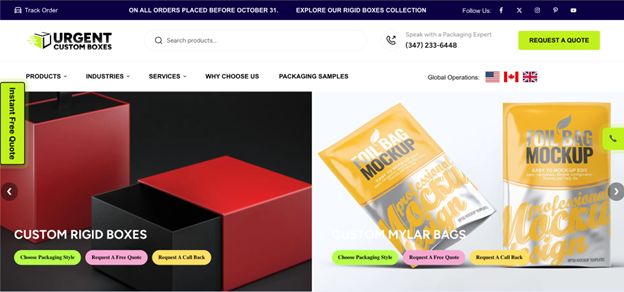
Urgent Custom Boxes Introduces Low-MOQ Packaging Program to Reduce Entry Barriers for Emerging Brands

New production model lowers minimum order quantities by up to 40% across select formats.

WATERVLIET, N.Y., February 12, 2026 — Urgent Custom Boxes today announced the launch of a low minimum order quantity (low-MOQ) packaging program designed to help startups and emerging brands reduce upfront packaging commitments while testing new products in market.

The initiative lowers minimum production thresholds by up to 40% across select packaging formats, allowing businesses to validate product demand, refine branding, and assess shipping durability before committing to full-scale manufacturing runs.

Industry analysts have noted that high minimum order requirements remain a common barrier for early-stage consumer brands, particularly in retail, e-commerce, and subscription-based business models. Smaller batch production can help companies manage inventory risk and preserve working capital during initial product launches.

“Early-stage brands often need flexibility as they introduce new SKUs or enter new distribution channels,” said a spokesperson for Urgent Custom Boxes. “This program allows businesses to align packaging production more closely with real-time sales performance while maintaining consistent manufacturing standards.”

Program Scope and Applications

The low-MOQ program applies to multiple packaging categories frequently used by growing consumer brands, including:

  • Businesses seeking to order custom candle boxes in smaller quantities for boutique retail placement, seasonal releases, or subscription kits.
  • Companies requiring a custom folding paperboard box for lightweight retail products that demand structured presentation and efficient shipping.
  • Food, wellness, and specialty goods brands exploring custom smell proof mylar bags for product sampling, limited-run flavors, or pilot market testing.

Minimum quantities vary by material selection, print specifications, and structural design requirements. The company stated that production recommendations are provided based on product dimensions, intended distribution channels, and timeline considerations.

Addressing Operational Risk in Product Launches

Emerging brands frequently conduct phased rollouts to evaluate consumer response before expanding production volumes. According to industry research on inventory management in consumer goods, smaller pilot runs can reduce excess stock risk and improve demand forecasting accuracy.

The new program enables:

  • Small-batch production for pilot launches
  • Retail and direct-to-consumer packaging validation
  • Limited-edition and seasonal product testing
  • Gradual scaling as confirmed sales data becomes available

Urgent Custom Boxes indicated that brands with fixed retail delivery windows are encouraged to initiate packaging planning early to meet production timelines.

About Urgent Custom Boxes

Urgent Custom Boxes is a U.S.-based custom packaging manufacturer serving startups, mid-sized companies, and established brands across retail, e-commerce, beauty, wellness, and consumer goods sectors. The company provides structural design consultation, production planning support, and scalable packaging solutions.

Media Contact
Press Team
Urgent Custom Boxes
Email: info@urgentcustomboxes.com
Phone: +1 (347) 233-6448
Website: https://urgentcustomboxes.com/
Address: 5 Mcewan Way, Watervliet, NY 12189

Payne Glasses LLC Announces Publication of Annual Eyewear Spending Framework for Insured and Direct Purchases

Pittsburgh, PA, United States – 12th Feb 2026 – Payne Glasses LLC announces the release of a consumer cost guide examining out-of-pocket spending patterns associated with routine eyewear purchases made through vision insurance compared with direct purchasing models. The document presents structured cost comparisons illustrating how premiums, copays, and frame or lens overages shape annual household spending on prescription eyewear.

The guide outlines how vision coverage is commonly structured around fixed allowances and preset pricing tiers rather than open-ended reimbursement. Routine lens materials, coatings, and prescription designs frequently fall outside base allowances, leading to layered charges at the point of sale. Documented examples include added fees for polycarbonate lens materials, anti-reflective coatings, progressive lens designs, and frame selections above allowance thresholds. The framework presents these charges as cost components that accumulate during standard purchasing decisions rather than uncommon upgrades.

Annualized cost modeling within the guide compares a typical insured purchase cycle with a direct-pay scenario. The insured example includes twelve months of payroll-deducted premiums totaling approximately $156, an exam copay between $10 and $20, and additional lens and frame copays or overages ranging from $99 to more than $300 depending on selections. The direct-pay scenario models a comprehensive eye exam priced between $80 and $90 and prescription eyewear purchased without retail or insurance intermediaries, commonly priced between $45 and $75 per pair. The guide presents these figures as an illustration of structural pricing differences rather than product comparisons.

Research referenced in the publication notes that a large share of eyewear consumers report out-of-pocket spending above $99 per purchase cycle even when enrolled in vision coverage. The guide positions this pattern within a broader discussion about how predictable healthcare-related purchases are financed and how pricing visibility influences decision-making at checkout. Emphasis is placed on the role of distribution layers, benefit design, and point-of-sale pricing structures in shaping total annual expenditure.

The document also addresses common assumptions regarding routine eye exams. Medical eye evaluations associated with disease monitoring or sudden vision changes are often billed under medical coverage, while refraction services used to determine eyeglass prescriptions are typically categorized as routine care and priced separately. The guide includes examples of independent exam pricing in the $80 to $90 range as part of overall cost comparisons.

Daniel Mercer, Director of Consumer Education at Payne Glasses LLC, stated, “This guide was developed to organize observable pricing components into a clear framework. Routine eyewear purchasing involves multiple small charges that are rarely reviewed together. Structured comparisons allow cost visibility before checkout decisions occur.”

The release forms part of an ongoing effort to publish educational materials addressing pricing structures in routine vision care categories. Distribution of the guide is available through company communication channels and informational resources.

About Payne Glasses LLC

Payne Glasses LLC operates as a direct-to-consumer eyewear company focused on prescription glasses distribution through online channels. The company publishes educational materials related to eyewear purchasing structures and pricing visibility.

MEDIA DETAIL

Contact Person Name: Matthew Helman, ABOC
Company Name: PayneGlasses LLC
Email: help@payneglasses.com
Website: https://www.payneglasses.com/

What Homeowners Should Know About Maintaining Air-Source Heat Pumps

London —As more homeowners transition to low-carbon heating systems, air-source heat pumps are becoming an increasingly common alternative to traditional gas boilers. The shift has been supported in part by government-backed incentives, including the Boiler Upgrade Scheme Grant, which is designed to reduce installation costs for qualifying households.

Industry professionals note that air-source heat pumps are generally considered low-maintenance systems. However, regular upkeep is still required to ensure reliable performance and long-term efficiency. Most manufacturers and service providers recommend a professional inspection at least once a year, ideally ahead of the winter heating season.

Maintenance typically focuses on preserving airflow and ensuring that external components remain clear of debris. Leaves, dirt, and nearby vegetation can restrict airflow and reduce system efficiency if not addressed. Filters and external coils may also require periodic cleaning to maintain consistent operation.

According to energy efficiency specialists, routine maintenance can extend the operational lifespan of an air-source heat pump to around 20 years, compared with an average lifespan of approximately 15 years for many conventional boilers. Proper upkeep can also help reduce the likelihood of system failures during periods of high demand.

Cold weather presents additional considerations. In winter conditions, ice can form on the outdoor unit, potentially affecting heat transfer. Many modern systems include automatic defrost functions, but monitoring remains important, particularly during prolonged cold spells.

Homeowners are also advised to periodically check thermostats, pressure valves, and system controls to confirm they are functioning as intended. In some installations, antifreeze solutions such as glycol are used to protect components from freezing and may require replenishment in line with manufacturer guidance.

The rising availability of subsidized installations, including options that may result in a free air source heat pump for eligible households, has increased public interest in the technology. Energy analysts emphasize that while grants can reduce upfront costs, ongoing maintenance responsibilities remain with the homeowner.

As adoption continues to grow, experts stress that air-source heat pumps require less intensive servicing than older heating systems but still benefit from routine professional assessment. Consistent maintenance, they note, plays a central role in preserving efficiency, managing energy use, and ensuring dependable heating throughout the year.

Media Details

Company Name: ECO Energy Services

Company Website: https://ecoenergyservices.co.uk/

Address: 124 City Road, London. EC1V 2NX

Contact Email: contact@ecoenergyservices.co.uk

Contact Number: +44 204 525 9721