Can the Free Boiler Scheme Cover Installation Costs?

The rising cost of energy has made heating homes a major concern for many UK households. The cost of heating a house is much higher than it was a few short years ago. Older boilers waste more energy and raise monthly bills. It can seem impossible for low-income households and those with vulnerable circumstances to replace a boiler. Here, government support is crucial.

The Free Boiler Scheme is one of the most discussed support options in today’s market. Before applying, many homeowners have the same question. Do the costs of installation and boiler cover each other, or just the boiler? This is important, as installation costs can be high.

This blog covers the subject in detail. The blog explains the program, how it works, who is eligible, what costs are covered and what homeowners can expect. This guide also contains real statistics, expert insight, and examples that will help you to make an informed decision.

Free Boiler Scheme

It is part of a wider UK government plan to reduce fuel poverty and emissions. The scheme is operated under the Energy Company Obligation (ECO4), also known as ECO4. The scheme is in its second phase, which runs until 2026. It aims to help low-income households and those who are vulnerable improve their energy efficiency.

Its main objective is straightforward. The main goal is to help people replace their old, inefficient, or broken boilers with more energy-efficient models. These upgrades lower energy bills and reduce energy consumption. These upgrades also help the UK achieve its net-zero target.

Large energy suppliers fund the scheme. They are required by law to assist eligible households. They do not give cash but instead upgrade heating and insulation directly by approved installers.

Why Installation Costs Matter So Much

It isn’t just about purchasing a new boiler. The installation can cost almost as much or more than the boiler. Installation often includes the removal of the old boiler and upgrading the pipework. It may also include fitting new controls and testing the system.

On the open market, boiler installations can cost between 1,500 and 3,500 Pounds. The cost depends on factors such as the type of boiler, the size of the home, and the complexity. This cost is unaffordable for many families.

People worry, therefore, that even a boiler advertised as “free” may come with hidden costs. This is a reasonable concern. Before applying, it is important to know if installation is included.

Does the Free Boiler Scheme Cover Installation?

In most cases, yes, the Free Boiler Scheme will cover the entire cost of installation. The cost of installation includes all labour, materials, testing and certification. Eligible households do not usually pay anything up front.

The goal of ECO4 is to eliminate all financial barriers. The government wants to encourage households to upgrade their boilers without having to worry about the cost. The government will cover both the boiler as well as the installation when certain criteria is met.

However, coverage depends on individual circumstances. It is important to consider the condition of your existing heating system. Also, the energy rating of a property is important. Some homes will need additional work, such as pipe or radiator adjustments. They are included in the price if necessary to ensure that your new boiler works safely and efficiently.

What the Data Shows About Boiler Grants

The government data shows that upgrading your heating system can make a huge difference. Ofgem reports that between 2013 and 2023, more than 2.4 million energy-efficient measures were installed through ECO schemes. The most common upgrade was to boilers.

New boilers reduced heating bills by 20-30 percent on average. Some homes with poor insulation saw savings that were higher even after further improvements.

The table below compares estimated costs with and without ECO4 assistance.Who Qualifies for Full Coverage?

The eligibility is determined by household income, property efficiency, and benefits. The scheme is aimed at those who are most in need. The scheme targets households receiving means-tested benefits, as well as those who live in homes that are not energy efficient.

Priority is usually given to properties with EPC ratings D, E, F or G. Also, homes with old boilers are good candidates. It is important to replace systems which waste energy and raise bills.

Renters can also be eligible, provided the landlord gives permission. Upgrades improve the property value and EPC rating, which is why many landlords agree.

Why Some People Think Installation Is Not Included

Online, there is a great deal of confusion. Private installers may advertise “free boilers, but with an installation charge. These offers do not fall under the official ECO4 scheme.

Installers approved by ECO must adhere to strict guidelines. The installers cannot charge hidden fees for work that is eligible. A company that asks for high upfront fees is a red flag.

It is important to choose a reputable provider. A seasoned ECO4 partner can protect homeowners from unanticipated charges.

The Role of Trusted ECO4 Partners

Installers who are approved manage the whole process. They manage eligibility checks, surveys and paperwork. They are there to make your experience easy and stress-free.

Berks Insulation has been a reliable partner in the insulation industry for many years. The ECO4 scheme offers free heating upgrades. The team provides support to households throughout the entire process. They make sure that installations comply with safety regulations and energy regulations.

When you work with a provider who has experience, both boilers and installation costs will be covered. This ensures that the boiler will perform well over time and is covered by a warranty.

Installation Quality and Safety Standards

Free doesn’t mean low-quality. ECO4 installations are subject to strict standards. Gas Safe registration is required for installers. All work is certified and inspected.

Modern boilers installed through the scheme are reliable and energy-efficient. Smart controls are often included to improve comfort and reduce waste. These controls improve temperature management and reduce wasteful heating.

After installation, homeowners receive full documentation. The documentation includes certificates of compliance and warranties. These documents add value to your property and protect you as a homeowner.

How Much Can You Save After Installation?

The savings continue even after the installation. Modern boilers use less fuel to produce more heat. Gas bills and usage are reduced.

According to the Energy Saving Trust, replacing an old G-rated heating system with an A rating can save you up to £ 580 a year in heating costs. Savings vary depending on home size and usage.Environmental Benefits of Covering Installation

Covering installation costs helps more people upgrade. This directly impacts carbon emissions. Nearly 25 percent of UK household emissions are due to heating.

New boilers burn fuel more efficiently and produce fewer emissions. The impact of upgrading insulation is increased when combined with new boilers.

According to the government, ECO4 is expected to reduce carbon emissions by millions of tonnes in its lifetime. This success is due in large part to the installation coverage.

What Happens During the Installation Process?

A free assessment is usually the first step. The surveyor will check the property and any existing heating systems. They verify eligibility and recommend the best solutions.

Installation is then scheduled. Installation of boilers usually takes between one and two days. The engineers remove the old boiler and then install the new one. They explain the workings of the system and test it.

Installers take care of everything. Installers are in charge of everything. Waste removal and safety inspections are included.

Are There Any Situations Where Costs Apply?

Rarely, homeowners can choose to upgrade their homes. Some examples include smart thermostats that are more advanced or additional radiators. The extras that are optional are explained clearly and upfront.

The scheme continues to cover essential installation work. Nobody is forced to pay. Transparency in ECO4 is a requirement.

Before work starts, it is determined if a home needs major structural modifications beyond the standard installation. This is not a problem for most homes.

Final Thoughts

Can the Free Boiler Scheme pay for installation costs? The answer is yes, in genuine ECO4 cases. The scheme aims to eliminate all financial barriers, which includes the boiler as well as professional installation. For older residents looking for specific support, checking eligibility for the Boiler Replacement Scheme Over 60s can be a vital step toward securing these benefits.

It is important to work with an approved, trusted installer. Berks Insulation, for example, ensures that the process is transparent, compliant, and fully funded. They can help improve household comfort, lower bills, and reduce emissions.

This support can change the lives of eligible households. This support provides warmth, safety, and long-term savings without financial strain.
The Free Boiler Scheme is a great option for homeowners with an old boiler or high energy bills.

Binance Referral Code Complete Guide

Key Takeaways

  • Binance referral codes provide immediate trading fee discounts of up to 20% for new users
  • Both referrers and new sign-ups benefit through commission sharing structures
  • Account verification is mandatory to unlock and withdraw referral rewards
  • Referral IDs must be entered during registration they cannot be added later
  • Geographic restrictions apply to certain bonus features depending on local regulations
  • To get discounts on Binance, use a referral code like D4SELPKM or OV8VNP2L during sign-up for 20% off spot fees and other welcome bonuses, as codes must be entered at registration for lifetime savings on fees and potential rewards. 


Introduction

Cryptocurrency trading has become mainstream, yet many traders overlook one of the simplest ways to reduce costs: referral programs. 

When I first started trading on Binance three years ago, I didn’t realize that a simple eight-character code could have saved me hundreds of dollars in fees. 

The Binance referral system operates as a mutual benefit mechanism new traders get lower fees while existing users earn passive income from their network’s trading activity.

This guide walks you through everything about Binance referral codes, from the mechanics behind the system to practical steps for maximizing your benefits.

Whether you’re creating your first account or trying to understand why your referral rewards aren’t showing up, you’ll find concrete answers here.

What is the Binance Referral Code?

A Binance referral code is an alphanumeric identifier (typically 8-12 characters) that connects new users to existing account holders during registration. 

Think of it as a digital handshake between the platform, the person sharing the code, and the new sign-up.

These codes serve multiple purposes:

Fee reduction mechanism: When you enter a valid referral code during signup, the system automatically applies a discount to your trading fees. 

The standard Binance trading fee is 0.1% for both makers and takers on spot trades. With a referral code, this can drop to 0.08% or lower depending on the specific code’s settings.

Tracking system: Each code is unique to one account holder, allowing Binance to accurately track which users brought in new traders. 

This tracking runs indefinitely if you refer someone today, you could earn commissions from their trading activity years from now.

Customization options: Users with referral privileges can create multiple codes with different names. I’ve seen people create codes like “RSKXSP66” or “V3I30ACF” to make them memorable for their audience.

The technical structure typically follows this pattern: a mix of uppercase letters and numbers (example: RSKXSP66) or sometimes a simplified custom version if the user has earned that privilege through higher referral tiers.

What is the Binance Referral Program?

The Binance Referral Program represents one of the most generous compensation structures in the cryptocurrency exchange industry. 

Launched in the platform’s early years, it has evolved into a sophisticated multi-tier system that rewards users for expanding the Binance ecosystem.

At its foundation, the program operates on commission sharing. 

When someone you refer completes trades, Binance allocates a portion of their trading fees as a reward to you. The platform doesn’t add extra charges instead, it shares part of its revenue with users who help grow the network.

Program tiers exist for different user types:

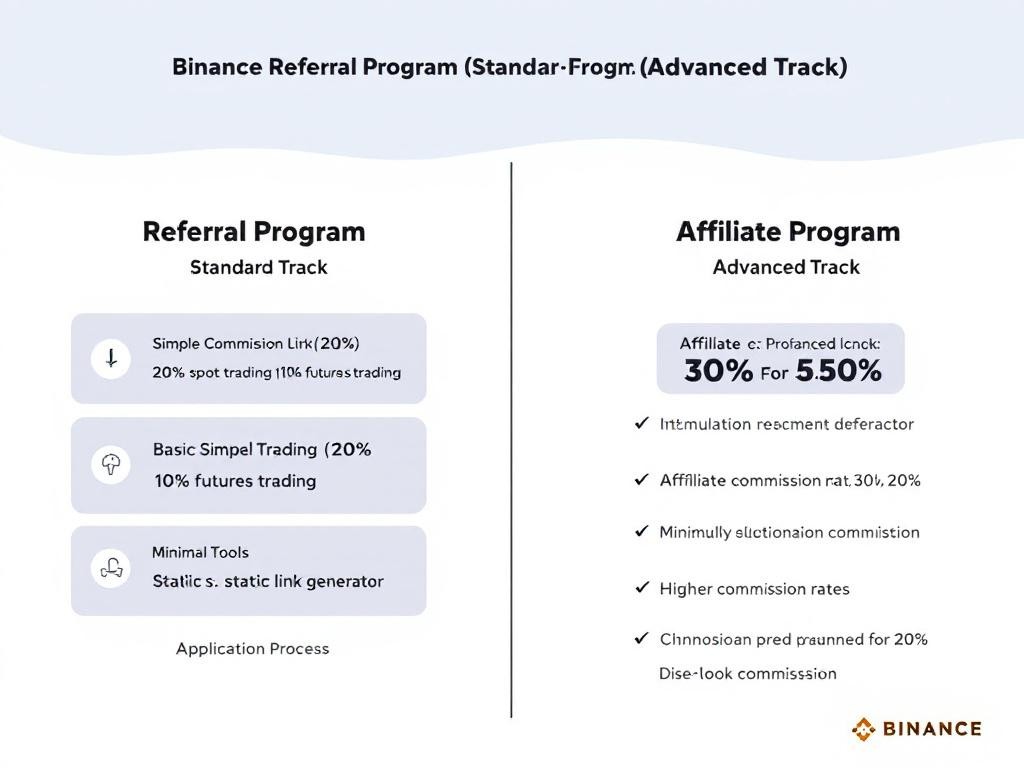
The standard user referral program is available to anyone with a verified Binance account. You receive a percentage of trading fees from people who sign up using your code. 

The exact percentage varies based on several factors including your account status and the specific promotional period.

The Binance Affiliate Program caters to content creators, influencers, and businesses with larger audiences. 

This upgraded tier offers higher commission rates (up to 50% in some cases) plus additional tools like tracking dashboards, marketing materials, and dedicated support teams. I’ve spoken with affiliate partners earning five-figure monthly commissions through this route.

Commission structure breakdown:

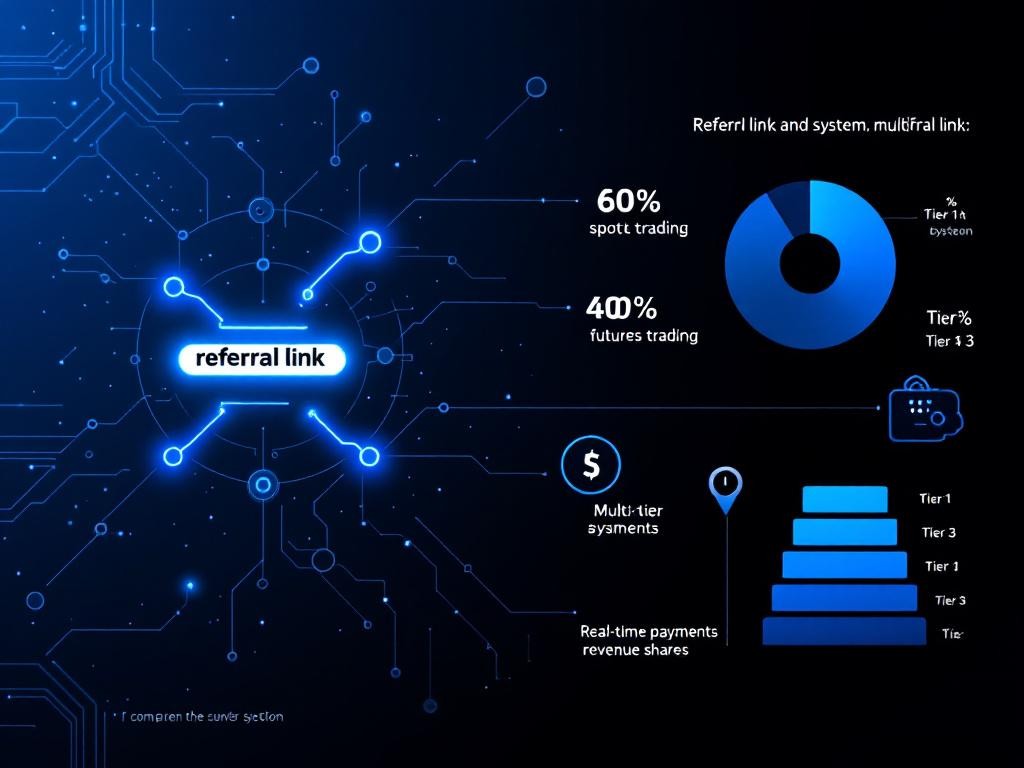
Spot trading commissions range from 20% to 40% of the fees your referrals generate. Futures trading typically offers 10% to 20% commission rates. The lower percentages on derivatives reflect the already-reduced fee structure for these products.

Payment frequency is real-time. Unlike some programs that hold payments for 30-60 days, Binance credits referral earnings almost instantly after the trade settles. 

You can track these micro-payments in your distribution history, watching pennies accumulate into substantial amounts over time.

How Does Binance Referral Code Work?

When a potential user clicks your referral link or manually enters your code during signup, Binance’s system creates a permanent connection between your accounts. 

This happens at the database level the new user’s account profile includes a field marking you as their referrer. 

This relationship is immutable; once set, it cannot be changed or transferred.

Every trade the referred user makes triggers a calculation. Your referral makes a spot trade buying $1,000 worth of Bitcoin. 

The standard trading fee is 0.1%, meaning Binance charges $1 for this transaction. If you’re earning a 20% commission rate, Binance allocates $0.20 to your referral wallet. If your referral received a 10% discount through your code, they paid $0.90 in fees instead of $1, and you earn 20% of that $0.90, which equals $0.18.

Referral earnings accumulate in a separate wallet section. You can find this under “Referral” in the rewards hub. The balance shows in real-time, updating with each qualifying trade your network makes. Withdrawal requires meeting minimum thresholds. For most cryptocurrencies, this is relatively low, often around $10 equivalent.

How Does Binance Referral Program Work?

Binance implements what some call a “2-tier” system. You earn commissions directly from people who use your code (tier 1). 

Some promotional periods or affiliate agreements extend this to a second level, where you earn smaller percentages from the trading activity of people your referrals bring in (tier 2).

Higher-tier affiliates gain access to kickback features. This tool lets you share part of your commission with your referrals as an additional incentive. 

For instance, you might offer to give back 10% of your earnings to anyone who signs up through your code, effectively giving them a larger fee discount while still maintaining profit for yourself.

Binance runs periodic campaigns with boosted rewards. 

During these events, commission rates might temporarily increase to 50% or higher for spot trades. The platform also provides detailed analytics showing total sign-ups, active traders, monthly trading volume, projected earnings, and geographic breakdown of your referrals.

Latest Changes to Binance Referral Program

In March 2024, Binance recalibrated its default commission structure. Standard referral codes that previously offered 20% commission on spot trades saw reductions to a base rate of 10-15% for many regions. However, active referrers who consistently bring in high-volume traders retain higher rates.

Perhaps the most impactful change: both referrers and referees now must complete identity verification to participate in the program. Previously, unverified accounts could earn and receive limited referral benefits. Current policy requires full KYC completion before any referral rewards become accessible.

The automatic fee discount new users receive through referral codes has also evolved. Standard codes typically provide 10% discounts, while premium affiliate codes might offer 15-20%. Some promotional codes during special events have pushed this to 30%, though these are temporary.

How to Enter a Binance Referral ID During Signup

Getting the referral code entered correctly is crucial; this is your only opportunity to link accounts and secure the benefits.

Desktop signup process:

  1. Navigate to the Binance homepage
  2. Click “Register”
  3. Choose email or phone number registration
  4. Enter your credentials and locate the “Referral ID” field
  5. Enter the code exactly as provided these are case-sensitive
  6. Complete security verification and create your account
  7. Verify your email or phone with the code Binance sends

Mobile app registration:

  1. Download the official Binance app
  2. Tap “Register” and select email or phone
  3. Before submitting, tap “I have a referral code”
  4. Enter the code in the field that appears
  5. Complete the verification process

Common mistakes include waiting to add the code later (impossible), mistyping the code, or skipping the field entirely. After registration, confirm the code worked by checking your “Rewards Hub” and verifying your trading fee shows the expected discount.

Which Referral IDs Give Fee Discounts on Binance?

Standard user codes typically provide 10% trading fee discounts and 20% commission for the referrer. 

Affiliate program codes offer 15-20% discounts with 30-50% commission rates for the affiliate. Promotional campaign codes during special events may provide 30% fee discounts plus bonus USDT rewards.

To identify the best code, ask the provider directly about benefits, check posted terms, and compare multiple options based on fee discount percentage, additional bonuses, and support offered. Avoid codes promising unrealistic benefits (50% discounts), third-party websites requiring intermediary signup, or anyone charging payment for access to codes.

Are Binance Referral Bonuses Available in My Country?

Most of Europe, Asia-Pacific, Latin America, Africa, and the Middle East have access to the complete Binance referral program. 

The United States operates Binance.US with its own separate referral program featuring lower commission rates and fewer promotional campaigns.

Binance restricts service in certain countries due to regulatory concerns including China, North Korea, Iran, Cuba, and Syria. Check Binance’s official country restrictions list or contact support to verify your region’s status.

Can I Add a Referral ID After Account Creation?

No, you cannot add a referral ID to an existing Binance account. Referral relationships form during account initialization, and Binance’s architecture doesn’t include functionality to modify this post-creation.

This design prevents abuse like referral shopping and commission disputes.

If you have an unlinked account and want referral benefits, calculate whether starting fresh makes economic sense based on your current balance, expected trading volume, and potential fee savings. For small balances under $100, creating a new account might be worthwhile. For established accounts with significant assets, the disruption likely outweighs referral benefits.

How to Verify Binance Account to Unlock Referral Rewards

Account verification is mandatory for referral program participation. Binance implements tiered verification with Level 1 (Intermediate) providing basic referral access and Level 2 (Advanced) offering full capabilities.

Verification steps:

  1. Log in and click your profile icon
  2. Select “Identification” and choose “Verify”
  3. Enter personal information (name, birthdate, address)
  4. Upload government-issued ID with clear, readable images
  5. Complete facial recognition scan
  6. Wait for review (typically 15 minutes to 48 hours)

Common issues include poor quality documents, facial recognition failures, and information mismatches. Ensure documents are valid, photos are clear, and all information matches exactly. Once verified, check your “Rewards Hub” to confirm referral program activation.

Binance Referral and Affiliate Program Explained

While often used interchangeably, the Referral Program and Affiliate Program represent distinct tracks with different requirements and benefits.

Referral Program (Standard Track):

This track opens automatically to all verified users. No application process exists verification completion grants immediate access.

Key characteristics:

You receive a default referral code based on your user ID. This code remains permanent but you can create custom vanity codes if desired.

Commission rates follow standard tiers:

  • Spot trading: 20% (base rate)
  • Futures trading: 10% (base rate)
  • Margin trading: 20% (base rate)

Payment structure is straightforward. You earn the stated percentage of fees generated by your direct referrals. No second-tier commissions apply unless special promotions are running.

Tools and resources are basic. You get a referral link and code but no advanced tracking, marketing materials, or dedicated support.

Affiliate Program (Advanced Track):

This exclusive program requires application and approval. Binance evaluates candidates based on:

  • Audience size and engagement metrics
  • Content quality and consistency
  • Existing presence in cryptocurrency space
  • Professional presentation and communication

The application requires:

  1. Minimum 10,000 social media followers or equivalent audience reach
  2. Content portfolio demonstrating crypto knowledge
  3. Traffic sources (website analytics, YouTube subscribers, etc.)
  4. Marketing strategy outline
  5. Previous partnership experience (helpful but not mandatory)

Approval rates vary. Binance accepts roughly 30-40% of applications based on historical data, prioritizing quality over quantity.

Enhanced benefits for affiliates:

Commission rate increases:

  • Spot trading: 30-50%
  • Futures trading: 15-30%
  • Additional bonuses for high-volume referrals

Sub-affiliate system access allows you to recruit other affiliates, earning a percentage of their commissions (typically 5-10%).

Marketing support includes:

  • Branded landing pages
  • Banner ads and creative assets
  • Email templates
  • Co-marketing opportunities
  • Priority placement in Binance promotions

Advanced dashboard provides:

  • Real-time conversion tracking
  • Geographic heatmaps
  • Revenue projections
  • A/B testing capabilities for different codes
  • Custom commission structures

Dedicated affiliate manager offers:

  • Strategic guidance
  • Technical support
  • Contract negotiation
  • Conflict resolution

Path to becoming an affiliate:

Start by building an audience. Focus on consistent, valuable content around cryptocurrency trading, market analysis, or investment strategies. Quality beats quantity 10,000 engaged followers outperform 100,000 passive ones.

Establish credibility. Share accurate information, admit mistakes, and prioritize your audience’s interests over quick commissions. Binance values partners who protect their brand reputation.

Document your reach. Compile analytics showing:

  • Monthly unique visitors/viewers
  • Engagement rates (likes, comments, shares)
  • Geographic distribution
  • Demographic breakdown
  • Conversion history if you’ve promoted other products

Prepare a pitch. Explain why partnering with you benefits Binance:

  • What unique value do you offer?
  • How will you promote the platform?
  • What differentiates you from other affiliates?
  • What results can you deliver?

Submit through proper channels. Find the affiliate application on Binance’s website under “Affiliate Program” in the footer. Avoid applying through unofficial third-party sites.

Maintaining affiliate status:

Affiliates must meet ongoing performance requirements:

Minimum monthly referrals (typically 50-100 new sign-ups depending on region). Volume alone isn’t enough Binance tracks active traders who generate fees, not just accounts created.

Content quality standards mean you must maintain professional, accurate information in your promotional materials. Misleading claims or aggressive marketing tactics result in warnings or termination.

Compliance with regulations requires staying current on cryptocurrency advertising rules in your jurisdiction. Affiliates bear responsibility for legal compliance in their marketing efforts.

Response time expectations exist for communication with your affiliate manager. Missing deadlines or ignoring requests signals poor partnership potential.

Earnings potential:

Top Binance affiliates report monthly earnings ranging from $10,000 to over $250,000. These outliers represent the upper 1% who’ve built massive audiences and optimized every conversion touchpoint.

Mid-tier affiliates with 50,000-200,000 followers typically earn $2,000-15,000 monthly. Results depend heavily on audience quality and engagement levels.

Beginning affiliates might earn $500-2,000 in their first six months. Growth requires patience and consistent audience development.

Key Features of Binance

Binance supports over 350 cryptocurrencies with 1,000+ trading pairs including spot trading, margin trading, futures contracts, and options. 

Security infrastructure includes cold wallet storage for 95% of funds, SAFU fund with $1 billion in reserves, and two-factor authentication.

The platform offers Binance Academy for free education, superior liquidity as the world’s largest exchange, and a full-featured mobile application. 

Additional earning products include flexible savings, locked staking, DeFi staking, and liquidity mining all generating potential commission revenue for referrers.

Conclusion

Binance’s referral system represents a legitimate opportunity for both cost savings and passive income generation. 

New traders benefit from reduced fees that compound into significant savings over time. The key is starting correctly entering a referral code during signup locks in benefits that cannot be added later.

Success correlates directly with audience trust. Share honest information about Binance’s strengths and limitations. Focus on helping people become better traders rather than just accumulating sign-ups.

FAQs

Q: How much can I realistically earn? Earnings depend on your network’s trading activity. Most casual referrers with 5-10 active referrals earn $50-200 monthly.

Q: Do referral codes expire? Standard codes remain active indefinitely. Promotional codes typically expire after 30-90 days.

Q: Can I use multiple referral codes? No. Each account links to only one code applied during registration.

Q: Are there withdrawal fees for referral earnings? Earnings follow standard Binance withdrawal fee schedules based on cryptocurrency and network conditions.

References & Resources

https://www.binance.com/en/square/profile/referral-code-f84o9qh3

https://nerdbot.com/2025/12/20/understanding-binance-referral-codes/

The Unexpected Rise of Retro Gaming: Trends, Communities & Digital Nostalgia

In recent years, retro gaming has become more popular than ever. People of all ages are rediscovering classic games from the past. These older games are now making a strong comeback in 2026, and they are not just for nostalgic players. Younger generations are also discovering the fun of retro games. The rise of digital nostalgia is helping retro games find a place in today’s gaming world. Let’s explore why this trend is happening and how classic games are shaping the future of modern gaming.

Why Retro Gaming Is Trending Again

One of the main reasons retro gaming is becoming popular again is nostalgia. Many players enjoy the simple and familiar gameplay of older games. Modern games are often complex, with advanced graphics and complicated controls. Retro games, on the other hand, focus on straightforward gameplay, which many people find comforting.

The simplicity of older games also offers a break from the stress of daily life. In today’s fast-paced world, retro games provide a sense of escape and comfort. They remind players of simpler times, making them feel more relaxed.

Another reason for the rise of retro gaming is the role of emulation. Emulators make it possible to play classic games on modern devices like PCs, smartphones, and even new consoles. This has made it easier than ever for people to enjoy these older games, even if they don’t own the original hardware. Younger generations who never played these games before are now getting the chance to experience them.

Availability of Classic Games on Modern Platforms

Classic games are more accessible than ever. Major gaming companies like Nintendo, PlayStation, and Xbox have made old games available on modern platforms.

For example, Nintendo offers a selection of retro games through its Nintendo Switch Online service. This includes titles from the NES and SNES eras. PlayStation and Xbox also have retro games in their online libraries. Xbox Game Pass and PlayStation Plus allow players to access classic games from previous consoles.

Emulator communities have also played a big role in making retro games available. These communities create and share software that allows players to emulate old consoles, making it easy to play classic games on modern devices.

The Role of Online Communities

The retro gaming community is thriving online. Websites, forums, and social media platforms provide spaces for retro gamers to share their passion and connect with others. Reddit is home to several retro gaming communities, like r/retrogaming, where fans discuss their favorite games and share tips. Discord servers also offer a place for real-time discussions and multiplayer gaming. Gamers can join retro gaming groups to play together and talk about their shared love of classic titles.

YouTube creators have also helped bring retro gaming back into the spotlight. Many channels focus on reviewing old games, offering gameplay walkthroughs, and sharing nostalgic memories. These creators introduce retro games to younger audiences who may not be familiar with them.

Platforms like Game Trellis also help players find retro games. Game Trellis is a resource where gamers can discover classic titles, compare games across different consoles, and read recommendations from other players. This community-driven site makes it easier for retro fans to explore and enjoy the world of classic gaming.

How Retro Games Influence Modern Game Design? 

Retro games have had a lasting impact on modern game design. Today, many game developers are inspired by the pixel art and simple mechanics of older games. Pixel art, once seen as a limitation due to the hardware, is now a popular style in modern games. Indie games like Celeste and Shovel Knight are great examples of how retro-inspired games are becoming hits today. These games use pixel art to create charming visuals and a nostalgic feel while offering exciting new gameplay experiences.

Another way retro games have influenced modern design is through their simpler mechanics. Older games often focused on basic, skill-based gameplay, which has proven to be timeless. Many modern games now adopt a similar approach by keeping mechanics simple, which helps make the games more accessible and fun to play.

Collecting Retro Games: A Growing Hobby

Collecting retro games has become a popular hobby. As more players get interested in classic games, the prices for physical copies of these titles are rising. Rare games from consoles like the NES and SNES are now seen as valuable collectibles, and some can even be sold for hundreds or thousands of dollars.

For many collectors, owning these games is about more than just money. It’s a way to preserve gaming history and celebrate the titles that shaped the industry. Collectors love finding rare games and adding them to their collections, which has led to a rise in online marketplaces.

The Future of Retro Gaming

The future of retro gaming looks bright. Handheld consoles designed for retro games are becoming more popular. These devices let players take their favorite classic games on the go, making it easier than ever to enjoy retro titles anywhere.

Retro-inspired indie games continue to dominate the gaming scene. Developers are constantly creating new games that capture the spirit of old-school gaming while introducing fresh ideas. These games are helping to keep retro gaming alive and exciting for new generations of players.

Efforts to preserve retro games are also growing. Digital preservation, through emulation and re-releases, ensures that older games remain accessible for years to come. Thanks to these efforts, retro games will continue to be enjoyed by both longtime fans and new players.

CONCLUSION

The rise of retro gaming shows no signs of slowing down. Nostalgia, accessibility, and community support are all helping to keep classic games relevant in today’s gaming world. Retro gaming has become more than just a trend—it’s a long-lasting movement that continues to shape the gaming industry.

Whether you’re revisiting an old favorite or discovering a game for the first time, retro gaming offers something for everyone. So, grab your controller and start exploring the classics. Retro gaming is here to stay, and there’s no better time than now to dive into the past and relive the magic of those timeless titles.

Commodityhero – Transforming the Future of Global Commodity Brokerage

Commodityhero is redefining what it means to build a successful career in the global commodities market. As the world’s leading all-in-one commodity brokerage ecosystem, the platform provides a complete suite of training, mentorship, and practical tools tailored to help both beginners and seasoned brokers thrive. With a rapidly expanding global presence and a proven track record of success, Commodityhero stands as the go to destination for anyone looking to enter or scale within the commodities industry.

At the center of this fast growing ecosystem is Jesse Regan, the President of Commodityhero, whose vision has propelled the company into becoming the largest online broker platform for new commodity brokers. Under his leadership, the platform has surpassed an impressive 70,000 users worldwide, a milestone that reflects its effectiveness, credibility, and global demand. Commodityhero has also played a key role in closing major contracts with refineries in Houston and has built a massive book of business in the oil and gas sector, solidifying its influence in one of the world’s most competitive industries.

Unlike traditional programs that focus on outdated theory or surface level training, Commodityhero emphasizes real-world application. The strategies taught throughout the program are battle tested and actively used by top brokers in the industry. These methods empower students not only to understand the markets, but to confidently execute deals, build meaningful relationships, and generate long term success. With a satisfaction guarantee and a strong, engaged community, students receive continuous support as they progress from learners to established brokers.

One of the standout features of Commodityhero is its commitment to career building. The platform doesn’t simply offer knowledge, it provides a structured path to results. By combining mentorship from experienced brokers, interactive training modules, and powerful digital tools, the ecosystem is designed to give every student the edge needed to compete at a global level. Whether someone is starting with zero experience or already closing deals, Commodityhero adapts to their needs, making it one of the most versatile platforms in the commodity trading space.

Looking ahead, Commodityhero is positioning itself to lead the next wave of innovation in the industry. The company is developing advanced tools and software solutions that even major trading firms will rely on to source the commodities they need. This forward-thinking approach ensures that the platform remains on the cutting edge of technology, efficiency, and market intelligence, key advantages for brokers navigating today’s fast-moving commodity landscape.

The learning experience itself is flexible and designed for real-world implementation. Most students complete the core training modules within 4–6 weeks, but the program is entirely self-paced, offering lifetime access to all materials. This allows participants to absorb the content at their own speed while applying the strategies immediately in live market situations.

Commodityhero’s mission is simple: to build successful brokers. And with its powerful ecosystem, expert leadership, and global impact, the platform is well on its way to shaping the future of commodity brokerage for years to come.

7 Best Use Cases for the Best AI Presentation Maker in Business & Education

Ideas are not sold, taught, or shared properly unless they are presented in the right way. PowerPoint Presentations have long been used by businesses and educational institutions to sell, teach, and share information. However, traditionally, it is not easy to create presentations unless you are good at designing. Thankfully, now, any person can create presentations even without designing language. This is where the best AI presentation maker helps many people. 

AI presentation makers have become key tools helping users create professional slide decks quickly with very little effort. From boardrooms to classrooms, AI-powered presentation tools are transforming how people communicate their ideas. Here are the seven best use cases of the best AI presentation maker in both education and business domains:

1. Classroom Presentation for Students

Students often face troubles in designing slides and structuring content. Thankfully, AI presentation makers can simplify these tasks for students. These tools can convert notes or topics given by students into well-organized slides. In turn, students can focus on research and learning rather than formatting. As a result, they can expect more confident and clearer presentations.

2. Lesson Planning for Educators

Professors and teachers can use an AI presentation tool for creating lecture slides quickly. Just by providing details about lesson goals and topics, teachers can generate structured and visually consistent presentations. In turn, they can save their valuable preparation time. Above all, they can expect the slides to be of the best quality.

3. Business Pitch Decks

For entrepreneurs and startups, first impressions mean a lot. The best AI presentation maker can generate pitch decks for them. Above all, the pitch deck generated by the tool will follow logical storytelling frameworks. In turn, the AI platform can make it easier for startups to present their ideas to stakeholders, partners, investors, and venture capitalists professionally.

4. Corporate Training Materials

AI presentation markers are the best tools for creating onboarding and employee training content. Trainers and HR teams in organizations can produce easy-to-follow standardized slide decks that ensure consistency across sessions when bringing down repetitive work.

5. Sales Presentations

Sales teams generally require customized presentations for different clients. With an AI presentation maker, sales teams can engage in rapid editing and generation of sales decks. It means that sales teams can customize messages quickly without having to redesign slides from scratch for different clients.

6. Presentation of Marketing Strategy

Marketing professionals can rely on AI presentation tools to create strategy overviews, performance reports, and campaign proposals. The best AI presentation maker will help with presenting ideas and data clearly. In turn, the tool can support better decision-making and persuasive storytelling.

7. Academic Research Presentations

Postgraduate students and researchers can convert complex studies into digestible presentations. An AI presentation tool can help them organize their findings into structured slides, thereby making it easier for them to present research at thesis reviews, seminars, and conferences.

In addition to these use cases, the best AI presentation marker can be used for last-minute preparations, to prepare e-learning content and online courses, and also for creating internal business reports.

Common Mistakes to Avoid When Using the Best AI Presentation Maker

Slide creation has become more accessible and faster than ever with AI presentation tools. When you choose the best AI presentation maker, you can transform your ideas into presentations that look professional. Above all, you can get the presentations created within minutes. Nevertheless, many people still fail to get the intended results from an AI presentation tool. The reason is not a lack of technology. However, it is because of the common usage mistakes. When you are aware of these pitfalls and ways to avoid them, you can create more engaging, clearer, and professional presentations.

Providing Vague or Incomplete Prompts

One of the common mistakes people make is giving the AI tool very little content. When you enter unclear or broad prompts, the tool can only generate generic content. This can lead to slides that lack relevance and depth.

To avoid this mistake, be specific about your goal, audience, and topic. The best AI presentation maker can work best when you give it clear direction, like key points to cover and the purpose of the presentation.

Overloading Slides with Text

Indeed, an AI presentation maker can generate slides quickly. Nevertheless, it does not mean that all your texts should be part of the slide. Many users make the mistake of leaving long paragraphs untouched. The outcome will be hard-to-read and cluttered slides.

To avoid this mistake, you can use AI-generated content as a draft. Make sure to edit slides with concise text. Also, check whether the platform has generated slides with bullet points. Check whether the slides support your message.

Depending Too Much on Automation

Yes, you are right that AI presentation tools are powerful. Nevertheless, when you rely on them overly, your presentations can feel generic. Do not commit the mistake of not reviewing the slides. Do not assume that the AI would have done everything perfectly.

To avoid this problem, always review and customize the presentations created by the AI platform. Indeed, the best AI presentation maker will save you time. However, your examples, personal insights, and tone can make the presentation engaging and unique.

Overlooking Visual Balance

Another mistake is overlooking spacing and visual alignment. Indeed, the best AI presentation maker will apply design rules automatically. Nevertheless, at times, odd extra elements can disrupt visual balance in your slides.

To avoid this mistake, stick to clean layouts. Also, avoid overcrowding slides with too many colors, icons, and images. Let the design structure of the AI platform guide you, and do not overlook making minimal adjustments.

Skipping Practice and Preparation

Just because AI makes slide creation quick, users, at times, spend less time practicing delivery. This can result in presentations that look great but feel poorly delivered.

To avoid this mistake, use the time that the AI has saved to rehearse for the presentation. When you get familiar with the slides generated by the AI platform, you can achieve confidence, audience engagement, and timing.

In short, if you can use the best AI presentation maker correctly, you can achieve incredible benefits. With the right approach, you can make the best AI presentation maker your powerful partner.

Future Trends of the Best AI Presentation Maker: What to Expect in 2026 and Beyond

As you know, artificial intelligence technology is rapidly evolving. It has entered every field, and it has never failed to revolutionize how presentations are created and delivered. As you move forward, the best AI presentation maker will no longer be used just to generate slides. It will be used as an intelligent assistant to share stories, improve productivity, and engagement. This blog shares the key trends that shape the future of AI-powered presentation-making tools.

Context Awareness Will Contribute to Smarter Ideas

In the future, presentation makers will go beyond fundamental text prompts. Before generating slides, they will better understand presentation goals, audience, and context. Rather than just generating slides from keywords, the tool will adopt structure, depth, and tone based on whether the presentation is for clients, executives, or students. This deeper knowledge will result in a more impactful and relevant presentation with minimal input from users.

Adaptive Editing and Real-Time Collaboration

Collaboration will become more dynamic in the future. The best AI presentation maker will support teamwork in real-time, thereby permitting multiple users to edit and refine the presentation at the same time. AI will suggest improvements on the go. Examples of improvements include recording content for better flow, improving clarity, and simplifying complex slides. In turn, collaboration will become more efficient and quicker.

Personalized Presentation Styles

In 2026, presentation will become a key trend. AI presentation tools will begin to understand user preferences, including layout habits, color choices, and design styles. It means that presentations that the tool makes in the future will automatically match the personal style or brand of the user. In turn, repetitive customization will be reduced. Also, there will be better consistency across all slide decks.

Advanced Multimedia and Visual Integration

In the future, AI presentation makers will integrate visuals more effectively. Rather than depending entirely on text-based slides, AI will suggest relevant charts, icons, images, and even short animations based on content. In turn, presenters can create more visually rich and engaging presentations by engaging in extra design work.

Interactive and Voice-Based Presentation Features

Yet another trend expected is voice-driven presentation creation. Users will be able to share their ideas vocally, and the AI will convert content delivered orally into structured slides. Apart from this, it is expected that interactive features like audience engagement, polls, and Q&A sessions will be part of the best AI presentation makers. In turn, presentations will become two-way experiences.

Deeper Integration with Other Productivity Tools

Also, the best AI presentation maker will integrate with project management platforms, spreadsheets, and documents. With this, users can turn reports, research documents, or meeting notes directly into presentations. This seamless workflow will further bring down manual effort and improve efficiency across tasks.

Responsible and Ethical AI Design

As AI Adoption grows, responsibility and transparency in design will become essential in the future. So, presentation tools will focus on bias reduction, accuracy, and originality. Users can expect better content verification and citation support features to ensure credibility, particularly in professional and educational settings.

How Nushi AI Is Redefining Algorithmic Trading With Multi-Asset EA Bots

From single-strategy automation to modular systems, this article explores the structural evolution of algorithmic trading and the role Nushi AI plays in multi-asset EA bot development.

Algorithmic trading has become an increasingly central component of modern financial markets. Once limited to institutional trading desks and proprietary systems, automation is now widely accessible to market participants seeking consistency, structure, and discipline in execution. As this shift accelerates, the underlying design of algorithmic trading software has become just as important as the strategies it executes.

Among the platforms contributing to this evolution is Nushi AI, a technology-focused provider of automated trading systems that emphasizes infrastructure-first design, asset-specific development, and transparency. Rather than positioning automation as a shortcut, the platform approaches algorithmic trading as a form of software engineering applied to market execution.

This article examines how algorithmic trading systems are evolving, why multi-asset EA bot architectures are gaining relevance, and how Nushi AI approaches automated trading software development through structured system design rather than short-term strategy deployment.

The Evolution of Algorithmic Trading in Modern Markets

Algorithmic trading is no longer a niche practice. Advances in computing power, data availability, and execution infrastructure have transformed automation into a foundational layer of global financial markets. Today, algorithms are responsible for a significant portion of order flow across equities, foreign exchange, commodities, and digital asset markets.

Early automated trading systems were often rule-based scripts designed to execute a single idea under a narrow set of conditions. These systems worked within specific environments but struggled when market regimes changed. As markets became more interconnected and volatile, limitations in these early models became increasingly visible.

Modern algorithmic trading software has shifted toward system-level design. Instead of focusing solely on trade signals, developers now emphasize execution discipline, risk structure, and operational resilience. Automation is viewed less as a predictive tool and more as a mechanism for consistency in decision-making and trade management.

This shift has led to increased interest in platforms that treat automated trading systems as infrastructure rather than standalone strategies.

Understanding EA Bots and Automated Trading Systems

EA bots, short for Expert Advisors, are automated trading software that operate within platforms such as MetaTrader. These systems execute trades based on predefined logic without discretionary human input once deployed.

While EA bots are often discussed as a single category, their underlying design can vary widely. Some bots rely on fixed technical indicators, while others incorporate adaptive logic or multiple execution layers. The quality of an EA bot is determined less by the complexity of its rules and more by how it manages execution, exposure, and operational consistency.

Automated trading systems that function reliably over time typically share several characteristics:

  • Clearly defined execution rules
  • Preconfigured risk parameters
  • Continuous monitoring of market conditions
  • Robust handling of abnormal scenarios

As automation has matured, many developers have moved away from one-size-fits-all EA bots toward systems that are tailored to specific asset classes and market structures.

Structural Limitations of Single-Strategy EA Bots

Single-strategy EA bots are often designed around a specific market behavior or technical pattern. While this approach can be effective under certain conditions, it introduces structural limitations when applied broadly.

Markets differ significantly in liquidity profiles, trading hours, volatility behavior, and reaction to macroeconomic events. A strategy optimized for one instrument may behave unpredictably when applied to another. As a result, systems that attempt to reuse the same logic across multiple markets often encounter instability.

Common limitations of single-strategy EA bots include:

  • Reduced adaptability across market regimes
  • Overexposure to specific conditions
  • Limited scalability across asset classes
  • Increased operational risk during volatility shifts

These limitations have prompted a growing interest in asset-specific and modular system design.

Why Asset-Specific and Multi-Asset Systems Are Gaining Importance

Multi-asset trading does not simply mean trading multiple instruments. It requires systems that account for the structural differences between markets. Forex markets operate continuously with high liquidity, while commodities may experience sharp movements driven by supply dynamics. Digital asset markets trade around the clock with distinct volatility patterns.

Asset-specific EA bots are designed to account for these differences at the system level. Each bot operates independently, with logic calibrated to the characteristics of its target market. This modular approach allows for more precise execution and clearer governance.

Multi-asset platforms that deploy independent systems rather than shared strategies can reduce cross-market risk and improve operational clarity. This architecture also allows users to engage with automation selectively, rather than relying on a single system to manage all exposure.

The Nushi AI Approach to Algorithmic Trading Software Development

Nushi AI approaches algorithmic trading software development as a form of infrastructure engineering. Rather than emphasizing strategy promotion, the platform focuses on system architecture, modular deployment, and transparency.

The platform has been active for several years, with an initial phase of private system development before making its automated trading systems publicly accessible. This development path reflects an emphasis on testing, iteration, and structural refinement prior to broader availability.

An overview of the platform and its technology philosophy can be found on the official Nushi AI website, which outlines its focus on structured system design rather than discretionary execution.

Infrastructure-First Architecture and Modular Design

At the core of the Nushi AI ecosystem is an infrastructure-first design philosophy. Each automated trading system operates as an independent EA bot, built specifically for its target asset class.

Current systems include:

  • A forex-focused EA bot designed for the EUR/USD market
  • A commodities-oriented EA bot developed for gold trading
  • A digital asset EA bot tailored to cryptocurrency market behavior
  • An equity-focused system currently in development

Each bot functions independently, with its own execution logic, parameters, and operational boundaries. This modular structure allows systems to evolve without introducing dependencies that could affect other components.

Access to these systems is managed through the Nushi AI EA bot platform, which serves as the deployment and configuration environment for users exploring the platform’s automated trading systems.

Transparency, Governance, and Third-Party Verification

Transparency is a recurring concern within the automated trading space. Many systems operate as closed environments, making independent evaluation difficult. As a result, third-party verification has become an important element of governance for algorithmic trading software.

Nushi AI utilizes external analytics tools to publish historical system activity. Independent tracking allows observers to review execution behavior without relying solely on internal reporting. While verification does not imply future outcomes, it provides accountability and visibility into system operation.

Historical data associated with one of the platform’s automated systems can be reviewed through the Nushi AI FXBlue verified profile, which illustrates how third-party analytics are used to support transparency.

Automation, Execution Discipline, and Risk Structure

One of the primary advantages of automation lies in execution discipline. Automated trading systems follow predefined rules consistently, without emotional interference or discretionary deviation. This consistency can be particularly valuable in fast-moving or highly volatile markets.

However, automation does not eliminate risk. Instead, it restructures how risk is managed. Well-designed systems define exposure limits, execution thresholds, and operational constraints in advance. These parameters act as guardrails rather than predictive tools.

Infrastructure-focused platforms emphasize how systems behave under varying conditions rather than how they perform under ideal scenarios. This perspective aligns automation with process control rather than outcome optimization.

Market Positioning of Infrastructure-Style Algorithmic Trading Platforms

As algorithmic trading becomes more accessible, differentiation increasingly depends on system design rather than marketing claims. Platforms that position themselves as infrastructure providers often appeal to users who value clarity, governance, and long-term development.

Nushi AI occupies a space between institutional-style system engineering and advanced retail access. By focusing on modular architecture, asset-specific development, and transparency practices, the platform reflects broader trends in trading technology.

This positioning may resonate with market participants seeking structured automation rather than turnkey solutions.

Frequently Asked Questions About Nushi AI and Algorithmic Trading

What is Nushi AI

Nushi AI is a technology-focused platform that develops algorithmic trading software and automated EA bots across multiple asset classes. The company focuses on structured system design, modular architecture, and transparency rather than discretionary or signal-based trading. More information about the platform and its approach is available on the official Nushi AI website.

How does Nushi AI algorithmic trading software work

Nushi AI algorithmic trading software operates through automated EA bots that execute trades based on predefined system logic. Once deployed, these systems manage execution according to their internal rules without manual intervention. The software is designed to support consistent execution rather than predictive decision-making.

What are EA bots in algorithmic trading

EA bots, or Expert Advisors, are automated trading programs that run within trading platforms such as MetaTrader. They execute trades based on coded rules and parameters. In the case of Nushi AI, each EA bot is developed for a specific asset class and operates independently within the broader system architecture.

What does multi-asset trading mean in automated systems

Multi-asset trading refers to the use of separate automated systems across different markets, such as forex, commodities, and digital assets. Rather than applying a single strategy universally, multi-asset platforms like Nushi AI deploy asset-specific EA bots designed for the structure and behavior of each market.

Why is transparency important in algorithmic trading software

Transparency allows users and observers to understand how automated trading systems operate over time. Independent verification and third-party analytics provide visibility into execution behavior and system activity. Nushi AI supports transparency through external tracking tools such as its publicly available FXBlue verification profile.

Who typically uses algorithmic trading platforms like Nushi AI

Algorithmic trading platforms are generally used by traders and investors who are familiar with financial markets and automation concepts. These platforms are designed for users seeking structured execution tools rather than discretionary trading or guaranteed outcomes.

Does algorithmic trading remove market risk

No. Algorithmic trading does not remove market risk. Automated systems operate within predefined parameters and remain subject to market conditions, volatility, and execution factors. Automation primarily changes how trades are executed, not the underlying risks of financial markets.

How is Nushi AI different from single-strategy EA bots

Nushi AI differs from single-strategy EA bots by using a modular, infrastructure-first approach. Each automated trading system is developed for a specific asset class and operates independently. This design allows systems to be aligned with market structure rather than relying on one strategy across multiple instruments.

Closing Perspective

Algorithmic trading continues to evolve from isolated strategies into system-level infrastructure. As markets grow more complex, the design principles behind automated trading software have become increasingly important.

By focusing on modular architecture, asset-specific EA bots, and transparency practices, Nushi AI reflects a broader shift toward infrastructure-driven automation. Rather than positioning automation as a promise, the platform frames it as a tool for structured execution within modern financial markets.

For market participants interested in understanding how algorithmic trading systems are built and governed, this infrastructure-first approach offers a perspective aligned with the ongoing evolution of trading technology.

Risk Disclosure

Algorithmic trading and automated trading systems involve market risk. Financial markets are subject to volatility, liquidity conditions, and external factors that may affect execution. Automation does not eliminate risk, and past system behavior does not indicate future outcomes. This article is provided for informational and educational purposes only and does not constitute financial advice or a recommendation to trade.

Company Name: Nushi AI
Website: https://nushi.ai
Email: info@nushi.ai

Key Market Themes to Watch in 2026: AI, Infrastructure, and Emerging Markets

2026 is shaping up to be an exciting year for the global economy. As global inflation eases to around 3 percent for the new year, down from 4.2 percent in 2025, pressure on households and businesses is expected to ease. With prices rising at a slower rate, major economies are likely to cut interest rates, helping boost consumer spending and opening doors to new investment opportunities.  

Landmark Markets has compiled information from leading industry and economic sources, highlighting key trends across technology, infrastructure, commodities, and emerging markets. Economic growth in developed regions remains modest, with the United States growing around 2 percent and the Eurozone about 1 percent. In comparison, emerging markets show stronger momentum, led by India at approximately 6.6 percent growth and Saudi Arabia at around 4 percent

At the same time, AI investment is set to exceed $1,000 billion by 2028 and government capital expenditure (CAPEX) programs focus on energy and infrastructure. 

Inflation & Interest Rates 

The International Monetary Fund (IMF) expects global growth of 3.1 percent in 2026, up from 3.0 percent in 2025, while inflation is projected to ease to 3.6 percent from 4.2 percent. 

Data tracked by Landmark Markets shows that as inflation moves closer to this range, central banks typically cut interest rates to encourage spending. Lower interest rates make bank loans cheaper, supporting consumer spending and business expansion. 

AI & Technology Expansion 

Artificial intelligence is becoming one of the biggest investment drivers globally. The CAPEX for this sector increase is from about $150 billion in 2023 to an expected $1,000 billion by 2028. 

Reports mention that OpenAI plans over 25GW of new data-center capacity, representing more than $1,000 billion in investment, while Nvidia’s Blackwell AI chips are sold out for the next 12 months.  

Infrastructure Trends 

Worldwide infrastructure investment reflects a growing commitment to heavy spending on critical infrastructure and key industries. SpaceX has invested over $10 billion in building the Starlink network in Texas and Washington. McKinsey estimates that $106,000 billion in infrastructure investment will be needed globally from 2026 to 2040.  

Landmark Markets reports that rising debt and inflation are pushing governments to rely more on private partnerships and models like the Regulated Asset Base (RAB). Infrastructure investment will continue, increasingly funded by both public and private capital which will be used across sectors such as construction, energy, and manufacturing. 

Emerging Markets Spotlight 

Emerging markets are set to drive more global growth, with India and Saudi Arabia expanding faster than developed economies, while China’s growth is expected to moderate in 2026.

The World Bank has raised India’s 2026 growth forecast to 6.5 percent, driven by strong domestic demand and a recovering rural economy, while India’s young population and vibrant startup culture as key long-term growth drivers.

Saudi Arabia’s GDP expected is to rise about 4–4.5 percent in 2026, driven by non-oil growth and Vision 2030 projects such as NEOM, the Red Sea Project, Qiddiya, and Diriyah.

According to CNBC, China’s GDP growth is expected to slow to 4.2 percent in 2026 from 4.8 percent in 2025, the World Bank says, due to weaker exports and property-sector stress.

Copper: A Key Clean-Energy Metal 

Landmark Markets report that copper is becoming critical to the clean-energy transition, with demand from EVs, renewables, and power networks expected to lift its clean-energy share from 3 percent to 16 percent by 2030, while the global copper market grows at a CAGR of 6.5 percent. 

Conclusion 

Improving financial conditions are setting the stage for a shift in global markets, with modest growth in developed economies increasingly overshadowed by emerging regions. Faster growth in India and Saudi Arabia reflects this shift and is shaping a new phase of global investment in 2026. 

About Us

Landmark Markets is an online trading broker committed to providing global financial markets accessible, transparent, and easy to navigate. We offer access to a wide range of assets—including stocks, indices, commodities, and currencies through CFD trading. Built on customer-first values, Landmark Markets enable traders of all levels of experience to trade with confidence and clarity as they pursue their financial goals. 
 
Note: This article compiles insights from leading industry and economic sources, including news outlets, financial institutions, and market research reports such as BBC, Mastercard, Goldman Sachs, Tom Tungus, GIIA, DD News, CNBC, and Devere Group. Landmark Markets curated these insights to provide an overview of the key market themes shaping 2026.  

Disclaimer: This article is for informational purposes only and does not constitute financial, investment, or legal advice. Readers should consult professional advisors and conduct their own market research before making any investment decisions. Landmark Markets LLC is incorporated under the laws of Saint Vincent and the Grenadines and registered with the Financial Services Authority, and Landmark Capital Markets Ltd is incorporated under the laws of Saint Lucia and registered with the Saint Lucia International Financial Centre Authority. Services may be restricted by certain jurisdictions. For full T&C, visit landmarkmarkets.com. 

Media Contact 

Communications Team – Landmark Markets  

Email: info@landmarkmarkets.com  

Phone: +44 800 0885 134  

Address: Euro House, Richmond Hill Road, Kingstown, Saint Vincent and the Grenadines

Letting Go Is A Form Of Growth

Letting go often gets framed as giving up, walking away, or losing something important. From the outside, it can look like failure or retreat. From the inside, though, letting go is usually a quiet decision to stop carrying what is no longer helping you move forward. It is less about what you lose and more about what you make room for. Many people come to this realization through pressure rather than choice. 

A relationship stops working. A job no longer fits. A financial situation becomes overwhelming, and exploring options like debt relief becomes part of releasing stress that has been building for years. In moments like these, letting go is not weakness. It is self-respect showing up late but determined. Growth rarely comes from holding tighter. It comes from knowing when your grip is costing you more than it gives back.

Letting Go as an Act of Energy Management

One way to look at letting go is through energy rather than emotion. Every commitment, worry, belief, or habit takes energy to maintain. When something stops giving a return on that energy, it quietly drains you. Letting go is how you rebalance. It is choosing not to spend emotional effort on what no longer aligns with who you are becoming. 

This does not require dramatic exits or grand statements. Sometimes it is as simple as deciding not to replay a conversation in your head anymore or not chasing closure that will never come. When your energy is no longer scattered, growth has space to happen.

Why Holding on Can Feel Safer Than Change

Holding on often feels safer than letting go because it is familiar. Even painful situations have known rules. Letting go introduces uncertainty, and the brain is wired to be cautious around the unknown. Psychology research shows that humans tend to overvalue what they already have, even when it is not serving them. 

The American Psychological Association explains how fear of change and loss can keep people stuck in unhelpful patterns. Understanding this response can reduce self-judgment and make the decision to let go feel more compassionate rather than forced. Recognizing that discomfort is part of the process helps normalize it. Feeling uneasy does not mean you are making the wrong choice.

Acceptance Is Not the Same as Approval

A common misunderstanding about letting go is the idea that acceptance means approving of what happened. In reality, acceptance simply means acknowledging reality as it is right now. You can accept that something ended without liking how it ended. 

You can accept that a situation changed without agreeing that it was fair. Acceptance stops the internal argument with the past, which is where much of the exhaustion lives. Once you stop arguing with what already happened, your attention shifts naturally toward what comes next.

Trusting the Version of You That Will Adapt

Letting go requires trust, but not in a perfect outcome. It requires trust in yourself. Specifically, trust that the future version of you will know how to adapt, learn, and respond. This is a subtle but powerful shift. Instead of needing certainty about what will happen, you trust your ability to handle whatever does happen. That trust builds resilience.

Research from the Greater Good Science Center highlights how self-compassion and adaptability support long term well-being during transitions. Their work shows that people grow not by avoiding difficulty but by responding to it with flexibility and care. 

Letting Go Creates Space for the Authentic Self

Holding on often involves performing a role that no longer fits. You stay because it is expected. You keep trying because it is who you have always been. Over time, this creates distance between your outer life and your inner values.

Letting go closes that gap. It allows you to act in ways that reflect your current priorities rather than past versions of yourself. This alignment feels like relief, even when it comes with grief. Growth here is not about becoming someone new. It is about returning to what feels true.

The Role of Courage in Quiet Decisions

Courage is often associated with bold action but letting go usually requires a quieter kind. It takes courage to stop explaining yourself. It takes courage to disappoint others in order to stay honest with yourself. It takes courage to step away without knowing exactly where you are headed. These decisions rarely get applause. They often happen privately, without validation. That does not make them small. It makes them deeply personal. Every time you choose release over resentment, you practice courage.

Renewal Comes After Release

Growth is not always immediate after letting go. There is often a pause, a neutral space where nothing new has fully formed yet. This can feel uncomfortable, but it is a necessary part of renewal. Think of it as fallow ground. The old crop has been cleared, but the next one is not planted yet. Rest, reflection, and recalibration happen here. Resisting this phase by rushing into replacements can recreate the same patterns you just released. Allowing it gives growth a stronger foundation.

Letting Go Is a Repeated Practice

Letting go is not a single moment. It is a practice you return to again and again. New attachments form. Old habits resurface. Life changes. Each time you release what no longer fits, you strengthen your ability to trust yourself. You learn that loss and growth can coexist. You learn that freedom often arrives quietly, disguised as an ending. Letting go is not about erasing the past. It is about carrying forward only what helps you live with more clarity, compassion, and authenticity. Over time, that choice becomes one of the most powerful forms of growth you can make.