Why Rural Specialty Retailers Lose Card Processing Overnight And How They Get It Back

A gun shop in a small Texas town can run clean books for eleven years, never miss a deposit, and still wake up on a Tuesday to an email saying its payment account has been closed. No fraud. No chargeback spike. Just a line in a terms-of-service document that says the processor does not support that category of business. For the owner, it means the card reader at the counter stops working before the morning coffee is finished.

This happens constantly to the kinds of businesses that anchor main streets across the Hill Country and rural Central Texas: firearms dealers, ammunition sellers, gunsmiths, CBD shops, sweepstakes and promotional operators, nutraceutical sellers, and a long tail of trades that mainstream platforms have decided are more trouble than they are worth. Understanding why it happens, and what a durable setup looks like, is worth more to these owners than any marketing advice.

“High-risk” is a banking label, not a judgment about you

The phrase gets taken personally, and it should not be. When an acquiring bank calls a merchant category high-risk, it is making a narrow underwriting statement: this type of business carries above-average exposure to chargebacks, regulatory change, reputational scrutiny, or future liability that outlives the transaction. A firearms retailer may have a near-perfect dispute history and still fall into that bucket because of interstate shipping rules and the political weather around the product. A CBD retailer lands there because the legal status of hemp-derived products has shifted repeatedly and varies by state. A sweepstakes operator lands there because prize-based promotions sit close to categories banks treat with extreme caution.

None of that is about whether the owner is honest. It is about where a bank’s risk committee is willing to sit. University treasury guidance on how merchant accounts and credit card acceptance actually work lays out the same underlying mechanics any small business is subject to: a merchant account is a line of credit extended against future sales, and the party extending it decides what exposure it will tolerate. Once you see it as credit rather than a utility, the sudden shutdowns make more sense.

Why aggregators are the wrong tool for these categories

Stripe, Square, and PayPal are extraordinary products for a coffee shop or a freelance designer. They work because they skip traditional underwriting: you sign up in four minutes and start taking cards under a shared merchant identification number alongside millions of other sellers. That speed is the whole trade-off. Because thousands of businesses share one risk pool, the platform protects the pool by writing broad prohibitions into its policies and enforcing them automatically.

The practical consequences for a specialty retailer are brutal:

  • Termination arrives without a hearing. The decision is a policy match, not a dispute you can argue.
  • Funds can be held. Reserves of 90 to 180 days on settled transactions are common in platform terms, which is devastating for a business carrying inventory.
  • Reinstatement is rare. Once a category flag is on the account, the same flag follows new applications tied to the same owner and tax ID.
  • There is no underwriter to call. The relationship was built to avoid human review, so there is nobody to explain your FFL compliance record to.

Owners frequently try to work around this by describing the business vaguely at signup: a gun shop files as “sporting goods,” a CBD retailer as “wellness.” That is the worst available option. Miscoding a merchant category is a terms violation that turns an ordinary closure into a listing on the MATCH file, the card networks’ shared database of terminated merchants. A MATCH listing typically sits there for five years and makes legitimate underwriting far harder.

What a stable setup actually looks like

The alternative is a dedicated merchant account: your own MID, underwritten by an acquiring bank that knowingly accepts your category. It takes longer to open, usually days rather than minutes, and it asks for more paperwork. In exchange you get a relationship with a bank that already knows what you sell and will not be surprised by it later.

Redundancy at the processing layer

Established high-risk merchants rarely run on a single account. Load balancing across multiple MIDs spreads volume so that no single account carries a dispute ratio hot enough to trigger a monitoring program, and so that a problem with one bank does not take the register offline. It is the same logic as a second internet circuit or a generator behind the shop: you build the redundancy before you need it, not during the outage.

Chargeback discipline

Card networks watch dispute ratios closely, and the thresholds that trigger remediation programs are low, measured in fractions of a percent of monthly transactions. Keeping ratios down is mostly operational: clear descriptors on statements so customers recognize the charge, saved delivery confirmation, written records of the identity and compliance checks a dealer already performs, and representment filed quickly with that documentation attached. Processors who specialize in these verticals treat dispute defense as part of the service rather than a self-service web form.

Pricing you can read

High-risk accounts cost more than flat-rate aggregators, and the honest framing is that the premium buys stability. What matters is being able to see the components: interchange, assessments, the processor’s margin, gateway fees, and any reserve terms. Ask for the reserve structure in writing before signing, because a rolling reserve is the single line item most likely to strain cash flow.

Where a specialist processor fits

Because the obstacle is underwriting appetite rather than paperwork, the useful providers are the ones that approached these categories deliberately. Specialists such as 2accept build merchant accounts for exactly the businesses mainstream platforms reject or terminate, with dedicated programs for FFL firearms dealers, CBD retailers, and sweepstakes operators, plus gateway integration, chargeback defense, and multi-MID load balancing for merchants that want redundancy from day one. The value of that kind of arrangement is unglamorous and entirely practical: the bank knows what you sell before it says yes, so your category stops being a surprise waiting to surface in a compliance review two years from now.

Practical steps for an owner reviewing their setup

1. Read the acceptable use policy of your current processor and find your product in it. If you cannot find clear permission, assume you are exposed.

2. Check that your merchant category code matches what you actually sell. Correct it proactively rather than waiting for a review.

3. Pull your last twelve months of dispute data. Know your ratio before an underwriter calls it out.

4. Assemble an underwriting file: licenses, processing statements, bank statements, product documentation, and your refund and shipping policies.

5. Open a second account before you need it. A dormant backup MID is cheap insurance against a frozen deposit cycle.

6. Keep an offline fallback, such as a terminal that can run on a cellular connection, so a network problem does not become a closed-for-the-day sign.

The wider local stake

These shops are not abstractions. A gunsmith, a feed-and-outdoor store, a small CBD retailer, and a promotions company running a county fair sweepstakes all employ neighbors and pay local taxes. When one of them loses card acceptance for a month, the loss shows up in payroll and inventory, not in a quarterly report somewhere else. That is part of why community investment work, including the kind supported through the GVTC Foundation’s grants to local organizations, matters alongside the infrastructure itself: durable connectivity and durable banking access are both prerequisites for a rural business to compete with online sellers.

The owners who come through a termination intact are the ones who treated payments as infrastructure rather than a settled question. They knew their dispute ratio, kept their documentation current, held a second account in reserve, and worked with an underwriter who had already said yes to their category with full knowledge of it. That preparation takes a few hours a quarter. The alternative is finding out on a Tuesday morning that the card reader has stopped working and nobody is picking up the phone.


How Industrial Drying Technology Shapes Equipment Investment Cycles

Manufacturing sectors from pharmaceuticals to specialty chemicals depend on precision drying equipment to meet product specifications, but the capital requirements and lead times for new industrial dryers often strain budgets and delay production schedules. Understanding how drying technology fits into broader equipment procurement strategies can help facility managers balance immediate operational needs against long-term financial planning.

The Role of Drying Equipment in Process Manufacturing

Industrial dryers remove moisture or solvents from wet solids, slurries, and pastes to produce stable, free-flowing products. Common types include rotary dryers, fluid bed dryers, spray dryers, tray dryers, and vacuum dryers. Each technology suits specific materials and throughput requirements. A pharmaceutical manufacturer handling heat-sensitive active ingredients might require a vacuum tray dryer operating below 60°C, while a chemical plant processing bulk inorganic salts could deploy a direct-fired rotary dryer handling several tonnes per hour.

Material properties dictate technology selection. Crystalline solids with defined particle size distributions often perform well in fluid bed systems, where heated gas suspends particles to maximise heat transfer. Viscous pastes or filter cakes demand different approaches such as paddle dryers or thin-film dryers that mechanically spread material across heated surfaces. The choice affects not only drying efficiency but also product quality, energy consumption, and downstream handling characteristics.

Capital Investment Pressures in Equipment Procurement

New industrial drying systems represent substantial capital outlays. A stainless steel fluid bed dryer for pharmaceutical applications can exceed half a million pounds, while large-scale spray dryers for food or chemical processing may reach several million. Lead times compound the challenge—custom-engineered equipment often requires twelve to eighteen months from order to commissioning, during which production expansion plans remain on hold.

Financial reporting cycles add another dimension. Publicly traded equipment manufacturers face quarterly disclosure requirements that influence investor sentiment and stock performance. For instance, CVD Equipment Corporation’s scheduled financial results announcements provide transparency into sector performance, but they also underscore the scrutiny manufacturers face regarding order backlogs, revenue recognition, and market demand. These dynamics affect supplier capacity allocation and pricing strategies that ultimately flow through to end users evaluating capital projects.

Plant managers weighing expansion options must reconcile engineering requirements with finance department constraints. A new dryer installation involves not just the equipment purchase but also foundation work, utility connections, control system integration, operator training, and validation protocols. Total installed costs often double the base equipment price, and return-on-investment calculations must account for opportunity costs during extended lead times.

Alternative Procurement Strategies

Facilities facing urgent capacity needs or budget limitations increasingly consider pre-owned equipment as a viable alternative. Surplus industrial dryers become available when plants close, production lines shift to different technologies, or capacity upgrades leave older units redundant. A used industrial dryer from a reputable broker can deliver functional equipment at substantially lower capital cost and dramatically reduced lead times, often measured in weeks rather than months. Buyers benefit from immediate equipment availability while maintaining budget flexibility for other plant improvements or working capital needs.

The secondary market spans a range of conditions from lightly used units requiring minimal refurbishment to equipment needing comprehensive rebuilds. Reputable suppliers provide detailed condition assessments, mechanical inspections, and documentation of materials of construction. Stainless steel, Hastelloy, and titanium dryers from pharmaceutical or specialty chemical applications often show minimal wear due to clean process environments and careful maintenance histories. Equipment can be reconditioned, re-certified to current pressure vessel standards where applicable, and delivered with performance guarantees that reduce procurement risk.

Technical Considerations in Equipment Selection

Whether procuring new or pre-owned equipment, engineers must match dryer characteristics to process requirements. Heat sensitivity determines maximum allowable temperatures. A spray dryer processing milk powder operates with outlet temperatures around 90°C to prevent protein denaturation, while a rotary dryer handling mineral concentrates might reach 600°C. Residence time matters—some products require seconds of exposure in flash dryers, others need hours in batch tray dryers.

Material compatibility governs construction materials. Corrosive feedstocks demand Hastelloy or titanium rather than standard stainless steel grades. Abrasive solids require hardened surfaces or replaceable wear components. Explosive dust hazards necessitate nitrogen purging systems, grounded construction, and explosion-proof electrical classifications. Regulatory compliance adds further constraints—pharmaceutical dryers must meet cGMP standards with validated cleaning procedures, while food-grade equipment requires sanitary design and FDA-approved surface finishes.

Integration with Upstream and Downstream Operations

A dryer functions as one node in a process sequence. Upstream filtration or centrifugation determines feed moisture content, affecting dryer sizing and energy consumption. Downstream milling, blending, or packaging operations expect material with specific moisture content and particle characteristics. Batch dryers require surge capacity in receiving hoppers, while continuous dryers demand steady feed rates maintained by level controls and metering devices.

Energy integration opportunities should inform equipment selection. Waste heat from exothermic reactions or utility systems can provide low-cost thermal energy, but requires heat exchangers compatible with available temperature levels. Solvent recovery systems on dryer exhausts may offset operating costs when processing organic solvents, but add capital expenditure and complexity. Life-cycle cost analysis should weigh these trade-offs against initial purchase price.

Understanding Reactor-Dryer Process Sequences

Many chemical processes discharge wet solids from batch or continuous reactors that require subsequent drying. The reactor defines the chemical transformation—crystallisation, precipitation, polymerisation, or other reactions—while the dryer completes the physical separation to produce a marketable solid product. Reactor design principles establish the foundation for understanding how reaction conditions influence downstream separation requirements, including particle morphology, moisture content, and thermal stability that directly affect dryer selection and sizing.

A batch agitated reactor producing a precipitated solid might discharge a slurry containing twenty to forty percent solids by weight. Filter presses or centrifuges reduce moisture to fifty to sixty percent before the wet cake enters a dryer. Crystalline products from the reactor may exhibit specific polymorphic forms sensitive to temperature and humidity during drying, constraining allowable process conditions. Coordination between reaction engineering and drying technology ensures the entire process sequence delivers target product specifications without reprocessing or quality failures.

Lifecycle Management and Equipment Reliability

Industrial dryers in continuous service require preventive maintenance programmes to sustain performance and avoid unplanned downtime. Rotating equipment such as fans, airlock valves, and agitators need regular inspection and component replacement. Heated surfaces accumulate product deposits that reduce heat transfer efficiency and may cause localised overheating. Scheduled cleaning intervals based on operating experience prevent productivity losses and maintain product quality.

Thermal cycling induces mechanical stresses, particularly in equipment handling temperature differentials between heated zones and ambient structures. Expansion joints, flexible connections, and proper support arrangements accommodate movement without generating excessive loads. Insulation systems protect personnel, reduce heat losses, and maintain stable internal temperatures, but deteriorate over time and require periodic replacement. Comprehensive documentation of maintenance activities, operating parameters, and any modifications supports regulatory compliance and preserves equipment value.

Balancing Technical and Financial Objectives

Effective equipment procurement aligns engineering specifications with financial realities. A plant requiring additional drying capacity can evaluate multiple scenarios: purchasing new equipment sized for future growth, acquiring smaller pre-owned units to meet immediate needs, leasing arrangements that preserve capital, or tolling production through third-party processors. Each option carries distinct implications for capital deployment, operating flexibility, and strategic positioning.

The optimal path depends on factors including production volume trajectory, product mix stability, available capital, risk tolerance, and competitive dynamics. Facilities in mature markets with stable demand might favour pre-owned equipment to minimise investment while maintaining acceptable performance. Companies in growth phases targeting expanding markets may justify new equipment investments despite higher costs and longer timelines. No single approach suits all circumstances—rigorous analysis of technical requirements, financial constraints, and business objectives guides sound decision-making that supports sustainable operations and competitive positioning.

How Data Privacy Regulations Are Reshaping Chemical Equipment Procurement

Chemical manufacturers face an unexpected compliance challenge: data privacy laws now extend into capital equipment purchasing. When procurement teams source reactors, mixers, or process vessels, they generate digital trails containing supplier information, pricing negotiations, technical specifications, and operational data. Under regulations like the California Consumer Privacy Act, companies must protect this information throughout the equipment lifecycle, from initial RFQs through decommissioning.

The intersection of industrial procurement and privacy compliance creates operational friction that few chemical engineers anticipated five years ago. Yet the penalties for mishandling supplier data, employee records embedded in procurement systems, or technical documentation containing proprietary processes can reach millions of dollars. Smart manufacturers are redesigning their equipment sourcing workflows to satisfy both engineering requirements and legal mandates.

Privacy Obligations in Equipment Transactions

Every equipment purchase generates personally identifiable information. Vendor contacts, sales representatives, internal approval chains, maintenance technician credentials, and equipment operator training records all fall under privacy protection. When a pharmaceutical plant requests quotes for a 500-gallon glass-lined reactor, the procurement file accumulates names, email addresses, phone numbers, and sometimes sensitive commercial terms tied to individual negotiators.

California’s privacy law, detailed in resources like the CCPA compliance framework, requires businesses to disclose what personal data they collect and allow individuals to request deletion. For procurement departments, this means maintaining clear records of who accessed supplier bids, which employees reviewed technical drawings, and how long negotiation records remain in document management systems. The complexity multiplies when sourcing equipment internationally, where GDPR or other regional laws may apply simultaneously.

The challenge intensifies with used or surplus equipment. Pre-owned reactors often come with maintenance logs, calibration records, and operational histories that contain the names of previous owners’ employees. A batch reactor purchased from a decommissioned facility might include service reports signed by technicians, inspection certificates with engineer names, or commissioning documents bearing project manager signatures. Buyers inherit privacy obligations for this historical data unless it’s properly scrubbed before transfer.

Material Selection and Compliance Documentation

Corrosion-resistant alloys present a specific documentation challenge. High-performance materials like Hastelloy C-276 require material certifications, mill test reports, and heat treatment records that often contain the names and signatures of quality control personnel, metallurgists, and third-party inspectors. These documents travel with the equipment and must be retained for compliance, creating a conflict between engineering necessity and privacy protection.

Chemical processors cannot simply redact all names from material certificates. Traceability requirements in pharmaceutical manufacturing demand unbroken chains of custody. FDA inspectors expect to see who certified a reactor’s construction materials and when. The solution requires selective anonymization: retaining certifying body names and reference numbers while removing individual inspector identities where regulations permit, then storing the original documents under access controls that limit exposure.

Sourcing Strategies That Minimize Privacy Risk

Forward-thinking procurement teams are restructuring their equipment sourcing to reduce privacy exposure from the outset. Instead of collecting detailed personal information from dozens of potential suppliers, they work with established intermediaries who handle vendor relationships under their own privacy policies. This approach proves particularly effective when sourcing used process equipment, where the seller pool is fragmented and tracking individual vendor compliance would be prohibitively expensive.

Manufacturers needing batch reactors, hydrogenation vessels, or specialized processing equipment increasingly turn to established brokers rather than canvassing dozens of individual sellers. A global buyer and seller of used process plants acts as a privacy buffer, maintaining their own vendor relationships and data handling procedures while presenting buyers with pre-qualified equipment options. This consolidation reduces the number of third parties a manufacturer must audit for privacy compliance, simplifies data processing agreements, and limits the personal information flowing through internal procurement systems.

The cost advantages of surplus equipment—often 40 to 50 percent below new pricing—make this approach financially attractive beyond the compliance benefits. Delivery schedules compress from twelve months to eight weeks in many cases, and buyers avoid the privacy complications of managing relationships with multiple fabricators, each operating under different data protection standards. The intermediary absorbs the complexity of international privacy law variations when sourcing globally.

Digital Systems and Access Controls

Modern procurement platforms create permanent digital records of every interaction. Email chains discussing reactor specifications, shared drives containing supplier proposals, and ERP systems tracking purchase orders all store personal data that privacy laws now regulate. Chemical manufacturers must implement role-based access controls ensuring that only employees with legitimate business needs can view supplier contact information or negotiation histories.

The technical challenge lies in balancing accessibility with protection. Engineers need quick access to equipment documentation during troubleshooting, but privacy rules limit how long personal information can be retained. Some companies now maintain two parallel systems: a fully detailed procurement archive with strict access controls and retention policies, and a sanitized technical library containing only the specifications, drawings, and performance data that engineers need for operational decisions.

Vendor Management and Data Processing Agreements

Every equipment supplier becomes a data processor under privacy law, requiring formal agreements that specify how personal information is handled. A fabricator building a custom reactor vessel will collect employee names for site access, safety training records for installation teams, and contact details for project coordination. Without proper data processing agreements, the buyer assumes liability for the vendor’s privacy practices.

Procurement departments now require standard privacy clauses in equipment purchase agreements. These clauses specify data retention limits, require suppliers to implement reasonable security measures, mandate breach notification within defined timeframes, and establish liability for mishandling personal information. For purchases below certain thresholds, some manufacturers accept supplier standard terms if they meet minimum privacy requirements, but major capital equipment investments demand negotiated data protection provisions.

Training and Cultural Shifts

Engineers accustomed to sharing equipment specifications freely now must consider privacy implications before forwarding documents. A maintenance supervisor who emails a reactor service report to a colleague at another facility might inadvertently share personal information belonging to the service technician who wrote it. These scenarios require workforce education, not just policy updates.

Effective training programs use specific scenarios: What happens when a supplier sends an unsolicited quote containing their entire sales team’s contact information? How should procurement handle requests to delete personal data from equipment files that must be retained for regulatory compliance? When can historical maintenance records be shared with a new equipment buyer? Addressing these questions builds practical competence rather than abstract compliance knowledge.

Building Sustainable Procurement Practices

Privacy compliance in equipment procurement is not a temporary regulatory burden. As data protection laws expand globally and enforcement intensifies, chemical manufacturers must embed privacy considerations into standard operating procedures. This means designing procurement workflows that minimize personal data collection, implementing technical controls that restrict access appropriately, and choosing suppliers and intermediaries who demonstrate robust data protection practices.

The manufacturers adapting most successfully treat privacy as a design constraint similar to safety or quality requirements. They ask what personal information is truly necessary before collecting it, anonymize historical data when traceability allows, and build vendor relationships with partners who understand shared compliance obligations. These practices reduce legal risk while often streamlining procurement operations, eliminating unnecessary data collection steps that added little value to equipment selection decisions.

Chemical processing will continue requiring sophisticated reactor systems, specialized alloys, and complex process equipment. The procurement methods may evolve, but the fundamental need for reliable, well-documented capital equipment remains constant. Companies that integrate privacy protection into their equipment sourcing strategies today position themselves for sustainable operations as regulatory scrutiny increases and data handling expectations mature across industrial sectors.

BrandingBuzz.Agency Introduces Flexible Press Release Distribution Options for Businesses and Marketing Agencies

Distribution packages provide qualifying business announcements with opportunities for publication across financial, national, regional, and industry-focused media networks.

HOUSTON, TX, October 13, 2026 — BrandingBuzz.Agency, a press release distribution agency serving businesses, entrepreneurs, marketing professionals, and resellers, has introduced an expanded selection of distribution packages designed for different industries, campaign goals, and budgets.

Through third-party newswire and syndication networks, qualifying press releases can be distributed to financial, business, national, regional, and industry-focused websites. Depending on the package selected, distribution may include publication on platforms such as Yahoo Finance, Markets Insider, AP News, Benzinga, Digital Journal, Barchart, The Globe and Mail, StreetInsider, USA TODAY Network publications, and local television affiliate websites.

The availability of individual publications varies by package, content eligibility, editorial requirements, and the policies of the applicable distribution network.

“Businesses often want credible online visibility but may not have the budget or resources required for a traditional public relations campaign,” said Mehboob Ali Meghani, Founder & CEO of BrandingBuzz.Agency. “Our goal is to simplify the distribution process by providing clearly defined options, transparent pricing, content review, and publication reports containing live links.”

Distribution Packages for Different Campaign Requirements

BrandingBuzz.Agency currently offers several press release distribution options, ranging from targeted single-network placements to wider syndication packages reaching hundreds of websites.

Current options include:

Yahoo Newsfile Package — 

A broader distribution package covering more than 250 websites. The package’s distribution list includes outlets such as Yahoo Finance, Markets Insider, AP, Benzinga, Digital Journal, The Globe and Mail, Barchart, StreetInsider, and CEO.CA.

Publication requirements and guaranteed coverage vary among the participating websites. BrandingBuzz.Agency provides clients with the package details and sample report before an order is placed.

Yahoo GlobeNewswire Package — 

This package distributes qualifying announcements through GlobeNewswire and includes Yahoo Finance. Additional syndication opportunities may include Markets Insider, AP, Benzinga, StreetInsider, ADVFN, CEO.CA, The Manila Times, and selected ABC, CBS, NBC, FOX, and CW affiliate websites.

GlobeNewswire publication is included with an approved release, while pickup or syndication by additional third-party outlets depends on the content and the policies of those platforms.

Premium DA80+ Package — 

This package provides publication across more than 20 high-authority regional news websites. Previous distribution reports have included press release pages on USA TODAY Network publications such as AZCentral, Telegram & Gazette, Herald-Tribune, The Columbus Dispatch, and Detroit Free Press.

The publications are press release placements and should not be interpreted as independent editorial coverage or endorsement by the named outlets.

EIN Presswire Package — 

Designed for distribution across approximately 100 to 200 websites. Depending on the release and current network availability, syndicated destinations may include AP News, USA TODAY Network publications, and ABC, CBS, NBC, FOX, and CW affiliate websites.

A report containing the resulting live publication links is supplied following distribution.

GetNews Package — 

This package provides wide press release syndication across hundreds of eligible websites. Possible distribution destinations include regional media websites, local television affiliate platforms, and other sites participating in the GetNews distribution network.

Final publication coverage depends on the submitted announcement, industry, editorial acceptance, and current syndication availability.

Dofollow Press Release Package — 

This package is intended for businesses seeking press release distribution across financial-content networks that may provide dofollow links.

Participating destinations may include FinancialContent market pages, CenturyLink, Windstream, Armstrong MyWire, Altafiber, Chronicle Journal market pages, Hawaiian Telcom, and GVTC. Indexing is not guaranteed, and the availability and attributes of links remain subject to the policies of each third-party platform.

Individual Publication Options

BrandingBuzz.Agency also offers selected individual press release and contributor-post placements.

Current options may include Yahoo Finance, USA TODAY press release pages, Markets Insider, AP News, The Globe and Mail, Investing.com, TradingView, Digital Journal, Benzinga, StreetInsider, Barchart, The Manila Times, FinancialContent, Big News Network, TechBullion, Citybiz, and other industry-focused websites.

These options allow clients to select a particular publication or distribution route instead of purchasing a larger syndication package. Availability, pricing, link attributes, indexing status, article format, editorial requirements, and turnaround time differ by publication.

A Clear Distribution Process

BrandingBuzz.Agency follows a structured process for each campaign:

  1. The client submits a completed press release for review.
  2. The agency evaluates the industry, content, and requested distribution option.
  3. The client is informed of the applicable content requirements and restrictions.
  4. The final press release is reviewed and approved by the client before distribution.
  5. After distribution, the client receives a report containing the available live publication links.

Many individual placements have an estimated turnaround time of 24 to 72 hours, while larger syndication campaigns may require additional processing time.

Supporting Businesses, Agencies, and Resellers

The distribution options are available to businesses promoting genuine company announcements, as well as marketing agencies and press release resellers managing campaigns for their clients.

BrandingBuzz.Agency works to help clients identify a suitable distribution route based on their preferred publications, industry, link requirements, campaign budget, and desired reach.

Press release distribution can help businesses make their announcements available across multiple online platforms and create media citations that may be referenced in company websites, social channels, presentations, and other marketing materials.

However, BrandingBuzz.Agency does not guarantee search-engine rankings, traffic, sales, lead generation, verification, or indexing unless a specific commitment is expressly included in the selected service. Publication on a press release or syndicated-content page does not constitute an endorsement or independent editorial recommendation from the hosting website.

Businesses and agencies can review the available options or request a package recommendation by visiting BrandingBuzz.Agency.

About BrandingBuzz.Agency

BrandingBuzz.Agency is a Houston-based press release distribution agency serving startups, entrepreneurs, established businesses, marketing agencies, and resellers. The agency provides bundled press release distribution and selected individual placement opportunities across business, finance, technology, national, regional, and industry-focused media networks.

Its process includes content review, clearly defined publication options, client approval before distribution, and reports containing live links to completed placements.

Disclaimer

BrandingBuzz.Agency is not affiliated with, sponsored by, or endorsed by the publications named in this release. Publication names are used solely to identify possible or previously completed distribution destinations included within relevant packages. All named publications and trademarks remain the property of their respective owners.

Publication availability depends on the selected package, content eligibility, editorial approval, distribution-network availability, and the independent policies of third-party platforms. Syndicated press release placement should not be interpreted as independent editorial coverage or endorsement.

Media Contact

BrandingBuzz.Agency
Mehboob Ali Meghani – Founder & CEO
Email: mail@brandingbuzz.agency
Website: https://brandingbuzz.agency/

Kennedy University Accreditation: International Standards and U.S. CHEA-Listed Quality Networks

Kennedy University connects mainstream international accreditation standards with major CHEA-listed quality-assurance networks across multiple regions.

Kennedy University Accreditation connects mainstream international academic standards with global quality-assurance relationships involving major U.S. CHEA-listed networks and governmental authorities.

PARIS, France – 13th October 2026 – Kennedy University published an updated international academic framework highlighting Kennedy University Accreditation connections across major quality networks and global education authorities. The verified update details how the university aligns its academic programs with mainstream accreditation standards through distinct international records. Each record clarifies the specific scope, issuing authority, and jurisdiction governing the institution’s international academic standing.

“Maintaining clear and transparent documentation of our academic records ensures that students and global partners can evaluate our international standing accurately,” said Evan Miller — Communications Specialist. “Publishing these updated verifications reflects our ongoing commitment to open institutional disclosure across every jurisdiction where we operate.”

June 2026 Program Accreditation Update and Asia-Pacific Standing

The primary news update centers on program-level recognition maintained through the Independent Kazakhstan Center of Accreditation (IKCA ). The IKCA Accredited Institutions Registry officially lists Kennedy University’s Doctor of Professional Studies (DPS / 8D020 professional track) at the Paris campus with an effective decision date of June 1, 2026. The source-supported IKCA Accreditation Council decision documents this specific doctoral track approval under IKCA’s formal quality frameworks.

IKCA appears in the International Directory of the Council for Higher Education Accreditation (CHEA) as an accreditation body. IKCA’s public profile includes official recognition by Kazakhstan’s Ministry of Science and Higher Education, inclusion in the National Register of Recognized Accreditation Bodies, Full Membership in the International Network for Quality Assurance Agencies in Higher Education (INQAAHE) and the Central and Eastern European Network of Quality Assurance Agencies (CEENQA), and Affiliate status with the European Association for Quality Assurance in Higher Education (ENQA).

Alongside this program decision, Kennedy University holds institutional Quality Assurance Standards accreditation through the Association of the Universities of Asia and the Pacific (AUAP). AUAP is listed in the CHEA International Directory under the category of Regional International Organization, maintains identified UNESCO consultative status, and holds a formal relationship with the World Federation of United Nations Associations (WFUNA). WFUNA independently holds Category One Consultative Status with the United Nations Economic and Social Council (ECOSOC).

Governmental Authorizations and Institutional Accreditation

Governmental authorizations and state institutional accreditations form a distinct layer within the university’s academic structure. Each governmental record operates under its specific territorial jurisdiction:

  • French Educational Portal Listing: Kennedy University is documented on the French Ministry of Education’s web portal as an online educational institution authorized to confer private institutional degrees under applicable French provisions.
  • Somali State Governmental Authorizations: Kennedy University holds formal governmental authorizations from the Ministry of Higher Education in Galmudug State and the Ministry of Higher Education in Hirshabelle State, authorizing the conferring of bachelor’s, master’s, and doctoral degrees.
  • Galmudug State Institutional Accreditation: Kennedy University maintains Galmudug Institutional Accreditation issued by the Ministry of Higher Education, Galmudug State, held as a distinct record from its general governmental operating authorization.

By keeping program accreditation, institutional accreditation, and state operating authorization clearly differentiated, the university maintains transparent academic boundaries for every degree track.

International Quality Networks and System Scope

Kennedy University maintains additional approved relationships with regional accreditation agencies and international quality bodies. The institution holds Approved Membership in the Americas Accreditation Council (AAC), formerly known as the Accreditation Agency of Curaçao. AAC is listed in the CHEA International Directory as an accreditation agency. AAC’s public profile notes interactions with relevant education ministries in Curaçao and Anguilla, listing in the World Higher Education Database (WHED), ENQA Affiliate status, and a Memorandum of Understanding with the Accreditation Council for Business Schools and Programs (ACBSP). Approved Membership in AAC represents an organizational quality connection and remains distinct from institutional accreditation.

Within the broader system structure, Kennedy University of Baptist operates under separate U.S. jurisdictional provisions. Kennedy University of Baptist maintains European Council of Leading Business Schools (ECLBS) membership. ECLBS maintains CHEA International Quality Group (CIQG) membership, a Bilateral Recognition Agreement with the National Center for Professional Education Quality Assurance Foundation (ANQAHE), listing in the Union of International Associations (UIA) directory, and INQAAHE membership; UIA identifies consultative status with UNESCO. In the United States, Kennedy University of Baptist holds annual verification as a religious college from the Florida Department of Education’s Commission on Independent Education. This religious exemption verification applies solely to Kennedy University of Baptist and remains completely separate from Kennedy University’s degree programs.

About Kennedy University

Kennedy University is an international higher education institution delivering professional and academic degree programs across multiple global locations. The university maintains separately scoped governmental authorizations, program approvals, and international quality relationships across Europe, Asia, and Africa. Detailed institutional documentation is available through Kennedy University.

About Kennedy University of Baptist

Kennedy University of Baptist is a separate religious educational entity operating under distinct regulatory guidelines. It holds annual verification as a religious college in the State of Florida and maintains independent international memberships. Complete details regarding its religious scope are accessible via Kennedy University of Baptist.

Distribution and Media Contact

Kennedy University supplied the institutional information summarized here, and Evan Miller — Communications Specialist is the communications spokesperson quoted above. Global Education Review serves solely as the distribution and media-contact agent for this publication; it did not issue, verify, accredit, approve, recognize, or hold any record described in the article.

Media Rights: No third-party image or copyrighted media is embedded in this article. Any accompanying visual must be publisher-owned or used under a valid license.

Media Contact

Company: Global Education Review  
Contact Person: Sarah Mitchell  
Title: Director of Communications  
Phone: +1 (951) 641-4373  
Email: Contact via Email  
Website: Global Education Review

Vettsafe Launches UK’s First Fintech Platform to Automate Property Lender Due Diligence and Compliance

Vettsafe logo

Vettsafe has launched a fintech platform designed to streamline property lender due diligence. The software consolidates borrower, broker, solicitor and company background checks into a single automated workflow, with automatic capture of timestamped supporting evidence for case files.

LONDON, United Kingdom, Oct. 12, 2026 — Vettsafe has launched what the company describes as the UK’s first lender fintech platform, designed to consolidate four core due diligence checks into a single automated workflow for property lenders, legal departments, underwriters and compliance teams.

The platform brings together searches relating to borrowers, brokers, solicitors and companies. It is designed to help lending teams manage background checks through a central dashboard while automatically capturing timestamped supporting evidence for individual credit and case files.

Property lending teams traditionally conduct property lender due diligence across multiple external registers, regulatory databases and websites. This process can require staff to search separate sources, review findings individually and save screenshots manually to document their work. Vettsafe brings these activities into one workflow, with the aim of helping teams organize research and maintain supporting documentation more efficiently.

When a user enters transaction details, the system runs applicable searches simultaneously, presents the results in a central dashboard and archives supporting digital evidence. The approach is intended to reduce administrative work associated with underwriting and case reviews.

The platform covers four main areas of due diligence:

  • Borrower checks: Reviews regulatory and personal background information on individuals seeking property finance.

  • Broker checks: Examines firm credentials, intermediary details and regulatory status for introducers.

  • Solicitor checks: Reviews professional qualifications and firm standing for legal representatives involved in transactions.

  • Company checks: Brings together corporate records, financial filings and officer details for business entities.

By presenting findings in a consolidated view, the platform is designed to help lending teams identify discrepancies and potential fraud indicators earlier in the credit assessment process.

A central feature is automated evidence capture. The software records timestamped screenshots of supporting search results and compiles the documentation into the relevant case file. This provides a record of the information available at the time of a decision and supports audit and compliance processes.

The platform is intended to support professional decision-making across legal, underwriting and compliance teams, while helping users organize information and progress cases more efficiently.

“Property lenders carry out critical due-diligence checks every single day, but those processes have historically been scattered across different websites,” said Kamil Mughal, founder and real estate consultant at Vettsafe. “Vettsafe brings four essential searches into one workflow, automatically capturing supporting evidence so lending teams can operate with total clarity, identify early fraud signals, and maintain a clear, defensible audit trail for every transaction.”

About Vettsafe

Vettsafe is a UK-based fintech company providing due diligence technology for specialist finance, bridging and commercial property lenders. Its platform brings multiple searches into a single workflow to help legal, underwriting and compliance teams organize checks, document findings and identify potential transaction risks earlier in the lending process.

For more information, visit https://www.vettsafe.com.

Media Contact:
Name: Kamil Mughal
Company: Vettsafe
Email: Contact@vettsafe.com
Phone: +44 07424298239
Address: 20, Km Global Capital First Floor, Swan Buildings, Swan Street, Manchester, United Kingdom, M4 5JW
Website: https://www.vettsafe.com/

TRT Kingdom Highlights Dedicated Transfer Pathway for Patients Switching TRT Providers

Personalized coordination, upfront pricing and clinical review support patients considering a change in care.

DURHAM, N.C. – 13th October 2026 – TRT Kingdom offers a dedicated transfer pathway for adults already receiving prescribed testosterone replacement therapy (TRT), helping patients bring their treatment history forward when considering a new provider.

The “Switch to Kingdom” process of Switching your TRT Provider combines secure records submission, a dedicated transfer coordinator and consultation with a licensed provider. Patients can submit recent laboratory results, current prescription details and their next refill date. Those missing records can receive a request template and guidance on outstanding requirements.

With advertised pricing starting at $79 per month, Kingdom provides a personalized quote following provider review. Existing bloodwork may be considered, although additional testing may be required.

Acceptance of care, treatment decisions and prescribing remain subject to independent clinical review and state availability. Uninterrupted treatment is not guaranteed.

About TRT Kingdom

Co-founded by four-time Mr. Olympia Jay Cutler and led by CEO Levi Barbee, a registered nurse, TRT Kingdom provides access to provider-guided hormone care and ongoing patient support.

Learn more: trtkingdom.com/switch-trt-provider

Company contact: 980-480-5250


Distributed By: Pulsebulletin.com

Link Coasters Announces SaaS Link Building Services for Enterprise Software Companies

Editorial placements support commercial software pages, with client approval before publication and a 12-month replacement guarantee

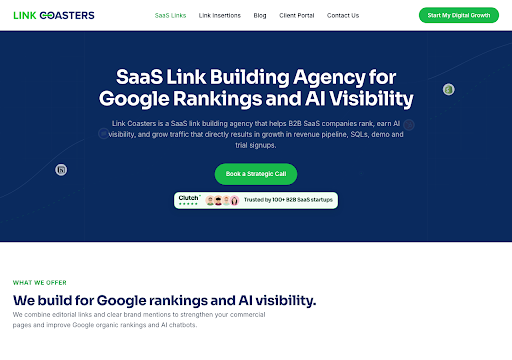
SHARJAH, United Arab Emirates — October 12, 2026 — Link Coasters announced its SaaS link building service offering for business-to-business software companies, startups and enterprise software brands. The offering combines off-page search engine optimization, digital public relations and Generative Engine Optimization, with editorial placements and brand mentions intended to support visibility in traditional search results and AI-generated answers.

The service centers on links to software companies’ commercial pages rather than a backlink volume target alone. Eligible destination pages include comparison, alternative, integration and pricing pages. These page types place the campaign’s focus on product evaluation and purchasing considerations, while giving marketing teams a defined set of website destinations for link acquisition. The company’s SaaS offering connects placement activity with the pages clients identify as priorities. 

Link Coasters includes client pre-approval of placement opportunities before publication. This approval step gives software marketing teams a role in determining which opportunities proceed. The arrangement makes publisher selection part of the client’s campaign involvement rather than leaving the placement destination undisclosed until a link becomes live. Approval rights are a stated component of the offering, alongside the selection of target pages.

“The service focuses on editorial placements, brand mentions and links to commercial SaaS pages, with client approval before publication,” said Antony Deroshan, co-founder of Link Coasters. 

The placement approach emphasizes editorial context and relevance to software buyers. Links are intended to appear within content connected to the client’s market, rather than functioning solely as additions to a backlink count. The service description identifies software publications and category sites as placement sources, with the client’s commercial pages remaining the destinations for campaign activity. This connects the subject of the publishing page with the software product being referenced. 

The offering also includes brand mentions and links intended to support AI visibility. Generative Engine Optimization forms part of that service scope, alongside conventional off-page SEO and digital public relations. Its stated purpose is to support brand visibility and citations in AI-generated answers. These activities are presented as campaign objectives, not as guarantees that a particular platform will cite a company or place its pages in a specified position. 

A 12-month replacement guarantee is included in the service terms described by Link Coasters. The guarantee accompanies the editorial placement offering and client approval process. It is a placement-related provision rather than a promise of a particular ranking, traffic increase or commercial result.

The service scope addresses software businesses at different stages, from startups to enterprise SaaS brands. Across those audiences, the announcement centers on the same delivery components: editorial placements, brand mentions, commercial-page targeting and client participation before publication. Campaigns can therefore focus on the relevant destination pages without treating every software company’s website or product offering as interchangeable.

About Link Coasters

Link Coasters provides link building, off-page SEO, digital public relations and Generative Engine Optimization services for SaaS companies. Its offering includes editorial placements and brand mentions supporting commercial software pages and visibility across search and AI-generated answers. 

MEDIA DETAILS

Contact Person: Antony Deroshan, co-founder
Company Name: Link Coasters
Email: contact@linkcoasters.com
Website: https://linkcoasters.com/

NewsCrypto Launches Real-Time Crypto Market News Platform

NewsCrypto Launches Real-Time Crypto Market News Platform

Newscrypto.org has positioned itself as a key player in delivering fast and reliable crypto news. The platform offers up-to-date information on cryptocurrency trends and market insights.

LONDON, United Kingdom — — NewsCrypto today announced the launch of its real-time cryptocurrency and digital-markets news platform, providing concise updates, market context and coverage of developments across Bitcoin, Ethereum, digital assets, blockchain infrastructure and the wider financial-markets landscape.

The platform is designed for readers seeking timely, accessible reporting during a period of continued change across the digital-asset industry. NewsCrypto publishes breaking-news updates alongside explainers and market context intended to help readers understand the events shaping the sector.

As adoption of digital assets and blockchain technology continues to develop globally, demand has grown for reliable, easy-to-understand information. NewsCrypto responds to this need by combining breaking-news updates with explanatory articles, market-focused reporting and coverage of developments relevant to both newcomers and experienced participants in the crypto ecosystem.

“Digital-asset markets move quickly, and readers need timely information presented in a clear and responsible way,” said Martin Soverski at NewsCrypto. “Our goal is to make important developments easier to follow by delivering concise coverage and useful context across the stories shaping this industry.”

NewsCrypto’s launch includes live market pages, topic hubs, mobile alerts, multilingual coverage. The company plans to expand its coverage based on reader demand and developments across the digital-asset ecosystem.

NewsCrypto is available at https://newscrypto.org.

About NewsCrypto

NewsCrypto is a digital news platform covering cryptocurrency, blockchain technology and financial-market developments. The platform publishes real-time updates, market context and explanatory reporting for an international audience interested in the evolving digital-asset economy.

Media contact
Joe Sanderson
Director
Newscrypto.org
support@newscrypto.org
newscrypto.org

Media Contact:
Name: Joe Sanderson
Company: News Crypto
Email: alfidehamirali@gmail.com
Website: https://newscrypto.org/

GeekyAnts Announces AntFabric Exhibition in San Francisco

The AI-native workspace will be demonstrated at Booth E-8 from October 13 to 15, 2026

SAN FRANCISCO, United States — October 12, 2026 — GeekyAnts will exhibit AntFabric at Moscone West in San Francisco from October 13 to 15, 2026, demonstrating an AI-native workspace that combines workplace communication, meetings, tasks, organizational knowledge, and AI assistance. The company’s team will present the product at Booth E-8 during a three-day technology event expected to bring together more than 10,000 founders, investors, operators, and technology leaders.

The exhibition will focus on how AntFabric connects workplace activities within a single operating environment. Demonstrations will show how messages, meeting records, decisions, and tasks can remain connected, preserving the context behind work as it moves from discussion to execution. The presentation will also address the distinction between actions the system can perform and those requiring human approval.

AntFabric is designed to address the fragmentation that occurs when workplace information is distributed across separate communication, meeting, task management, and email systems. A discussion may begin in chat, continue in a meeting, and produce a task elsewhere, leaving the underlying context in several places. The workspace brings these functions together so that organizational knowledge remains connected to the activities that created it.

Within AntFabric, a meeting can be recorded, transcribed, summarized, and connected to the decisions arising from it. A task can retain its connection to the conversation that initiated it. These capabilities support the product’s approach to capturing work as it happens and retaining its source and context, rather than requiring employees to reconstruct that information for a separate AI assistant.

The product also incorporates approval boundaries for AI-assisted actions. When an action cannot be safely completed or reversed, the system can stop and seek approval rather than proceed on an assumption. The exhibition will demonstrate this relationship between automated assistance and human oversight as part of everyday workplace activity.

“The goal is to improve efficiency. AI should act as a support function, but within proper governance,” said Kunal Kumar, Chief Revenue Officer of GeekyAnts.

AntFabric runs speech-to-text and language models on infrastructure it controls. Its approach centers on keeping workplace prompts, messages, and meeting transcripts away from third-party AI application programming interfaces. This infrastructure model forms part of the product’s treatment of workplace information alongside its connected communication, meeting, and task capabilities.

Sanket Sahu, Co-founder of GeekyAnts; Apoorva Sahu, Director; and Kunal Kumar, Chief Revenue Officer, will represent AntFabric at the exhibition. Their participation brings together company leadership and product discussions around the operational use of AI. The demonstrations will concentrate on workflows that combine meetings, messages, tasks, organizational memory, and AI actions, including the points at which the system pauses for approval.

AntFabric builds on GeekyAnts’ engineering work dating to 2006 and more than 550 engagements across products and enterprises. The company’s experience provides the engineering background for a workspace that brings communication, retained knowledge, and AI assistance into the same system.

About GeekyAnts

GeekyAnts is an AI-powered digital product engineering and consulting company with 20 years of engineering experience since 2006. Its work spans AI engineering, digital product development, application modernization, cloud, DevOps, quality engineering, and enterprise software. The company also contributes to open-source developer projects.

MEDIA DETAILS

Contact Person: Kunal Kumar, Chief Revenue Officer
Company Name: GeekyAnts
Email: info@geekyants.com
Website: https://geekyants.com/